Documenting the Means of Murder
The Syria Prisons Museum has now launched with an event in the National Museum in Damascus, and as a website here. The first in-depth investigation, complete with 3D virtual tour, witness testimonies, and more, is on Sednaya Prison.
I wrote the following article for Time magazine about the purpose and methodology of the Syria Prisons Museum, and some of its findings.
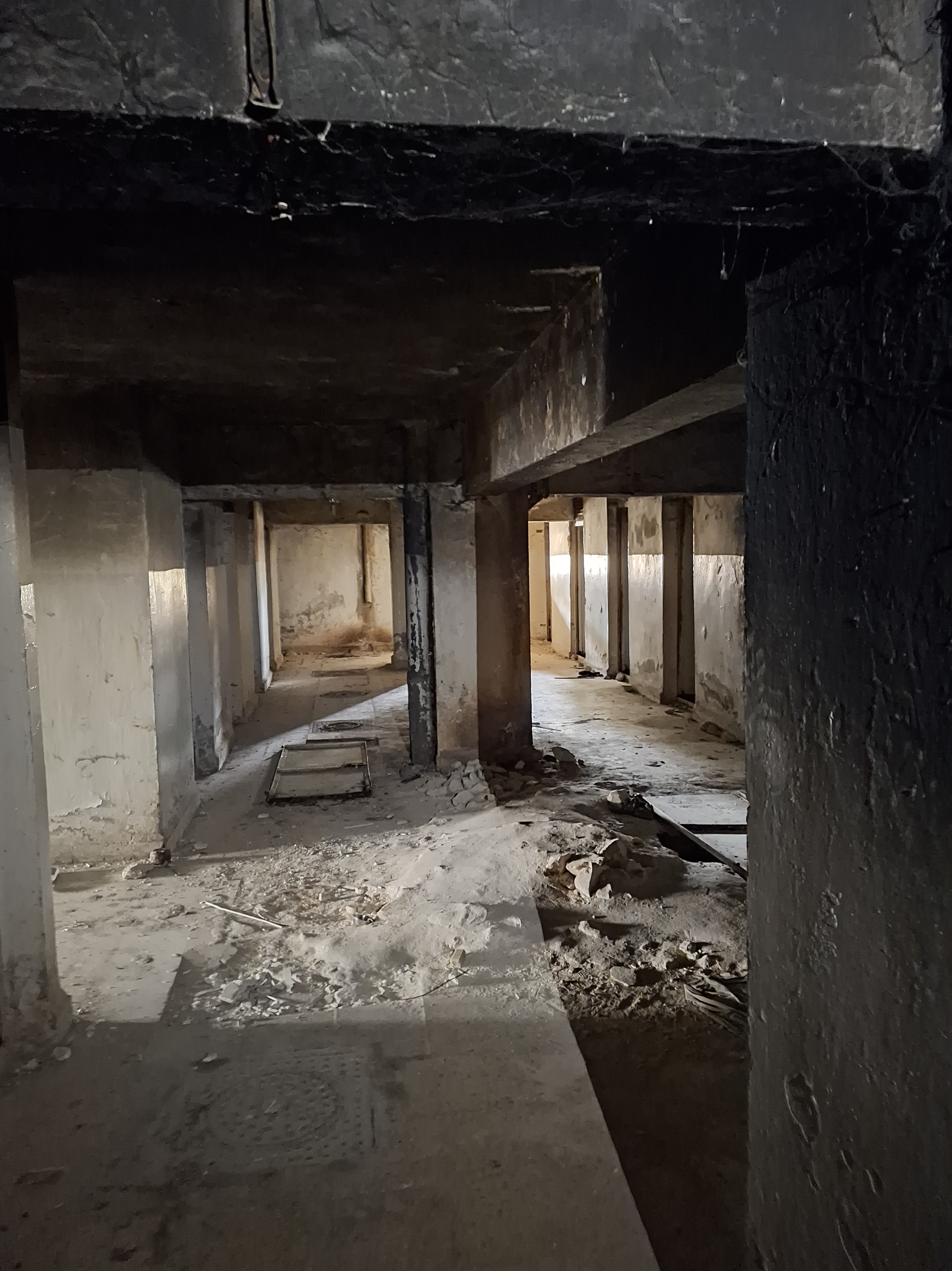
In Sednaya Prison, the names of those sentenced to death were called once a week. These men were removed from the group cells and chained together. They were usually held in designated cells for their last three days of life, during which time they were deprived of food and water. Apparently this made them die more easily, less messily. The killing itself was done on the ground floor, in the reception hall, using a gallows constructed of metal pipes which was large enough to dispatch several victims at once.
The victims were not criminals but political prisoners arrested for protesting, organizing or fighting against Syria’s Bashar al-Assad regime, which finally collapsed last December after 14 years of revolution and counter-revolutionary war. Sednaya Prison – otherwise known as ‘the human slaughterhouse’ – was the most notorious of the dozens of prisons run by the regime. Prisons had always been central to Assadist rule. From 1970 – when Bashar al-Assad’s father Hafez seized power in a military coup – a comprehensive system of surveillance, detention and torture terrified Syrians and turned the country into a “kingdom of silence”.
Syrians found their voices in 2011 when, in the context of the regional ‘Arab Spring’, they rose up against the regime. But they paid an enormous price. Assad responded by declaring war on the people. Iran and Russia sent troops and war planes to help him, while Turkey and Gulf states backed rebel militias. And as the cities burned, the prisons were transformed into death camps. The Syrian Network for Human Rights reported in August that at least 160,000 men and women remain unaccounted for after being forcibly disappeared by the Assad regime. Many of their corpses fill the mass graves which are still being uncovered today.
The result is the mass traumatisation of Syrian society. Recovery from such terrible crimes requires transparency, understanding, and at least a degree of justice. And the first step towards these aims is to clearly establish the facts of what happened. A Syrian-led organisation called the Prisons Museum is at the forefront of this effort. It brings together investigative journalism, human rights advocacy and cutting-edge technology to shed light on horrors which the perpetrators would prefer remain hidden. (I am the Museum’s English-language editor.)
The surviving prisoners in Sednaya Prison were liberated by rebel fighters and local civilians in the early hours of December 8 last year, as Bashar al-Assad fled to Moscow. A few days later, a Prisons Museum team entered the facility and began to document every room and object.
The team was applying the methodology developed for our first project – the ISIS Prisons Museum. ISIS exploited the war in Syria and political dysfunction in Iraq to take control of vast swathes of both countries, which it ruled over between 2014 and 2017. Like the Assad regime, it ruled by terrorising the population, and prisons were a key component of the terror. ISIS confiscated every conceivable type of building – a sports stadium, a school, a shopping mall basement, a gymnasium, churches and family homes – and converted them into prisons in which it tormented dissenters and those who violated its extremist behavioural code.
By 2017, with the defeat of ISIS, many of these buildings were being demolished after war damage or were being reclaimed by their original owners. This meant evidence of the crimes committed within their walls was being lost. So the Prisons Museum filmed every inch of every room using 360 degree cameras. It recorded the names scratched on the walls and collected the torture tools and over 70,000 documents the terror group had left behind. Then it tracked down and interviewed hundreds of survivors of these prisons. When the forensic evidence and the witness testimony were cross-referenced, they provided compelling proof of crimes committed.
The same methodology allowed the Prisons Museum to work out the means of mass murder at Sednaya. Our team relied on the accounts of those prisoners who had been held in the cells above the prison’s reception hall. They reported hearing heavy metal objects being dragged on execution nights. The accounts of former prisoners in Tadmor Prison – Sednaya’s predecessor, where Bashar al-Assad’s father had ordered thousands of killings – were also useful. These men had witnessed executions at Tadmor in the 1980s on a similar gallows, but one made of wood rather than metal. Once they knew what they were looking for, our team was able to locate the metal pipes (they had been scattered through various parts of the prison) and reconstruct the gallows. Bags full of nooses had already been found.
Then the documents that our team discovered at Sednaya show what happened to the corpses of the victims. Those sentenced to death and executed on the gallows were transported directly to mass graves, except when the roads were closed by fighting. On those occasions, they were stored temporarily in the prison’s ‘salt room’. Those killed under torture, or by starvation or medical neglect, on the other hand, were transported first to military hospitals where pretexts were invented for the deaths. A common one was, “respiratory failure due to tuberculosis and fluid-electrolyte imbalance disorder.” (Both the Assad regime and ISIS built intensely bureaucratic systems; both of them documented their own crimes, and produced more than enough evidence to convict their operatives.)
The Syria Prisons Museum will be launched on September 15. Visitors to the website will be able to take virtual 3D tours of Sednaya Prison, watch survivor testimonies, and read detailed reports on the history and administration of the facility. Further investigations will be uploaded regularly on both the ISIS and Syria Prisons Museum websites.
Both projects aim to support victims and, if possible, to achieve justice. Evidence produced by the ISIS Prisons Museum has already been used (in a German court) to convict war criminals. Evidence produced by the Syria Prisons Museum will also be available for use in transparent trials.
Even when our work does not result in convictions, we hope to offer some level of closure to the relatives of the disappeared by shedding light on their fates. We hope to combat denialism of these crimes, both in Syria and abroad, and to build a national memory for Syrians and Iraqis, so that present and future generations can reflect on what happened, and deter its recurrence.
We and similar organisations wish to help build the culture of accountability that Syria will need if it is to avoid such disasters in the future.
The stakes could not be higher. Syria’s current government has in some cases released Assadist criminals accused of massacres and appointed former militia leaders accused of crimes against civilians to high ranks in the new army. The logic is understandable; the government is focused on solidifying its authority and eliminating potential threats. But society has different priorities, and demands rapid, visible justice.
The alternative to organized, transparent, legal accountability is vigilantism and generalized revenge attacks which threaten to spill over into sectarian violence, and risk destabilizing Syria’s fragile transition. That’s why our project is not just about Syria’s past, but about its future too.



 Qunfuz
Leave a comment