Archive for the ‘Iran’ Category
ISIS: Hassan/Weiss versus Cockburn
 The review below was published at the Guardian. Unfortunately the heart of the review was cut from the published version. I’ll put it here first of all, because it shows that Patrick Cockburn actually makes stuff up in order to defend Assad and Iran and to slander the Syrian people. Here it is:
“There is no alternative to first-hand reporting,” he nevertheless opines; and “journalists rarely fully admit to themselves … the degree to which they rely on secondary or self-interested sources”. Which brings us to the question of Cockburn’s reliability. In the book he states, in early 2014, “I witnessed [Nusra] forces storm a housing complex … where they proceeded to kill Alawites and Christians.” This alleged massacre was reported by Russian and Syrian state media (Russia is Assad’s imperial sponsor, providing his weapons and defending him at the Security Council); yet international organisations have no record of it. But Cockburn’s original report of the incident, in a January 28, 2014 column for The Independent, states that, rather than witnessing it, he was told the story by “a Syrian soldier, who gave his name as Abu Ali”.
And now here’s the whole thing:
ISIS feeds first on state dysfunction, second on Sunni outrage. In Iraq – where its leadership is local – Sunni Arabs are a minority displaced from their privileged position by America’s invasion. Their revanchism is exacerbated by the sectarian oppression practised by the elected but Iranian-backed government. In Syria – where most ISIS leaders are foreign – Sunnis are an oppresssed majority, the prime targets of a counter-revolutionary tyranny headed by mafias but claiming and exploiting Alawi sectarian identity.
Under other names, ISIS first grew in Iraq as it would later in Syria, by exploiting resistance to occupation, American in one case, that of a delegitimised regime in the other. Drawing on research by the Guardian’s Martin Chulov as well as their own, Michael Weiss and Hassan Hassan show how Syria’s regime collaborated with Iraqi Baathists and Salafist extremists, facilitating the passage of bombers to Iraq who would do more to precipitate civil war than to shake off American occupation. This was a message to America to leave Syria alone.
Popular disgust and the US-backed Awakening movement eventually drove al-Qaida out of Sunni Iraq. The jihadists waited; their moment returned when peaceful Sunni protests were repressed by live fire in 2013. Heading a Baathist-Islamist coalition, ISIS then captured huge swathes of the country and set about its reign of terror.
Weiss and Hassan have produced a detailed and immensely readable book. Their informants include American military officials, American, Jordanian and Iraqi intelligence operatives, defected Syrian spies and diplomats, and – most fascinating of all – Syrians who work for ISIS (these are divided into such categories as politickers, pragmatists, opportunists and fence-sitters). They provide useful insights into ISIS governance – a combination of divide-and-rule, indoctrination and fear – and are well placed for the task. Hassan, an expert on tribal and jihadist dynamics, is from Syria’s east. Weiss reported from liberated al-Bab, outside Aleppo, before ISIS took it over.
Cockburn’s book, on the other hand, is more polemic than analysis. While Weiss and Hassan give a sense of the vital civil movements which coincide with jihadism and Assadism in Syria, Cockburn sees only an opposition which “shoots children in the face for minor blasphemy”. He concedes the first revolutionaries wanted democracy, but still talks of “the uprising of the Sunni in Syria in 2011”. The label doesn’t account for (to take a few examples) the widespread chant ‘The Syrian People are One’, or Alawi actress Fadwa Suleiman leading protests in Sunni Homs, or Communist Christian George Sabra leading the Syrian National Council.
Beware the Game of Shadows in Syria
I am a signatory to this letter published by the Guardian.

‘Hamza Bakour’ by Khalil Younes
As supporters of the Syrian people’s struggle for freedom and democracy, we are concerned by the British government’s decision to re-establish diplomatic relations with Iran in response to the crisis in Iraq (Shortcuts, G2, Iran, 18 June).
There is a grave danger that the Iranian government will see this as a licence to extend its already substantial intervention in Syria in support of its client – the Assad regime – which could not have survived this long without Iranian support.
Thousands of troops from the Iranian Revolutionary Guard and the Basij militia are actively fighting in Syria on the regime’s side, as are Iran’s proxies, Hezbollah and the Iraqi Shia militias. To ally with Iran in order to combat Isis is deeply ironic, since there is considerable evidence that the Syrian regime has been colluding with Isis: Assad’s air force bombs civilians, schools, markets and hospitals without mercy but declined to attack Isis’s massive headquarters in Raqqa until the Iraq crisis erupted.
The Syrian regime has been playing a game of shadows in which this covert collusion with the growth of Isis has been used to undermine the democratic opposition and strengthen its own claim to be a bulwark against “terrorism”. To accept Iran – and by implication Bashar al-Assad – as allies in the fight against Isis is to fall for this deception.
On ISIS and Iran
Now that ISIS has supposedly taken over vast swathes of northern Iraq (in reality, ISIS is a small minority of the Sunni Arab forces that have risen against the Malki government), the newspapers are full of articles telling us that the West should align with Iran to defeat the common foe. Of course, Iran’s sectarian and aggressively expansionist policy in both Iraq and Syria is a major contributor to the rise of ISIS and similar groups. Working with Iran against ISIS is as intelligent as working with Hitler against anti-Semitism. I discussed the issue with Hayder al-Khoi and Jeremy Paxman on the BBC’s Newsnight.
Iran’s Secret Army
As the world celebrates the deal between the West and Iran, it should be remembered that Western concerns over Iran’s nuclear programme – and the sanctions which have so damaged Iran’s economy – were provoked by Israeli concerns, and that these are not existential but strategic. Iran doesn’t need a nuclear weapon but only the ability to enrich uranium to a level where it could quickly make a nuclear weapon. At that stage, the bullying power given Israel by its own nuclear arsenal vanishes. A sensible approach to the problem would have reduced Tehran’s nuclear ambition while disarming Israel. The West, of course, did not press for this, and Iran, despite its stale ‘resistance’ rhetoric, did not hold out for it.
In general, it’s good to see tension reduced between Iran and the West. The great shame is that while a deal is done over the nuclear programme, something that was never much of a threat, Iran has not been called to account for its pernicious intervention in Syria, a far greater threat to regional and international security. Iran’s intervention is on a far greater scale than any Saudi or Qatari interference. The Islamic Republic’s ‘revolutionary’ legitimacy is of course destroyed by its siding with a tyrant against a revolutionary people, and its Shia legitimacy will also be destroyed in the eyes of any thinking human being, for it has joined Yazeed in a war against a struggling Hussain. After Assad’s employment of sectarian death squads, ‘Shia’ Iran’s deployment of racist occupation forces to direct the tyrant’s fightback has been the single biggest factor amplifying the sectarian nature of the conflict. It has already dragged Lebanon back to the brink of civil war. Some argue that peacable relations between the US and Iran will defang Iran’s hardliners. That may happen eventually, but it will be far too late for usurped and shattered Syria.
I used to argue that the West and the Arabs should work with Iran. I used to repeat the line about Iran not having attacked another country in three centuries. (I made allowances for its pernicious role in keeping Iraq divided and sectarian; Iraq had after all attacked Iran in the past.) Unfortunately this is no longer true. The Arabs are now absolutely right to regard Iran as an aggressive, expansionist threat. This deal has by no means secured peace in the region.
Iran Shoots Itself in the Foot
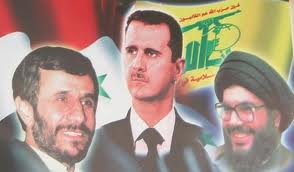 This was written for the excellent Lobelog.
In August 2012 Egyptian President Muhammad Morsi attended a meeting of the Non-Aligned Movement (NAM) in Tehran. His presence at the conference was something of a diplomatic victory for the Iranian leadership, whose relations with Egypt, the pivotal Arab state, had been at the lowest of ebbs since the 1979 revolution.
Egypt’s President Sadat laid on a state funeral for the exiled Iranian shah. A Tehran street was later named after Khalid Islambouli, one of Sadat’s assassins. Like every Arab country except Syria, Egypt backed Iraq against Iran in the First Gulf War. Later, Hosni Mubarak opposed Iranian influence in Iraq, Syria, Lebanon and Palestine, worked with the US and Saudi Arabia against Iran’s nuclear program, and was one of the Arab dictators (alongside the Abdullahs of Jordan and Saudi Arabia) to warn darkly of a rising “Shi’ite cresent”. Not surprisingly, Iran was so overjoyed by the 2011 revolution in Egypt that it portrayed it as a replay of its own Islamic Revolution.
Iran also rhetorically supported the revolutions in Tunisia and Libya, the uprising in Yemen, and, most fervently, the uprising in Shia-majority Bahrain.
In Syria, however, Iran supported the Assad tyranny against a popular revolution even as Assad escalated repression from gunfire and torture to aerial bombardment and missile strikes. Iran provided Assad with a propaganda smokescreen, injections of money to keep regime militias afloat, arms and ammunition, military training, and tactical advice, particularly on neutralising cyber opponents. Many Syrians believe Iranian officers are also fighting on the ground.
Thank You So Much
A message from the father of the murdered nine-year-old Ibrahim Shayban to Russia, China and Bashaar al-Asad.
The Russian and Chinese vetoes to protect the Syrian regime from UN Security Council condemnation are reminiscent of all those American vetoes to protect Israel. Both countries have their reasons for shielding the Syrian regime: Russia’s naval base at Tartus, discomfort over the way the Libya No Fly Zone slipped into more overt intervention, the fear that UN condemnation may one day focus on Russian abuses in Chechnya and Chinese abuses in Tibet and Xinjiang. But both countries should consider their own interests more creatively. Ultimately, their influence in Syria and the wider region will depend on their image in Syrian and Arab eyes. The Syrian regime will not be there for ever. The Syrian people will.
Iran is another state which has repeatedly shot itself in the foot since the Arab revolutions began, first by mischaracterising as Islamic uprisings the deposings of Mubarak, Bin Ali and Qaddafi, then by opposing the revolution which seems most similar to Iran’s in 79 – the Syrian revolution. Iran used to be popular in Syria even amongst many sectarian-minded Sunni Muslims. It used to be popular in the wider Arab region. This popularity was Iran’s best guarantee against marginalisation and even military attack from the region’s pro-Western forces. But its popularity has evaporated this year.
Back to Ibrahim. He was martyred while leaving a mosque in the Qaboon suburb of Damascus. His funeral was held today in Meydan, in the heart of the city. Here’s some footage. Apparently insecurity forces killed two of the mourners when they came out of the mosque into the street.
Commentators have been telling us that central Damascus remains quiet. It’s true that many areas have been quiet, either because the upper middle class inhabitants still support the regime or are sitting on the fence, or because of the overbearing police and mukhabarat presence on the streets. Damascus has certainly not slipped out of regime control, as Homs, Hama, Deir ez-Zor and Idlib sometimes have. Yet Damascus has been bubbling for a long time. Pro-regime commentators will say that Kafar Souseh (which has demonstrated frequently since Shaikh Rifa’i of the Rifa’i mosque was shot) is a suburb, not the city itself – which is true, if Camden Town isn’t part of London. Suburbs further out – like Harasta, Douma, Muadamiya – have been veritable war zones for months. Imagine if Streatham, Hackney, Tottenham and Ealing were in a state of war and commentators told us ‘London remains quiet.’ And Meydan and Rukn ad-Deen have witnessed frequent, large demonstrations, and savage repression. These places are as central as Chelsea and Kensington. Smaller, briefer demonstrations have occurred in high-class Malki, in Sha‘alaan, Shaikh Muhiyudeen, Baghdad Street, Muhajireen. You can’t get more central. The last place is within earshot of Bashaar al-Asad’s house. If the quietness of Damascus reassures the regime, I think they’d better start panicking.
The Wrong Side of History
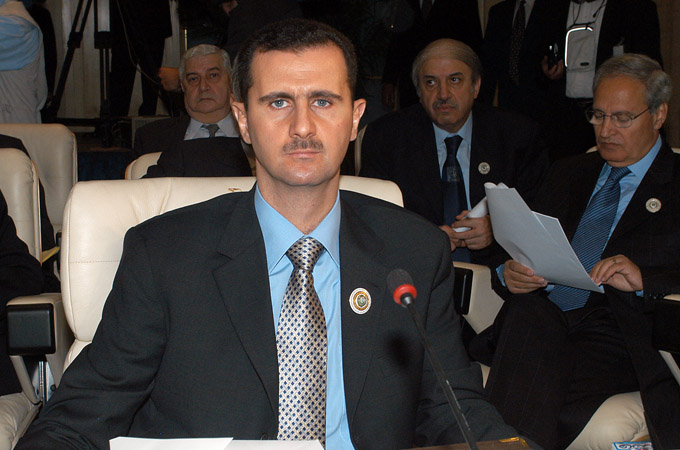
impeccable
An interesting article in the Asia Times (republished in full after the break) states that “in recent weeks more and more former Iranian officials and academics have begun to speak out against the lack of complexity and nuance in Iran’s policy vis-a-vis the perceived deteriorating situation inside Syria.” The article also suggests that Hizbullah is rethinking its position. About time too.
The Asia Times continues: “talking to Iranian officials it appears that there is deep unease about the methods employed by the Syrian security forces which have allegedly killed up to 2,000 people since protests and violence erupted in March. In private, Iranian officials draw a comparison to how professionally Iranian security forces responded to widespread rioting and disorder in the wake of the disputed presidential elections of June 2009. They claim (with some justification) that the disorder was quelled with minimum loss of life.”
The article goes on to list reasons why Iran’s rulers expect the Asad regime to come out of the current unrest intact. Beyond an appreciation of the ruthlessness of regime violence, these include: “the divided nature of the Syrian opposition, the majority of whom hail from a Sunni Islamist pedigree. But deep down Iranian officials believe that Assad will survive because owing to his foreign policy posture and his impeccable anti-Zionist credentials, his regime is somehow more ‘connected’ to the deepest aspirations of his people, indeed the people of the region as a whole.”
On the Radio
I was on BBC Radio 4’s The World Tonight the other night to comment on the situation in Syria.
Then Jeb Sharp of the BBC interviewed me for PRI’s The World.
A Different Kind of Dominoes
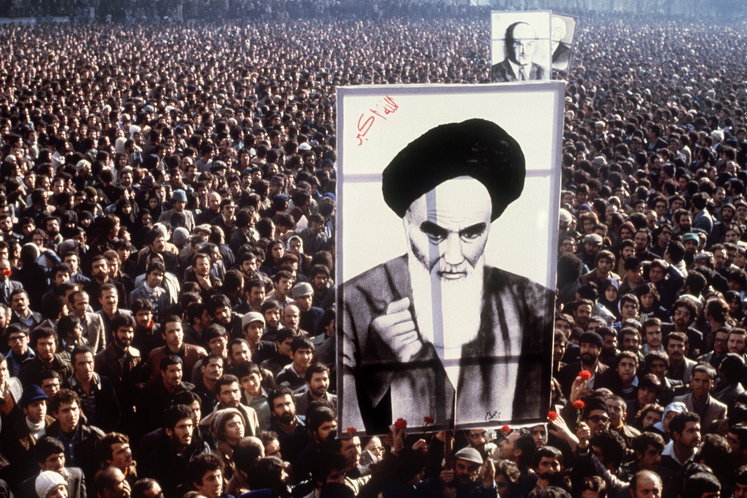
AFP Photo
I ended my last post like this:
“Perhaps in six months’ time non-Arab commentators will decide that the Tunisian revolution was a mere anomaly in an eternally stagnant Arab world. But they’ll be wrong. The revolution will exert a long-term pervasiveness throughout Arab culture, as the Iranian revolution did before it. It will change the air the Arabs breathe and the dreams the Arabs dream.”
Well, it seems I was wrong on the timescale. I should have said six minutes. Today several commentators are indeed arguing that the Tunisian revolution is anomalous. Robert Fisk is pessimistic, contending that the Tunisian people are no match for the combined forces of the Tunisian elite and Western imperialism. Perhaps events will prove him right. Steve Walt fears that those expecting immediate regime change from the Ocean to the Gulf will be rapidly disappointed.
His point is a good one. In the frontline states with Israel, foreign policy issues increase in importance because they have the potential to immediately translate into security issues. The Syrian regime, for instance, may be unpopular for its corruption, bureaucracy, and stifling of dissent, but its foreign policy is broadly in line with Syrian opinion – and in Syria this matters a great deal. The Western clients are more vulnerable to protest, not least because they’re more linked into the ‘globalised’ economy and are thus more vulnerable to dramatic fluctuations in the price of essential goods. Yet even in Jordan legitimate fears of an Israeli intervention (perhaps an attempt to fulfill the Jordan-is-Palestine fantasy) could damp down effervescence. The public in many countries seems too split by sect, ethnicity or tribe to coordinate unified protest. And of course the regimes will now be battening down for fear of Tunisian contagion.
Myth-Making
 We often project our current political concerns backwards in time in order to justify ourselves. I say ‘we’ because everyone does it. Nazi Germany invented a mythical blonde Aryan people who had always been kept down by lesser breeds. The Hindu nationalists in India imagine that Hinduism has always been a centralised doctrine rather than a conglomerate of texts and local traditions, and describe Muslim, Buddhist, Christian, Sikh, Jain and animist influences on Indian history as foreign intrusions. Black nationalists in the Americas depict ancient Africa as a continent not of hunter-gatherers and subsistence farmers but as a wonderland of kings and queens, gold and silk, science and monumental architecture. To our current cost, Zionists and the neo-cons have been able to reactivate old Orientalist myths in the West, myths in which the entirety of Arab and Islamic history has involved the slaughter and oppression of Christians, Jews, Hindus, women, gays, intellectuals .. and so on.
Such retrospective mythmaking frequently goes to the most absurd extremes in young nations conscious of their weakness or of a need for redefinition (America may be one of these). Probably for that reason it is particularly evident in the Middle East.
What Comes Next
This is the extended version of a piece published in today’s Sunday Herald.
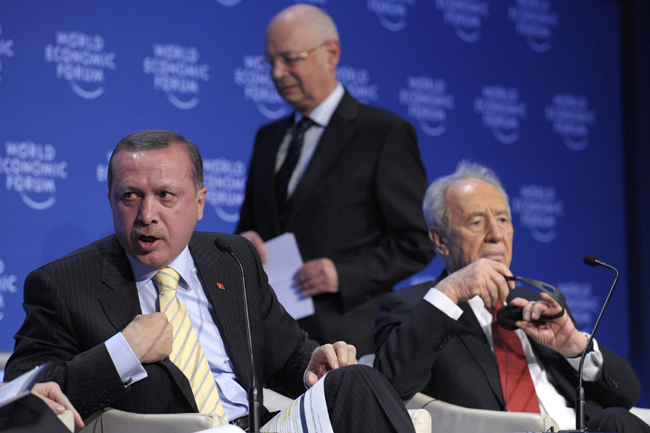
Erdogan reacts to his war criminal neighbour
A strange calm prevails on the Middle Eastern surface. Occasionally a wave breaks through from beneath – the killing of an Iranian scientist, a bomb targetting Hamas’s representative to Lebanon (which instead kills three Hizbullah men), a failed attack on Israeli diplomats travelling through Jordan – and psychological warfare rages, as usual, between Israel and Hizbullah, but the high drama seems to have shifted for now to the east, to Afghanistan and Pakistan. The Arab world (with the obvious exception of Yemen) appears to be holding its breath, waiting for what comes next.
Iraq’s civil war is over. The Shia majority, after grievous provocation from takfiri terrorists, and after its own leaderhip made grievous mistakes, decisively defeated the Sunni minority. Baghdad is no longer a mixed city but one with a large Shia majority and with no-go zones for all sects. In their defeat, a large section of the Sunni resistance started working for their American enemy. They did so for reasons of self-preservation and in order to remove Wahhabi-nihilists from the fortresses which Sunni mistakes had allowed them to build.
The collapse of the national resistance into sectarian civil war was a tragedy for the region, the Arabs and the entire Muslim world. The fact that it was partly engineered by the occupier does not excuse the Arabs. Imperialists will exploit any weaknesses they find. This is in the natural way of things. It is the task of the imperialised to rectify these weaknesses in order to be victorious.
Demonising Iran
This was published in the Sunday Herald.
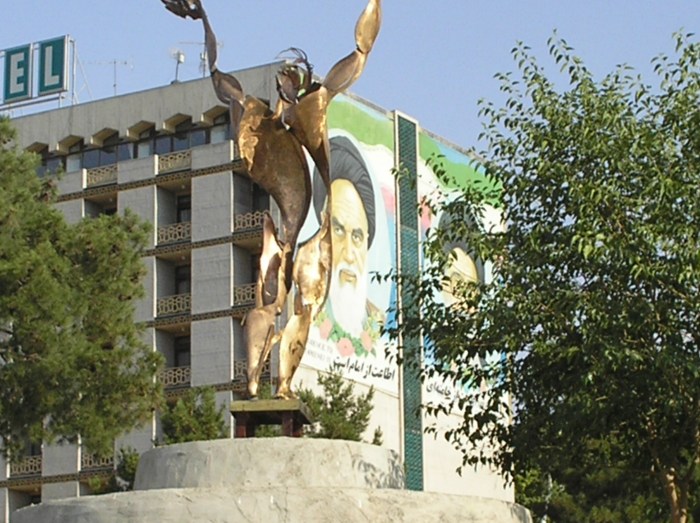
Two manifestations of Iranian modernity
The mainstream media narrative of events unfolding in Iran has been set out for us as clear as fairytale: an evil dictatorship has rigged elections and now violently suppresses its country’s democrats, hysterically blaming foreign saboteurs the while. But the Twitter generation is on the right side of history (in Obama’s words), and could bring Iran back within the regional circle of moderation. If only Iran becomes moderate, a whole set of regional conflicts will be solved.
I don’t mean to minimise the importance of the Iranian protests or the brutality of their suppression, but I take issue with the West’s selective blindness when it gazes at the Middle East. The ‘Iran narrative’ contains a dangerous set of simplicities which bode ill for Obama’s promised engagement, and which will be recognised beyond the West as rotten with hypocrisy.
Syria’s Regional Alliances
CreativeSyria (see the link on the left) organises a ‘Creative Forum’ where bloggers consider an aspect of Syrian politics. This time the topic is Syria’s regional alliances. My contribution, which I copy below, is on CreativeSyria along with several more opinions. I think Wassim’s is excellent, far more comprehensive than mine. But here’s mine:
For a time the pattern of alliances in the Middle East was organised into monarchical-conservative and republican-nationalist camps. Following the 1991 Kuwait war, there was a realignment which pitted a Saudi-Syrian-Egyptian alliance against a disgraced and battered Baathist Iraq and its perceived allies such as the Jordanian monarchy. Because the Damascus Declaration countries were the three key Arab mashreq states, some pretence at the centrality of Arab alliances in the region was still possible. But since the 2003 invasion and subsequent dismantling of Iraq a new set up seems firmly established. On one side stands Syria, Iran, Hizbullah and Hamas; on the other Saudi Arabia, Egypt, Jordan, the March 14th Lebanese, Mahmoud Abbas, and (implicitly) Israel.
Gunboat Diplomacy
On January 11th, US occupation forces took five Iranian officials hostage from a diplomatic office in Arbil, Northern Iraq, prompting protests from the Kurdish regional authorities who had invited the Iranians. On February 4th, an Iraqi army unit under direct American command kidnapped an Iranian diplomat in Baghdad. These are incidents we can be sure of.
On February 14th, the anniversary of the bomb which killed Rafiq Hariri and many passersby in Beirut, eleven Iranian Revolutionary Guardsmen died when their bus was bombed by Jundallah, a Sunni fundamentalist and Baluchi separatist group active in southeastern Iran. Iranian authorities accused the US of involvement in the attack, a claim which is backed up by Seymour Hersh and several other analysts who have described American promotion of ethnic and sectarian conflict in Iran, and specifically American cooperation with al-Qa’ida linked anti-Shia groups throughout the region.
Murkier still are rumours that the US administration’s Iran Syria Policy and Operations Group is running a campaign to kidnap Revolutionary Guard commanders. Veteran Guardsman Alireza Askari either defected or was kidnapped during a visit to Istanbul in early February, and the fates of several other officers are unknown.
One of Iran’s top nuclear scientists, Ardeshir Hussainpur, died on January 18th. His death wasn’t announced until a week later, and the cause given then was ‘gas poisoning.’ The US security company Stratfor has said that the Israeli Mossad assassinated Hussainpur.
Meanwhile, there are now two US aircraft carrier batle groups in the Gulf, and Britain’s naval presence has recently been boosted.
This is the context in which 15 British sailors have been arrested by Iranian forces while patrolling the Shatt al-‘arab waterway between Iraq and Iran. Immediately much of the Western media fits the event into the narrative of the American embassy hostage crisis. We are told, without a hint of irony, that the British navy is on the Shatt al-‘arab to ensure that ‘intruders’ will be chased off. The British mission, writes Richard Norton-Taylor in the Guardian, is to ‘protect Iraq’s oil supply’ against ‘pirates, smugglers and terrorists.’ If the Anglo-American invasion and destruction of Iraq is seen against the background of the new oil law hurried through Iraq’s absentee parliament, the words ‘pirates, smugglers and terrorists’ seem apt descriptors of US and British forces. In any case, Western packaging of the story has made very little reference to the recent history of US kidnapping operations against Iranian targets, or to the fact that the Shatt al-‘arab was one front in the disastrous Iran-Iraq war during which Saddam Hussain used Western arms and money to cover Iranian cities in poison gas.
Nobody has wondered what the British reaction would be if Iranian forces were found half a mile outside of British territorial waters (this is the British claim; the Iranians say the sailors had crossed the border). The press, ‘liberal’ and conservative, have remained largely loyal in framing the victim as the aggressor, the aggressor as the victim, once again. Watch this story carefully. It has the potential to escalate into a deliberately-plotted, nation-smashing tragedy. Once again.
America versus America
My children have a Dreamworks animated film called AntZ. I suppose it’s better than the average American children’s film, but still, once you’ve watched 15 minutes you can predict both the conclusion and the moral message that will be rammed violently past your gullet for the next hour and a bit. As in very many Disney films for children or in the Hollywood versions for adults, the message is BE YOURSELF. BE AN INDIVIDUAL. STAND OUT FROM THE CROWD.
It seems contradictory that the country which feeds its children unto obesity with this message is also the country with the most conformist of populations. Americans are more likely than any other people to confuse their national identity with their state machinery, to identify themselves with their leaders and their flag, to believe that their country has a divinely-ordained manifest destiny. The ability of Americans to contemplate alternative perspectives on the world, or even to understand that people in different countries may not want to speak English or eat hamburgers, is severely limited. The declared ideology is individualism, but the reality is rigid conformism.



 Qunfuz