Archive for the ‘Transitional Justice’ Category
The Wounds of the Past, and Transitional Justice
This essay was first published at New Lines Magazine.
In dry hills half an hour’s drive outside Damascus, Sednaya Prison comes into view. A squat three stories covering a good deal of land, it imposes on the vision as we approach from below. Repeated rings of barbed wire and mine fields surround the main building. The Assad regime’s organized graffiti praising the leader and describing the (non-existent) struggle against Israeli occupation still covers the outer buildings which housed the guards and their workshops until the regime collapsed on December 8 2024.
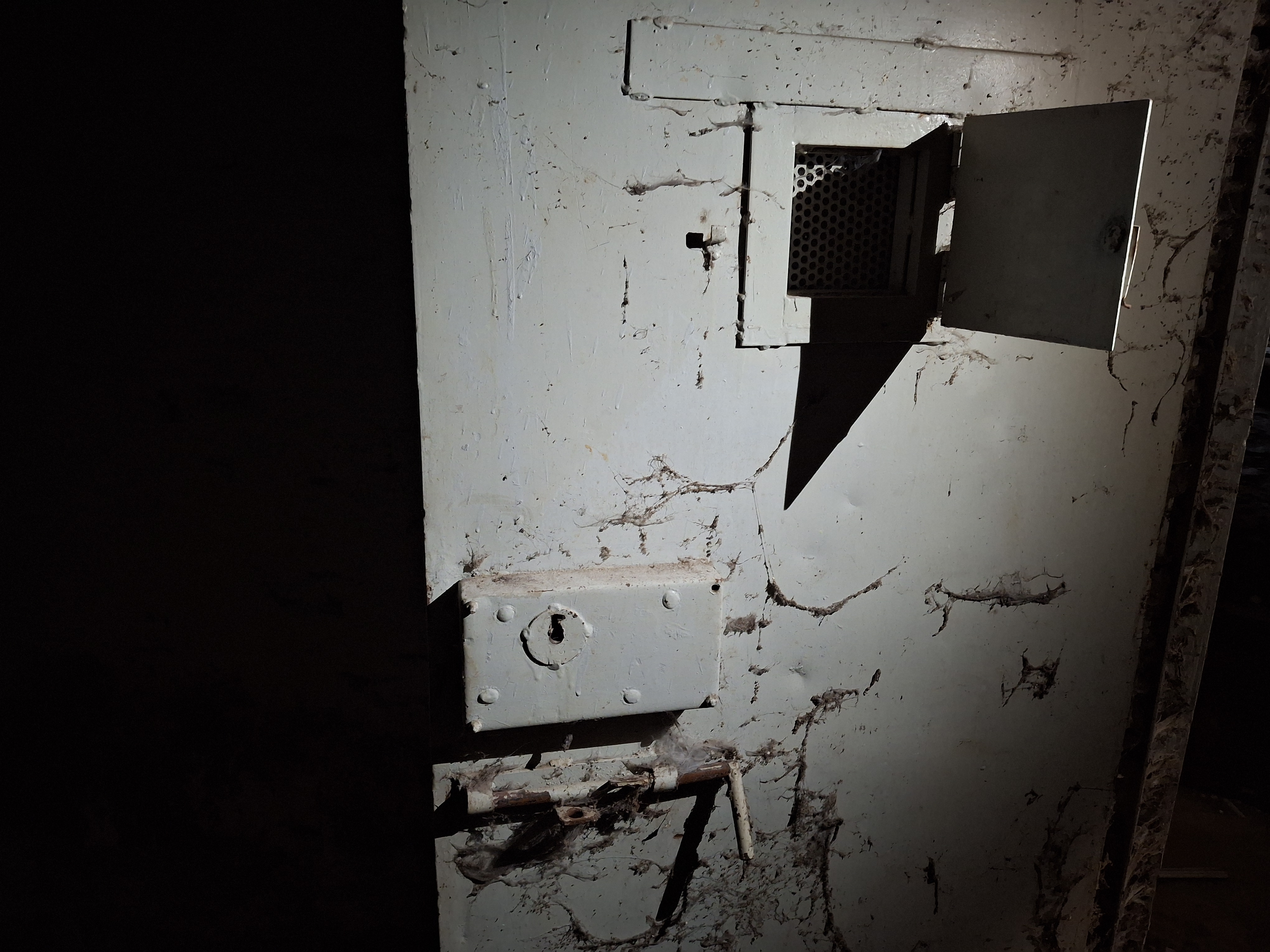
The whirlwind of revolutionary change has hit the place. Rubble and rubbish litter the entrance. I and the photographers climb a few steps into the reception room where prisoners were previously pushed into narrow caged corridors and stripped of their clothes. It isn’t hard to imagine the screams and thuds as new arrivals received their ‘reception party’ beatings. Although on second thoughts, my imagination may be overdoing it. Absolute silence was often enforced on the victims, even during torture.
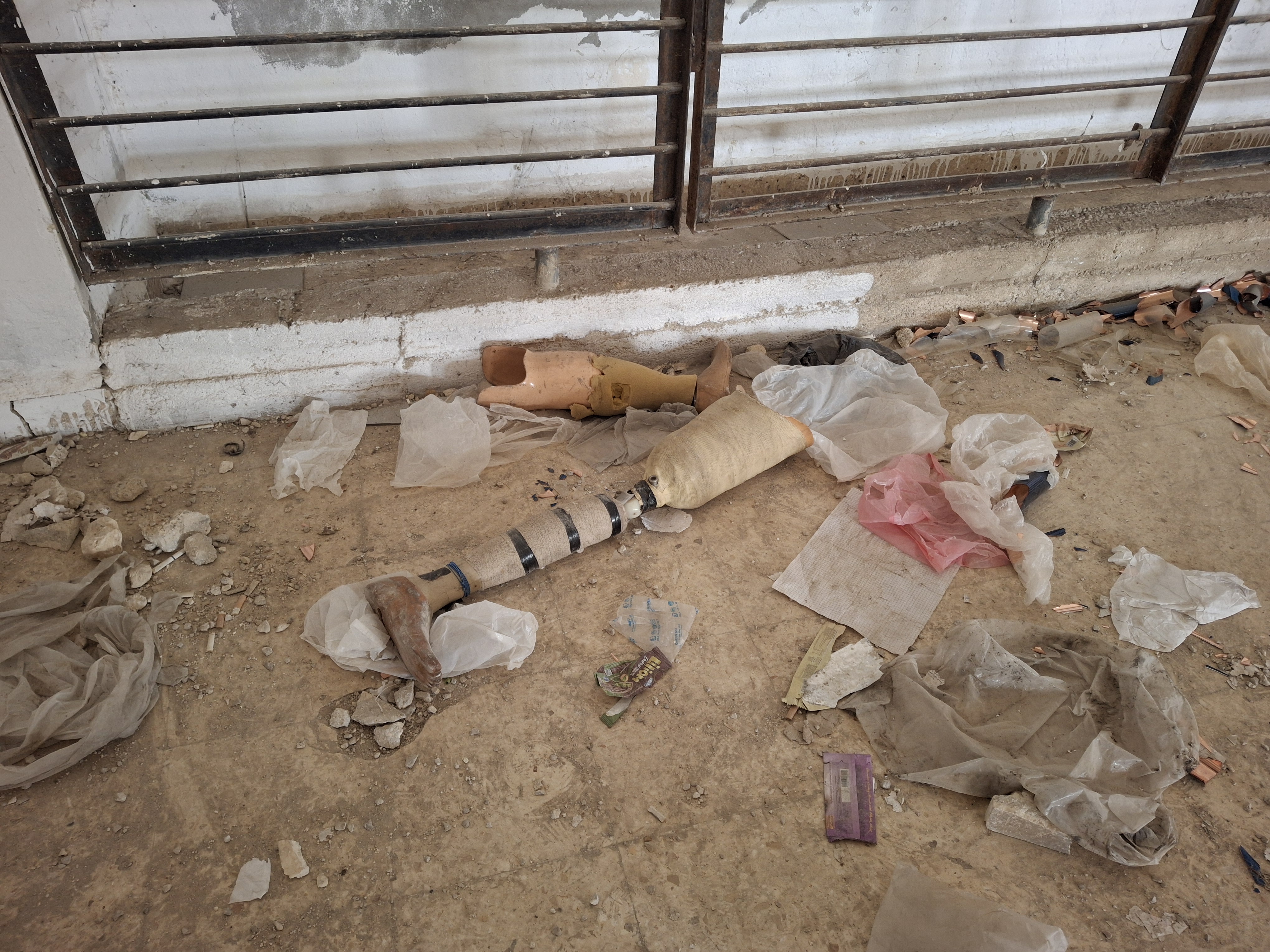
Amongst the detritus here on the filthy tiled floor, a couple of artificial legs lie marooned. They are made of very basic plastic, one to fit beneath a knee, one to replace an entire limb from the hip down. I can’t understand why they’re still here. Surely their owners didn’t discard them when they fled? Later, however, I read the transcript of an interview with a survivor of the prison. He described the reception room process: “If you have a prosthetic leg, they throw it away. If you have glasses, they get rid of them.”
At the center of the prison is a spiral staircase made of metal and surrounded by metal bars. This connects (or for the prisoners, separated) the three stories and the three wings fanning out from the center. Nine cells recede down each corridor. These are the group cells, in which dozens of men were crammed. Very thin, dark brown blankets cover the floor. There is a bad odour or the memory of one, a discomforting sweet staleness.
Down the stairs are the solitary cells, so-called because they aren’t big enough to fit more than one man, though in fact three, four or five men were often forced inside. Each cell contains a dirty squat toilet, from which the men also had to drink. Food was delivered through a slot at the bottom of the heavy metal door. There is no light inside. The prisoners existed in absolute darkness. Sightlessness as well as soundlessness contributed to the deprivation. There is writing on some of the walls nevertheless, apparently etched by fingernails. A name of a man and his city, Tartous. A date in 2014. A count of days, though in the dark the days could only have been guessed at.
The smell is stronger here. One of the photographers explains that in the first days after the liberation streams of human waste flowed from the cells into the hallway. We’re stepping now on blankets put down to absorb the filth. They have hardened in the dry air in the months since, but the smell persists. This is despite the thick clouds of incense currently being burnt upstairs, where the group cells are. That sweetness covers but doesn’t hide the deeper, more disturbing sweetness of persistent degradation.
If this works as a symbol – and we are in need of symbols, of any tools we come across to help us comprehend – it serves to embody the need for a deep cleaning of Syrian society. Superficial treatment won’t do, for the crimes committed in the Assad prisons system can be rightly described as radically evil. Of the at least 130,000 people missing in Assad’s dungeons, only about 30,000 were released in the hours following the fall of the regime. That means at least 100,000 victims were murdered in Sednaya and other prisons, by torture or starvation or medical neglect. Their corpses pack the mass graves found at Qutayfa and many other sites. The victims were not criminals, but people who had spoken, protested, organized, or in some cases fought against the regime.
Read the rest of this entry »


 Qunfuz