Heroes and Traitors
Despite the mass arrests, the beatings and torture, the besieged towns and suburbs, the blocked-off mosques, and the killings of up to a thousand people, Syrian heroes today demonstrated in Damascus, Aleppo, Homs, Hama, Idlib, Qamishleh, Amouda, Latakia and elsewhere.
The film below was made in Dera’a last month. It is very distubing to watch, but also very inspiring. I love the courage and compassion and the solidarity of those wonderful people who work against bullets and fear to rescue one fallen. That’s the best of syria, and there’s a great deal of it. I challenge anyone to watch the film and then claim that the Syrian regime still enjoys any legitimacy at all. “Khawana!” scream these brave men at their persecutors. “Traitors!”
More videos smuggled through the media blackout can be seen at Sham News.
Salhiyeh
Upmarket central Damascus, Corncob square and the shopping precinct below. ‘Salafi terrorists’ singing the Syrian national anthem. The mukhabarat playing various roles.
Lyrics Alley
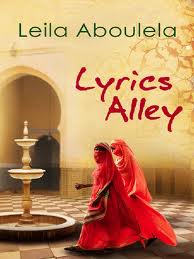 This review of Leila Aboulela’s novel was published in the excellent Wasafiri magazine.
It’s the mid twentieth century, as British control over north east Africa fails. Sudanese cotton tycoon Mahmoud Abuzeid, awarded the title Bey by Egypt’s King Farouk, is pulled between his two wives.
“They belonged to different sides of the saraya, to different sides of him. He was the only one to negotiate between these two worlds, to glide between them, to come back and forth at will.”
The two wives share a compound. Sudanese Waheeba in her hoash – a traditional living space half open to the air – represents “decay and ignorance…the stagnant past” to gregarious, multi-lingual Mahmoud. Egyptian Nabilah, much younger, better educated, attempts to recreate Cairo in her Italian-furnished modern salon. She represents “the glitter of the future..sophistication.” But events question such easy distinctions.
صدمة لم يتلوها أي رعب
مع حلول يوم الجمعة الماضي أعلن النظام السوري الحرب الفعلية على شعبه وقتل على الأقل مئة متظاهراً في ذلك اليوم. وخلال هذا الأسبوع وقعت مناطق سورية عدة تحت وطأة الحصار. الدبابات السورية التي لم تقرب صوب الجولان المحتلة منذ عام 1973 نشطت الآن وتحركت لتدخل درعا عروس الجنوب, فأغلقت الطرق والشوارع فيها وقطعت المياه والكهرباء والاتصالات. ثمة تقارير عن نقص في الغذاء في درعا وهيمنة الذعر العام, وجثث ملقاة في الشوارع تتعفن على مهلها. وفي ضاحية “دوما” ينتشر القناصون ويطلقون الناس على المشاة, أما بانياس الساحلية فتحاصرها الدبابات, بينما أصبحت”مضايا” وهي بلدة جبلية على الحدود اللبنانية, بلدة محتلة. لا بد أن النظام يتمنى أن يوقف تهريب الأسلحة عبر الحدود أو أنه يتمنى لو يوقف نزوح السوريين وهربهم عبر منافذ التهريب, فلقد عبر الآلاف من سوريا إلى لبنان خلال الأيام الأخيرة ولقد اعتُقِل خمسمئة شخصاً على الأقل وأُودِعوا غرف التعذيب السورية.
Some Shock, No Awe
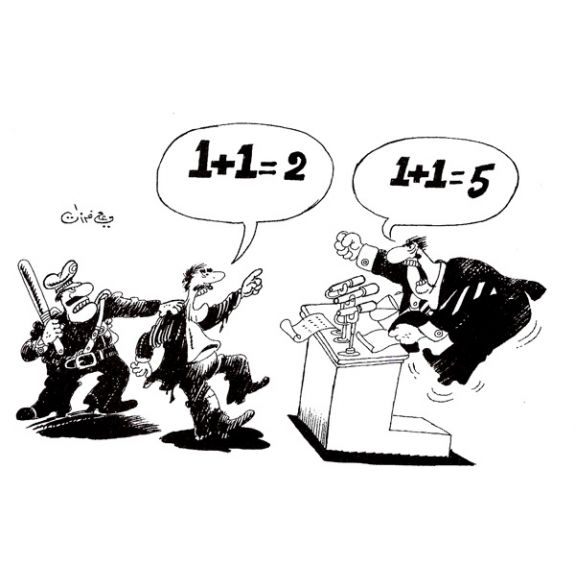
picture by Ali Farzat
By last Friday, if it hadn’t already done so, the Syrian regime effectively declared war on its own people, killing at least a hundred protestors. Throughout this week parts of Syria have fallen under outright siege. The tanks and infantry which haven’t peeped across the occupied Golan since 1973 entered the southern city of Dara’a, cutting roads, telephone and internet, water and electricity. Reports from the city speak of food shortages, generalised terror, and corpses stinking in the streets. Snipers are firing at pedestrians in the Damascus suburb of Douma. Tanks surround the coastal city of Banyas. Madaya, a mountain town on the Lebanese border, is also occupied. The regime may wish to stop weapons being smuggled across the border, or it may wish to stop Syrians fleeing via the smuggling routes. Thousands have crossed to Lebanon in recent days, and at least five hundred have been rounded into the regime’s torture chambers.
The violence has been massive, but also tactically applied. The sudden escalation is intended to shock the population into obedience. Yet live ammunition has not been used everywhere. Security forces have tried not to kill protesting Kurds in the north east, fearing that would trigger a genuine armed insurrection. Demonstrations in central Damascus have been dispersed with batons and tear gas rather than live fire. The regime doesn’t want to kill the sons of important businessmen, not yet at least.
You People
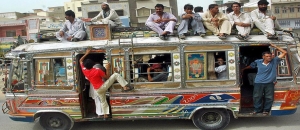 My contribution to the Journal of Postcolonial Writing’s Pakistan Special.
Seventeen years ago, as a very young man, I arrived in Karachi. Apart from six months in Beirut in my babyhood, this was my first time outside Europe. I didn’t know what to expect, although I had stereotypes from my British experience of what a Pakistani was (a Mirpuri, with brown skin and eyes, probably a cab driver).
The airport was spacious and anonymous, until the exit. Here tens of faces squashed against the glass doors, most of them cab drivers trying to make a personal connection. I was offered hashish in the cab, taken to an expensive hotel – which I refused – then to a hotel for cockroaches, but very cheap and very friendly. The man at the desk had black skin and blue eyes.
I liked Karachi. It was bustling, lively and engaging. The food was spicy and the weather was pleasantly hot. There appeared to be no social restraint on spontaneous conversation with strangers. It wasn’t Britain. I was pleased to find a word or two of Arabic helped greatly.
Easter Blood
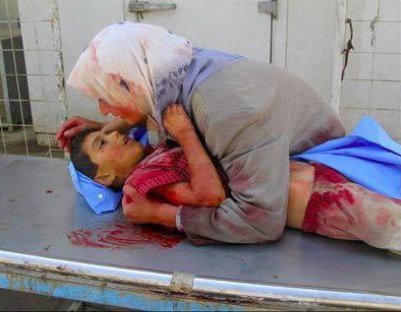 On Friday the saviour died for our sins
That we might live.
Dumuzi, on the blood river’s brink
Takes the plunge.
Israa Yunis, seven years old, takes the plunge
And the little boys of Dara’a whose skulls they smashed
The brave men of Jableh, the warm women of Bayda
The intellectuals, the street kids, the people of truth
Walk into the waves.
الجمعة العظيمة
بالأمس القريب رفع الرئيس بشار الأسد قانون الطوارىء, وحلّ محاكم أمن الدولة سيئة السمعة وسمح بالتظاهر السلمي. ولكن بعد صدور المرسوم الرئاسي تقدم أحد المحامين في الحسكة بطلب إذن لتظاهرة سلمية فاعتقلته قوات الأمن.
واليوم , يوم “الجمعة العظيمة” قامت مظاهرة ضخمة, سلمية وعزلاء في كل المناطق السورية. لجأ الجيش والشرطة والميليشيات إلى استخدام الذخيرة الحية والعصي الكهربائية والغاز المسيل للدموع ضد المتظاهرين. قٌتِل على الأقل 88 ابناً وابنة من أبناء السوريين, ومنعت قوى النظام بعض المصابين من تلقّي المساعدة الطبية اللازمة, بينما تمّ اعتقال مصابين آخرين من فوق أسرّتهم في المشفى. يمكن رؤية هذا
Four Points on Syria
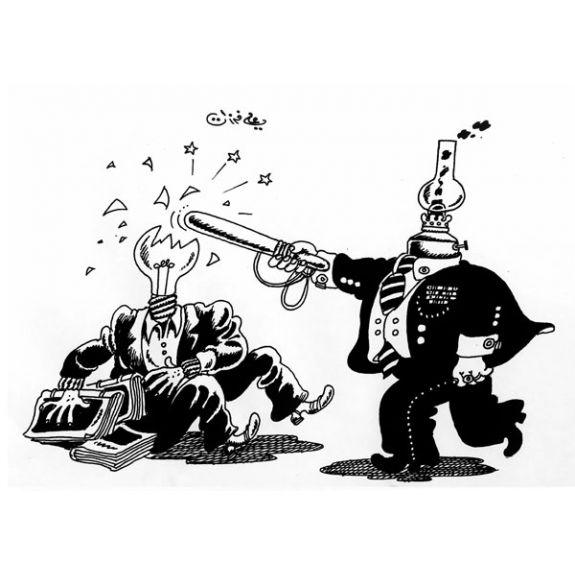
picture by Ali Farzat
1. Obama Should Shut Up
Obama’s claim that the Syrian regime is receiving Iranian assistance to repress protests is a statement which could inflame sectarian hatred inside Syria, as Obama’s Zionist advisors know very well. (This because Iran is Shia, a target of Saudi-Wahhabi propaganda, and the Syrian dictator is an Alawi, whereas the majority of Syrians are Sunnis). Obama gave no evidence to support his claim. The regime may be using Iranian bullets and tear gas. The Egyptian, Tunisian, and Libyan regimes have recently used American bullets and tear gas against their respective peoples. And America has offered its full support to the Saudi occupation of Bahrain and the Khalifa reign of terror there, which includes midnight arrests, extrajudicial executions, the destruction of Shia mosques, and assaults on hospitals and medical staff. The United States continues to assist the same dictatorships it has assisted for decades, and to function as the lifeline of the Zionist apartheid state. Obama’s statement could be a message to the Asad regime: if you distance Iran and the resistance, we will help you survive this crisis. But the Asad regime knows its only popularity arises from its support of resistance. Alternatively, Obama may have decided that Bashaar will fall, and the message is to the Syrian people, to encourage sectarian hatred amongst them and make it more difficult for them to build a stable, inclusive nation after the Asads capable of confronting the Zionist project.
Great Friday
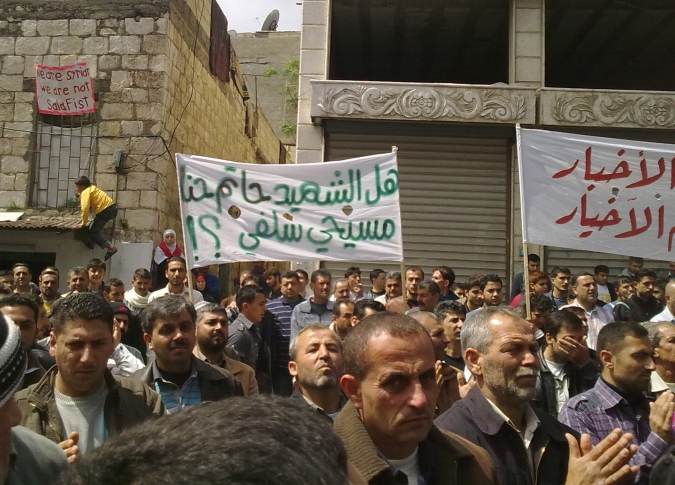
banner reads: was the martyr Hatem Hana, a Christian, also a Salafi?
Yesterday President Bashaar al-Asad lifted the Emergency Law, dissolved the notorious State Security Courts, and legalised peaceful protests.
After the president’s decree, a lawyer asked permission to hold a protest in Hasakeh. He was detained by security forces.
Today – ‘Great Friday’ – large, peaceful, unarmed protests were held in all regions of the country. Police, army and militia used tear gas, electric rods and live ammunition against the people. At least 88 sons and daughters of Syria were murdered. Regime forces prevented some of the wounded from receiving medical help. Other wounded have been arrested from their hospital beds. (Here are ugly scenes in Homs).
Damascus is under lockdown, mukhabarat clustering on every corner. Someone I know tried to cross the city today for entirely apolitical reasons. During the journey he was taken off the bus (with everyone else) and marched to a police station where he was questioned and his details recorded. But protests and gunfire still roared from the suburbs as far into the city’s heart as Meedan.
Words are one thing, actions another. The president’s words have no meaning at all.
Blankets, Dazzlement, Slander
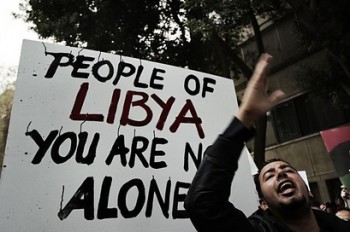 This was published at Ceasefire Magazine.
The anti-imperialist left, in the West at least, is painfully divided over the NATO-led intervention in Libya. On the one hand, such commentators as Paul Woodward, Gilbert Achcar, Phil Weiss, and me, believe the intervention is the least worst option, that there was no better alternative. On the other hand, John Pilger, Mahmoud Mamdani and many others, are wary of a new Iraq and oppose Western intervention on blanket principle.
Both positions are legitimate. Although I disagree in this case, I’m very pleased that the general gut response – if we must work by gut responses – is against intervention. But unfortunately a number of lesser figures, emotional oppositionists of the sort who qualmlessly rearrange reality to fit their personal agendas, have wilfully ignored facts on the Libyan ground, and even stooped so low as to slander the revolutionary Libyan people.
Some say NATO is interfering in a civil war, that Libya is split between east and west, that Tripoli stands firm with Qaddafi. These people fail to understand the overwhelming unpopularity of Qaddafi’s capricious regime. In the first days of the revolution, the regime lost control of most areas in the west as well as the east, including suburbs of Tripoli. Protestors marching on Green Square (or Martyrs Square) were driven back by machine gun and artillery fire. Qaddafi is currently keeping the capital quiet by mass arrests, rooftop snipers, and roving jeeps of weapon-wielding thugs.
Some people describe the free Libyans are mere ‘so-called’ rebels. If they were real freedom-fighters, these people argue, they’d be able to take over the country without foreign help. Their acceptance of intervention proves them to be CIA stooges, agents of imperialism, traitors.
Miss Dallal
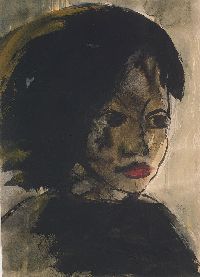
Emil Nolde: Portrait of a Young Girl
This story was published in today’s Guardian.
He filled up the tank before he left Kuwait City, filled it again at Qurriyat near the Saudi-Jordanian border. He stopped a couple of times for sandwiches and crisps, otherwise kept on driving through the flat desert with stereo playing and air conditioning humming. They waved him through the crossings after he’d waved his genuine Rolex and his heavy silver rings at them. Including border stops, the journey took eighteen hours. These days the world’s a small place, which is one of the Prophet’s Signs of the Hour – distances will disappear before the end comes.
Dusk was falling on Damascus when he arrived. Fumes rose from the minibuses and paraffin heaters and from people’s cigarettes and swirled up to meet the thickening night. Green lights and minarets shook on either side, and there were potholes in the asphalt. He didn’t bother checking into his hotel. He wanted to get straight to business.
He drove towards the mountain, through the centre of town. He followed a highway along the bed of a gorge. Here at last the barren melted against the power of potential fertility. A gurgling stream rushed beside the road, and there were trees and restaurants, sometimes dining rooms fatly bridging the water. He pulled in at a building more contemporary than the rest, a tall building fronted in metal and dark mirrors.
Two Syrians
Here are two slightly differing takes on accusations that the protests in Syria have an overly Sunni and anti-minority character. First, from someone in Damascus:
There are claims that the Ismailis weren’t part of these protests but actually al-Salamiya was one of the first towns in Syria to protest after Daraa, then other areas followed.
In Banias last Friday, the Sheikhs invited an Alawite speaker to address the protesters.
I find the word “Islamist” quite problematic. I mean, in Syria many are religious, but Islamists? what does that even mean? They want to impose an Islamic state? Doesn’t that mean that the Syrian people would be supportive of the Ikhwan’s ideology? What’s interesting is that many disapprove of the regime AND the Ikhwan’s ideology, so we’re talking about conservative Muslims not Islamists, conservative when it comes to their daily lives and when it comes to their daughters, but when we talk about Islamists, we’re talking about a political discourse that wants to turn Syria into an Islamic state, a discourse that we haven’t heard thus far in any of these protests, nor from Sheikhs of Banias, Douma and Homs, who addressed the president with a statement and clear demands.
As for the mosques thing, my friends go to mosques to protest there, waiting for Friday prayers to finish. My Alawite, Durz and Kurdish friends in Damascus, who are atheists, go to mosques because there is no other safe place to protest. Just today there were couple of protests in Damascus university trying to initiate something away from mosques. Which is something that we’re trying to do now. We’re talking about a country where a gathering of more than 8 people might be threatened, where sit-ins in front of embassies to support revolutions were violently dispersed. So people skeptical about protests following Friday prayers are not well aware of the situation in Syria, this is how it will start but it will soon change inshalla.
Who Will Survive in the End
By Nafissa Assed
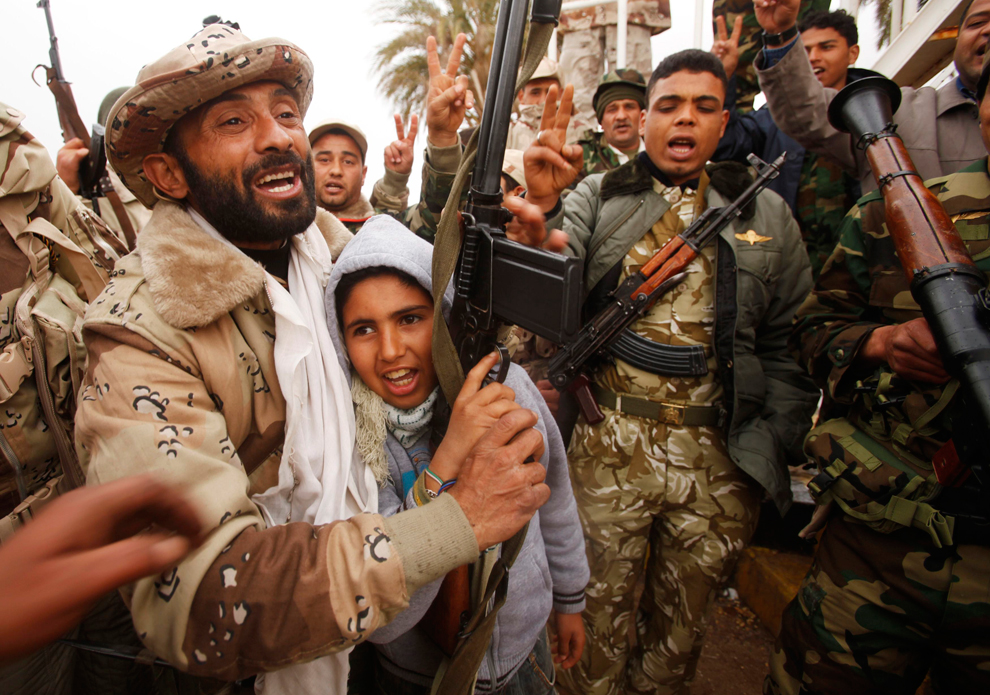
free Benghazi
As the 17th February commemorates the memory of the fallen victims of the Abu Salim prison massacre, when over 1200 prisoners were brutally executed, the 7th April is also known as one of those days that witnessed some of the worst abuses of human rights in Libyan history. On 7th April 1976, Qaddafi ordered the persecution and public execution of Libyan university students who were suspected of opposing the regime. The same month of the same year also commemorates Qaddafi’s physical liquidation campaign against Libyan dissidents inside and outside Libya.
Today I called a family member in Libya and she told me that the living conditions and the level of terror in Tripoli are indescribable. People go to the gas stations, wait for hours, and when their turn comes, they may be unlucky and find none left. There is no money in banks anymore. Every time she goes to the bank, they keep telling her the same thing: that there is no money. People barely go out, and what’s worse is that there are many elderly and babies who must receive weekly treatment in clinics. The critical living conditions of Tripoli are disrupting its economic life gravely, as Malta stopped a fuel ship on its way to west Libya, preventing it from making its delivery in accordance with the UN blockade.