Posts Tagged ‘Syria Prisons Museum’
Discussing the Missing in Damascus
It was a great honour to speak in the presence of the mothers and fathers of some of the hundreds of thousands of forcibly disappeared people in Syria. We were at the National Museum in Damascus, and I was presenting the Syria Prisons Museum’s research into Branch 215 of Assad’s Military Intelligence. Agnes Callamard, the head of Amnesty International, was speaking too, as was Zeina Shahla of the National Commission for the Missing; Wassil Hamada, who has worked on Sednaya and other prisons; and Reham Hassan, who lost two brothers to ISIS.
Al-Jumhuriya did this report on the event:
I urge everyone to visit the Branch 215 investigation on the website, where there is a virtual 3D tour of the two buildings in Kafr Souseh where the branch was located. Thousands of people were murdered at these locations. The Caesar photographs were taken here. The website also has riveting witness testimony. And everyone should read the investigation by Amer Matar called Branch 215: the Bureaucracy of Murder. It provides a detailed illustration of what Hannah Arendt called the banality of evil.
Documenting the Means of Murder
The Syria Prisons Museum has now launched with an event in the National Museum in Damascus, and as a website here. The first in-depth investigation, complete with 3D virtual tour, witness testimonies, and more, is on Sednaya Prison.
I wrote the following article for Time magazine about the purpose and methodology of the Syria Prisons Museum, and some of its findings.
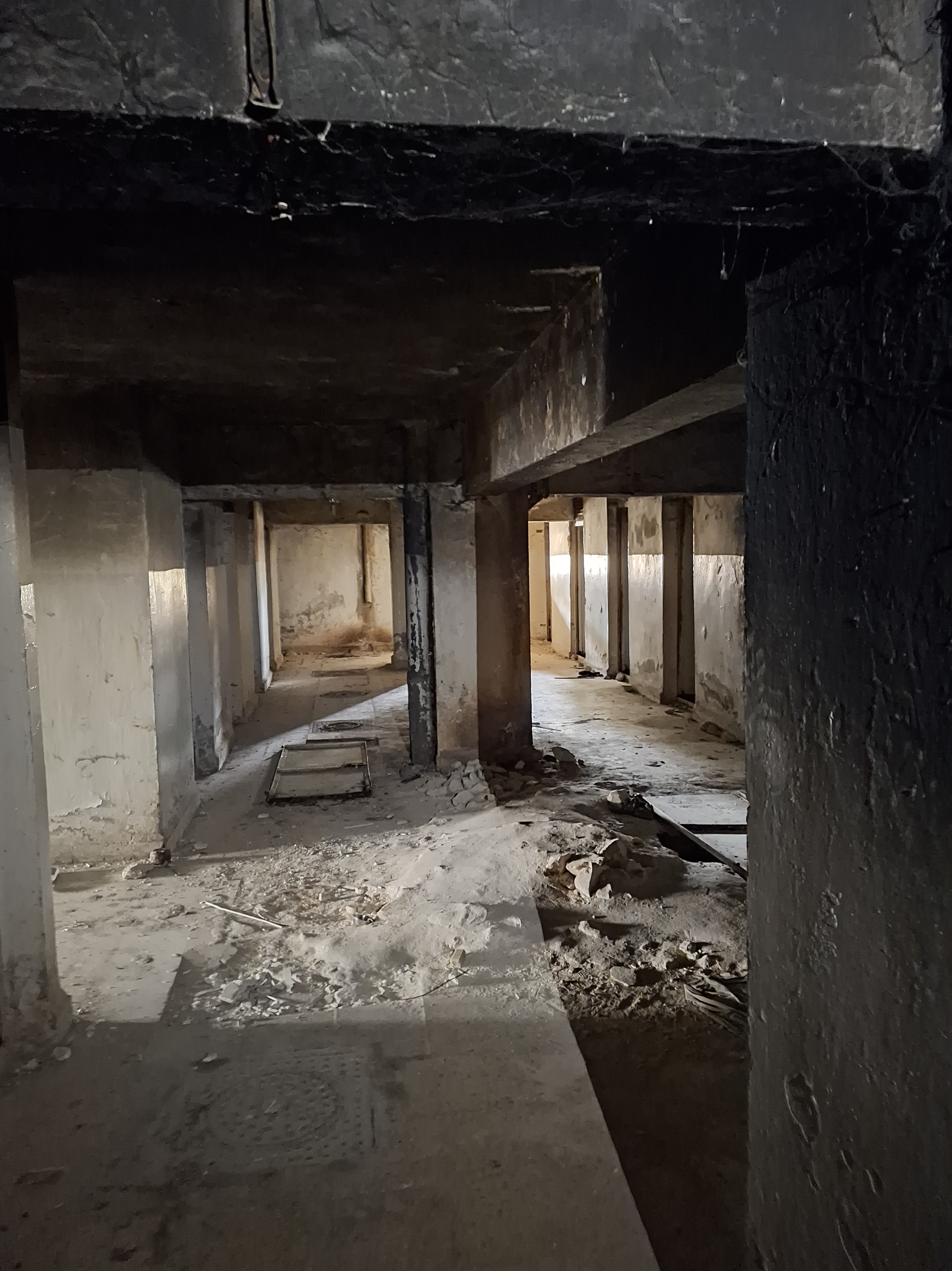
In Sednaya Prison, the names of those sentenced to death were called once a week. These men were removed from the group cells and chained together. They were usually held in designated cells for their last three days of life, during which time they were deprived of food and water. Apparently this made them die more easily, less messily. The killing itself was done on the ground floor, in the reception hall, using a gallows constructed of metal pipes which was large enough to dispatch several victims at once.
The victims were not criminals but political prisoners arrested for protesting, organizing or fighting against Syria’s Bashar al-Assad regime, which finally collapsed last December after 14 years of revolution and counter-revolutionary war. Sednaya Prison – otherwise known as ‘the human slaughterhouse’ – was the most notorious of the dozens of prisons run by the regime. Prisons had always been central to Assadist rule. From 1970 – when Bashar al-Assad’s father Hafez seized power in a military coup – a comprehensive system of surveillance, detention and torture terrified Syrians and turned the country into a “kingdom of silence”.
Syrians found their voices in 2011 when, in the context of the regional ‘Arab Spring’, they rose up against the regime. But they paid an enormous price. Assad responded by declaring war on the people. Iran and Russia sent troops and war planes to help him, while Turkey and Gulf states backed rebel militias. And as the cities burned, the prisons were transformed into death camps. The Syrian Network for Human Rights reported in August that at least 160,000 men and women remain unaccounted for after being forcibly disappeared by the Assad regime. Many of their corpses fill the mass graves which are still being uncovered today.
The result is the mass traumatisation of Syrian society. Recovery from such terrible crimes requires transparency, understanding, and at least a degree of justice. And the first step towards these aims is to clearly establish the facts of what happened. A Syrian-led organisation called the Prisons Museum is at the forefront of this effort. It brings together investigative journalism, human rights advocacy and cutting-edge technology to shed light on horrors which the perpetrators would prefer remain hidden. (I am the Museum’s English-language editor.)
The surviving prisoners in Sednaya Prison were liberated by rebel fighters and local civilians in the early hours of December 8 last year, as Bashar al-Assad fled to Moscow. A few days later, a Prisons Museum team entered the facility and began to document every room and object.
Read the rest of this entry »


 Qunfuz