The Blood Between Us
My new book The Blood Between Us: Syria After the Fall of Assad has now been published. It won’t be liked by those who want me to say that the new president (Ahmad al-Sharaa) was brought to power by Turkey, that his organisation is indistinguishable from ISIS, that he has normalised with Israel, or that he rubs his hands in glee when members of sectarian minorities are killed. Neither will it be liked by those who want me to say that the new government is transparent and accountable, that its manipulation of identity politics isn’t a problem, or that Syria’s revolutionary goals were achieved when the old regime collapsed. I hope the book will be appreciated, however, by those who want a nuanced treatment of the new era and the complex trauma inherited from the past, and who want to hear a range of Syrian voices and perspectives.
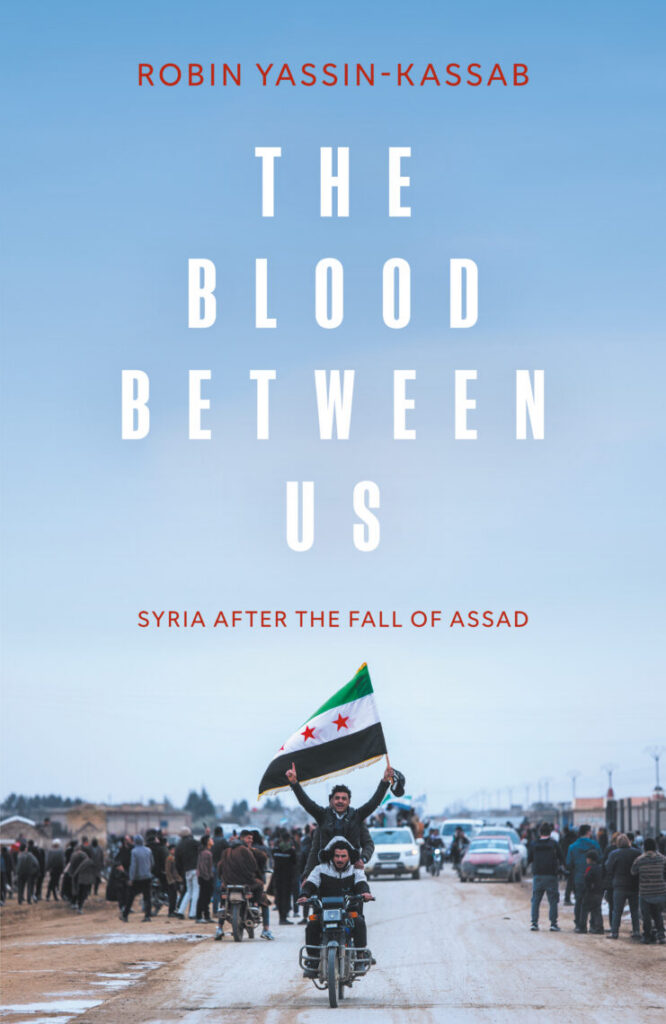
‘The Blood Between Us’ refers to the bad blood between authoritarian Islamists and civil revolutionaries, and between revolutionaries and Assadists, and between sects, ethnicities, villages, even branches of the same family, after over half a century of oppression and fourteen years of total war. How to put the wounded country back together? The book mixes reportage, analysis, and personal reflection with lots of interviews. It focuses on the liberation itself, the new rulers, transitional justice, prisons, sectarian violence in the northwest and in Suwayda, the complex physical and ideological battles in the northeast, identity politics and opposition, the economy, and the roles of foreign states.
The book also gives a sense of the emotions experienced during the first year of the new Syria: the euphoria of the final eleven-day offensive that toppled Assad, almost without civilian casualties; the horror of sectarian massacres in March and July 2025; disappointment as, for instance, the National Dialogue turned out to be not much of a dialogue at all; bubbling frustration with the slow and flawed transitional justice process; and the ongoing enthusiasm that brings refugees back to the country, even when they have no homes to return to.
The book captures a crucial moment in the history of a state at the centre of global events, in the aftermath of a revolution that was in many ways crushed, and that in other ways succeeded against all the odds.


 Qunfuz
Leave a comment