To Aleppo and Beyond
An edited version of this article was published at the New Statesman.
Today, for the first time in years, millions of Syrians can dare to hope. In only three days, rebel forces swept out of the north western corner of the country in which they had been crammed, into Aleppo city and beyond.
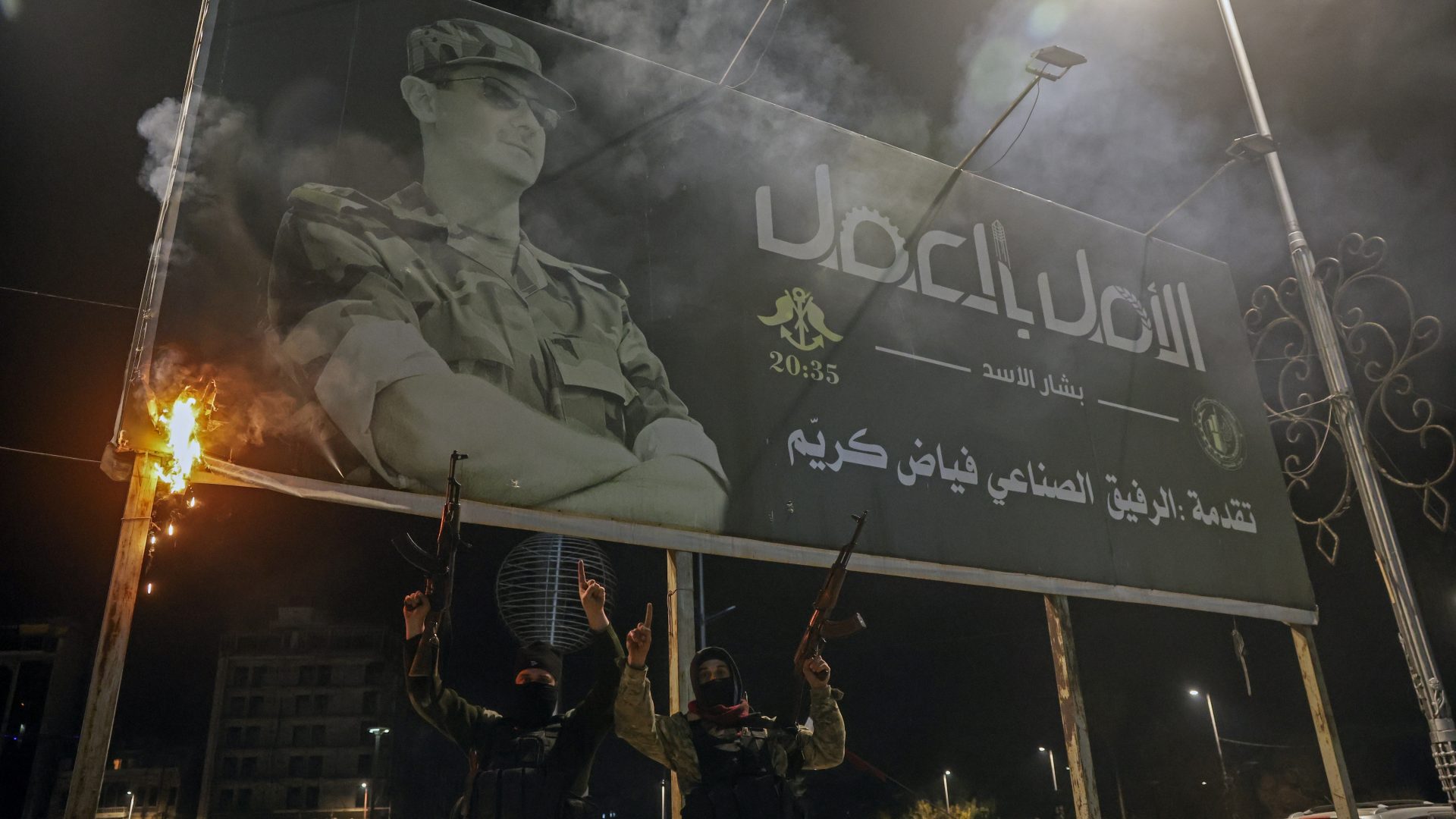
The dominant power in the rebel coalition is Hayat Tahrir al-Sham, a militia which began in 2011 as an offshoot of al-Qaida, but which has since purged its most extreme elements and greatly moderated. It’s still an authoritarian Islamist organisation, but is not at all ‘like ISIS’, as some are claiming. It doesn’t field a ‘religious police’ to interfere in people’s private lives, and it has a far more tolerant approach to religious minorities and dissent than ISIS. It isn’t popular with the people it rules – at least it wasn’t until four days ago when the offensive was launched. People have protested against its authoritarianism for months. Unlike the Assad regime, HTS has largely tolerated these protests. But even if people don’t like HTS, they do support the offensive. That’s because they wish to return to their homes from which Assad and his allies expelled them.
At first the offensive looked like a limited operation, perhaps agreed between Turkey and Russia to force Assad to negotiate. But as the regime lines collapsed and the rebels entered Aleppo, pushing Iran’s militias out and liberating prisoners from Assad’s dungeons, it soon became clear that events had slipped foreign control. This is primarily a Syrian drama, reflecting both rebel success and regime failure.
The rebel coalition contains unified military forces operating much more efficiently and professionally than ever before. Even more impressive than the military improvements on show is the obvious social progress. Rebel messaging to the multicultural inhabitants of Aleppo has stressed respect for the rights and lifestyles of all religions and sects, and so far this has been backed up in practice. Unveiled women walk the streets without harassment, and services are held in the churches. There have been no credible reports of violations whatsoever. The rebels have even set up a phone line through which citizens can report violations. It is important civil revolutionaries continue to hold the rebels to the high standards they seem to have set for themselves. It was a mistake, a decade ago, to turn a blind eye to the growing criminality of the armed men, which did so much damage to the revolutionary cause.
For now, very unusually, electricity is on in the whole city. Public buildings are guarded from looters. The rebels already look something like a government, in stark contrast to the regime – a narco-mafia (look up its Captagon trade) underpinned by local warlords and foreign imperialists.
But why is the regime collapsing this year rather than last? When Assad clawed back Aleppo from the revolution in 2016, 80 percent of his ground forces were foreign Shia militias organized by Iran, and his air force was Russian. Today, Iran’s regional militia system has been decimated by Israel, and Russia is preoccupied by its assault on Ukraine. In these conditions, the unsustainability of the Assad regime becomes glaringly apparent. The economy cratered years ago, largely as a result of the regime’s destruction of the national infrastructure and its expulsion of over half the country’s population. This means that even many of the hitherto loyalist communities are now desperate for change.
Enormous problems certainly lie ahead. Russian and Assadist revenge bombardment of civilian neighbourhoods is underway, and intensifying. It was such scorched earth tactics against liberated areas which caused a refugee crisis, and opened the way for ISIS, a decade ago
Rebel abuses may yet escalate. The Syrian National Army – remnants of the Free Syrian Army now under Turkish control – are more secular than the troops currently in control of Aleppo, but are also far less disciplined. Turkey belatedly gave them permission to move, but so far only in the Tel Rifaat area, which they liberated from a joint force of Assad troops and the Kurdish PYD. There are already reports of abuses and looting there.
At this stage, there is no democratic opposition ready to inherit control of the country. The hundreds of quasi-democratic revolutionary councils that once spanned liberated areas have been crushed, and most of the original civil activists are dead, imprisoned, or in exile. But if Assad falls, or at least if large areas of the country become safe from bombing, then millions of Syrians currently enduring existence in tents or the slums of neighbouring countries will be able to return. Then civil society, and democratic opposition, will begin to reconstitute itself.
What Syria needs now is a diverse but united national front. If other parts of Syria manage to expel Assadist forces, HTS and SNA influence will be diluted by people from other backgrounds and with other ideas. There are signs this may be happening. Armed residents in Daraa and Homs provinces have attacked regime installations, while the semi-autonomous Druze community in Sweida roundly rejected Assad over a year ago, and has been demonstrating daily in support of the revolution.
Western governments should give up the absurd idea that the regime which has murdered hundreds of thousands of Syrians will ever bring stability. They should do what they can to discourage Russian and Assadist bombardment, and they should accept Syrian self-determination. The western chattering classes, left as well as right, should resist the welter of Islamophobic and racist propaganda that Syrians are usually subjected to, and should seek to understand Syria on its own terms, not as an adjunct to other conflicts. More representative government in Syria, and in the wider Arab world, is in all of our interests.
Today, for the
first time in years, millions of Syrians can dare to hope. In only three days,
rebel forces swept out of the north western corner of the country in which they
had been crammed, into Aleppo city and beyond.The dominant power
in the rebel coalition is Hayat Tahrir al-Sham, a militia which began in 2011 as
an offshoot of al-Qaida, but which has since purged its most extreme elements
and greatly moderated. It’s still an authoritarian Islamist organisation, but is
not at all ‘like ISIS’, as some are claiming. It doesn’t field a ‘religious
police’ to interfere in people’s private lives, and it has a far more tolerant
approach to religious minorities and dissent than ISIS. It isn’t popular with
the people it rules – at least it wasn’t until four days ago when the offensive
was launched. People have protested against its authoritarianism for months.
Unlike the Assad regime, HTS has largely tolerated these protests. But even if
people don’t like HTS, they do support the offensive. That’s because they wish
to return to their homes from which Assad and his allies expelled them.At first the
offensive looked like a limited operation, perhaps agreed between Turkey and
Russia to force Assad to negotiate. But as the regime lines collapsed and the
rebels entered Aleppo, pushing Iran’s militias out and liberating prisoners
from Assad’s dungeons, it soon became clear that events had slipped foreign
control. This is primarily a Syrian drama, reflecting both rebel success and
regime failure.The rebel coalition
contains unified military forces operating much more efficiently and
professionally than ever before. Even more impressive than the military
improvements on show is the obvious social progress. Rebel messaging to the
multicultural inhabitants of Aleppo has stressed respect for the rights and
lifestyles of all religions and sects, and so far this has been backed up in
practice. Unveiled women walk the streets without harassment, and services are
held in the churches. There have been no credible reports of violations whatsoever.
The rebels have even set up a phone line through which citizens can report
violations. It is important civil revolutionaries continue to hold the rebels
to the high standards they seem to have set for themselves. It was a mistake, a
decade ago, to turn a blind eye to the growing criminality of the armed men,
which did so much damage to the revolutionary cause.For now, very
unusually, electricity is on in the whole city. Public buildings are guarded
from looters. The rebels already look something like a government, in stark
contrast to the regime – a narco-mafia (look up its Captagon trade) underpinned
by local warlords and foreign imperialists.But why is the
regime collapsing this year rather than last? When Assad clawed back Aleppo
from the revolution in 2016, 80 percent of his ground forces were foreign Shia
militias organized by Iran, and his air force was Russian. Today, Iran’s
regional militia system has been
decimated by Israel, and Russia is preoccupied by its assault on Ukraine. In
these conditions, the unsustainability of the Assad regime becomes glaringly
apparent. The economy cratered years ago, largely as a result of the regime’s
destruction of the national infrastructure and its expulsion of over half the country’s
population. This means that even many of the hitherto loyalist communities are
now desperate for change.Enormous problems
certainly lie ahead. Russian and Assadist revenge bombardment of civilian
neighbourhoods is underway, and intensifying. It was such scorched earth tactics
against liberated areas which caused a refugee crisis, and opened the way for
ISIS, a decade agoRebel abuses may
yet escalate. The Syrian National Army – remnants of the Free Syrian Army now
under Turkish control – are more secular than the troops currently in control
of Aleppo, but are also far less disciplined. Turkey belatedly gave them
permission to move, but so far only in the Tel Rifaat area, which they
liberated from a joint force of Assad troops and the Kurdish PYD. There are already
reports of abuses and looting there.At this stage,
there is no democratic opposition ready to inherit control of the country. The
hundreds of quasi-democratic revolutionary councils that once spanned liberated
areas have been crushed, and most of the original civil activists are dead,
imprisoned, or in exile. But if Assad falls, or at least if large areas of the
country become safe from bombing, then millions of Syrians currently enduring existence in tents or the slums of
neighbouring countries will be able to return. Then civil society, and
democratic opposition, will begin to reconstitute itself.What Syria needs
now is a diverse but united national front. If other parts of Syria manage to
expel Assadist forces, HTS and SNA influence will be diluted by people from
other backgrounds and with other ideas. There are signs this may be happening.
Armed residents in Daraa and Homs provinces have attacked regime installations,
while the semi-autonomous Druze community in Sweida roundly rejected Assad over
a year ago, and has been demonstrating daily in support of the revolution. Western governments
should give up the absurd idea that the regime which has murdered hundreds of
thousands of Syrians will ever bring stability. They should do what they can to
discourage Russian and Assadist bombardment, and they should accept Syrian
self-determination. The western chattering classes, left as well as right,
should resist the welter of Islamophobic and racist propaganda that Syrians are
usually subjected to, and should seek to understand Syria on its own terms, not
as an adjunct to other conflicts. More representative government in Syria, and
in the wider Arab world, is in all of our interests.



 Qunfuz
Leave a comment