Archive for the ‘book review’ Category
Sarmada

Fadi Azzam
A slightly shorter version of this review appeared in The Independent.
Places have moods, this novel reminds us. Sometimes Sarmada, a mountain village rising from the Hauran plain of southern Syria, is all “oblivion, dust and tedium”; at other times it’s a shimmering delight, each rock, tree, spring, cliff and cave owning rich meanings and histories. Sarmada is also “a Sheherazade”, a generator of tales, so many tales we can’t possibly hear them all. “I thought about telling her the joke about the overweight fortune-teller,” Azzam writes, “but..”
Like the Arabian Nights, “Sarmada” contains stories within a frame story. The frame and trigger is a meeting with Azza Tawfiq, an expert in chaos theory at the Sorbonne who (following the Druze tenet of transmigration) believes she lived in Sarmada in a past life as a murdered girl called Hela Mansour. Bemused, disbelieving, the narrator returns from “chasing dreams in Paris and delusions in Dubai” to excavate the village’s memories, at first on Azza’s behalf.
Aftermath
 The first issue of Critical Muslim, a quarterly magazine in book form co-edited by Ziauddin Sardar and me, will be in the shops in January. More on that at a later date. Today I’m finishing off a long essay on Syria, Iraq and sectarian hatred for Critical Muslim’s third issue. Amongst the books I review in the essay are Fanar Haddad’s indispensable “Sectarianism in Iraq” and Nir Rosen’s “Aftermath: Following the Bloodshed of America’s Wars in the Muslim World,” which is also indispensable, in a different way. As a taster, here’s the section on “Aftermath.”
For a mix of contextual analysis and gripping reportage, the reader will find no better book than Nir Rosen’s magisterial “Aftermath: Following the Bloodshed of America’s wars in the Muslim World”.
Most Western correspondents were flown into Iraq unable to speak Arabic, largely ignorant of the context, to pass their time attending coalition press briefings or embedded with the US military. Their reports were heavy with simplistic labels (‘the Sunni triangle’, for instance) and ignored non-sectarian nationalism and class issues. Rosen’s writing on Iraq is the polar opposite of such parachute journalism. He speaks Arabic for a start, and blends in physically as a result of the “melanin advantage” bequeathed by his Iranian father. More to the point, he is courageous and energetic, going where few outsiders would dare, whatever their skin tone. He’s a reporter of the best kind, capable of locating pattern behind the copious detail. So he doesn’t merely report the mosque sermons he attended, or his encounters with militiamen and their victims, but accurately interprets and reads between the lines. His descriptions of time, place and personality are vivid, with not an ounce of orientalism added. His lack of sentimentality combined with his obvious sympathy for the people of the region make him the perfect candidate to voyage into the sectarian heart of darkness.
Stranger Magic
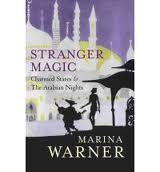 This review appeared in the Guardian.
The Arabian Nights (or the Thousand and One Nights, or the Arabian Nights Entertainments – there are so many versions) constitute, in Marina Warner’s words, “a polyvocal anthology of world myths, fables and fairytales.” The antecedents of these Arab-Islamic texts are Quranic, Biblical, Indian, Persian, Mesopotamian, Greek, Turkish and Egyptian. In them, oral and written traditions, poetry and prose, demotic folk tales and courtly high culture mutate and interpenetrate. In their long lifetime the Nights have influenced, amongst many others, Flaubert, Wilde, Marquez, Mahfouz, Elias Khoury, Douglas Fairbanks and the Ballets Russes.
The frame story, in which Shahrazad saves her life by telling King Shahryar tall tales, is only one such ransom. More than simple entertainment, then: throughout these stories within stories, and stories about stories, and stories metamorphosing like viruses, endlessly generative, narrative even claims for itself the power to defer death.
Although oral versions of the Nights had long percolated through Europe (elements turning up in Chaucer, Ariosto, Dante, Shakespeare), the tales were established in the mainstream of European popular and literary culture with Galland’s early 18th Century French translation. Galland purged the eroticism and homosexuality, added tales from the dictation of a Lebanese friend, and perhaps invented the two best-known and seemingly most ‘Arabian’ tales of all: Aladdin and the Magic Lamp and Ali Baba and the Forty Thieves.
Warner quotes Jorge Luis Borges (a guiding spirit in her book) approving the belle infidele approach to translation. “I think that the reader should enrich what he is reading. He should misunderstand the text; he should change it into something else.”
Our Lady of Alice Bhatti
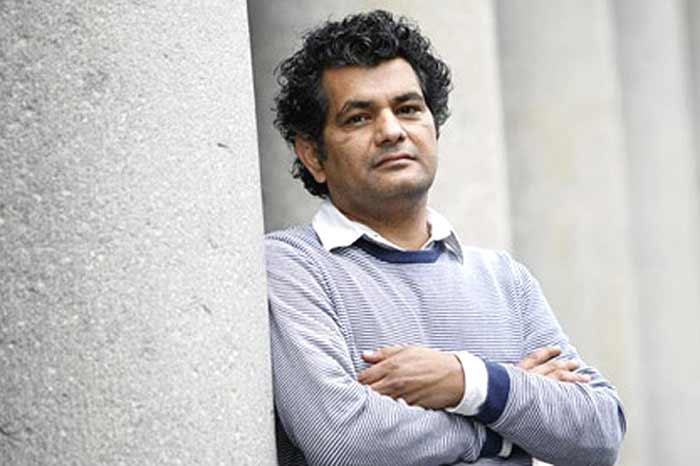 This review was written for the Guardian.
“These Muslas,” says Joseph Bhatti, father of Alice, “will make you clean their shit and then complain that you stink.” This is pretty close to the mark. Pakistan won’t forget the low-caste origins of most of its Christians, or ‘Choohras’, who constitute an ‘untouchable’ sweeper and maid class. In recent decades, with the rise of increasingly intolerant forms of Islam, the Choohra plight has worsened. Christians are victims of obscene ‘blasphemy’ laws and frequent sectarian violence. The outside world is often ignorant of the minority’s very existence.
How refreshing, therefore, that Mohammed Hanif, Booker-listed author of ‘A Case of Exploding Mangoes’ and perhaps Pakistan’s brightest English-language voice, has chosen to view his country through the eyes of a (lapsed) Christian – the eponymous Alice Bhatti, a hard-nosed, warm-hearted nurse, too beautiful for her own good, also nifty with a razor blade.
Her lover and foil is the ‘Musla’ Teddy Butt, a thigh-waxing, body-building, Mauser-packing lowlife. Teddy works unofficially for the Gentlemen’s Squad, a police unit somewhat darker than the Keystone Cops staffed by partially reformed rapists, torturers and sharpshooters.
Lyrics Alley
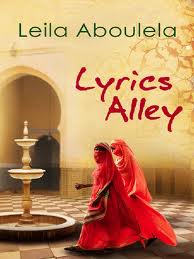 This review of Leila Aboulela’s novel was published in the excellent Wasafiri magazine.
It’s the mid twentieth century, as British control over north east Africa fails. Sudanese cotton tycoon Mahmoud Abuzeid, awarded the title Bey by Egypt’s King Farouk, is pulled between his two wives.
“They belonged to different sides of the saraya, to different sides of him. He was the only one to negotiate between these two worlds, to glide between them, to come back and forth at will.”
The two wives share a compound. Sudanese Waheeba in her hoash – a traditional living space half open to the air – represents “decay and ignorance…the stagnant past” to gregarious, multi-lingual Mahmoud. Egyptian Nabilah, much younger, better educated, attempts to recreate Cairo in her Italian-furnished modern salon. She represents “the glitter of the future..sophistication.” But events question such easy distinctions.
Tablet and Pen
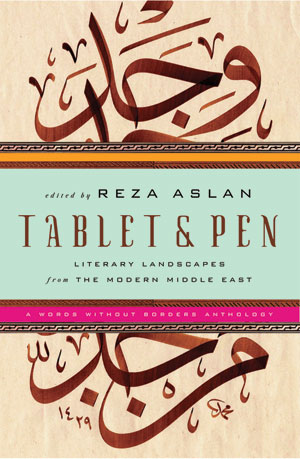 This review appeared in today’s Financial Times.
In his introduction to “Tablet and Pen – Literary Landscapes from the Modern Middle East”, Reza Aslan correctly argues that “from ‘the civilising mission’ to ‘the clash of civilisations’” the West has read the East primarily through a security prism, as something to be managed and contained. Apart from a couple of Nobel winners, an Egyptian feminist, and Sayyid Qutb, the region’s writing – and therefore the human dimension – is absent from our calculations.
With Saidean distaste for grand orientalist categories, Aslan argues the literatures grouped here are linked by themes of “imperialism, colonialism and Western cultural hegemony.” A straightforward civilisational definition might have been more logical; African, Indian and Caribbean writing has engaged the same preoccupations. But we know what Aslan means: these 20th Century poems, short stories, novel extracts and essays come from Pakistan, Iran, Turkey and the Arab world, the old Islamic heartland connected by common experience and similar cultural references.
The presence of the anthologiser is felt throughout – pleasantly so: Aslan’s introductions and chronologies give historical structure and social context to the pieces, and succeed in making this “not an anthology to be tasted in disparate bits but rather a single sustained narrative to be consumed as a whole.” It’s a weighty and physically beautiful book which is also compulsively readable.
Breaking Knees
Zakaria Tamer’s “Breaking Knees” tugs us rushing straight into the Big Topics: religion, politics, sex and death. It deals with imprisonment, literal and figurative, its characters entrapped in unhappy marriages and by their personal inadequacies, ignorances and fears, as well as by dictatorship, bureaucracy and corrupt tradition. It sounds grim, but “Breaking Knees” is a very funny book.
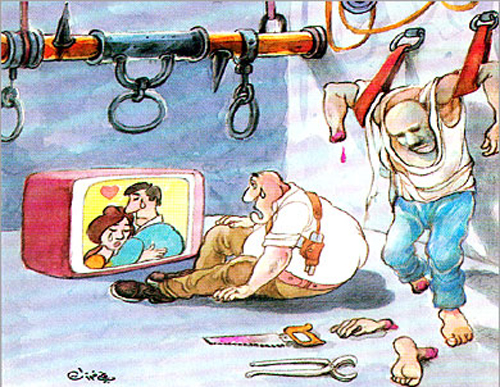
by Ali Farzat
Tamer is a well-known Syrian journalist and writer of children’s books. His literary reputation, however, rests on his development of the very short story (in Arabic, al-qissa al-qasira jiddan), of which there are 63 here. Each is a complex situational study, a flash of life or nightmare, each with at least one beginning, middle and end. Some are as clear as day; some are seriously puzzling. Some are no more than extended, taboo-breaking jokes.
It’s certainly satire. Tamer uses an elegant, euphemistic language (referring, for instance, to “that which men have, but not women”) to tell some very plain tales. Delicious irony abounds. In bed an adulterous woman begs her lover “not to soil the purity of her ablutions.” In the street afterwards she frowns at a woman without a headscarf and says “in a voice full of sadness that immoral behaviour had become widespread.”
Sabriya
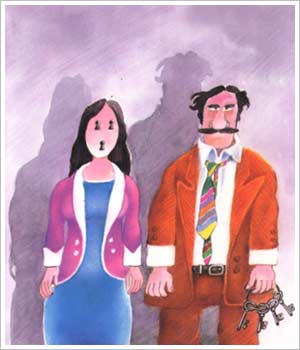
by Ali Farzat
It’s Damascus: bustling alleyways and courtyards crammed with silence. Sabriya is secretly in love with Adil. Her brother Sami is secretly in love with Nermin. Both loves are chaste and built on idealism, and both are doomed. Adil and Sami join the 1925-27 revolt against the French occupation. Sami is killed by the enemy. Nermine is badgered into marrying a wealthy old man, then ends up eloping with her hairdresser. Sabriya’s fiance Adil is killed, probably by Sabriya’s bullying brother Raghib who doesn’t like the idea of her marrying a baker’s son. Sabriya is left alone to care for her dying mother, then her dying father. Finally she kills herself, leaving her journal for her niece to read, and a message: “Do not let your life be in vain.”
“Sabriya: Damascus Bitter Sweet” (in Arabic, “Dimashq Ya Basmat al-Huzn”, or “Damascus, O Smile of Sadness”) was published in Syria and then transformed into a controversial and wildly popular muselsel, or television series. (If the Egyptians are famous in the Arab world for films, the Syrians do muselselat, particularly period dramas). This elegantly-written, carefully-dramatised period novel is nostalgic but also very current in its concerns.
Ulfat Idilbi explicitly links the struggles for national rights and women’s rights. When Sabriya participates (wearing niqab) in a women’s demonstration against the French, she says: “For the first time I felt I was a human being with an identity and an objective, in defence of which I was ready to die.”
Ours Are The Streets
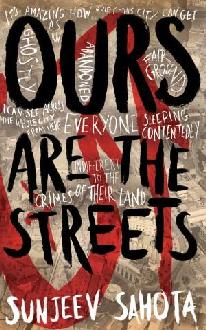 This review was written for the Guardian.
Here’s another suicide bomber novel. We’ve had Amis and Updike’s uninformed attempts, plus variations on the theme from Sebastian Faulks. This time, though not of Muslim background, our author is a British-Asian and he does have some important insights on the anguished inbetweenness suffered by so many second-generation immigrants, which in some rare cases may constitute part of the psychological background to political radicalisation.
As a study of migrants, the frustrated ambition of the first generation and the generalised alienation of the second (from the ‘home country’ as much as from ‘home’) – this could as well be titled ‘Ours Are Not The Streets’ – the novel is very successful.
People of a variety of backgrounds will recognise the complex allegiances of Imtiaz, the chief protagonist, who “felt fine rooting for Liverpool, in a quiet way, but not England” and who finds himself “defending Muslims against whites and whites against Muslims.” Everybody will appreciate Suhota’s deft treatment of the generation gap. Imtiaz’s repeated ‘why can’t you be normal?’ is a common adolescent interrogation, but one which becomes more acute in an immigrant household. Suhota is very good at dramatising children’s rankling shame at their migrant parents’ submission to humiliation. Imtiaz’s father’s silence as a passenger pisses in the back of his cab, or when a member of a hen party demands he grope her breasts, and Imtiaz’s squirming response to the silence, are excrutiatingly well written.
Imtiaz is really very British. He stands up to his parents and marries Becka, his pregnant white girlfriend, who happily converts to Islam and moves into the family home. They have a daughter, Noor. Imtiaz, not assimilated but reasonably comfortably integrated, seems to have it all.
The Awakening According to Antonius
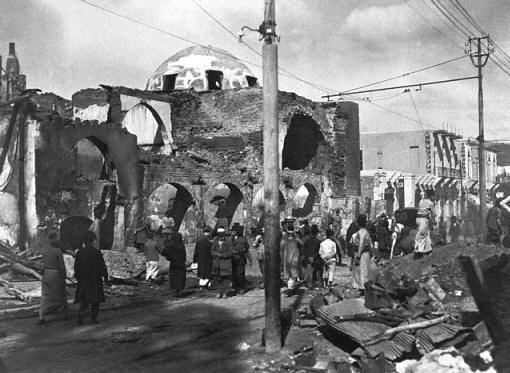
Damascus after French Bombardment, 1925
Originally published at the Muslim Institute.
I never managed to finish T.E. Lawrence’s vastly overrated “Seven Pillars of Wisdom”. It’s a poorly written, narrowly partial and self-dramatising account of the Arab Revolt against Turkish rule during World War One, as poor a rendering of history as one would expect from Lawrence, with his poor Arabic, poor knowledge of the Arab nationalist movement, and his strange belief that he could pass as an Arab, despite his blond hair and stumbling speech.I got as far as his description of the Syrians as “an ape-like race.”
A far, far better book on early Arab nationalism is George Antonius’s “The Arab Awakening,” which covers the period from Muhammad Ali’s brief unification of Egypt and Syria in the 1830s to the struggle for Palestine in the 1930s.
Writing in 1938, Antonius is much too optimistic about the Saudi takeover of Asir, the Shammari lands and the holy cities in the Hejaz. “It re-established the ascendancy of Moslem ethics and Arab traditions,” he says, paying only slight attention to the massacres and cultural vandalism which attended the Sauds’ arrival. Antonius didn’t forsee the immense power that oil wealth and the client relationship with America would bring, and he incorrectly expected that Wahhabism would moderate through contact with the world.
But that’s my only quibble. He’s excellent on events in the northern Arab countries and on the linguistic and cultural origins of Arabism. He notes the interesting role of American Protestant missions in re-establishing the study of Arabic and its literature, and the key part played by Arab Christians in the burgeoning movement.
An Animal of Colossal Proportions
 This review first appeared at the new Muslim Institute website (worth watching)..
These days it seems that almost everyone sees the apocalypse bearing down. This is the age of Kali Yag and the oncoming rapture, the arrival of the triumphant Mehdi, of catastrophic climate change and resource shortage. This is the age in which Beduin compete to build the taller towers, in which fog appears above cities as a sign of their evil.
‘2666’ is a vast apocalypse-in-motion novel set in the 1990s. It was written by a poet who turned to novel writing in his forties only in order to support his young family. He died at 50.
Roberto Bolano wrote ‘2666’ in five books. Before he died he asked that each book be published separately, because he believed that would leave more cash for his loved ones. His publishers decided to ignore this directive, for each book feeds thematically and by plot tangent into the others. The novel has a cumulative, total effect.
The first book – effortlessly cosmopolitan, densely detailed, persistently digressive – centres on a menage a trois between three European academics who also share an obsession with a reclusive German writer called Archimboldi. When a British-Pakistani cab driver expresses his outrage at the academics’ unorthodox relationship, the two men of the trio beat him to a pulp. Afterwards, “they were convinced that it was the Pakistani who was the real reactionary and misogynist, the violent one, the intolerant and offensive one, that the Pakistani had asked for it a thousand times over.” Almost in passing, the episode diagnoses a very contemporary European disease, but also contributes to some of the novel’s central themes, of violence, anonymity, senselessness and the failure of imagination.
A Short Border Handbook
 I met Gazmend Kapllani, a Greek of Albanian origin, during a recent visit to Germany (for a British Council ‘Our Shared Europe’ conference). He’s a great conversationalist, so I was pleased when he promised to send me one of his books. A Short Border Handbook arrived this morning. I took it back to bed, planning to read the blurb and perhaps the first chapter before adding it to my enormous pile of books-to-be-read. But I read the whole thing in one go.
It’s not a novel but it feels like one, because it’s so lightly yet densely written, full of stories and humour and therefore with a texture more human than journalistic. Part autobiography, part fiction, part philosophy, Kapllani’s book reminds us that a migrant, unlike a tourist, is the weak pole in relation to his host society, and that the weak are never respected, however hard they work. The Handbook’s general ruminations are applicable to any migrant, but it also addresses very specifically the conditions in Albania in the 1990s which forced so many people to move.
It has the following to say about Enver Hoxha. Examples of other fallen dictators will leap into readers’ minds:
Epilogue on Tony Benn
Me chewing the fat with Ken Livingstone and Nadifa Mohamed.
more after the break..
A History of Significant Moments
 How many Britons are aware of the British-Iraq war of May 1941? Not many. Yet such past wars are the producers of today’s reality. People in Iraq remember. If Westerners don’t remember the past they will inevitably fail to understand the present moment.
The urge to remind the reader so as to better contextualise the present is the laudable motive energising Eugene Rogan’s “The Arabs. A History,” which covers the last five hundred years.
The history starts in 1516 with the Ottoman defeat of the Mamluk slave-elite, the regime which in previous centuries had repelled Mongols and Crusaders from the Arab heartlands. The Mamluks weren’t Arabs, but they’d ruled from Arab capitals. Now power moved to Istanbul, which makes the moment a good place to begin. From the 1516 collapse in Cairo until the present day, many key decisions governing Arab life have been made in foreign cities. Rogan calls the process “the cycle of subordination to other people’s rules.”
In the early years, Ottoman rule “in the Arab provinces was marked by great diversity and extensive autonomy.” Sulayman’s perspicacious laws, public building projects and reasonable prosperity followed. But the global centre of gravity was shifting, and the long decline set in.
Beware of Small States
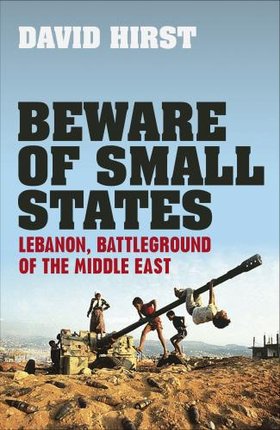 The chaos of Lebanon has thrown up an Arab horror parallelled only in post-invasion Iraq. It has also produced the Arab world’s most urgent intellectual life, and its first victory against Israel. Lebanon is the most contradictory of countries, “a more open, liberal and democratic society than any of its Arab neighbours” precisely because of “its vulnerability to domestic dissension.” So, with its seventeen sects and constantly shifting allegiances, who would dare to explain Lebanon?
No better candidate than David Hirst, whose 1977 book “The Gun and the Olive Branch” was one of the very first to sympathetically present the Palestinian plight in English. Hirst’s latest work “Beware of Small States” is a panoramic study of Lebanon’s difficult history which strikes exactly the right balance between close detail and broad interpretative sweep. The writing is precise, penetrative and elegant. For sober, logical analysis, “Beware of Small States” outstrips Robert Fisk’s “Pity the Nation.”


 Qunfuz