Archive for the ‘Syria’ Category
Newsnight
Here’s a Youtube recording of a full BBC Newsnight episode on Syria, in which I participated. The debate was about serious help for the resistance. The help isn’t coming.
Politics not Theology
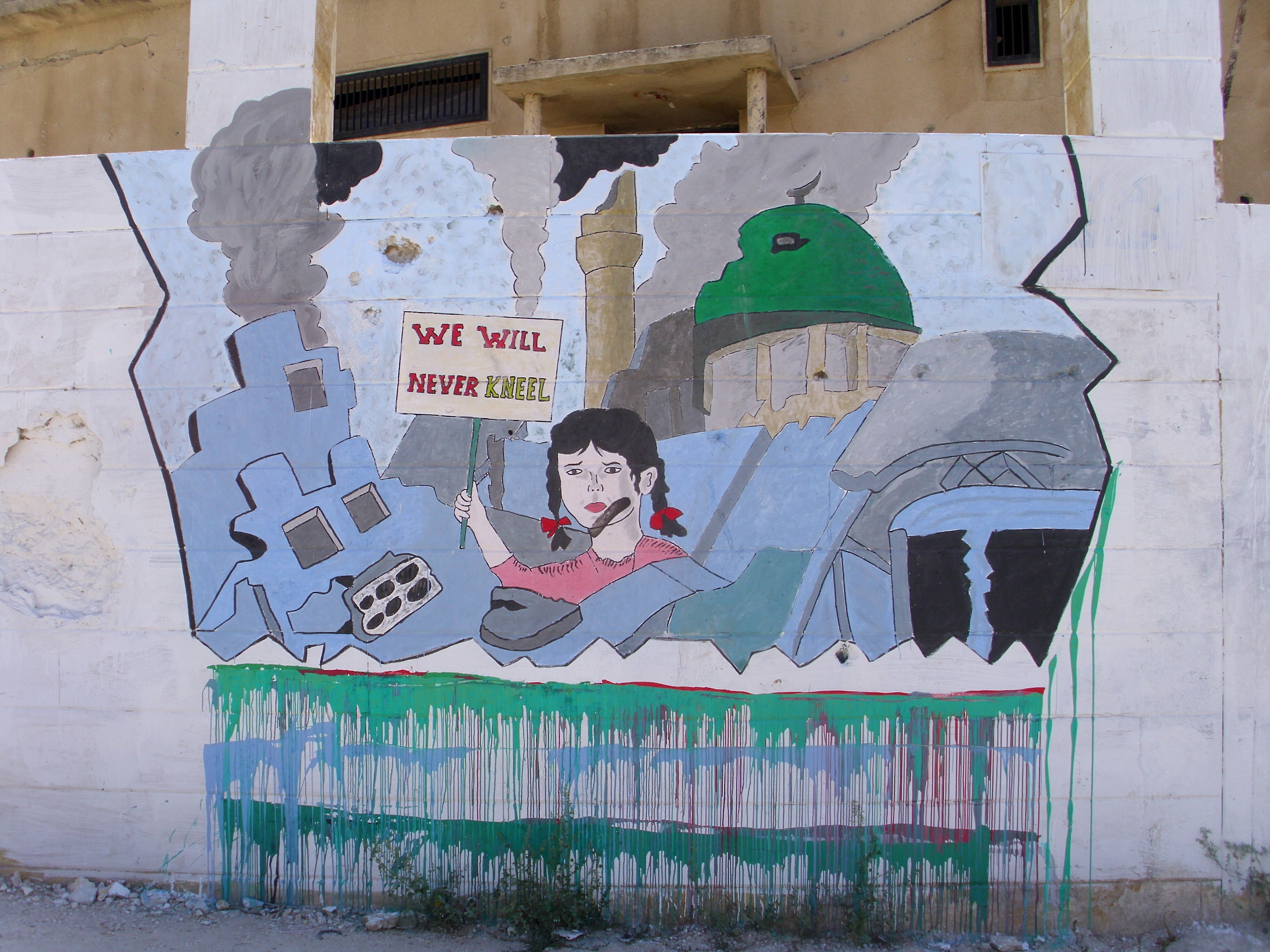 This was published by the National.
I live in Scotland, where I am witness to the continuing legacy of Protestant-Catholic communal hatred, despite the theological indifference and general irreligiosity of the populace.
The hatred is most commonly activated by the Rangers-Celtic football game. (In his great novel “Kieron Smith, Boy”, James Kelman brings it viscerally alive through the mouth of a Glaswegian child.) It is manifest too in Orange Order marches and schoolyard slurs. It intersects with the gang violence of the ‘schemes’. Most of the time, of course, it’s absent, or it emerges as friendly competitiveness rather than actual conflict, but you can bet your last communion wafer that it would blossom into something much fiercer if, in the event of political crisis, a divide-and-rule tyrant were to send Catholic militia in to pacify restive Protestant areas, or vice versa.
Like Scotland’s sectarians, Syria’s Alawis are usually largely secular and ignorant of their own theology (at least they were – a war-driven religious revival is touching them as well as the Sunnis). Over the last four decades Alawi religious scholars have been assassinated or otherwise silenced by the Assad regime as it sought to render the community entirely dependent on the Ba‘athist state. Most Alawis (by no means all) continue to support Assad because they have no other community leadership. Add to this that many have relatives working in the security forces, and so fear a loss of privileges and even violent revenge when the regime falls. Alawis also remember their historical marginalisation by the Sunni majority, and therefore fear majority rule.
As in Iraq, Palestine-Israel, or Northern Ireland, the conflict in Syria is not about theology but about group fears and resentments. Ultimately, it’s about power. Communal tensions are the result not of ancient enmities but of contemporary political machinations. And nothing is fixed in time. Syria’s supposedly ‘Sunni rebellion’ (which contains activists and fighters of all sects) becomes more or less Islamist in response to rapidly-changing political realities. A few months ago, for example, Islamist black flags dominated demonstrations in Raqqa, in the east of the country; now Raqqa’s demonstrations are as likely to protest Jabhat an-Nusra, the extremist militia which nominally controls the city, as the regime. This isn’t an Islamist rebellion but a popular revolution. As in Egypt, if the Islamists oppress the people or fail to deliver, they too will be revolted against.
China Radio International
Follow this link to hear me and Stephen Zunes discussing the situation in Syria on China Radio International. (Due to a timezone confusion, I was asleep until two minutes before this hour-long broadcast, which took place between 3 and 4 in the morning, my time.)
Burning the Mosques
The Umawi mosque in Aleppo has burnt. Its thousand-year-old minaret has fallen. The minaret of Dera‘a’s Omari mosque, built in the seventh Century by Caliph Omar ibn al-Khattab, has been destroyed. And today the Khalid ibn al-Waleed mosque in Homs, built around the mausoleum of the famous Muslim general and companion of the Prophet, was shelled and burnt. These are ancient mosques of enormous significance to Muslims, and they are world heritage. They were. They survived the Mongols, but not Assad.
It’s clear the Western media does not understand the religious, cultural and historical importance of these sites. Assad’s cultural vandalism and civilisational provocations are worse than the Taliban’s assault on the Bamiyan Buddha. Am I wrong to think that an attack by rogue elements of the Syrian resistance on a major Shia shrine would raise a far greater noise?
Many Muslims too are strangely quiet. If the Israelis were to hit a mosque of such vast symbolic resonance, you can bet there’d be furious demonstrations from Casablanca to Jakarta, from London to Lahore.
What’s happening is no secret. The shabeeha write it on the walls: “Al-Assad or We’ll Burn the Country.” The world worries about Islamists, about hypothetical future persecutions, about the chess game between America and Russia, Israel and Iran. Meanwhile the country burns. The people and their history burn. And the flammable poison of sectarian hatred seeps out from Syria, to east and west.
Help the Syrian People
People are asking me how they can help the victims of the genocidal repression in Syria. Those who engage in political debate can struggle against the orientalist, Islamophobic, or statist-ideological misinterpretations of the media which have obscured the reality of the revolution and convinced large swathes of public opinion that the Syrians should be left to face Assad’s war machine unarmed. Those who don’t do politics, or who are honestly confused about the rights and wrongs of the crisis, can donate money.
I have worked with three charities on Syria. I can vouch that all three are honest and efficient, run by intelligent people, and that they do immediate work on the ground in Syria helping displaced people and those holding out in their bombed towns and villages. Syria Relief is UK-based. The Karam Foundation and the Maram Foundation are US-based. I’m sure all three can receive donations from anywhere in the world. Please remember that the Syrian tragedy is unsurpassed in contemporary history, worse than the Iraqi crisis in 2006/2007. The daily death toll is equally high; the numbers of displaced – well over a quarter of the country’s population – are much higher.
Soriyat for Humanity Development is a great project which I saw at work on the ground. It was set up by novelist and revolutionary Samar Yazbek, and is based in Paris. To donate:RIB de la banque LA BANQUE POSTAL. ASSOCIATION SORYAT POUR LE DEVELOPPMENT HUMANITAIRE – NATIONAL 20041-00001-5773792S020-25 – INTERNATIONAL IBAN FR30-2004-1000-0157-7379-2S02-025. CODE BANCK PSSTFRPPPAR
Here’s a short film on the work of Camp Zeitouna, a project of the Karam and Maram Foundations.
On the Fall of Qusair
I participated in BBC World’s “World Have Your Say” to discuss the fall of Qusair and the spread of sectarian war as Hizbullah invades Syria in force. Sara Assaf, Kenan Rehmani and Elizabeth Tsurkov also contribute.
Pictures from Syria
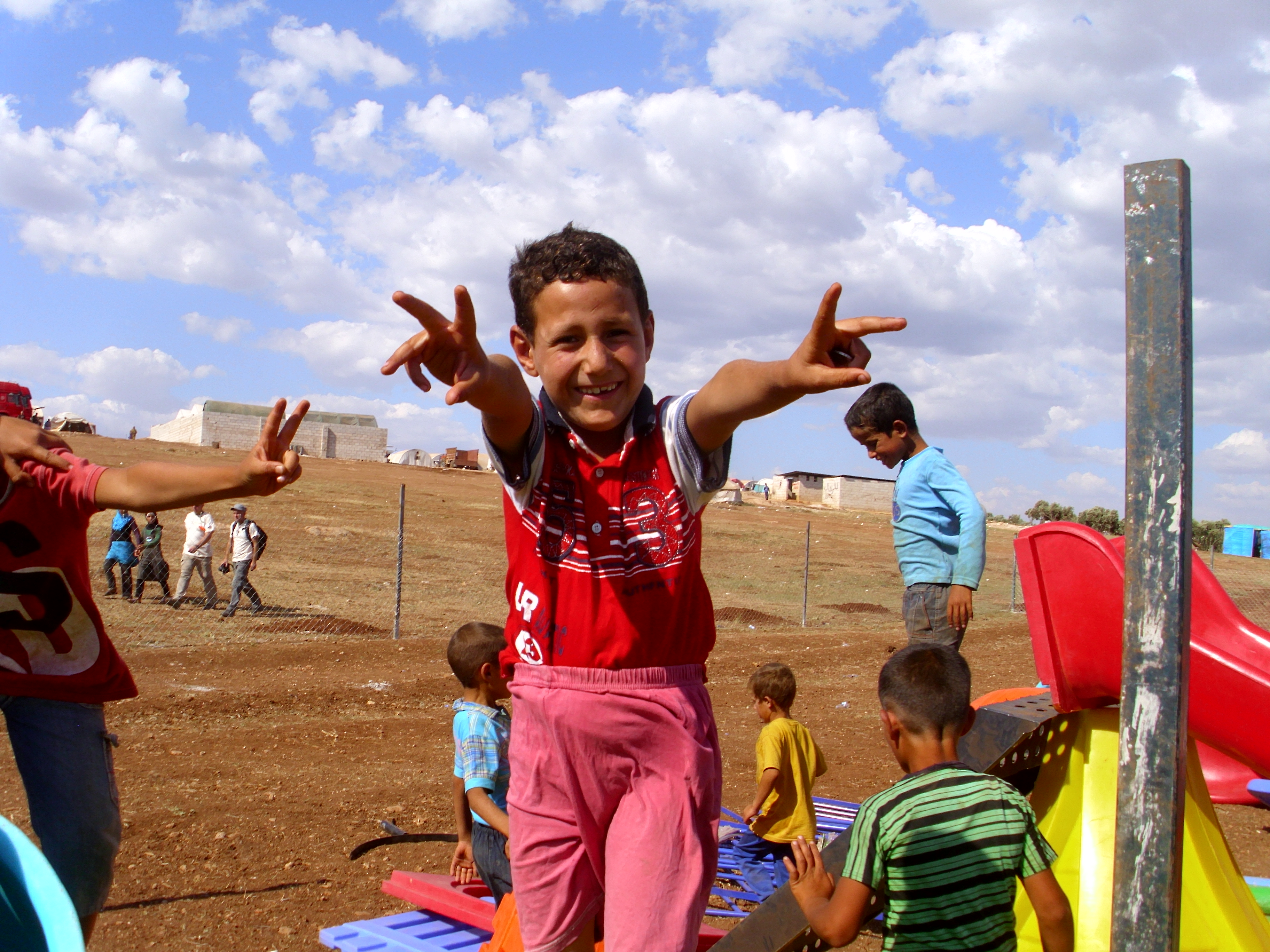 I’ve just returned from a trip to Syria, which I’ll be writing about. In the meantime, please follow this link to see some photographs, with comments.
Immediate Responses to Israel’s Attack
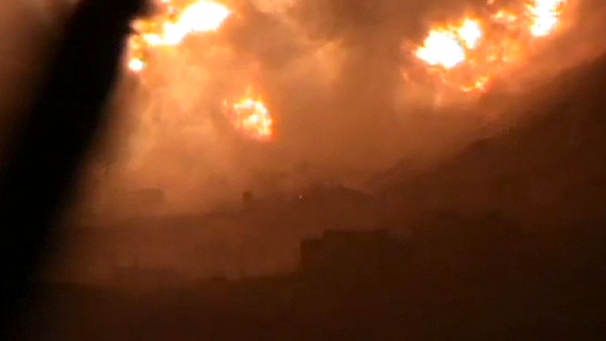 Israel’s attack on Assad’s military bases on Mount Qassioun above Damascus have provoked mixed feelings amongst Syrians. On the one hand, Syrians have been well aware for over two years that Assad’s army is designed not to confront Zionism but to slaughter the Syrian people. For a year and a half Mount Qassioun has been the launching pad for for artillery and missile attacks on civilian areas of Damascus and its suburbs. On the other hand, hatred and mistrust of Israel rightly runs very deep indeed among the people, far deeper than among the regime which, despite all its rhetoric, has not once (since 1973) responded to Israeli violations of Syrian sovereignty. Syrians know that Israel’s attack is an attempt to exploit the revolutionary situation for Israel’s own ends, that it is part of Israel’s confrontation with Iran – something Syrians want no part of, however much they may hate Iran’s criminal support of the genocidal Assad regime – and that it offers grist to Assad’s propaganda mill.
Here are some immediate responses to Israel’s attack. The Syrian National Coalition released this statement, including this line: “The Coalition holds the Assad regime fully responsible for weakening the Syrian Army by exhausting its forces in a losing battle against the Syrian people.” Many Arabic language Youtube videos show various Free Army and Salafist militias condemning both Israel and Assad’s regime.
I wrote this on Facebook:
Assad responds to the Israeli attack by escalating his sectarian massacres on the coast and his bombardment of Syrian cities, including the Palestinian refugee camp at Yarmouk. Infantile so-called ‘anti-imperialists’ everywhere cheer on Assad’s ‘heroic resistance’.
By ‘sectarian massacres on the coast’ I was referring specifically to the ongoing slaughter of Sunnis in al-Bayda and other areas of Banyas, causing thousands to flee the area.
An Opposition Divided
I was invited to al-Jazeera International’s Inside Syria programme to discuss the political opposition and its divisions with Najib Ghadban of the SNC and Professor Amr al-Azm.
A Subtle Shift
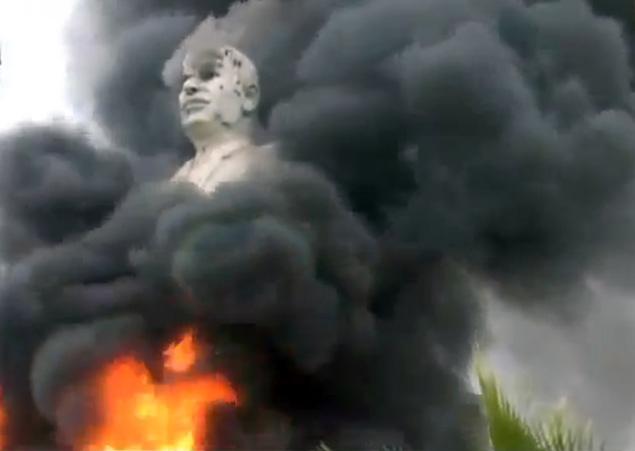
Hafez al-Assad burns in liberated Raqqa. photo by AP.
This was published in the National.
From the very start, some commentators convinced themselves that the Syrian popular revolution was plotted, funded and armed by the West. From Seamus Milne to John Pilger, from Glenn Greenwald to George Galloway, they described the West supplying oppositionist ‘jihadist elements.’ Former leftist icon Tariq Ali spoke on Russia Today of “Russia and China resisting attempts by the West to take Syria over.” Russia is resupplying the Assad regime with the materiel with which to slaughter the Syrian people, making Ali’s performance on Russia’s satellite as unedifying, and as distant from reality, as that of a commentator telling Fox News that Palestinian resistance is simply an Iranian attempt to take over Israel.
These journalists have staked their positions against the evidence. They have done so by forcing Syrian realities, breaking the edges of these jigsaw pieces, to fit their prior geopolitical concerns (their opposition to concurrent Israeli-American and Saudi enmities towards Iran) or ideological stances (that, following Iraqi and Palestinian models, the West must always be the troublemaker in the Arab world).
But Syria is neither Palestine nor Iraq; Syrian events are moved primarily by internal dynamics – namely the violence of the regime and the agency of the rising Syrian people. The conspiratorial leftist perspective misses this, first by vastly overestimating Western influence on current events (a failure to accurately diagnose the historical moment) and, secondly, by misunderstanding how unenthusiastic the West is for any rapid democratic or revolutionary change in Syria.
The Silence and the Roar
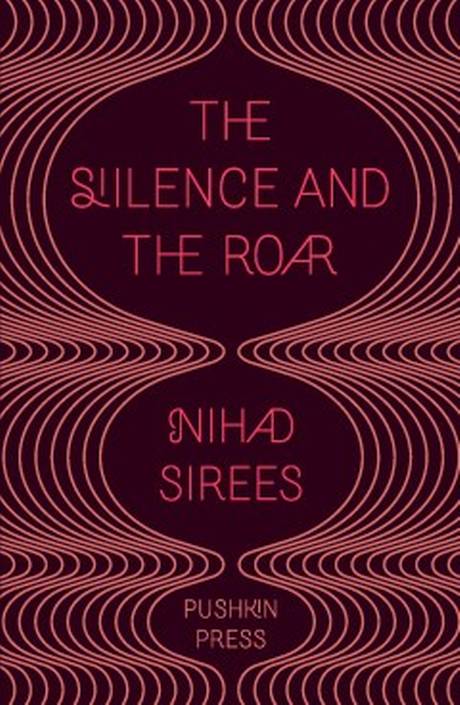 A version of this review was published at the Independent.
“The Silence and the Roar” by Syrian novelist and screenwriter Nihad Sirees was written in 2004, long before the roar of revolutionary crowds, and the countervailing roar of gunfire and warplanes, filled Syrian skies.
The pre-revolutionary roar of the title is that of the (capitalised) Leader speaking, and of the crowd celebrating the Leader speaking, and of those being beaten because they aren’t celebrating loudly enough; a roar relentlessly repeated by radios and televisions throughout the city, accompanying the protagonist almost everywhere he goes.
Counterposed to the roar there are two forms of silence: of imprisonment and of the grave. The first holds an ironic allure, for “the most beautiful thing in the entire universe is the silence that allows us to hear soft and distant sounds.”
The narrator is Fathi Sheen, a writer fallen out of favour with the regime, silenced only to the extent that he doesn’t write any more. He’s very pleasant company, amusing and straightforward, his digressions into Aristotle and Hannah Arendt notwithstanding. Over the course of a day Fathi struggles against the flow of celebrant crowds and regime thugs to visit first his mother and then his lover. He’s been content thus far to continue not to write in return for being left alone, but it becomes clear as the hours pass that the Leader’s friends plan to drive a different sort of bargain. The novella is in part a parable of the artist surviving under dictatorship. How does he make space for creation between silent and roaring states of mind? How does he avoid the regime’s Faustian temptations? More generally, how should one resist?
One answer for Fathi and his lover Lama, as for Winston Smith and his Julia, is through sex, which they find to be “a form of speech, indeed, a form of shouting in the face of the silence.”
Syrian Revolutionary Culture
I and Malu Halasa discussing cultural change in the Syrian Revolution at BBC World TV. I’m looking forward to seeing Khaled Khalifa and other Syrian writers and artists in Copenhagen in a couple of days, at the exhibition organised by Malu.
Negotiations?
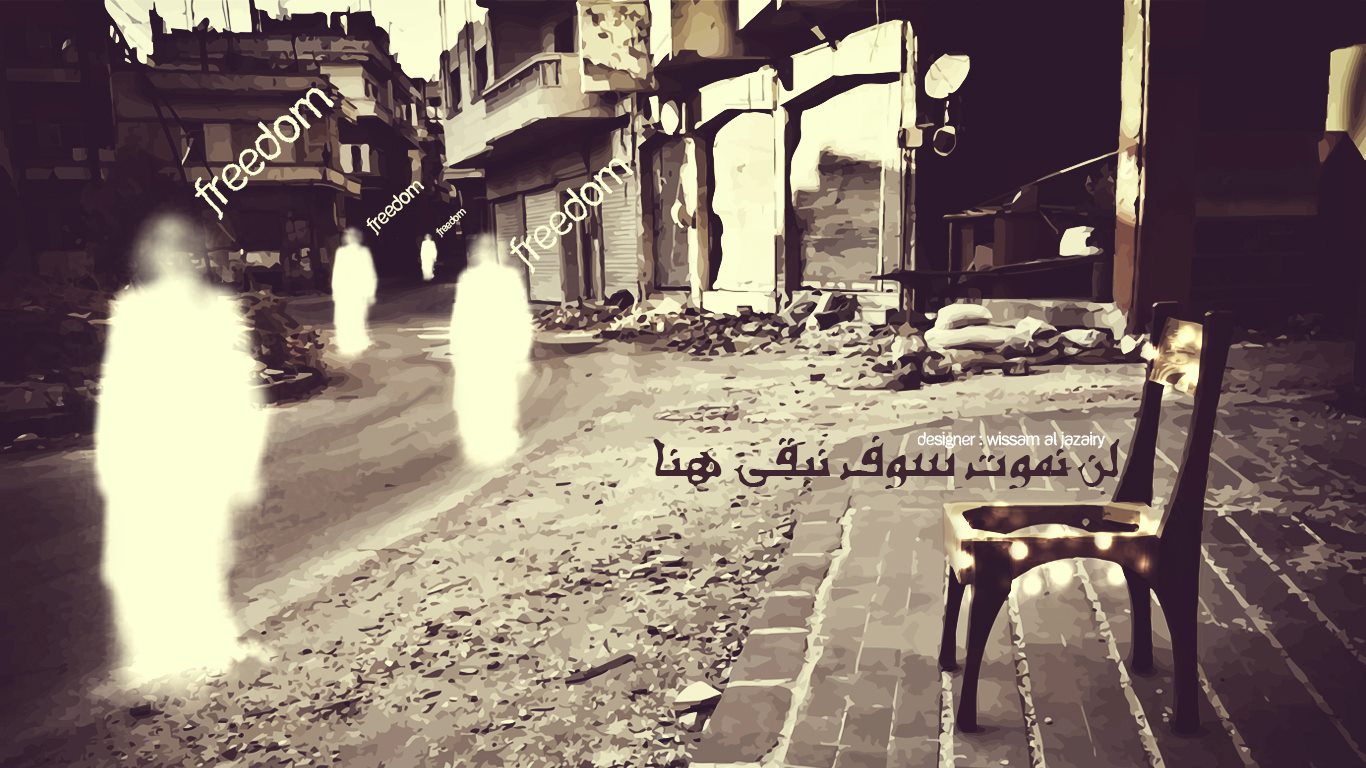
We Won’t Die We Will Remain Here by Wissam al-Jazairy
This was published at The National.
On January19th Syrian foreign minister Walid al-Moallem gave an apparently conciliatory interview to state TV. “I tell the young men who carried arms to change and reform, take part in the dialogue for a new Syria and you will be a partner in building it. Why carry arms?” In the southern and eastern suburbs of Damascus his voice was drowned out by the continuing roar of the regime’s rocket, artillery and air strikes.
The UN and parts of the media have also called for negotiations. Until late January this year, however, the Syrian National Coalition – the widely-recognised opposition umbrella group – opposed the notion absolutely. But then SNC leader Moaz al-Khatib announced that he would talk directly to regime representatives (not Bashaar al-Assad himself) on condition that the regime releases 160, 000 detainees and renews the expired passports of exiled Syrians.
In the context of Moallem’s media offensive (and in the absence of concerted international financial or military support for either the SNC or the revolutionary militias) al-Khatib’s announcement calls the regime’s bluff. It doesn’t, of course, mean that negotiations are about to be launched. For a start, the regime only intends to negotiate with, as it puts it, those “who have not betrayed Syria”. Like successive Israeli regimes, it will only talk with the ‘opposition’ it chooses to recognise. This includes, as well as pro-regime people posing as oppositionists, Haytham Manaa’s National Coordination Committee for Democratic Change, a group which has no influence whatsoever on the revolutionary fighters setting the agenda. The SNC – which does have some influence on the ground, and would have far more if it were sufficiently funded – is definitely not invited.
World Service Twice
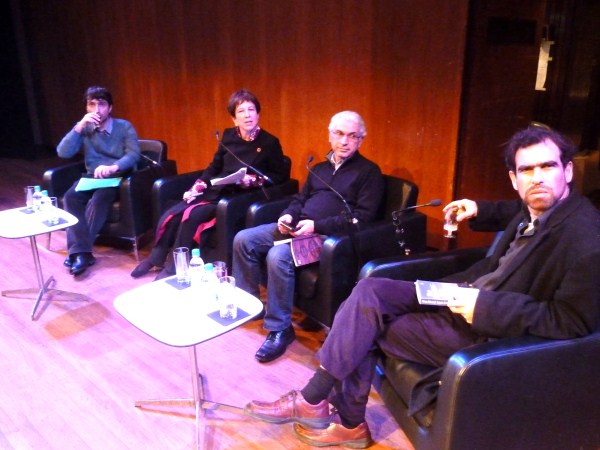
Golan drinks, Lyse looks on, Nihad eyes me suspiciously
Last night I was at London’s Purcell Room, honoured to be in the presence of novelist and screenwriter Nihad Sirees and poet Golan Hajji. The event was chaired by the BBC’s Lyse Doucet. We were talking about writing in the context of the Syrian revolution. Then I participated in the morning edition of the BBC World Service’s World Have Your Say, discussing Syria, and I joined the WHYS in the evening too, discussing Syria and Mali (on which I’m no expert) at greater length.
Here is the morning edition.
And here is the longer evening programme.
The Revolution Armed Itself
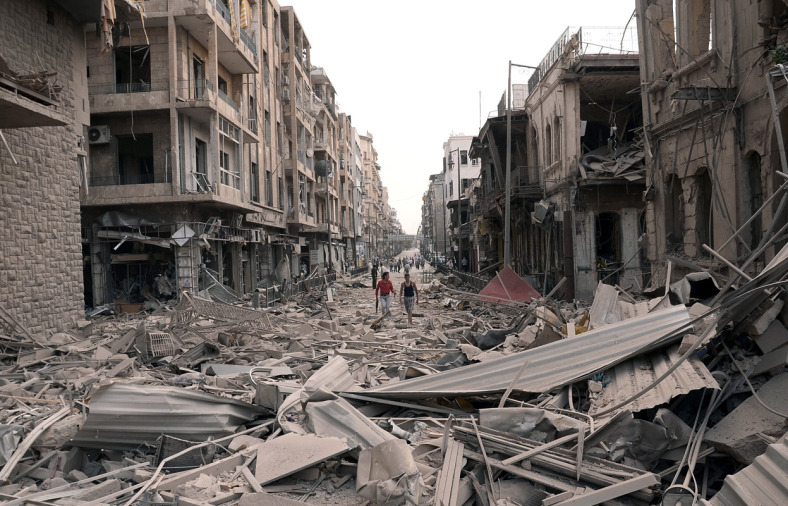 This piece, a rebuttal to Marc Lynch, was published at Foreign Policy under the title Fund Syria’s Moderates.
In response to non-violent protests calling for reform, the Baathist regime in Damascus has brought Syria bloodshed, chaos, and created the conditions in which jihadism thrives. The now partially armed revolution is doing its best to roll back the bloodshed and to eliminate the regime that perpetrates it.
Yet Foreign Policy’s Marc Lynch, one of the more perceptive analysts of the Middle East, argues that after more than 60,000 lives have been lost, “the last year should be a lesson to those who called for arming the rebels.” In a previous article, Lynch noted, “Syrian armed groups are now awash with weapons.”
Anyone laboring under the delusion that pro-revolution foreign powers have flooded Syria with hi-tech weaponry should scroll through the blog of New York Times correspondent C.J. Chivers or peruse the web pages displaying improvised catapult bombs and PlayStation-controlled armored cars. These are hardly the tools of a fighting force that has been armed to the teeth.
While it’s true that some armed groups — particularly the al Qaeda-linked Jabhat al-Nusra — have sometimes found themselves in possession of plenty of weaponry, the resistance remains overwhelmingly dependent on the weapons it can buy, steal, or seize from captured checkpoints and bases.
Simply put, the assumptions of those who called for arming the rebels have not been tested because the rebels have not been armed — except in irrelevant, sporadic and, in Lynch’s words, “poorly coordinated” ways. For instance, an ammunition shortage slowed the original rebel advance in Aleppo to a destructive halt.


 Qunfuz