Revolutionary Alawis
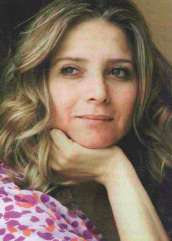
Samar Yazbeck
Novelist, screenwriter and journalist Samar Yazbeck in interview: “The regime has indeed destroyed the Alawite religion, a peaceful religion, as it engaged in things foreign to the faith, leading some to become its Alawite thugs. But many of us are opponents, in jail, in exile, or banned from travel. The regime is playing with sectarianism to terrify “its” minority and get support. A game that will end, but first, I fear, there will be clashes between the communities. ”
In this interview an Alawite member of the Syrian Revolution General Council based in Homs argues, “We need to break down the myth that the regime is the defender of Alawites and other minorities. It is just defending itself, and using us for its own ends.”
And in this interview actress Fadwa Sulaiman explains why she’s thrown her lot in with revolutionaries in a besieged area of Homs (she’s currently on hunger strike): – “I just wanted to go just to say we Syrians are one people. I wanted to contradict the narrative of the regime.“
Reporting Syria

Egyptians in Solidarity with Syria
The Syrian regime’s blanket ban on journalist access has some carefully selected exceptions. Robert Fisk, for instance, who seems to be compensating for the naive anti-Syrian and pro-March 14th line in his reporting of Lebanon over the last years by treating the statements of Syrian regime figures – professional liar Boutheina Shaaban is one – with great naivety. At least he didn’t apply the ‘glorious’ epithet to her which he used to describe Walid Jumblatt’s wife. Fisk’s book on Lebanon “Pity the Nation” is a classic, his account of the massacres at Sabra and Shatila remain fresh in the mind (the blood-footed flies clambering over his notebook), and for many years he was one of the very few English-language journalists with some real knowledge of the Middle East. Sadly, his knowledge doesn’t extend to a working familiarity with Arabic. In several recent articles he has informed us that that the slogan of the Ba‘ath Party – umma arabiya wahda zat risala khalida – means ‘the mother of the Arab nation.’ In fact it means ‘one Arab nation with an eternal message’. Fisk is confusing ‘um’ – mother – with ‘umma’ – nation. It’s a rather disastrous mistake. Someone ought to tell him about it.
Nir Rosen is an excellent journalist who clearly does speak Arabic and who makes the effort to talk to ordinary people rather than just politicians and PR people. His book “Aftermath” is essential reading for anyone who wants to understand how the American occupation of Iraq catalysed an outbreak of Sunni-Shia sectarian hatred across the Arab world. His recent visit to Syria (see here and here and here and here) seems to have been both above and below regime radar. While he appears to have been smuggled in to certain locations he also interviews such regime figures as the state Mufti Hassoun – someone once known for his touchy-feely liberalism and his campaign against honour killing now making absurd threats about armies of pro-Asad suicide bombers lying low in Western countries. Unfortunately, Rosen sees Syria through the prism of Iraq’s sectarian war. He expects to find expressions of sectarian hatred, and he finds them aplenty. He can’t be blamed for making it up, because sectarian hatred certainly does exist in Syria, and because he honestly reports what people say to him. The danger of this method, however, is twofold. First, his selection of informants necessarily reinforces his bias. He does interview some pro-regime Sunni figures (like Hassoun) but chooses not to interview Alawi, Christian, Ismaili or secularist figures who support the revolution. He doesn’t consider such people to be representative of the revolution because he’s decided that the dynamic must be sectarian, even if the Ismaili town of Selemiyeh has been demonstrating for months and secularists like Suhair Atassi are very prominent in the revolution’s Coordination Committees. (Indeed, Burhan Ghalyoun, the head of the umbrella Syrian National Council, to which many demonstrations have proclaimed allegiance, is fiercely anti-clerical).
Fadwa Sulaiman
Samar Yazbeck, Ibrahim Qashoush, Rasha Omran, Ali Farzat, Mai Skaf, Khaled Khalifa, Samih Shqair – there’s an impressive list of Syrian writers, musicians and artists who have bravely and unambiguously supported the people’s aspirations for dignity. And now the actress Fadwa Sulaiman. Here she is in besieged Homs leading chants of ‘no Salafis, no Brotherhood, the Syrians want freedom’ and ‘One, One, the Syrian People are One.’ Here she is on Jazeera (Arabic) interviewed via skype. And, below, here she is announcing her hunger strike until the prisoners are released and the siege of the besieged cities is lifted. Laila Al-Attar’s translation of her words follows after the page break.
Stranger Magic
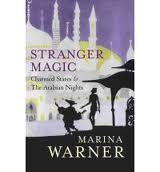 This review appeared in the Guardian.
The Arabian Nights (or the Thousand and One Nights, or the Arabian Nights Entertainments – there are so many versions) constitute, in Marina Warner’s words, “a polyvocal anthology of world myths, fables and fairytales.” The antecedents of these Arab-Islamic texts are Quranic, Biblical, Indian, Persian, Mesopotamian, Greek, Turkish and Egyptian. In them, oral and written traditions, poetry and prose, demotic folk tales and courtly high culture mutate and interpenetrate. In their long lifetime the Nights have influenced, amongst many others, Flaubert, Wilde, Marquez, Mahfouz, Elias Khoury, Douglas Fairbanks and the Ballets Russes.
The frame story, in which Shahrazad saves her life by telling King Shahryar tall tales, is only one such ransom. More than simple entertainment, then: throughout these stories within stories, and stories about stories, and stories metamorphosing like viruses, endlessly generative, narrative even claims for itself the power to defer death.
Although oral versions of the Nights had long percolated through Europe (elements turning up in Chaucer, Ariosto, Dante, Shakespeare), the tales were established in the mainstream of European popular and literary culture with Galland’s early 18th Century French translation. Galland purged the eroticism and homosexuality, added tales from the dictation of a Lebanese friend, and perhaps invented the two best-known and seemingly most ‘Arabian’ tales of all: Aladdin and the Magic Lamp and Ali Baba and the Forty Thieves.
Warner quotes Jorge Luis Borges (a guiding spirit in her book) approving the belle infidele approach to translation. “I think that the reader should enrich what he is reading. He should misunderstand the text; he should change it into something else.”
Syrian Eid al-Adha 2011
Not a great Eid in Syria. The traditional open air Eid prayers turned into anti-regime demonstrations and, as usual, the regime’s insecurity forces fired at the demonstrators. At least twenty three people were murdered today, including an infant. Many of the dead were in the central city of Homs, which has been a veritable war zone for weeks, the site of clashes between loyalist and defected soldiers as well as tank bombardments and sniper fire from the regime. In the last four days, since the regime supposedly agreed to release prisoners and withdraw its forces from civilian areas according to the Arab League plan, at least 80 people have been reported killed in the city.
There is one piece of very important good news, however. Burhan Ghalyoun, leader of the Syrian National Council, delivered an Eid address to the Syrian people which was carried by al-Jazeera. Ghalyoun, who does not wish to become a future president, was truly presidential. He appealed to those Syrians still hesitant or afraid to support the revolution, assuring them that the future Syria will be a state of citizenship and equal rights, and that minorities will be protected. Bringing larger sections of the Alawi and Christian minorities on board is the only way for the revolution to move forward, so Ghalyoun’s speech is most welcome, and long overdue. The English translation which follows after the break was posted at al-Jazeera’s live blog, but I found it at the excellent Walls.
After 42 Years
The great Libyan poet Khaled Mattawa reads ‘After 42 Years’ – his reflection on the fall of the tyrant.
Benghazi: The Uprising
Some very silly ‘information sheets’ have been doing the rounds on Facebook and elsewhere. They purport to show how wonderful Libya was under dictatorship, how generous Qaddafi was in building a limited welfare state. The people who produce such propaganda are infantile leftists (that wonderfully apt phrase was first used by Lenin) – that’s why they don’t produce similar propaganda on behalf of the royal dictators in the Gulf, although the Gulf dictatorships have also built welfare states, much better ones, in fact, than Qaddafi’s. Libya is a vast lake of high quality oil. Libyans should be as rich as Emiratis or Kuwaitis. The reality is that much of Libya is poor, and that if a Libyan needed a major operation he had to travel to Tunisia, a much poorer country. And the oil wealth is a gift of God or nature, not of Qaddafi. The only thing Qaddafi gifted to the Libyan people was death.
It’s wise to be suspicious of Britain, France and Qatar and to resist the ‘humanitarian intervention’ propaganda. Every state acts according to perceived interests, not according to moral principles. But there’s nothing wise or intelligent in opposing a revolution and insulting a revolutionary people because they choose to accept help from outside rather than die. The more repulsive armchair revolutionaries (almost all of them Western) are calling the heroic Libyan people ‘quislings’ and ‘traitors’ and imagining an alternative reality in which the revolution was begun by Western agents provocateurs. The film below is a timely reminder of how the revolution started in Benghazi – with the blood of martyrs. (I wish the Iran regime-controlled Press TV was also capable of broadcasting sensible documentaries on Syria).
Some Syria Resources
I am going through a period of (relatively) silent reflection on Syria. Of course, in Syria history continues to move at a rapid pace. At least 44 people were murdered by the regime yesterday. Today there is news of 17 soldiers killed by army deserters in Homs, a city which now appears to be in the early stages of a civil war. Syria’s criminal regime has brought this catastrophe on the country.
I’m remaining quiet for a while, but here are some highly recommended sites and articles. First, Walls is rapidly becoming the successor blog to Syria Comment, a space for intelligent discussion of the situation. Syria Comment was perceived by many (including me) to have lost its bearings. It always had a pro-regime and somewhat anti-Sunni slant; as the regime proved its stupidity and it became clear that the country would come closer to disintegration so long as the regime retained power, SC only reinforced its loyalty. Its reporting of events in Syria was highly selective, it gave a false view of the protestors, their motivations and leaders, it sometimes repeated absurd regime propaganda verbatim, and it even stooped to repeating false regime slanders of opposition figures. Now that Joshua Landis has taken a back seat the site is in less academic, even more blatantly partial hands. So it’s really good to see the Walls blog attracting SC’s best commentors and building such a big audience.
Thank You So Much
A message from the father of the murdered nine-year-old Ibrahim Shayban to Russia, China and Bashaar al-Asad.
The Russian and Chinese vetoes to protect the Syrian regime from UN Security Council condemnation are reminiscent of all those American vetoes to protect Israel. Both countries have their reasons for shielding the Syrian regime: Russia’s naval base at Tartus, discomfort over the way the Libya No Fly Zone slipped into more overt intervention, the fear that UN condemnation may one day focus on Russian abuses in Chechnya and Chinese abuses in Tibet and Xinjiang. But both countries should consider their own interests more creatively. Ultimately, their influence in Syria and the wider region will depend on their image in Syrian and Arab eyes. The Syrian regime will not be there for ever. The Syrian people will.
Iran is another state which has repeatedly shot itself in the foot since the Arab revolutions began, first by mischaracterising as Islamic uprisings the deposings of Mubarak, Bin Ali and Qaddafi, then by opposing the revolution which seems most similar to Iran’s in 79 – the Syrian revolution. Iran used to be popular in Syria even amongst many sectarian-minded Sunni Muslims. It used to be popular in the wider Arab region. This popularity was Iran’s best guarantee against marginalisation and even military attack from the region’s pro-Western forces. But its popularity has evaporated this year.
Back to Ibrahim. He was martyred while leaving a mosque in the Qaboon suburb of Damascus. His funeral was held today in Meydan, in the heart of the city. Here’s some footage. Apparently insecurity forces killed two of the mourners when they came out of the mosque into the street.
Commentators have been telling us that central Damascus remains quiet. It’s true that many areas have been quiet, either because the upper middle class inhabitants still support the regime or are sitting on the fence, or because of the overbearing police and mukhabarat presence on the streets. Damascus has certainly not slipped out of regime control, as Homs, Hama, Deir ez-Zor and Idlib sometimes have. Yet Damascus has been bubbling for a long time. Pro-regime commentators will say that Kafar Souseh (which has demonstrated frequently since Shaikh Rifa’i of the Rifa’i mosque was shot) is a suburb, not the city itself – which is true, if Camden Town isn’t part of London. Suburbs further out – like Harasta, Douma, Muadamiya – have been veritable war zones for months. Imagine if Streatham, Hackney, Tottenham and Ealing were in a state of war and commentators told us ‘London remains quiet.’ And Meydan and Rukn ad-Deen have witnessed frequent, large demonstrations, and savage repression. These places are as central as Chelsea and Kensington. Smaller, briefer demonstrations have occurred in high-class Malki, in Sha‘alaan, Shaikh Muhiyudeen, Baghdad Street, Muhajireen. You can’t get more central. The last place is within earshot of Bashaar al-Asad’s house. If the quietness of Damascus reassures the regime, I think they’d better start panicking.
Our Lady of Alice Bhatti
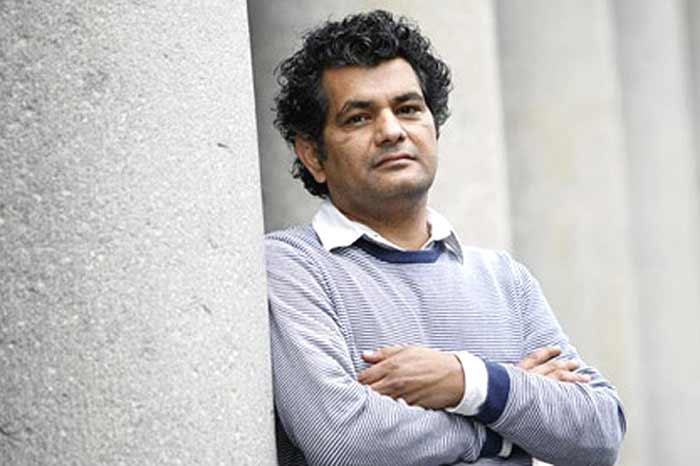 This review was written for the Guardian.
“These Muslas,” says Joseph Bhatti, father of Alice, “will make you clean their shit and then complain that you stink.” This is pretty close to the mark. Pakistan won’t forget the low-caste origins of most of its Christians, or ‘Choohras’, who constitute an ‘untouchable’ sweeper and maid class. In recent decades, with the rise of increasingly intolerant forms of Islam, the Choohra plight has worsened. Christians are victims of obscene ‘blasphemy’ laws and frequent sectarian violence. The outside world is often ignorant of the minority’s very existence.
How refreshing, therefore, that Mohammed Hanif, Booker-listed author of ‘A Case of Exploding Mangoes’ and perhaps Pakistan’s brightest English-language voice, has chosen to view his country through the eyes of a (lapsed) Christian – the eponymous Alice Bhatti, a hard-nosed, warm-hearted nurse, too beautiful for her own good, also nifty with a razor blade.
Her lover and foil is the ‘Musla’ Teddy Butt, a thigh-waxing, body-building, Mauser-packing lowlife. Teddy works unofficially for the Gentlemen’s Squad, a police unit somewhat darker than the Keystone Cops staffed by partially reformed rapists, torturers and sharpshooters.
Malta
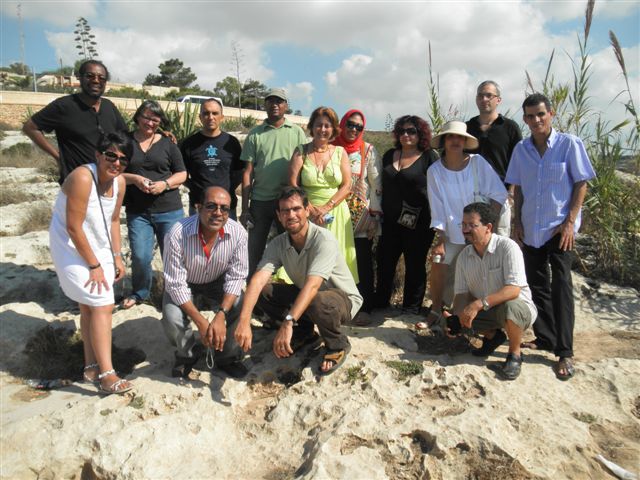 Malta is a speck or three of rock distantly cradled by the Tunisian-Libyan coastline, south of Sicily, midway between Gibraltar and Suez. It’s an ideal location for a Mediterranean Literature Festival.
Megalithic people built temples here six thousand years ago. The Phoenicians established a trading colony. The Greeks and Romans valued the place for its honey (and the Greek word for honey-sweet – Melite – is one possible origin for the name). For a few centuries Malta was ruled by Arab dynasties; a foundational period of immersion in that civilisation which brought in the Siculo-Arabic language, precursor to modern Maltese.
The language is Malta’s idiosyncracy: half Arabic in vocabulary, more than half in structure. The verbs, prepositions and pronouns are Arabic. The rest is mainly Italian. The air hostess asked us to store our bags ‘fowq raasikum’. When we landed she said ‘saha wa grazia!’ In the airport before the return flight I needed no translation for ‘Wait Behind the Yellow Line’ – Stenna Wara l-Linja s-Safra. (The only word there which isn’t Arabic is ‘linja’.) There is, I think, controversy over the extent of Arabic influence on the language. Our tour guide was certainly downplaying it. On the other hand, the Maltese prose writers and poets I met seemed very proud of the heritage. The writer Albert Marshall called Arabic ‘the mother’, and told me how, as he saw it, the gutturals of Semitic jostling Romance language softnesses offer a tremendous sound range for the poet.
Lion One and Lion Two
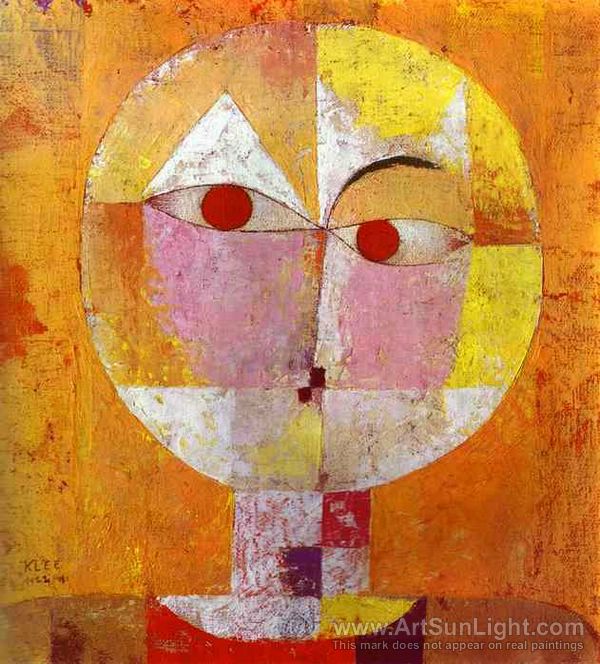
paul klee's senecio
Lion One
misnamed hollow lion
wearing his megalo mane
a pointy-head frown
toothsome
grin
says the important thing
is to believe in a cause
it allows him to kill
the causeless the useless
the malformed will
rule
Becoming Sane
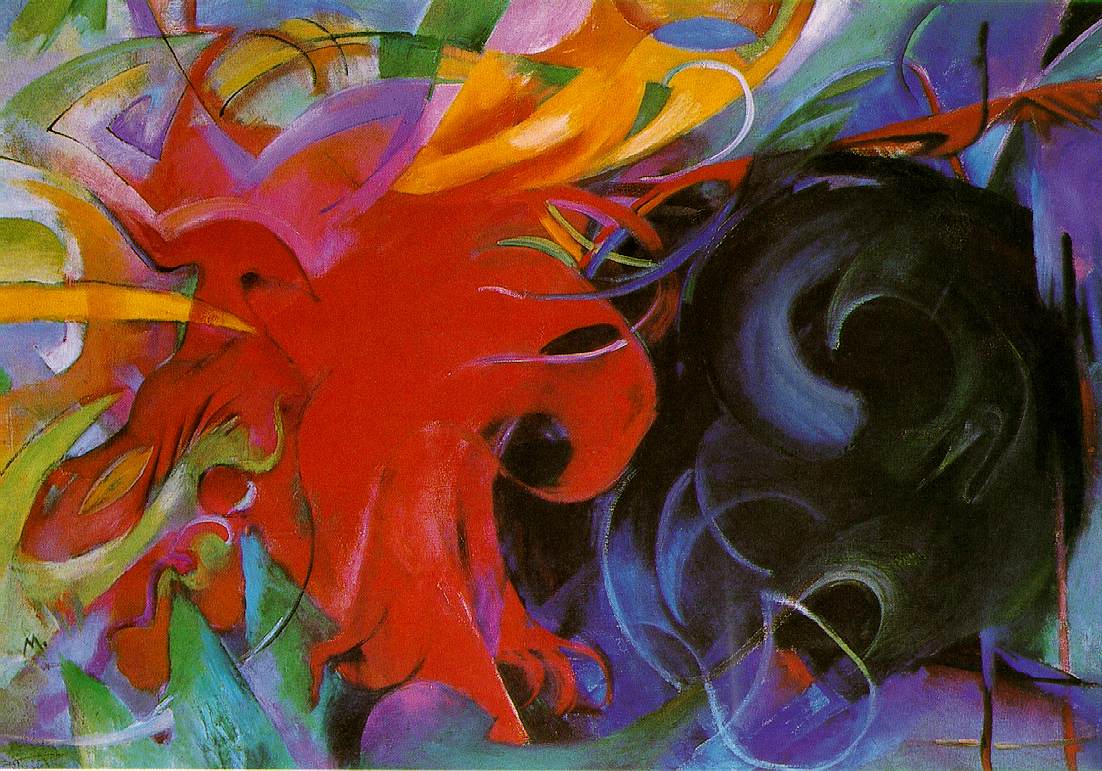
Franz Marc's Fighting Forms
imagine the poor man
his eyes dimming his ears clouding
colour draining from the sky
movement stiffening in the trees
descending
from prickly elevation to prosaic daily sludge
in the grey city in the grey century
Self-Fulfilling Prophecy
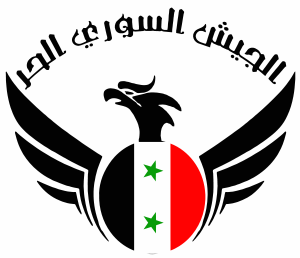
the Free Syrian Army logo
This was first published at Foreign Policy.
From the start of the Syrian revolution, the Assad regime’s media have portrayed the overwhelmingly peaceful grassroots protest movement as a foreign-backed military assault. Its preferred catchall term to describe the tens of thousands of patriots it has kidnapped and tortured, as well as the thousands it has murdered, is “armed gangs.” Despite a series of televised “confessions,” the regime has not provided any serious proof of the supposed American-French-Qaeda-Israeli-Saudi-Qatari plot against the homeland. Nor has it explained the evident contradictions between its narrative and the thousands of YouTube videos and eyewitness accounts of security forces shooting rifles and artillery straight into unarmed crowds.
Of course it hasn’t. Yet its propaganda is taken seriously by Russian and Chinese state media, certain infantile leftists, and a vaguely prominent American academic.
Tragically, the propaganda is also taken seriously by members of Syria’s minority sects — not by all of them by any stretch, but perhaps by a majority. It’s tragic because perceived minority support for this sadistic regime will inevitably tarnish intersectarian relations in Syria in the future.
Those Sunni Syrians who are (understandably) enraged by the minorities’ siding with the dictatorship should remember first that many Alawis and Christians, as well as many more Druze and Ismailis, have joined the revolution and that many have paid the price. Second, Sunnis should remember that Alawis and Christians have good reason to fear change, if not to believe the propaganda.


 Qunfuz