The Wrong Side of History
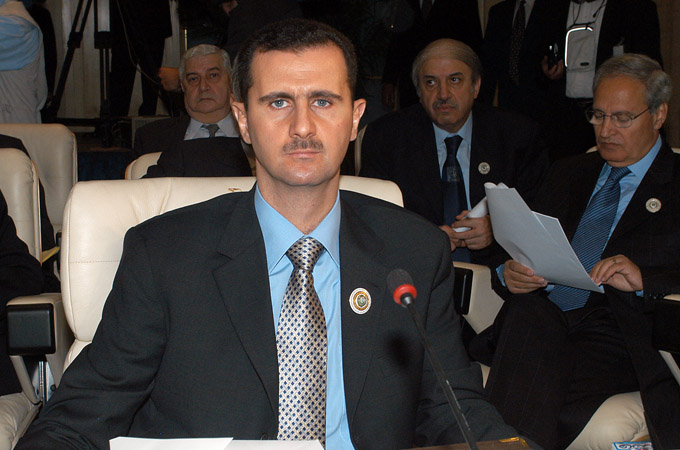
impeccable
An interesting article in the Asia Times (republished in full after the break) states that “in recent weeks more and more former Iranian officials and academics have begun to speak out against the lack of complexity and nuance in Iran’s policy vis-a-vis the perceived deteriorating situation inside Syria.” The article also suggests that Hizbullah is rethinking its position. About time too.
The Asia Times continues: “talking to Iranian officials it appears that there is deep unease about the methods employed by the Syrian security forces which have allegedly killed up to 2,000 people since protests and violence erupted in March. In private, Iranian officials draw a comparison to how professionally Iranian security forces responded to widespread rioting and disorder in the wake of the disputed presidential elections of June 2009. They claim (with some justification) that the disorder was quelled with minimum loss of life.”
The article goes on to list reasons why Iran’s rulers expect the Asad regime to come out of the current unrest intact. Beyond an appreciation of the ruthlessness of regime violence, these include: “the divided nature of the Syrian opposition, the majority of whom hail from a Sunni Islamist pedigree. But deep down Iranian officials believe that Assad will survive because owing to his foreign policy posture and his impeccable anti-Zionist credentials, his regime is somehow more ‘connected’ to the deepest aspirations of his people, indeed the people of the region as a whole.”
Street Debate
This reminds me of the debates I saw breaking out in Tahrir Square. And it’s what TV should be like. FlipLife TV took a camera to Clapham and let the people speak.
Resistance Regime?
One of my favourite chants from the Syrian uprising is the powerful and cleanly apparent illi yuqtil sha‘abu kha’in, or ‘he who kills his people is a traitor.’ It’s cleanly apparent to me at least – but not to everybody. Some kneejerk ‘leftists’ (a rapidly diminishing number) still hold that the Syrian regime is a nationalist, resistance regime, a necessary bulwark against Zionism, and that therefore it must be protected from its unruly subjects; that in fact it’s the unruly subjects, rather than those who murder them, who are the traitors.
Very sadly, Shia Islamists – Lebanon’s Hizbullah, the sectarian parties in power in Baghdad, and Iran – have repeated the same argument, not because they believe it but for tedious clannish reasons. Syrians aren’t very surprised by the Iraqi or Iranian positions; it’s Hizbullah’s betrayal which sticks in the craw. After all, until Hassan Nasrallah began propagandising on behalf of the regime’s repression, Syrians of all sects supported and admired Hizbullah. During Israel’s 2006 assault they welcomed southern Lebanese refugees into their homes. Indeed, the regime’s alliance with Hizbullah can in large part be credited to the Syrian people; the alliance was one of the regime’s only real sources of popularity. The Asad clique needed Hizbullah’s resistance flag to cover its own nationalist nakedness.
Hama Hallucinated
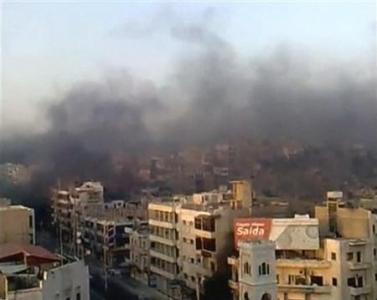
picture by Reuters
Here’s an extract from my novel The Road From Damascus, in which the dying Ba’athist Mustafa Traifi hallucinates the Hama massacre of 1982. Back then the regime really was fighting an armed group – the Syrian Muslim Brotherhood. I don’t much like my writing of four years ago, but the passage is rustling in my mind today for obvious reasons.
What’s time to a corpse? From the moment of its death, time becomes a foreign territory, a land stranger and more distant with every minute, every decade, until soon there’s nobody left to put a face to the corpse’s name, to the name of the dust, and soon the letters of its name have sunk into the graveslab’s grain, and the stone itself is broken or buried or dug up. And the land which was once a graveyard is overgrown, or shifted, or levelled. And the planet itself dead, by fire or ice, and nobody at all anywhere to know. No consciousness. As if nothing had ever been.
Unless there is Grace watching and waiting for our helplessness.
There is no permanence for a corpse, not even for corpse dust. Or corpse mud, in this country. All this graveyard sentiment. You may as well shoot it into outer space. Into the stars.
Mustafa Traifi is dreaming intermittent dreams of war. He sees the city of Hama from above and within. Sees the black basalt and white marble stripes. The mosque and the cathedral. The thin red earth. The tell of human remains, bones upon bones. The Orontes River rushing red with the blood of Tammuz, the blood of Dumuzi, the dying and rising shepherd god. The maidens weeping on the river banks.
Life is precarious. This place is thirty kilometers from the desert. The river raised by waterwheels feeds a capillary network of irrigation and sewage channels, and agricultural land in the city’s heart. Traffic is organised by the nuclei of marketplaces (Mustafa sees from above, like the planes) where there are householders and merchants and peasant women in red-embroidered dresses and tall men of the hinterland wearing cloaks and kuffiyehs, and mounds of wheat and corn, and olives and oranges from the hill orchards, and complaining oxen and fat-tailed sheep. Where there is dust in the endless process of becoming mud and then again dust.
The Sultan’s Shaikhs and Salafis
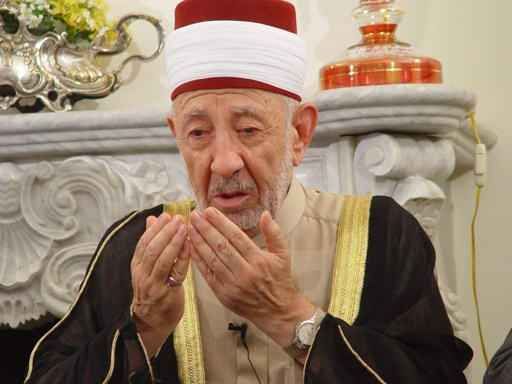 Update: Syria’s tame mufti Hassoun has said there is no truth to the news which I repeat below, that Buti, Hassoun and other clerics met with the minister of Awqaf and decided to cancel taraweeh prayers. I heard the false report from someone in Syria. Obviously a rumour was circulating.
When I lived in Syria in the 1990s people would speak very respectfully about Shaikh Sa’id Ramadan al-Buti, a Damascus-based cleric and a traditionalist. I could never quite understand why. I attended his mosque once after an American bombing run on sanctions-starved Iraq; on that occasion Buti blamed the deaths in Iraq on ‘a lack of love between the Muslims.’ Perhaps some of the congregation imagined this was a veiled criticism of the Arab leaders. People called al-Buti honest and fearless.
I had a conversation with someone who taught archeology at Damascus University. This academic arranged a debate on human origins, the scientific versus the religious view. The debate went very well until Shaikh Buti arrived, with entourage. The cleric encouraged noisy religious chanting until the debate had been entirely disrupted, at which point he declared ‘this is a victory for belief over unbelief’ and had himself carried away on the shoulders of his admirers. A great victory indeed.
Throughout the Syrian uprising, Buti has told Syria’s Muslims to trust the regime that is murdering them. He has repeatedly condemned peaceful demonstrations for dignity and rights. He has accused the protestors who set out from Friday mosques of not knowing how to pray. I accuse Buti of not knowing how to think, or feel, and of having no moral sense. Yesterday, following the most savage massacres yet perpetrated by the regime, Buti released a ‘fatwa’ cancelling the taraweeh prayers which are held every evening during Ramadan. The truth could not be clearer: this ‘honest, fearless’ cleric is even willing to cancel prayers when he is ordered to by the state. He is to religion what Dunya TV and Syria Comment are to objective reporting; what the shabeeha are to domestic security. Many of Syria’s Christian leaders, meanwhile, have taken the most unChristian step of joining in state propaganda against unarmed Syrian citizens even as these citizens – of all sects – are tortured, maimed and humiliated.
Call From The LCC
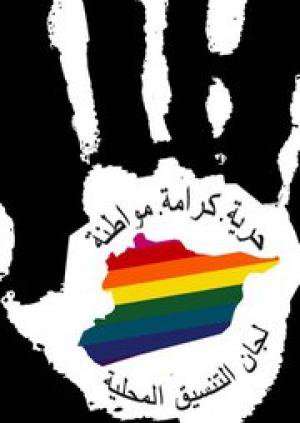
Freedom Dignity Citizenship
From the Local Coordination Committees
The killing machine of the Syrian regime has started another military campaign against our beloved cities and towns, in Hama, Deir Ezzor, Bokamal, Moadhamieh, Hirak and others. More than 100 people have been killed today. This confirms the criminal murderous nature of the regime to those who are still unsure about it, and makes it paramount to all Syrians to get rid of it, sooner rather than later.
To the squares of freedom, O Syrians. The price of changing the regime is lower than that of leaving it. If this regime manages to regain control, much more of your blood would be shed, and much more of your dignity would be lost, and you will be ruled by a gang of Shabeeha, murderers and thieves. You will face black days for many coming years if the current regime maintains the upper hand in this great national confrontation. The blood of your brothers and sisters in Hama, Homs, Daraa, Idlib, Damascus and Deir Ezzor is crying out for you to rise up and save your homeland from the rule of criminals.
Pre-Ramadan Massacres
Ramadan begins tomorrow. Every night throughout the month Muslims will congregate for taraweeh prayers; in Syria, each night’s taraweeh will turn into anti-regime protests. During Ramadan people work less and therefore have more time for meditation – and for protesting. The security forces repressing these protests will be tired and snappy. The protestors will be quick-tempered from thirst and hunger, and also in many cases less frightened of death. For a pious Muslim, to die in Ramadan while standing up for justice is a very good death. At the same time, fighting in Ramadan is frowned upon. Regime violence during the holy month will outrage people even more than usual.
The regime would like to frighten everybody into their homes before the fasting starts. Hence the escalation today. The city of Hama, where between 10 and 20,000 people were massacred by the regime in 1982, was invaded by traitors before dawn. Up to 45 have been killed so far, and numbers are rising quickly. In the east, Deir-ez-Zor is also under tank attack. Several have been killed. A child has been murdered in Albu Kamal, right on the Iraqi border. And Moadamiya and other suburbs of Damascus are being attacked. Hundreds have been taken away and many injured. Reports are coming in of heavy gunfire in Homs. (Updated figures at lunchtime claim 121 have been murdered so far today throughout the country).
Does the regime want to provoke an armed reaction? (In the tribal areas near the Iraqi border, it probably will). Or does it really think that after months of massacres Syrians will be intimidated by a larger slaughter? The barbarity, idiocy and treason of this regime are beyond doubt. As uniformed Syrians murder civilian Syrians, the Golan remains under Zionist occupation – as it has been since Hafez al-Asad lost it in 1967 – and the many Israeli violations of Syrian sovereignty, which the state assured us would be avenged ‘at a time and place of Syria’s choosing’, have not been avenged. The brave security forces of the Asad thugs – great at invading Syrian cities, shooting women dead, mutilating little boys. Absolutely shit at defending Syrian people, dignity and territory. I do hope the Free Syrian Army is real. (Joshua Landis thinks it isn’t; but then, Joshua Landis has, repulsively, started to refer to pro-regime Syrians as ‘pro-stability.’)
Burhan Ghalyoun on Syria and Palestine
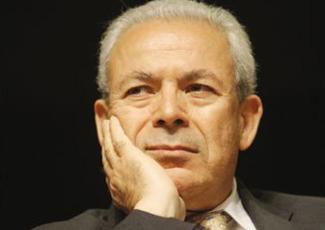
pic from alawan.org
Jadaliyya has translated an interview with prominent Syrian oppositionist Burhan Ghalyoun – well worth reading. He addresses those Syrian intellectuals still “poisoned by the idea that the regime is the foundation for an opposition and resistance to Israel, even though Rami Makhlouf, one of the regime’s pillars, stated that the security and stability of Israel is tied to the stability of Syria’s current regime,” and continues: “There is no danger for the Palestinian cause in the shadow of a democratic Syrian system. The Syrian people are closest to the Palestinian people, and they are more protective of the Palestinian cause, the Golan Heights, and Arab solidarity than the current regime whose leaders have made the country feudal and do not care for anything except for protecting their own interests and existence.”
Read the interview in full after the break.
Syria Update
I’ve been keeping quiet about Syria recently. I’ve been working on other projects. The main reason for this is that I have nothing new to say. The regime continues to spew meaningless words concerning ‘reform’ and ‘dialogue’ even as it escalates its assaults on urban areas and its campaigns of arrest and torture. The rate at which the regime murders the innocent is still shocking, but is substantially less than in earlier months. There is evidence that the killings are now more targetted against protest leaders and organisers – in other words against the intelligent leadership of the next generation. Pro-regime propagandists continue to speak about the Syrian people (their own people) the way Zionists speak about the Palestinian people. Anti-regime violence, understandably, seems to be rising. Very worryingly, there appear to have been sectarian clashes between Alawis and Sunnis in Homs. The regime, with its appalling instrumentalisation of sectarianism since the intifada began, its use of irregular Alawi-majority militias (as the Americans used Shia and Kurdish militias to terrorise restive Sunni areas in Iraq), and through its black operations, bears full responsibility for this. It is to the credit of Syrians that almost universal revulsion met news of the sectarian fighting. Most protestors reaffirmed their commitment to national unity. The protests, meanwhile, have grown to enormous proportions. The governorates of Hama, Deir ez-Zor, Idlib and Homs appear to be lost to the regime. Damascus and Aleppo are now definitely involved. Ramadan will bring a further intensification.
When I get to it, I will write more fully about Hizbullah’s blunder in supporting the regime. Hizbullah used to be wildly popular in Syria because it was perceived as an organisation dedicated to fighting for the oppressed. Now that it’s taken to supporting the Syrian oppressors against the Syrian oppressed, Hizbullah is widely despised in Syria. Its own stupidity achieved what decades of Wahhabi-Saudi, Zionist and Western propaganda could not. Here’s an article by Hamid Dabashi on that.
And here’s a fair documentary from the BBC on the situation in Syria, featuring the brave and long-suffering Riyadh as-Saif.
All Things Considered
I was a guest on BBC Wales’s All Things Considered, a religious programme, talking about Christians in the Arab world in the light of the Arab revolutions. Also talking are the Right Reverend Bill Musk, based in Tunisia, Bishop Angelos, who serves the Coptic community in London, and the Reverend Christopher Gillam, who admires the Syrian regime and overemphasises Syrian Christian opposition to the uprising. Apologies for my voice, which was heavy with cold.
Outside/ Inside
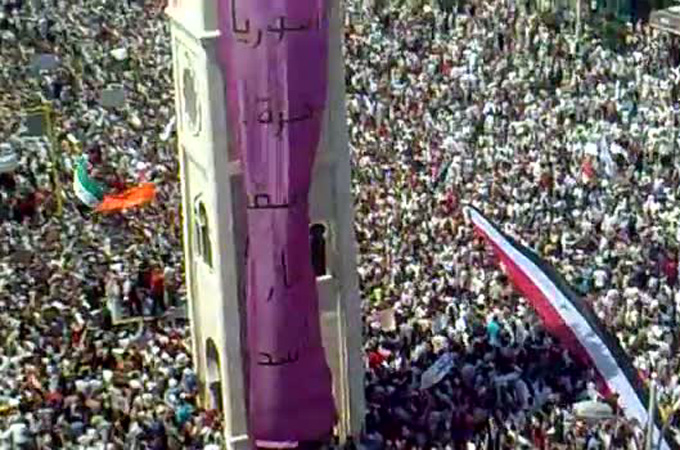
Hama (Reuters picture)
For days Syrian security forces stayed out of Hama; not even traffic police were seen in the city. During these days, no armed gangs emerged from the shadows to terrorise and loot. Christians and Alawis were not rounded up and shot. Nobody was whipped for wearing an unIslamic haircut. All that happened was day and night demonstrations against the regime swelled into crowds of hundreds of thousands – men and women, adults and children.
Perhaps the security forces stayed out of the city on the request of Hama’s governor, and perhaps that’s why he was sacked. Now security forces have entered the city and brought plenty of insecurity in their wake. At least sixteen Hamwis were killed yesterday.
Slaughter in this city – over sixty protestors were murdered there a few weeks ago – reminds Syrians of the greatest wound in their contemporary history: the Hama massacre in 1982, when 10,000 were killed at the lowest estimate, by aerial and artillery bombardment and in house to house murder sprees. There are reports that poison gas was used, and of dismemberments and rapes, but no-one really knows. No journalists slipped inside the city. There was no satellite TV, no internet, no mobile phones. Still, a thousand stories escaped the net, and every Syrian has heard some; stories whispered, not told. Hama, ‘the events’, is the great taboo.
Awake Unconscious
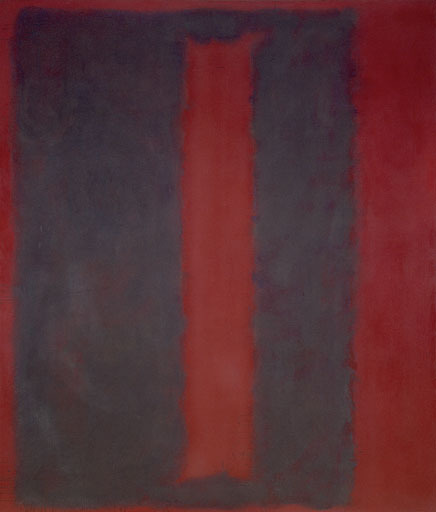 Mark Rothko was a twentieth century American artist. Art academia labels him an abstract expressionist. In his case, however, labels aren’t much help – at least not to me.
Rothko canvases are rectangles or slabs of colour. At first sight they often seem monolithic or blank; upon closer inspection the colour is layered and subtly varied in tone and intensity. But ‘inspect’ is the wrong verb, a far too cold and conscious and controlling verb. The observer is absorbed, rather; in the same semi-dazed or forgetful way he finds himself absorbed by the sky or the form of a mountain. The colours throb and quake, until it feels that the canvas is inspecting the observer instead of vice versa.
Ancient building sometimes creates the same sensation – I’ve felt it at Tadmor and Resafah in Syria, at Persepolis in Iran, in the Hippostyle Hall at Karnak in Egypt. Or in old mosques, stupefied by columns and shadows, by the contradiction of space and constriction. Sumerian statuary also does it for me. I understand entirely why people worshipped statues or remarkable rocks or shapes; I do it myself, involuntarily. Or the larger part of me which has nothing to do with self or will does it. Perhaps the deepest part of me is always reacting like this to the world. Always has. That’s why labels don’t help in Rothko’s case – he could as easily have emerged from the 20th century BC.
Pride
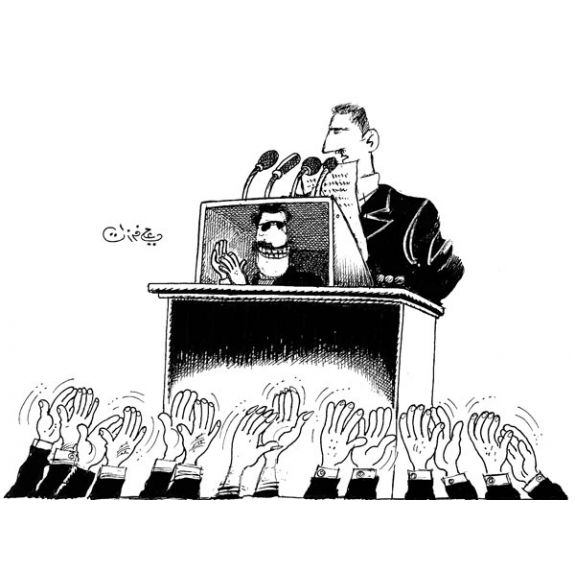
picture by Ali Ferzat
Bashaar al-Asad’s speech this week was undoubtedly a sign of weakness. Apart from a phone call to Lebanon, the ‘president’ (how insubstantial the word now sounds) hadn’t been seen or heard for two months. Turkey, the West, even Russia wanted to see a proactive, present president dealing with the crisis; Syrians began to wonder if the man was under house arrest, or sedated, or dead. So finally he turned up, only to repeat vague and unsubstantiated noises about ‘reform’, ‘dialogue’, and the like. All entirely meaningless – the killings and arrests continue regardless. The greater part of the speech focussed on the alternative reality which lives in regime heads – on conspiracies, germs, saboteurs, vandals, infiltrators. At the start of the trouble, the president said, he’d thought the ‘armed groups’ contained only 10,000 men. Imagine his surprise when he learnt there were in fact 64,000!
The only change was one of style. This time al-Asad was careful not to giggle. (A Facebook page was set up the day before the speech, called – in Arabic – ‘Bashaar, if you laugh tomorrow, we’ll shit on you.’) The camera was careful to pull away from the president when the audience applauded, lest he break into one of his gormless smiles. But he wasn’t smiling. There was very definitely fear in his eyes. And he’d lost weight. Not as much as lost by 1400 corpses, but a good few kilos.
Facebook Detox
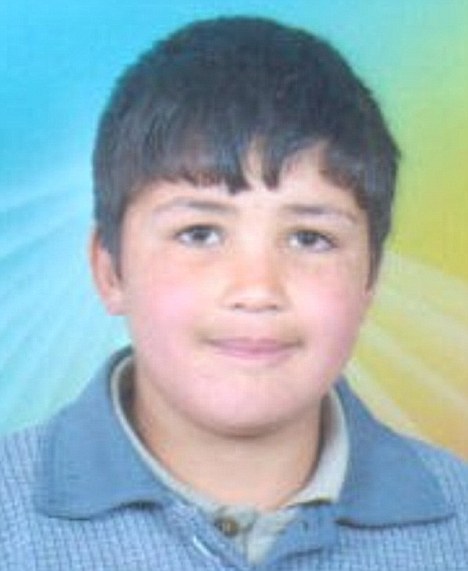
Hamza al-Khateeb
Today, following a period of Facebook madness, I deactivated my account. Unlike reefer madness, this one was a by-product of the Arab revolutions. Since January I’ve been updating statuses, liking pages, linking to articles, posting youtube videos. And, regrettably, I’ve been getting into fights. I don’t mean physical fights. My computer screen is still intact. I mean Facebook fights. Sometimes these are reasonably polite altercations; sometimes they aren’t polite at all. At all times they eat up time. Hours and hours of time. Time I could have spent reading Tolstoy or trying to play the saxophone or walking across the fields.
Getting into fights on Facebook is undoubtedly a symptom of psychological problems. I possess many social skills, diplomacy not included. I am overly passionate. Plus I am too sensitive for someone who is also a rhetorical bruiser – like a soft-jawed weakling who packs an iron fist (which sounds like Bashaar al-Asad; but this becomes too ugly). Beyond my own issues, however, Facebook presents challenges to any human being more used to communicating through the contexts fine-tuned over millenia – face to face, or in a crowded room, or by private or public letter. All these situations contain subtle mechanisms for conflict resolution or avoidance. Facebook doesn’t.
Asad, Shaaban and Me
I was on BBC Radio 4’s The World Tonight again last night, again talking about Syria. Boutheina Shaaban – translator of Chinua Achebe’s excellent novel ‘Things Fall Apart’ into Arabic, but someone who has clearly forgotten the value of words – comes before me. Unfortunately the dispute over Abdullah Gul at the end (I was right) made me forget what I was talking about.


 Qunfuz