The Murder of Salmaan Taseer
Salmaan Taseer, governor of Pakistan’s Punjab province, has been shot dead by one of his own security detail for the supposed crime of defending Aasia Bibi, a Christian woman threatened with execution under Pakistan’s blasphemy law. The law was introduced by the British and given extra teeth by military dictator Zia ul-Haq, and is commonly used for the pursuit of grudges against the weak. The most disturbing aspect of Taseer’s murder is that both puritanical Deobandi and traditionalist ‘Sufi’ Barelvi religious leaderships have expressed support for it. Many Pakistanis are lionising Taseer’s murderer. For decades sections of Pakistan’s ruling elite have peddled religio-nationalist chauvinism as a stop-gap substitute for social justice. The result is today’s ugly combination of elite and mob rule. I reviewed a book by Taseer’s son here. Below, novelist Mohammed Hanif reports from Karachi:
Minutes after the murder of the governor of Pakistan’s Punjab province Salmaan Taseer I saw a veteran Urdu columnist on a news channel. He was being what, in breaking news jargon, is called a “presenter’s friend”. “It is sad of course that this has happened but . . .”
Inspiration from Tunisia
The anti-regime protests spread across Tunisia involve trades unionists, the unemployed, lawyers, journalists and students. The people chant against “the killers of the people, the flayers of the people.” Their slogans include “Tunisia is the people, not the government,” “We’ll solve the police crisis, we’ll solve the Tunisian crisis,” and (I think – the sound isn’t clear) “Work, Freedom, National solidarity.” The first film shows a Tunisian town continuing to fearlessly demonstrate despite tear gas and truncheon attacks. (A maths teacher has been shot dead by police during the protests). The second (over the fold) shows a demonstration in the capital. Arabic speakers can follow this link to al-Jazeera’s round-up of the most recent developments.
The Tunisian Intifada
The dictatorship of Zine el-Abdine Ben Ali, a Western client, is in serious trouble. A full-scale intifada is raging. It began in Sidi Bouzid as a protest against unemployment, corruption and police brutality. Then it spread to Sousse, Sfax, Meknassi, and the capital, inflated by long-simmering resentment at Tunisia’s lack of civil liberties. Because Ben Ali is a client, and because Tunisia is a mass tourism destination, the Western mainstream is leaving this largely alone. But here’s Nesrine Malik in the Guardian, and al-Jazeera (see below) is doing well. In the context of a horrific upsurge of nihilistic sectarianism in the Arab world, it is to be hoped that the Tunisian revolution will grow and develop, and teach a lesson to the Arabs in real, not illusory, action towards change.
Horror and Hope
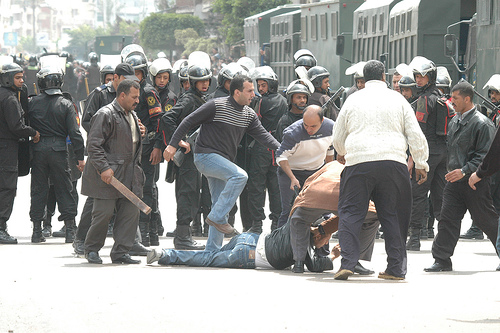
Egyptian police break a Copt's leg. Photo by Nasser Nouri
It currently seems there is a real danger of the Middle East losing its millenia-old diversity. Iraq’s post-invasion civil war separated the country’s Shia and Sunni communities, driving millions into exile. Pro-Western Arab regimes continue to spew vicious anti-Shia propaganda, which is heard by important sections of society. Now Wahhabi-nihilists have declared open season on Iraq’s ancient Christian community. Palestine was cleansed of its natives in 1947/48 and transformed into a Jewish ethno-state. Zionism and a new Muslim chauvinism have reduced the Christian proportion of the West Bank from 15% in 1950 to 2% today. And the New Year brought news of an appalling attack on Egyptian Copts, an increasingly oppressed and alienated community.
Informed observers will know that there is nothing essential or ‘ages-old’ about the emerging sectarian chaos. Sectarianism had receded almost to irrelevance amongst the generations of Arabs that believed they were on their way to true independence. Foreign partitions and occupations did a large part to crush that dream. Totalitarianism and economic and educational failures (often the policies of foreign-backed regimes) did the rest. In Egypt’s case, the Mubarak regime has dealt with its Islamist challenge in two ways: politically, it has rigged elections ever more blatantly and persecuted its visible opponents; socially, it has given way to the most retrograde desires of Islamism (forbidding the construction of churches, banning books) and done its best to whip up petty chauvinism over the most ridiculous of pretexes (for instance the mutual football hooliganism of Egyptian and Algerian fans).
Wrong Target for a Pretend Philosopher
French Zionist and celebrity Islamophobe Bernard-Henri Levy recently accused Susan Abulhawa’s novel Mornings in Jenin of contributing to anti-Semitism. Levy picked the wrong target. Abulhawa has already proved herself more than a match for the ranting Alan Dershowitz. In the Huffington Post she responds to Levy’s anti-Semitism charge: “This word — with its profound gravity of marginalization, humiliation, dispossession, oppression, and ultimately, genocide of human beings for no other reason but their religion — is so irresponsibly used by the likes of Levy that it truly besmirches the memory of those who were murdered in death camps solely for being Jewish.” Then she reminds us that “the people who today are being marginalized, humiliated, dispossessed, and oppressed for the sole reason of their religion are Palestinian Christians and Muslims.“
The entire, excellent rejoinder to Levy’s attempt at intimidation is over the fold. Meanwhile, if you haven’t yet bought a copy of Abulhawa’s wonderful novel, do so. Read the rest of this entry »
The Awakening According to Antonius
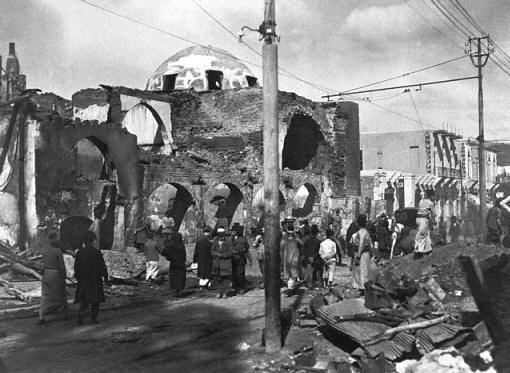
Damascus after French Bombardment, 1925
Originally published at the Muslim Institute.
I never managed to finish T.E. Lawrence’s vastly overrated “Seven Pillars of Wisdom”. It’s a poorly written, narrowly partial and self-dramatising account of the Arab Revolt against Turkish rule during World War One, as poor a rendering of history as one would expect from Lawrence, with his poor Arabic, poor knowledge of the Arab nationalist movement, and his strange belief that he could pass as an Arab, despite his blond hair and stumbling speech.I got as far as his description of the Syrians as “an ape-like race.”
A far, far better book on early Arab nationalism is George Antonius’s “The Arab Awakening,” which covers the period from Muhammad Ali’s brief unification of Egypt and Syria in the 1830s to the struggle for Palestine in the 1930s.
Writing in 1938, Antonius is much too optimistic about the Saudi takeover of Asir, the Shammari lands and the holy cities in the Hejaz. “It re-established the ascendancy of Moslem ethics and Arab traditions,” he says, paying only slight attention to the massacres and cultural vandalism which attended the Sauds’ arrival. Antonius didn’t forsee the immense power that oil wealth and the client relationship with America would bring, and he incorrectly expected that Wahhabism would moderate through contact with the world.
But that’s my only quibble. He’s excellent on events in the northern Arab countries and on the linguistic and cultural origins of Arabism. He notes the interesting role of American Protestant missions in re-establishing the study of Arabic and its literature, and the key part played by Arab Christians in the burgeoning movement.
An Animal of Colossal Proportions
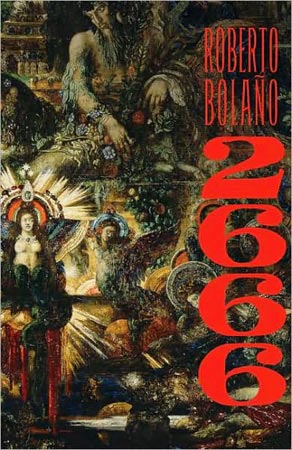 This review first appeared at the new Muslim Institute website (worth watching)..
These days it seems that almost everyone sees the apocalypse bearing down. This is the age of Kali Yag and the oncoming rapture, the arrival of the triumphant Mehdi, of catastrophic climate change and resource shortage. This is the age in which Beduin compete to build the taller towers, in which fog appears above cities as a sign of their evil.
‘2666’ is a vast apocalypse-in-motion novel set in the 1990s. It was written by a poet who turned to novel writing in his forties only in order to support his young family. He died at 50.
Roberto Bolano wrote ‘2666’ in five books. Before he died he asked that each book be published separately, because he believed that would leave more cash for his loved ones. His publishers decided to ignore this directive, for each book feeds thematically and by plot tangent into the others. The novel has a cumulative, total effect.
The first book – effortlessly cosmopolitan, densely detailed, persistently digressive – centres on a menage a trois between three European academics who also share an obsession with a reclusive German writer called Archimboldi. When a British-Pakistani cab driver expresses his outrage at the academics’ unorthodox relationship, the two men of the trio beat him to a pulp. Afterwards, “they were convinced that it was the Pakistani who was the real reactionary and misogynist, the violent one, the intolerant and offensive one, that the Pakistani had asked for it a thousand times over.” Almost in passing, the episode diagnoses a very contemporary European disease, but also contributes to some of the novel’s central themes, of violence, anonymity, senselessness and the failure of imagination.
A Short Border Handbook
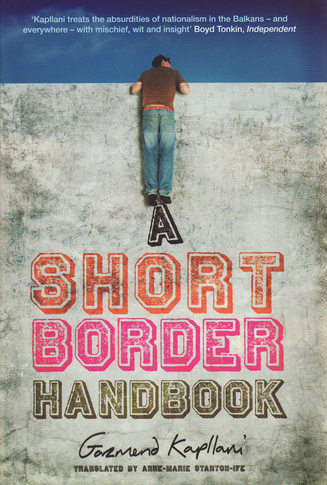 I met Gazmend Kapllani, a Greek of Albanian origin, during a recent visit to Germany (for a British Council ‘Our Shared Europe’ conference). He’s a great conversationalist, so I was pleased when he promised to send me one of his books. A Short Border Handbook arrived this morning. I took it back to bed, planning to read the blurb and perhaps the first chapter before adding it to my enormous pile of books-to-be-read. But I read the whole thing in one go.
It’s not a novel but it feels like one, because it’s so lightly yet densely written, full of stories and humour and therefore with a texture more human than journalistic. Part autobiography, part fiction, part philosophy, Kapllani’s book reminds us that a migrant, unlike a tourist, is the weak pole in relation to his host society, and that the weak are never respected, however hard they work. The Handbook’s general ruminations are applicable to any migrant, but it also addresses very specifically the conditions in Albania in the 1990s which forced so many people to move.
It has the following to say about Enver Hoxha. Examples of other fallen dictators will leap into readers’ minds:
Outposts
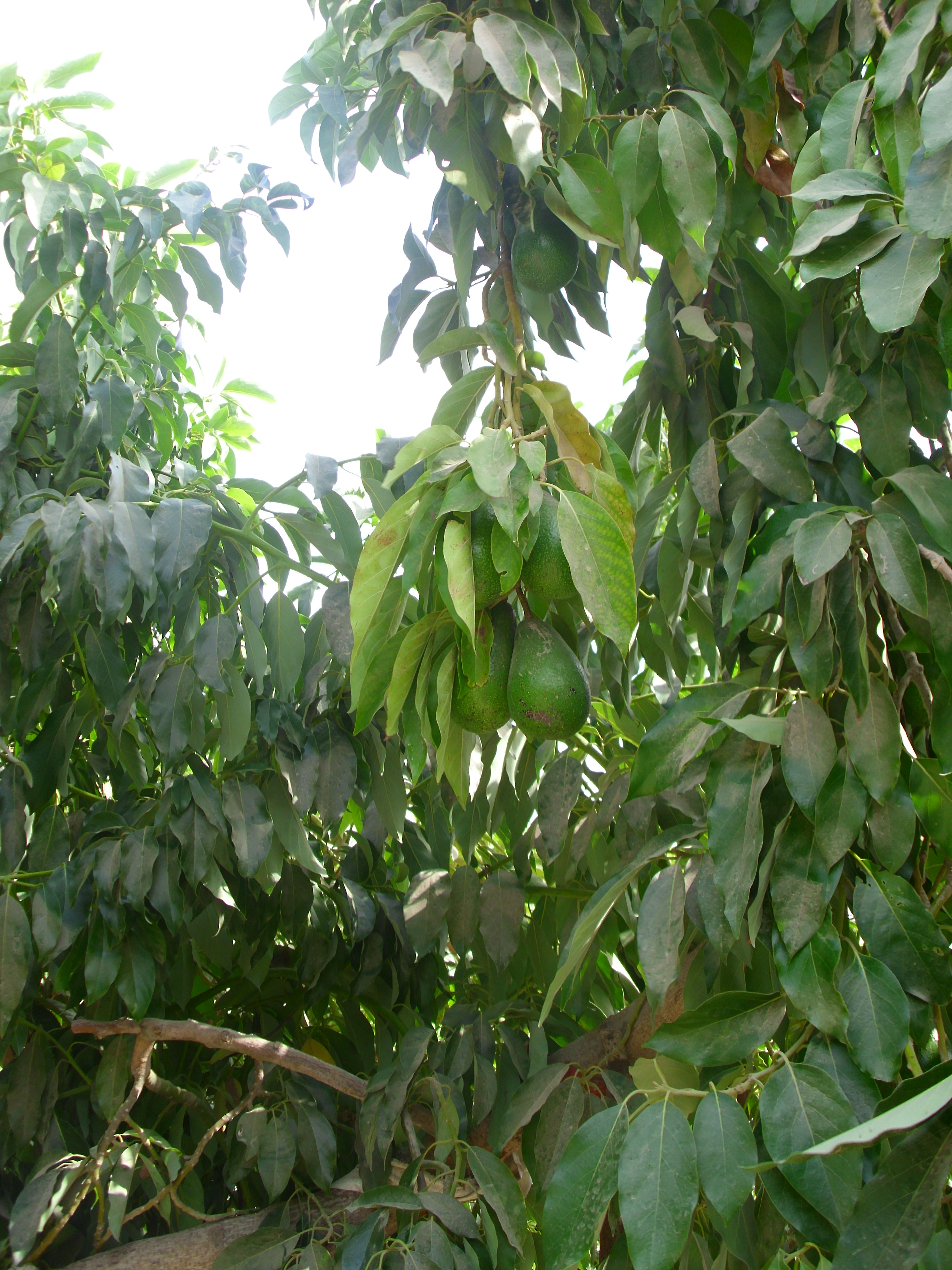
avocadoes
Whatever the Western media calls them, the illegal Jewish settlements on the West Bank are very far from being outposts. They are connected to Jerusalem and Tel Aviv by fast, Jews-only motorways. Their villas have swimming pools and lawns (a settler is allocated eight times more water than a Palestinian). Even the most recent and farflung of settlements are tooled-up enough to intimidate the Arabs on whose land they encroach.
It’s the Palestinian villages which feel like outposts, although some have been settled for thousands of years. Even when they’re close to major cities they are vulnerable, intermittently cut-off, and surrounded by wolves (or boars).
An example is Iraq Burin, a mountain-top village just a kilometre from Nablus but one trapped behind a checkpoint. Not only are the villagers unable to access city shops and services, they face violent harrassment from soldiers and armed men from the nearby Bracha settlement.
There’s an unarmed ‘popular’ struggle against land confiscation being waged here. It involves weekly demonstrations which are met by tear gas and sometimes bullets (in March two teenagers were killed). Similar protests are held in villages all over the West Bank, most famously in Bil’in, Nil’in and Budrus.
Epilogue on Tony Benn
Me chewing the fat with Ken Livingstone and Nadifa Mohamed.
more after the break..
Mountain of Fire
With different pictures, and very slightly edited, this was published at al-Jazeera’s website.
 Nablus is built over deep wells on the narrow valley floor between Mount Jarizeem and Mount Aybaal. Its alleyways brim with ground coffee and spices, abrupt wafts of aniseed, plus honied tobacco bubbling from the argilehs, meat vaporising on the grills, traffic fumes, baking odours, pavement rubbish, and dust. By day there’s plenty of friendly Arab noise; by night barks and cock crows take over. Although this is a city of over 130,000 people, everybody seems to know everybody else. Deeper than that, there’s a connecting air of solidarity.
The intricate Old City, and the view of the ochre mountainside, reminded me of Damascus. In fact, Nablus used to be known as Little Damascus. Before Messrs. Sykes, Picot and Balfour chopped up the world, there was a trade route from Nablus (the West Bank) via Irbid (Jordan) to Damascus (Syria). Nabulsis and Damascenes intermarried. In Syria today the famous sweet knafeh is known simply as nabulsiyeh, the Nablus thing.
Nablus is also famed for its delicious olive oil soap. Although local bedazzlement by ‘modern’ products and (mainly) the obstructions of Israeli occupation have shrunk the industry, factories still operate in the Old City, sourcing their oil from the semi-besieged villages in the nearby hills.
These days life is a little easier than it has been. Palestinians can get to Ramallah fairly fast. They can’t get to Jerusalem (or Gaza, or Haifa) but they can benefit from some of the EU/ PA cash sloshing around if they’re lucky. They can even drive up to the Sama Nablus viewpoint and drink tea without being shot at from the military base above.
Yom Kippur
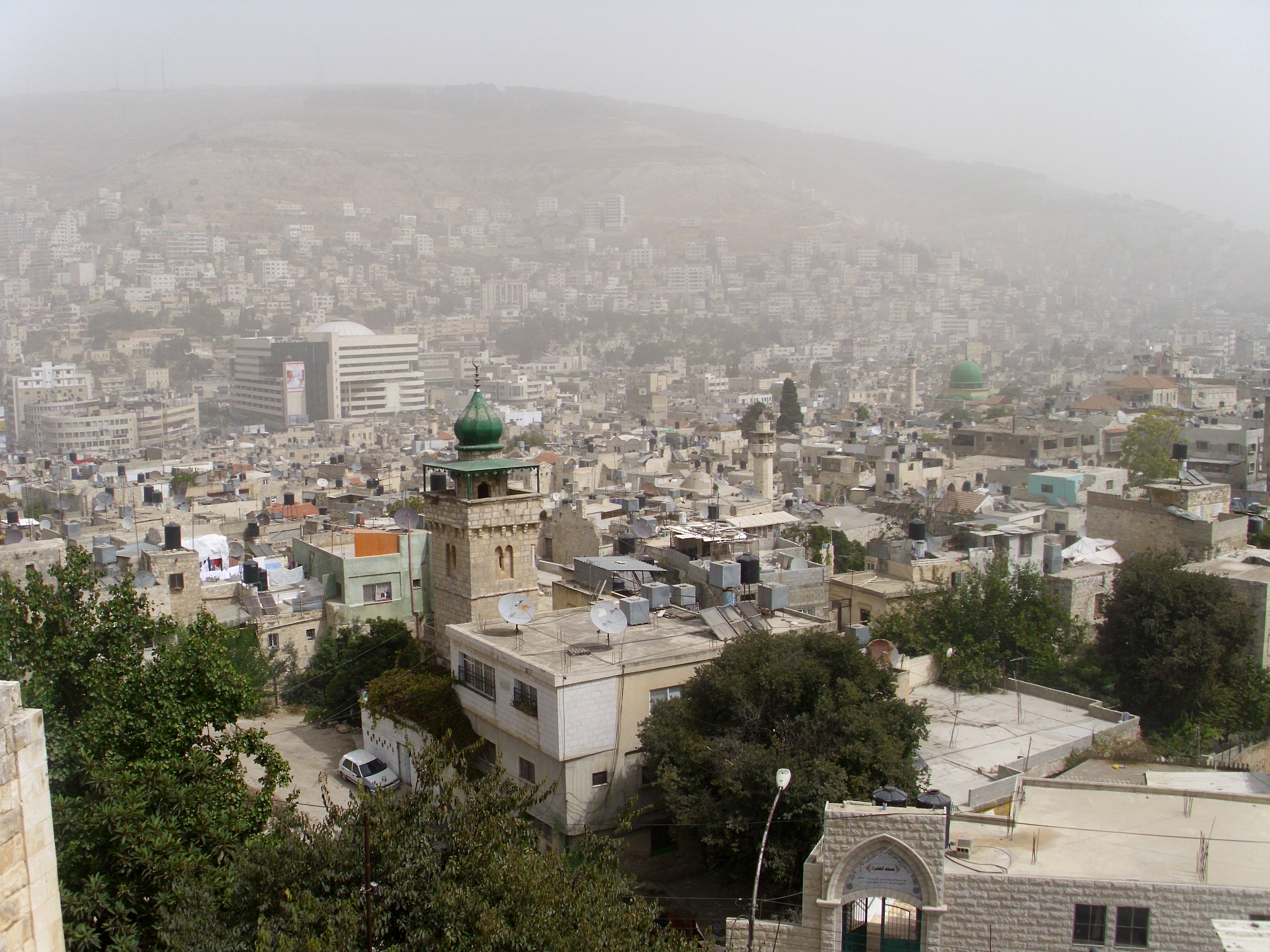
Summer Mist in Nablus
“Have you visited Afghanistan? Pakistan? Yemen? Do you have a weapon? Do you have a credit card? Give us your email address. Do you know anyone in Israel? Do you know anyone in Jordan? What is your novel about? What did you do yesterday?”
It only took an hour and a half to get through the border. They were closing early because it was Yom Kippur, yowm al-ghafran in Arabic, the Day of Atonement.
The driver who met me said he couldn’t go to Nablus, not now, it was getting too late, because the car had Israeli plates and settlers were throwing stones, he could take me to Ramallah instead, although it was further.
“Won’t we be alright with Israeli plates?”
“We need Palestinian plates. They’re throwing stones at Israeli cars because they don’t want Jews driving on the holiday.”
So we went to Ramallah, south through the West Bank. We drove down the confiscated Jordan valley. A couple of memorials to settlers shot here during the Second Intifada were set up at the roadside. To our east, closed military zones and then the hills of Jordan rising. To the west, ochre desert mountains and hardly any habitation.
Petrol
 His father used to work at the refinery, which was a good job. His father brought home a new toy every evening, that’s what Bilal remembers. Many of the toys are still at home, stuffed under his mother’s bed: speaking animals, racing cars, things that work if you have batteries.
Bilal thought his father had a round and jolly face, but this thought contradicted the stern, gaunt photograph framed on the living room wall. The photograph was a fact – unlike Bilal’s thought, which was only a thought, as vague and blurry at the edges as thoughts tend to be.
A couple of years ago, a long time now, his father had been arrested and taken away. This happened to a lot of people and was nothing much to cry about.
There was some confusion as to his father’s exact location. One aunt said he was in the local prison. One said he was in prison in the capital. His uncles squeezed his shoulder and said nothing at all.
One aunt said he was in heaven. When Bilal heard her he thought his father had been killed and he began to cry inconsolably. But his mother told him that that aunt was just upset and raving, that his father was in prison in the capital, and that Bilal would meet him again one day when he’d grown up and done something that his father could be really proud of. She said people don’t die in any case. And Bilal was consoled.
He was the oldest child, the only son, so in a way the head of the household. He bossed around his two sisters who were too little to obey him. He knew he bore responsibility for them and for his mother whose wages paid the rent on their flat but didn’t put food on the table. That was his job. But what he suffered in responsibility he regained in freedom.
Sun Deprived in Palestine
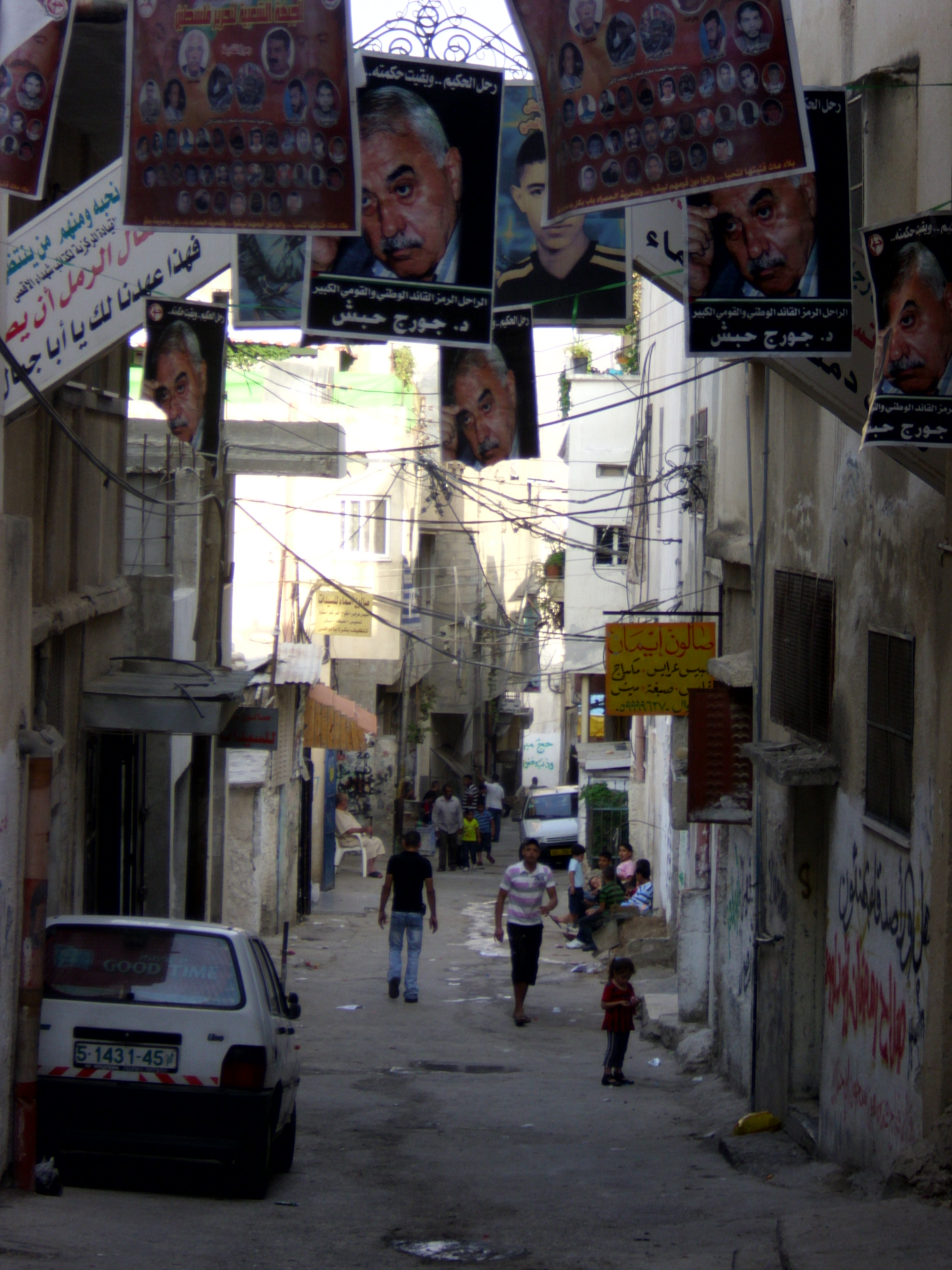
The PFLP's George Habash pulls an eyebrow
Balata Camp started as tents in the fifties, grew cement blocks in the sixties, installed sewage and water in the seventies, and has stretched ever upwards until now. The camp boasts the densest population in the West Bank: at least 25,000 people in a couple of square kilometres (the inhabitants claim up to 40,000). The buildings are so tightly packed that the kids forced out to play in the shadowed alleyways suffer from Vitamin D deficiency, sun deprivation. There are eight to ten people to a residential room. In school there are 50 children to a class. UNRWA schools and the graveyard take up most space. Most of the graves are those of people killed in the streets of the camp.
It’s a remarkably friendly place, but also discomfiting. Many of the young are prematurely aged and many of the old seem broken. There’s a higher proportion of wheelchairs than anywhere else I’ve been. In a comparatively wide street I found boys playing table football in front of a memorial to their murdered playmate. They laughed and screamed.
An Apartheid Distinction
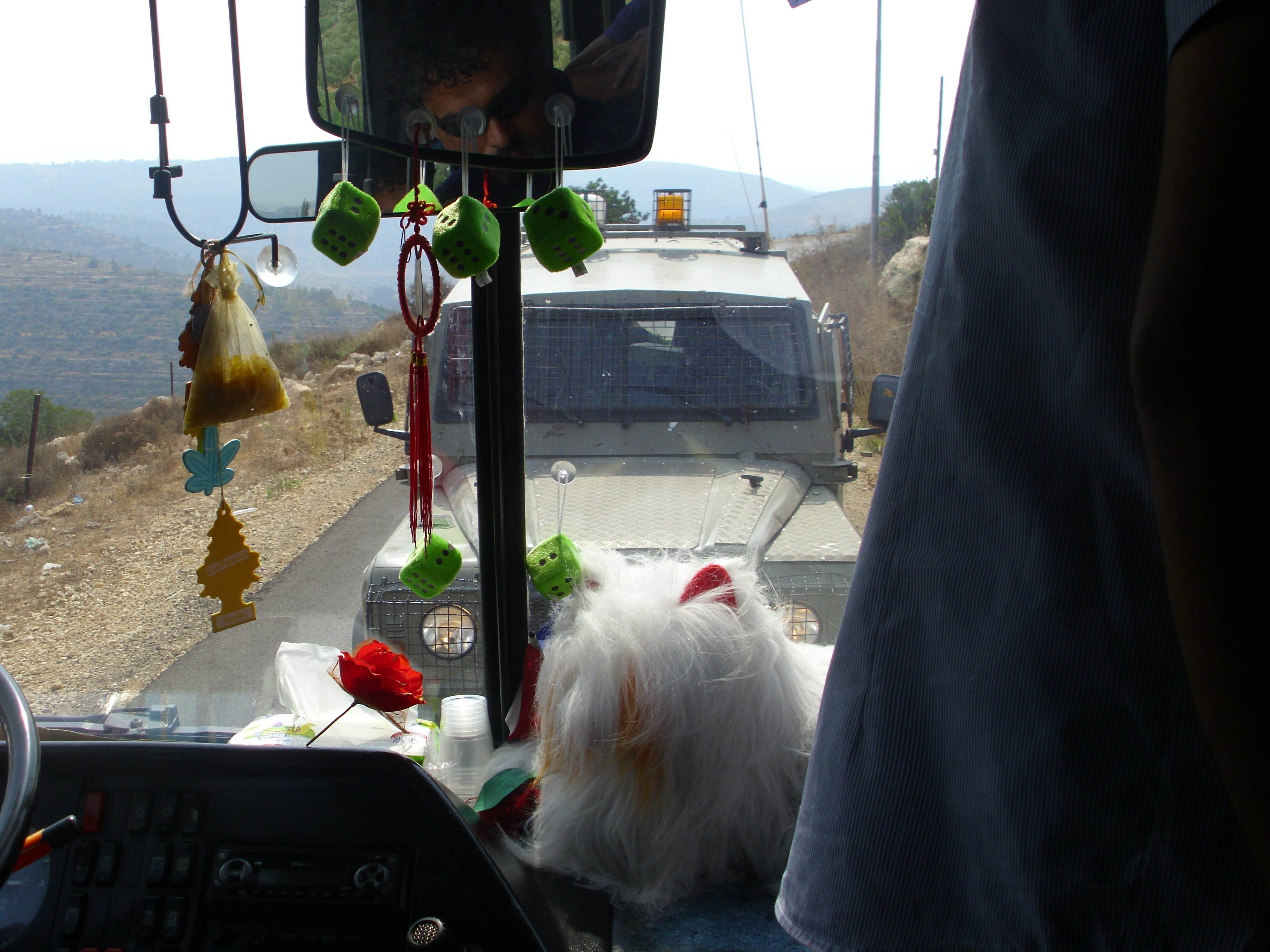 I was at the border, a British national with an Arab name on my way into Palestine-Israel. The Jordanians were suspicious but not at all intimidating. It felt more like an unexpected cup of tea with an avuncular officer (which it was) than an interrogation. I learnt about Abu Tariq’s children and he learned about my reasons for crossing, my travels, and my career. He noted everything down before shaking my hand.
The bus through no-man’s land was full of Palestinian-Israelis, descendants of the remnant not driven out in 1948 – those the Israelis call ‘Arab-Israelis’, as if they were recent immigrants from Kuwait or Algeria. The sun bubbled the box of our bus. It was airless and sweaty inside.
Israeli border control is staffed by teenaged girls in low-slung military trousers backed up by men with sunglasses and enormous guns. The girls clocked my (Arabic) name, and my bags were searched. Then I was closely questioned. Then I had to wait. Fortunately it was Yom Kippur: they let me through an hour later when they closed up early.
Then by car through the the ethnically-cleansed city of Beesan (signposted in Arabic script with the Hebrew name – Beit She’an), and into the West Bank. The roadsigns here are very democratically scripted in Hebrew, English and Arabic, except for those in Hebrew only. But Palestinian towns and villages are never posted. A visitor travelling a Jews-only road wouldn’t realise that such places exist. Jerusalem is written in Arabic as “Urushaleem,” and then between brackets “al-Quds”, which is the actual, ancient and contemporary Arab name. In such ways the attempt is made to occupy the land’s abstract Arab qualities, to control history and memory, the past as well as the present and future.


 Qunfuz