Things that Happened While I was There
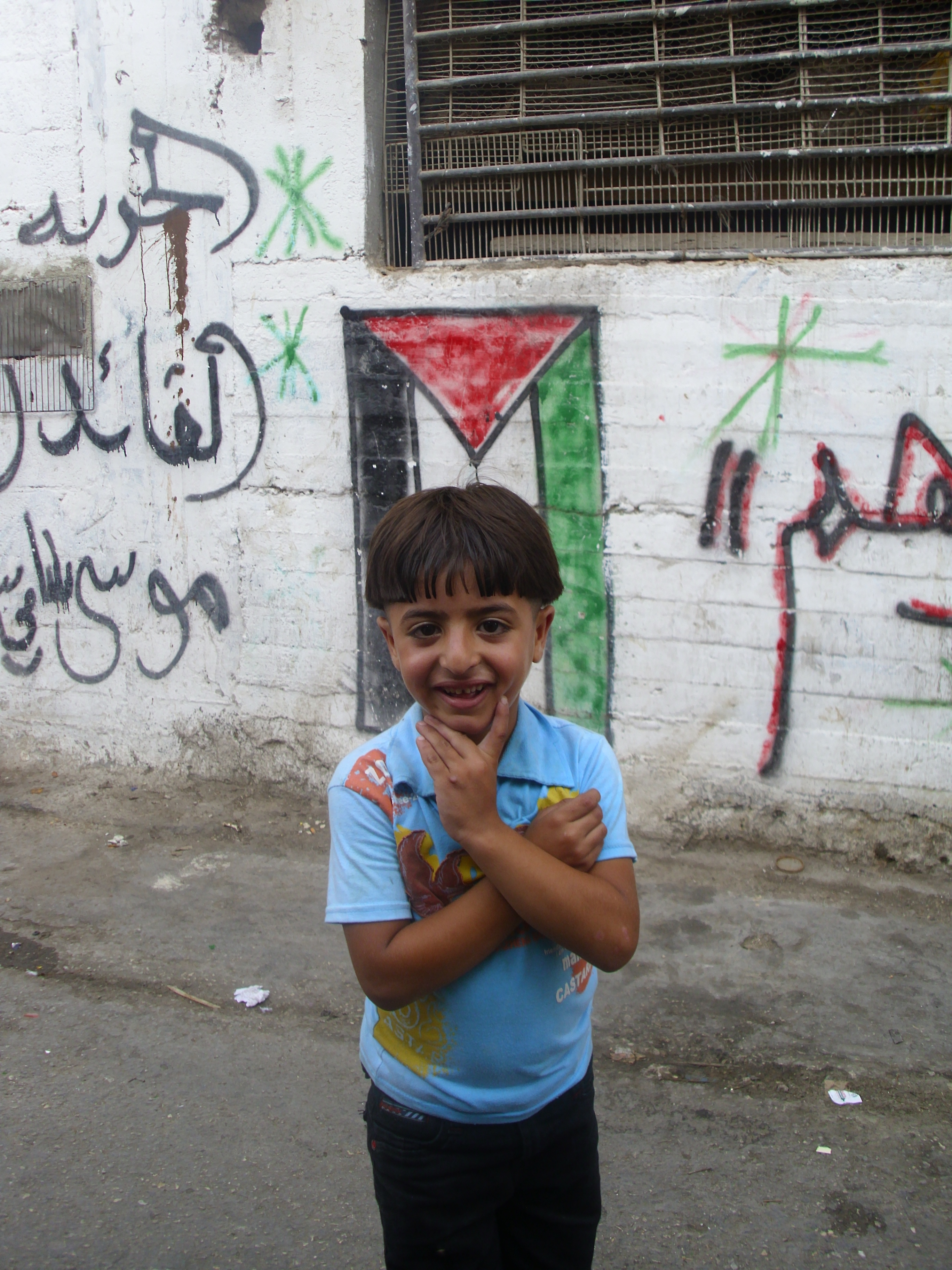 A large demonstration was held in central Nablus calling for the release of the thousands of prisoners held in the Israeli gulag.
Israeli forces shelled Gaza.
The Palestinian Authority arrested 53 men in overnight raids.
I passed a settlement built during Netanyahu’s ten-month settlement freeze.
Two settlers were shot in the legs by Palestinian fighters while driving near Hebron.
PA president Mahmoud Abbas let slip that he might not pull out of peace talks when the settlement freeze lapses.
The Palestinian Authority arrested 20 men in overnight raids.
Dana wrote a story about a girl raped by a relative.
Hamas forces closed down a Gaza restaurant because a woman had publicly smoked the argileh there.
A History of Significant Moments
 How many Britons are aware of the British-Iraq war of May 1941? Not many. Yet such past wars are the producers of today’s reality. People in Iraq remember. If Westerners don’t remember the past they will inevitably fail to understand the present moment.
The urge to remind the reader so as to better contextualise the present is the laudable motive energising Eugene Rogan’s “The Arabs. A History,” which covers the last five hundred years.
The history starts in 1516 with the Ottoman defeat of the Mamluk slave-elite, the regime which in previous centuries had repelled Mongols and Crusaders from the Arab heartlands. The Mamluks weren’t Arabs, but they’d ruled from Arab capitals. Now power moved to Istanbul, which makes the moment a good place to begin. From the 1516 collapse in Cairo until the present day, many key decisions governing Arab life have been made in foreign cities. Rogan calls the process “the cycle of subordination to other people’s rules.”
In the early years, Ottoman rule “in the Arab provinces was marked by great diversity and extensive autonomy.” Sulayman’s perspicacious laws, public building projects and reasonable prosperity followed. But the global centre of gravity was shifting, and the long decline set in.
Syria’s Diversified Options
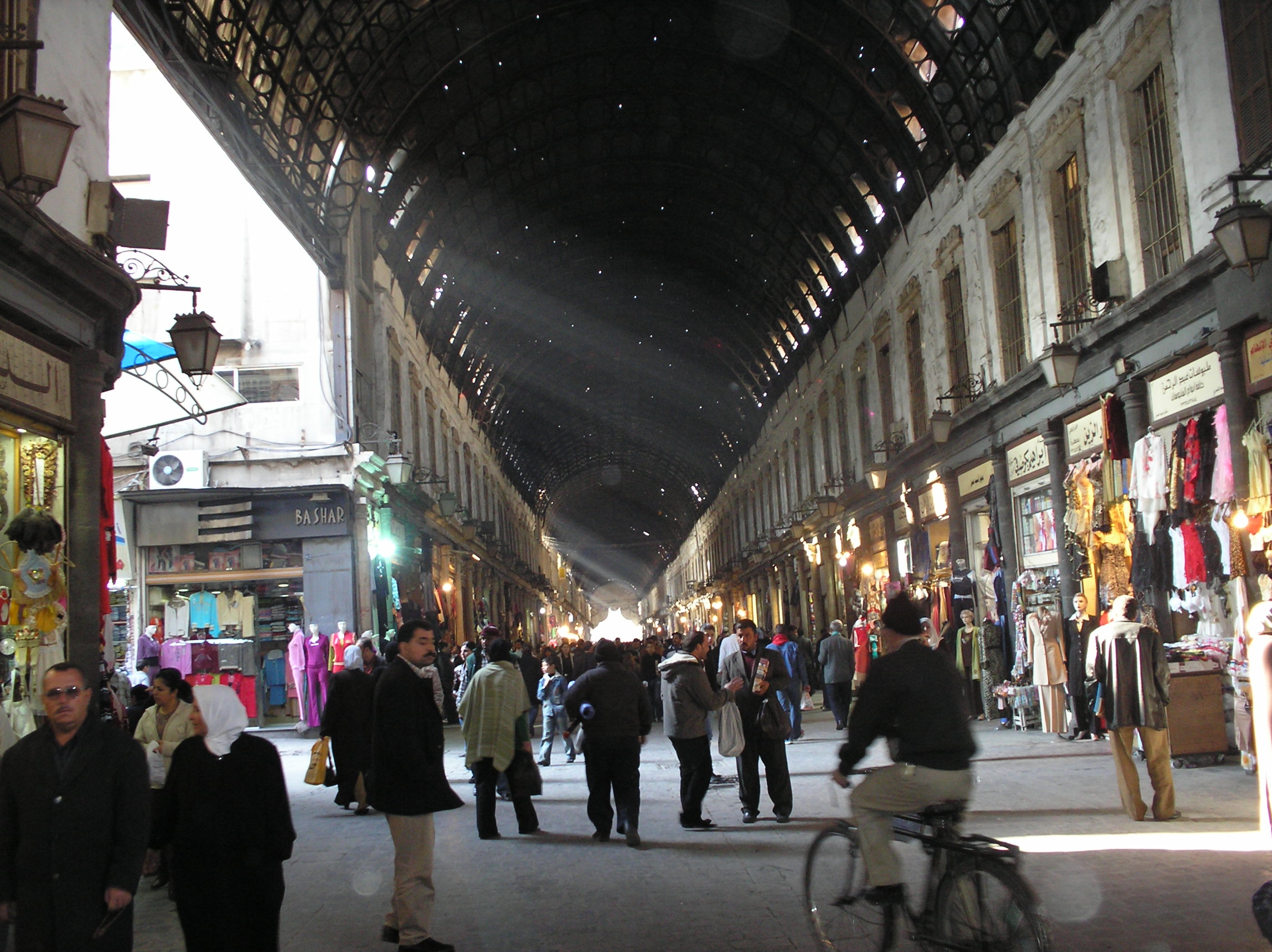
French bullet holes in the ceiling
This was written six months ago and recently published in Political Insight.
A sigh of relief blew across Syria when the Bush administration was retired. Bush had backed Israel’s reoccupation of West Bank cities, described Ariel ‘the Bulldozer’ Sharon as “a man of peace”, given Syria two million Iraqi refugees and an inflation crisis, and blamed Syria for the assassination of Lebanese prime minister Rafiq al-Hariri. Veiled American threats of “regime change” scared the Syrian people – who observed the blood rushing from neighbouring Iraq – almost as much as they scared the regime itself.
Obama’s re-engagement signalled an end to the days of considering Syria – in the predatorial neo-con phrase – “low-hanging fruit”, but American overtures have remained cautious, the new administration’s policy severely limited by its commitments to Israel and the domestic Israel lobby. Obama nominated Robert Ford as the first American ambassador to Damascus in five years, but the appointment has since been blocked by the Senate. In May, Obama renewed Bush-era sanctions, citing Syria’s “continuing support for terrorist organizations and pursuit of weapons of mass destruction and missile programs,” which, “continue to pose an unusual and extraordinary threat to the national security, foreign policy, and economy of the United States.”
So not much has changed. The neoconservative language is still in place, the same elision of distance between American and Israeli interests, and between anti-occupation militias and al-Qa’ida-style terrorists, plus a flat refusal to understand that the countries really under unusual and extraordinary threat of attack are Syria, Lebanon, and – Netanyahu’s “new Amalek” – Iran.
Prisoners
During the journey from Ramallah to Nablus I got talking to the middle-aged man sitting beside me. It turned out he’d been in prison for five years, cramped in a cockroach-run tent with tens of other men. At the kiosk at the end of my street I got talking to a white-haired young man. A few nights earlier the two owners of the kiosk had been taken away in an Israeli jeep. The white-haired man’s brother had been killed in 2007. He himself had done eleven years inside. I got talking to a writing student whose brother was constantly detained. A Palestinian friend of mine who now lives outside did ten years in Israeli jails. Two and a half of them were underground. Almost every male I met in Nablus had been imprisoned at some point. There are at least 8500 prisoners currently inside. But my friend tells me he felt more free inside the small prison than he did inside the larger. So here’s the statistic that counts: in all the territories controlled by the apartheid state of Israel there are 5,300,000 Palestinian prisoners. The other half of the Palestinian people is locked outside in exile. Here’s Saed Abu-Hijleh describing temporary detention.
Hope, and How Not to Visit Palestine
 My visit to Nablus coincided with the first Palestinian Human Rights Film Festival at an-Najah University. Even better than the films shown were the panel discussions afterwards, on issues such as refugees, resistance and women’s rights. The first film I saw was “To Shoot an Elephant” (watch it here), a brutal, highly-recommended documentary shot by International Solidarity Movement activists who happened to be in Gaza as the 2008/09 massacre unfolded. After the screening the audience communicated with director Alberto Arce via a video link-up to Spain. (Alberto is permanently banned from entry into Israeli-controlled territory.)
Alberto said this: “It is not my job to tell the Palestinians what to do. It’s my job to support the Palestinians and to witness what’s happening to them. The Palestinians have suffered so much from the actions of foreigners, and foreigners have no right to impose their beliefs on Palestinians.”
The Martyrdom of Shaden al-Saleh
This video concerns Israel’s 2002 murder of a Palestinian teacher,cultural activist and neighbourhood organiser, Shaden al-Saleh. Shaden was the mother of Saed Abu Hijleh, who witnessed the murder and gives his own account here. Saed teaches political geography at Nablus’s an-Najah University, writes poetry, blogs, organises, and provides me with wonderful food and information, for which I’m very grateful. He’s a well-educated member of the Nablus middle classes. He’s also been shot in the belly and in the shoulder and has been imprisoned five times. But his suffering is not unusual. Everybody in Nablus has a story to tell. I’ve just returned from the prison, and over the next couple of weeks I aim to convey a few of the stories I heard. An example of Saed’s English-language poetry is over the fold.
Read the rest of this entry »
David Hirst Interviewed
 My interview with David Hirst, author of Beware of Small States, reviewed here, was done on behalf of the indispensable Electronic Intifada.
Veteran Middle East correspondent David Hirst, author of the seminal work on the Palestinian plight The Gun and the Olive Branch, has a new release: Beware of Small States, an equally important book on Lebanon’s complex tragedy. The Electronic Intifada contributor Robin Yassin-Kassab interviewed Hirst on his work and views.
Robin Yassin-Kassab: You did your national service in Cyprus and Egypt just before the 1956 Suez War. What effect did your first experience of the Middle East have on you? Why did you end up spending your life in the Middle East, particularly in its more violent corners? Have kidnappings and bannings discouraged you?
David Hirst: Yes, I was one of the last generation of British 18-year-olds obliged to do two years of military service. Politically speaking, it had virtually no effect on me; I was an immature youth from a thoroughly apolitical middle class background, and knew next to nothing about international affairs, and hardly knew, for example, the difference between Arabs and Israelis. But — unusually for a mere private soldier — I sought and secured permission to use a fortnight’s leave to travel round Syria, Iraq, Jordan and Lebanon. I enjoyed the experience. After three years at Oxford, I could not think of a career to embark on. Remembering the American University of Beirut, I wrote and asked them if there were any kind of introductory course about the Middle East that I could follow there. There was. With a vague idea of staying there for a couple of years or so, I found myself drifting into journalism, and, taking to it, I ended up staying fifty.
Beware of Small States
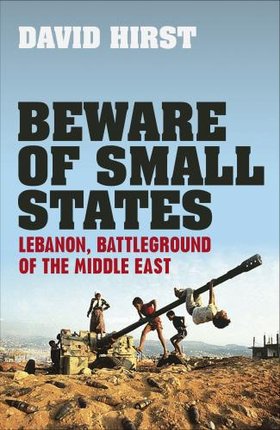 The chaos of Lebanon has thrown up an Arab horror parallelled only in post-invasion Iraq. It has also produced the Arab world’s most urgent intellectual life, and its first victory against Israel. Lebanon is the most contradictory of countries, “a more open, liberal and democratic society than any of its Arab neighbours” precisely because of “its vulnerability to domestic dissension.” So, with its seventeen sects and constantly shifting allegiances, who would dare to explain Lebanon?
No better candidate than David Hirst, whose 1977 book “The Gun and the Olive Branch” was one of the very first to sympathetically present the Palestinian plight in English. Hirst’s latest work “Beware of Small States” is a panoramic study of Lebanon’s difficult history which strikes exactly the right balance between close detail and broad interpretative sweep. The writing is precise, penetrative and elegant. For sober, logical analysis, “Beware of Small States” outstrips Robert Fisk’s “Pity the Nation.”
Beirut 39
 This was published at the Guardian.
The Arab world is undergoing seismic transformations, groping its way towards new, as yet unknown forms, throwing up works of art as well as bombs in the process. In the face of vast complexity, however, and in a time of war, our media’s first response is to dumb down.
If the news media simplifies, literature, by offering social and psychological context, broadens and diversifies our understanding of the region, and particularly literature written by Arabs. (When Martin Amis or John Updike write about Arabs, they are of course writing about themselves, their own ideas of how Arabs tick.) The reading public seems to know this. Recent years have seen an increasing demand for Arabic writing in English translation, though Europe still translates far more.
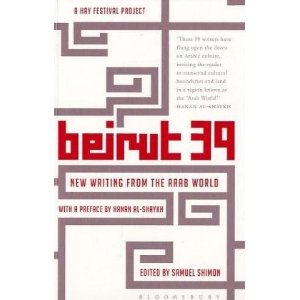
So the publication of “Beirut 39” – 39 extracts by Arab writers under 40 – is a timely and worthwhile initiative. The 39 are winners of a contest organised by Banipal magazine and the Hay Festival of Literature, and the book’s name honours UNESCO’s World Book Capital for 2009. “Beirut 39” contains short stories, novel extracts and a few poems, often brimming with exuberant confidence and sparkling with innovation. The quality of translation ranges from acceptable to excellent.
British Writers in Support of Palestine
I’m proud to be a signatory to this letter published in shortened form in the Independent on Sunday.
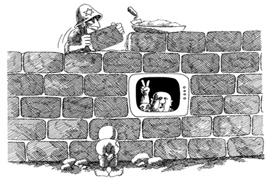
by Naji al-Ali
June 4th 2010
Dear Editor
The murder of humanitarian aid workers aboard the Mavi Marmara in international waters is the latest tragic example of Israel’s relentless attacks on human rights. But while violently preventing the free passage of medical, building and school supplies to Gaza, Israel continues to pride itself as a highly cultured, highly educated state. In solidarity with Palestinian civil society and its call for a Boycott Divestment and Sanctions campaign against Israel, we the undersigned therefore appeal to British writers and scholars to boycott all literary, cultural and academic visits to Israel that are sponsored by the Israeli government, including those organised by Israeli cultural foundations and universities. (This boycott does not include courageous independent Israeli organisations who openly oppose the occupation.) We also ask that writers, poets and British funding bodies actively support Palestinian literary events, such as the Palestinian Literary Festival and the Palestinian Writing Workshop.
When Did Resistance Become a Dirty Word?
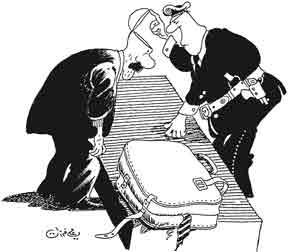
Any Resistance There? by Ali Farzat
What the Western political class and its media demand of the Arabs and Muslims is acceptance of the unacceptable status quo in Israel-Palestine. To resist the status quo is to be troublesome, destabilising and irrationally violent. Resistance arises from the inadequacies of a culture and religion given to antisemitism and hysteria. In order to develop, these backward folk must give resistance up.
For the Lebanese, this means that they must forget the brutal 22-year occupation of their country and the 1982 siege of Beirut as well as the 2006 assault on the country’s civilian infrastructure. They must forget the endless chain of massacres perpetrated by Zionists and their allies on Lebanese territory. They must smile when Israel violates their air space on a daily basis and threatens to send them “back to the stone age” on a weekly basis. They must disarm and label as terrorist Hizbullah, the principled defender of their country.
The Earth Shifts
Following the Israeli act of terrorism in the Mediterranean, calls for the siege of Gaza to be lifted have come from some unlikely quarters, including the British prime minister. A nervous Husni Mubarak has temporarily opened Egypt’s border with Gaza. More ships are being prepared to break the siege, including one organised by European Jewish groups. Norway has cancelled a military seminar because an Israeli officer was part of the programme. Swedish dock workers will block Israeli ships and goods for a week. The British trades union UNITE has voted to boycott Israeli companies. A French cinema chain has pulled an Israeli film and will instead show a film about Rachel Corrie (murdered by Zionism while protecting a Palestinian home from demolition). Nicaragua has suspended ties with Israel. The rock groups Gorillaz, the Pixies and the Klaxons have added their names to the growing list of musicians (Santana, Elvis Costello, Gil Scott Heron..) who refuse to perform in the apartheid state. But the big story, the earthshaking story, is Turkey. Idrees has already posted the video below at PULSE, but I must repost it here. It shows the expanding demonstrations in Turkey, with Turks waving Palestinian, Hamas and Hizbullah flags, and even pictures of Imad Mughniyeh. It can’t be stressed enough how important this is. After a century of bitter estrangement, Turks and Arabs are coming together. This is a game changer.
The Freedom Flotilla and Guardian Propaganda
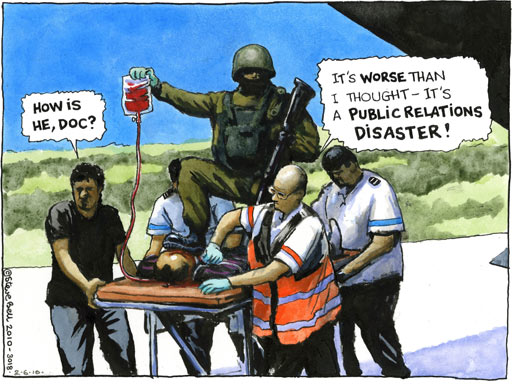
by Steve Bell
Dear Sir/ Madam
I appreciate the Guardian allowing a range of voices to be heard on the issue of Israel-Palestine, but I find straightforward propaganda in the news (as opposed to opinion) pages very worrying indeed. I refer to the ‘story’ by Harriet Sherwood – “Flotilla raid: Turkish jihadis bent on violence attacked troops, Israel claims”.
In Muslim cultures, it is common to refer to those who have died for a cause or who have been killed by state terrorism as ‘martyrs’. In the hospitals of Palestine, one might hear people crying – “My baby has been martyred! They’ve martyred my mother! My grandfather was prepared for martyrdom, and now it’s happened!” This does not mean that the baby, mother or grandfather in question were trained-up, armed Wahhabi-nihilists.
Sherwood’s ‘story’, which the Guardian positioned so prominently, is based on the assumption that when grieving Turks use the word ‘martyr’ they mean ‘Islamist suicide bomber’, that they mean what we decide they mean. This is not journalism but propaganda. Its purpose is not to inform readers concerning facts or to give more background on Turkish culture and Turkish responses to the attack on their ships, but to whitewash the piracy and murder committed by Israel in international waters. Sherwood’s sources are “the Israeli government” and Colonel Richard Kemp, who Sherwood doesn’t tell us is a well-known pro-Israel propagandist.
Read the rest of this entry »
Myth and Memoricide: Shlomo Sand’s “Invention of the Jewish People”
Denise Buonanno's Le Juif Errant
This review essay was published at The Drouth.
A nation is “a group of persons united by a common error about their ancestry and a common dislike of their neighbours.” Karl Deutsch.
“I don’t think books can change the world, but when the world begins to change, it searches for different books.” Shlomo Sand.
Our Assumptions About Israel
Here is what we in the West, to a varying extent, whether we are religious or not, assume about the Jews and Israel:
The Jews of the world, white, black and brown, are the sons of Abraham, Isaac and Jacob. Moses, after leading the Jews out of Egyptian enslavement, gave them laws. Emerging from the desert, the Jews conquered the promised land of Canaan, which became Judea and Israel, later the mighty kingdom of David and Solomon. In 70CE the Romans destroyed the temple at Jerusalem and drove the Jews from their land. A surviving Jewish remnant was expelled when Muslim-Arab conquerors colonised the country in the 7th Century. And so the Jews wandered the earth, the very embodiment of homelessness. But throughout their long exile, against all odds, the Jews kept themselves a pure, unmixed race. Finally they returned, after the Holocaust, to Palestine, “a land without a people for a people without a land.”
This story has been told again and again in our culture. Today we find bits of it in Mark Twain and Leon Uris, in Hollywood’s output and in church pulpits, and of course in the mainstream news media. American Christian Zionists – devotees of the Scofield Bible – swear by it, and swear to support Israel with all the power of their voting block until the Risen Christ declares the apocalypse.
Ghoshwood’s Mendacity
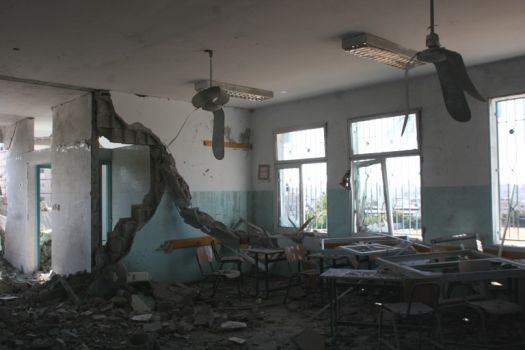
"Keeping Doors Open" - photo by Jon Elmer
by Robin Yassin-Kassab and Claire Chambers.
Novelists Amitav Ghosh and Margaret Atwood have accepted the Dan David prize at Tel Aviv University, an institution at the heart of Israel’s military-industrial complex. By doing so they have spurned Palestinian civil society’s call for boycott, divestment and sanctions on the Zionist state. Atwood has specifically ignored this wonderful open letter from the students of Gaza. The shared prize money amounts to a million dollars, of which 10 percent will be handed back to support Tel Aviv’s graduate students.
Of course it would be a mistake to expect writers to attain to higher moral standards or to to display more political intelligence than anyone else. Two things stick in the craw in this case, however. The first is that both Ghosh and Atwood have made names as ‘progressive’ and ‘postcolonial’ writers. We aren’t surprised when an openly-declared Zionist like Martin Amis visits Israel, but when writers who sell books on the basis of their opposition to oppression visit, the resultant hypocrisy is quite nauseating.


 Qunfuz