Posts Tagged ‘Alawites’
Sectarian Stories on the Syrian Coast
This article was originally published at New Lines Magazine. The topic – Sunni-Alawite sectarianism on the coast – is also treated in my new book, The Blood Between Us: Syria After the Fall of Assad, available for pre-order here.
In the aftermath of 14 years of war and six decades of divide-and-rule dictatorship, the bonds between Syria’s sectarian and ethnic communities have been strained like never before. The most urgent task before both government and society is to reestablish and strengthen these bonds, yet several outbreaks of violence since the fall of the Assad regime have threatened to break them entirely.
Some of the worst violence has occurred in the northwestern provinces of Latakia, Tartus, Homs and Hama, where Alawite and Sunni Muslim communities rub shoulders. My conversations with people from the coast, including with my relatives, show the extent to which Alawite and Sunni perspectives can diverge, and how intractable intercommunal resentments now are.
Can a national consciousness beyond sect and ethnicity be revived in splintered Syria? By last spring, the new authorities had erected signs around the country reading “Revolution Yesterday, Building Today.” In political terms, the question of what is being built involves the question of what the Syrian revolution was for. Was it a national democratic uprising against dictatorship, or a Sunni Islamist uprising — later a Salafist jihad — against Alawite rule?
The short answer is that it was both (and various other things, too), or perhaps that it started as the former, but war made the latter come to the fore.
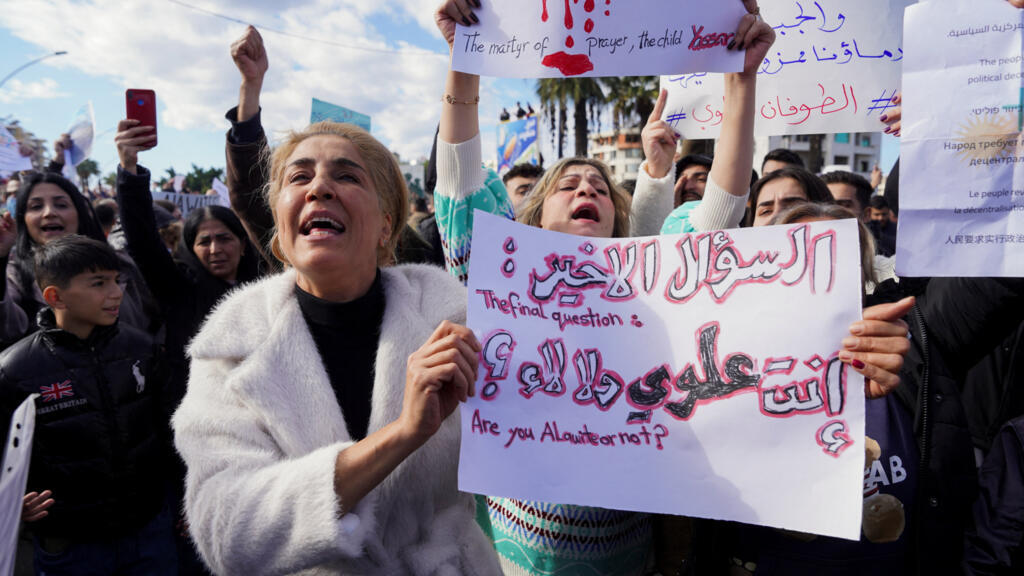
The Alawite-led regime’s response to the revolution was designed to create a sectarian conflict that would force loyalty from Alawites and other minorities. The regime rounded up the nonsectarian, nonviolent revolutionary activists first, and at the same time released jihadists from prison. It imposed collective punishment on Sunni areas and organized massacres of Sunni women and children. As time passed, it relied increasingly on foreign Shiite militias to plug the gaps in its repressive apparatus. Under pressure, Bashar al-Assad made it quite clear that his idea of national belonging was based on loyalty. “Syria is not for those who hold its passport or reside in it,” he said. “Syria is for those who defend it.” The sentiment was echoed, but with a sectarian role reversal, by the Islamic State group leader Abu Bakr al-Baghdadi, who said, “Syria is not for the Syrians, and Iraq is not for the Iraqis. The land is for the Muslims, all Muslims.”
All this sectarian rhetoric and practice went a long way to smashing Syrian identity and boosting subnational identities instead. After the liberation from the Islamic State in 2017, and then the Assad regime in 2024, those subnational identities lived on, continuing to offer support to fearful, traumatized people, and to provoke further conflict.
Read the rest of this entry »


 Qunfuz