Posts Tagged ‘Sectarianism’
Discussing ‘The Blood Between Us’ on the Tahrir Podcast
Thank you to Abdullah Nasef for hosting me on the Tahrir podcast.
You can watch the interview here:
Sectarian Stories on the Syrian Coast
This article was originally published at New Lines Magazine. The topic – Sunni-Alawite sectarianism on the coast – is also treated in my new book, The Blood Between Us: Syria After the Fall of Assad, available for pre-order here.
In the aftermath of 14 years of war and six decades of divide-and-rule dictatorship, the bonds between Syria’s sectarian and ethnic communities have been strained like never before. The most urgent task before both government and society is to reestablish and strengthen these bonds, yet several outbreaks of violence since the fall of the Assad regime have threatened to break them entirely.
Some of the worst violence has occurred in the northwestern provinces of Latakia, Tartus, Homs and Hama, where Alawite and Sunni Muslim communities rub shoulders. My conversations with people from the coast, including with my relatives, show the extent to which Alawite and Sunni perspectives can diverge, and how intractable intercommunal resentments now are.
Can a national consciousness beyond sect and ethnicity be revived in splintered Syria? By last spring, the new authorities had erected signs around the country reading “Revolution Yesterday, Building Today.” In political terms, the question of what is being built involves the question of what the Syrian revolution was for. Was it a national democratic uprising against dictatorship, or a Sunni Islamist uprising — later a Salafist jihad — against Alawite rule?
The short answer is that it was both (and various other things, too), or perhaps that it started as the former, but war made the latter come to the fore.
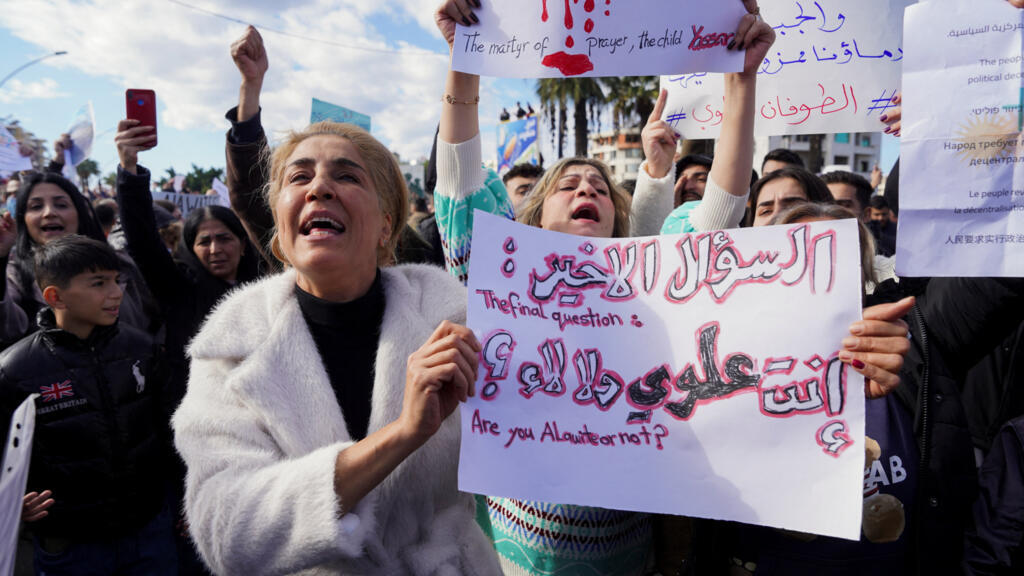
The Alawite-led regime’s response to the revolution was designed to create a sectarian conflict that would force loyalty from Alawites and other minorities. The regime rounded up the nonsectarian, nonviolent revolutionary activists first, and at the same time released jihadists from prison. It imposed collective punishment on Sunni areas and organized massacres of Sunni women and children. As time passed, it relied increasingly on foreign Shiite militias to plug the gaps in its repressive apparatus. Under pressure, Bashar al-Assad made it quite clear that his idea of national belonging was based on loyalty. “Syria is not for those who hold its passport or reside in it,” he said. “Syria is for those who defend it.” The sentiment was echoed, but with a sectarian role reversal, by the Islamic State group leader Abu Bakr al-Baghdadi, who said, “Syria is not for the Syrians, and Iraq is not for the Iraqis. The land is for the Muslims, all Muslims.”
All this sectarian rhetoric and practice went a long way to smashing Syrian identity and boosting subnational identities instead. After the liberation from the Islamic State in 2017, and then the Assad regime in 2024, those subnational identities lived on, continuing to offer support to fearful, traumatized people, and to provoke further conflict.
Read the rest of this entry »The End of the Fairy Tale
An edited version of this piece was published at UnHerd. I disagree with the headline there – Syria Can’t Escape War – though at present it looks like the cycle of violence will keep on rolling. Along with the Assadist violence and the sectarian killings by men linked to the new authorities, there have been deals with the SDF and representatives of the Druze. It’s true that these are only preliminary steps – that the SDF deal was spurred by the American desire to withdraw, for instance, that the PKK may seek to quash part of the deal (SDF integrating into national army) and Damascus may seek to renege on another (decentralization). But if Syrians keep working intelligently, the country can indeed escape war, and build something better. Anyway, here’s the piece:
The sudden collapse of the Assad regime on December 8 2014, without any civilian casualties, felt like a fairy tale. Syrians had feared that the Assadists would make a last stand in Lattakia, the heartland of the regime and of the Alawite sect from which its top officers emerged. Many also feared there would be a sectarian bloodletting as traumatised members of the Sunni majority took generalised revenge on the communities which had produced their torturers. None of that happened then. But some of it has now. On March 6, an Assadist insurgency killed hundreds in Lattakia and other coastal cities. Then men associated with the new authorities, as well as suppressing the insurgency, committed sectarian atrocities, summarily executing their armed opponents, and killing well over a hundred Alawite civilians.
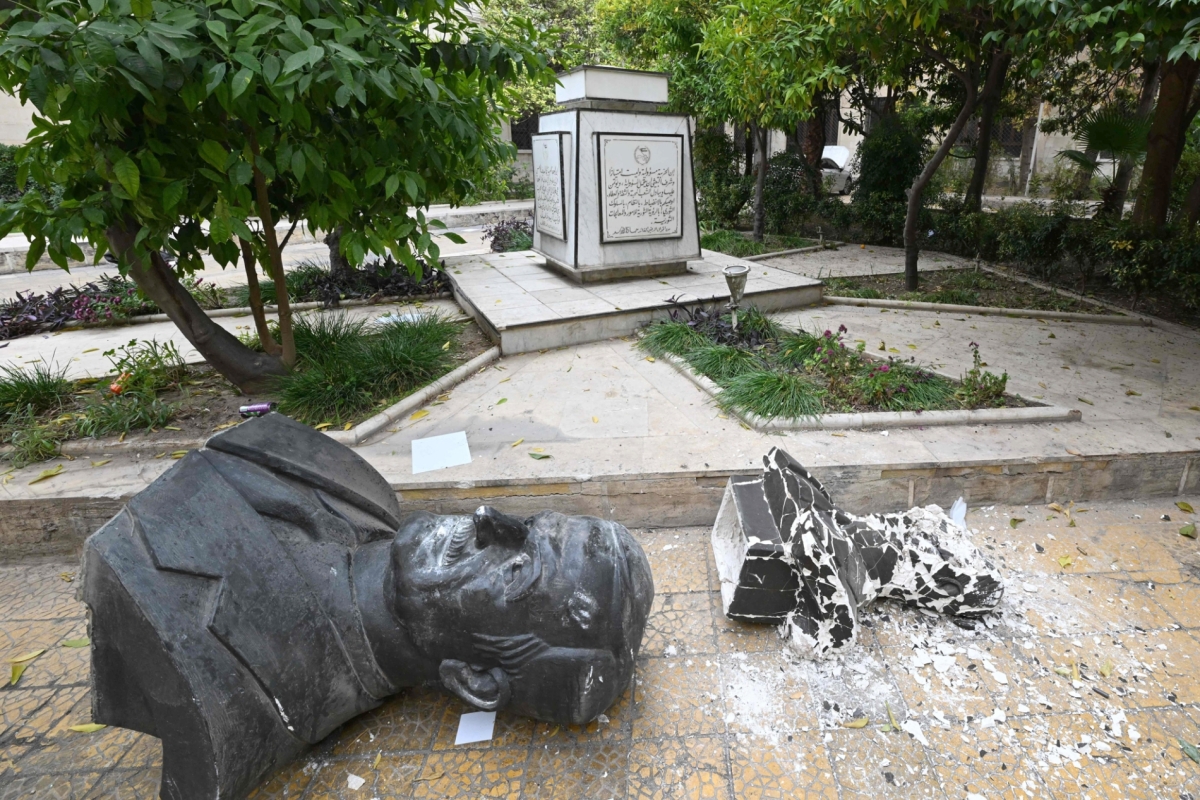
This is the first sectarian massacre of the new Syrian era, and it casts a fearsome shadow over the future. The revolution was supposed to overcome the targeting of entire communities for political reasons. Now many fear the cycle will continue.
The previous regime was a sectarianizing regime par excellence, both under Hafez al-Assad, who ruled from 1970, and under Hafez’s son Bashar, who inherited the throne in 2000. This doesn’t mean that the Assads attempted to impose a particular set of religious beliefs, but that they divided in order to rule, exacerbating and weaponizing fears and resentments between sects (as well as between ethnicities, regions, families, tribes). They carefully instrumentalised social differences for the purposes of power, making them politically salient.
The Assads made the Alawite community into which they were born complicit in their rule, or at least, to appear to be so. Independent Alawite religious leaders were killed, exiled or imprisoned, and replaced with loyalists. Membership in the Baath Party and a career in the army were promoted as key markers of Alawite identity. The top ranks of the military and security services were almost all Alawite.
In 1982, during their war against the Muslim Brotherhood, Assadists killed tens of thousands of Sunni civilians in Hama. That violence pacified the country until the Syrian Revolution erupted in 2011. The counter-revolutionary war which followed can justifiably be thought of as a genocide of Sunni Muslims. From the start, collective punishment was imposed on Sunni communities where protests broke out, in a way that didn’t happen when there were protests in Alawi, Christian or mixed areas. The punishment involved burning property, arresting people randomly and en masse, then torturing and raping those arrested. As the militarization continued, the same Sunni areas were barrel-bombed, attacked with chemical weapons, and subjected to starvation sieges. Throughout the war years, the overwhelming majority of the hundreds of thousands of dead, and of the millions expelled from their homes, were Sunnis.
Alawi officers and warlords were backed in this genocidal endeavour by Shia militants from Lebanon, Iraq, Afghanistan and Pakistan, all of them organized, funded and armed by Iran. These militias – with their sectarian flags and battle cries – were very open about their hatred of Sunnis.
The worst of sectarian provocations were the massacres perpetrated in towns in central Syria, especially in 2012 and 2013, places like Houla, Tremseh, and Qubair. The modus operandi was that the regime’s army would first shell a town to make opposition militias withdraw, then Alawi thugs from nearby towns would move in to cut the throats of women and children. It’s important to note that these were not spontaneous assaults between neighbouring communities, but were carefully organized for strategic reasons. They were intended to induce a backlash which would frighten Alawites and other minorities into loyalty. This fitted with the regime’s primary counter-revolutionary strategy. Early on it had released Salafi Jihadis from prison while rounding up enormous numbers of non-violent, non-sectarian activists. For the same reason, it rarely fought ISIS – which in turn usually focused on taking territory from the revolution.
Read the rest of this entry »


 Qunfuz