Archive for December 2024
The End of Eternity
A slightly edited version of this text was published at the Guardian.
The liberation of Syria was long hoped for, but unexpected. Over the last weeks, Syrians have experienced the full range of human emotions, with the exception of boredom.
On the first two Assad-free Fridays, millions of celebrants swelled the streets to chant and sing and speak formerly forbidden truths. There was a huge presence of women, who had been less visible in the years of war. Relatives are meeting again and assuaging their pain as hundreds of thousands return from the camps of exile. At the same time, millions are having to accept at last that their loved ones have been tortured to death. It now appears that most of the 130,000 lost in Assad’s prisons (a bare minimum figure) are dead. Dozens of mass graves have already been discovered.
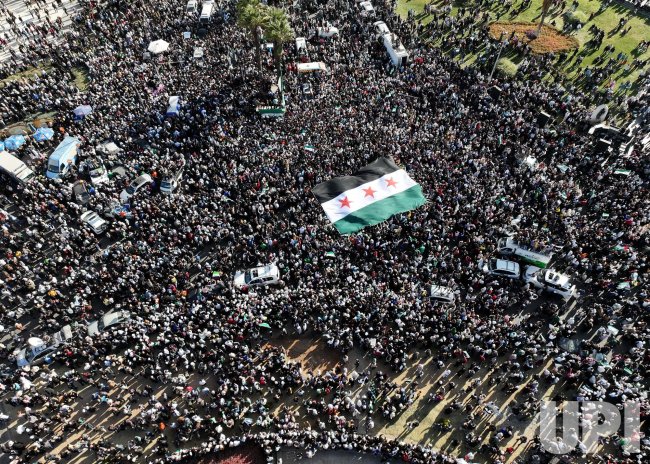
Working hard to crawl out from under the corpse of one of the worst torture states in history, Syrians are now looking to the future.
A key factor in the final fall of the regime was the remarkable discipline and social intelligence shown by the HTS-led rebel coalition. When it became clear that neither Christians nor unveiled women were being harassed in liberated Aleppo, that there was no looting, and that Shia towns which had hosted murderous foreign militias were not subjected to revenge attacks, then tens of thousands of Assad soldiers felt safe enough to defect or desert.
But some still harbour deep suspicions of HTS leader Ahmad al-Sharaa, previously known as Abu Muhammad al-Jolani. He also has enormous charisma, which might ease the path to a new dictatorship. So far, however, the signs are more hopeful than that. Al-Sharaa is popular precisely for his non-dictatorial qualities.
Read the rest of this entry »Discussing Syria on Eon
I was pleased to discuss events unfolding in Syria and the region on the Pakistan-based Eon podcast.
The ISIS Prisons Museum on MEMO
I was interviewed at length on the Middle East Monitor podcast about the ISIS Prisons Museum. I’m really pleased to work with this highly-professional, grassroots Syrian and Iraqi project, which brings together human rights, investigative journalism and cutting-edge technology. I gave the interview before the fall of the Assad regime, so I need to update my words by saying that the IPM is currently hard at work documenting the Assad prisons which have just been liberated. It is also publishing reports on Assad security prisons, and witness accounts of detention under Assad. The IPM will continue to display investigations and reconstructions of ISIS crimes alongside work on Assad prisons.
The Thinking Muslim
I was very happy to be interviewed about Syria by Muhammad Jalal for his Thinking Muslim podcast.
Free Syria’s First Days: Good, Bad and Ugly
This was published at the New Arab (link here)
We feared the regime’s end would be accompanied by a bloodbath. Thank God, that hasn’t happened. In the end the regime collapsed without a fight, even in its supposed heartland on the coast.
There has been some looting in Damascus, which has been somewhat more chaotic than the northern cities, perhaps because there has been a smaller rebel presence. Otherwise, the news coming from liberated Syria has been surprisingly good.
On the social level, Syrians are talking the language of reconciliation. One typical video shows a bearded rebel admonishing surrendered regime fighters for standing with the side that slaughtered women and children. Then he tells them, “Go! You are free!” The rebels have issued a general amnesty for military personnel. This does not extend to those guilty of war crimes and crimes against humanity. The intention is to hold those people to account.
Meanwhile, Muhammad al-Bashir, who was the prime minister in Idlib’s Salvation Government, has been appointed to form a Transitional Government in Damascus. The Salvation Government ruled in HTS territory, but was civilian, largely technocratic, and fairly independent. It looks as if a similar logic is going to apply to the Transitional Government.
Having shed his nom de guerre, Abu Muhammad al-Jolani is now known by his real name, Ahmad al-Sharaa. Instead of ‘leader of HTS’, he has been rebranded as ‘commander of military operations’. He wants to be seen as a national figure rather than a Sunni jihadist. Some fear that he will change direction as soon as western states stop branding him a terrorist, but for now at least his direction is tolerant and democratic. Rebels have been told not to interfere in women’s clothing choices, for instance. And prominent opposition figures say that UN Resolution 2254 will be implemented. This will involve drafting a new constitution and holding free and fair elections under UN supervision.
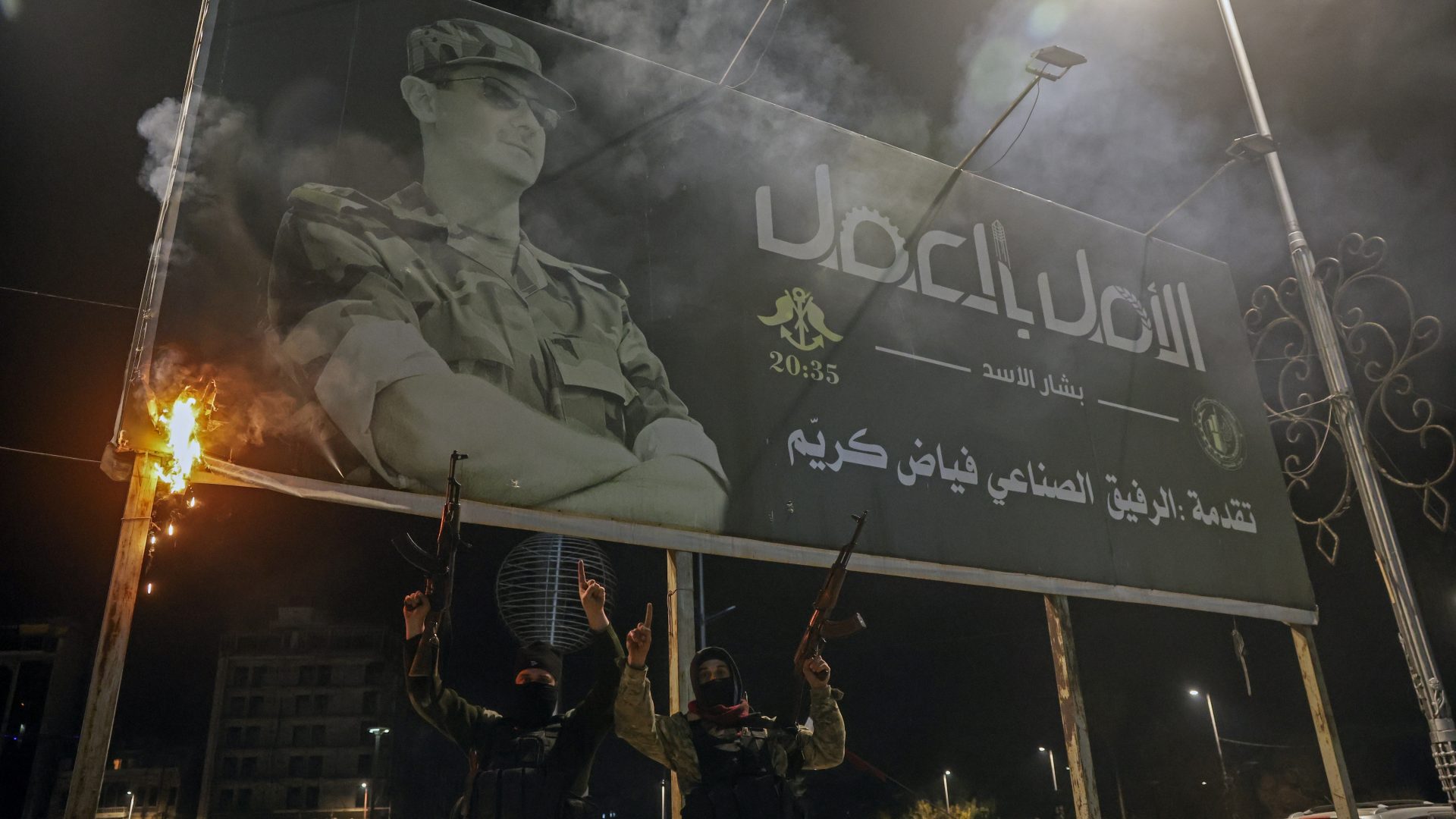
So far so good. All of it inspires confidence in Syrians at home as well as the millions who were driven from their homes. Huge streams of people are leaving the tented camps on the country’s borders, and returning from Turkey and Lebanon, where so often they were subjected to racist abuse and violence. The result is thousands of emotional reunions between siblings, or between parents and children, who in many cases haven’t seen each other in over a decade. This is a blessing that nobody expected a fortnight ago, and it culminates a drama that has lasted almost 14 years. In 2011, millions of Syrians screamed Irhal! – Get out! – at Assad. His response was to drive them out instead. But today, at last, the Assad family are the refugees.
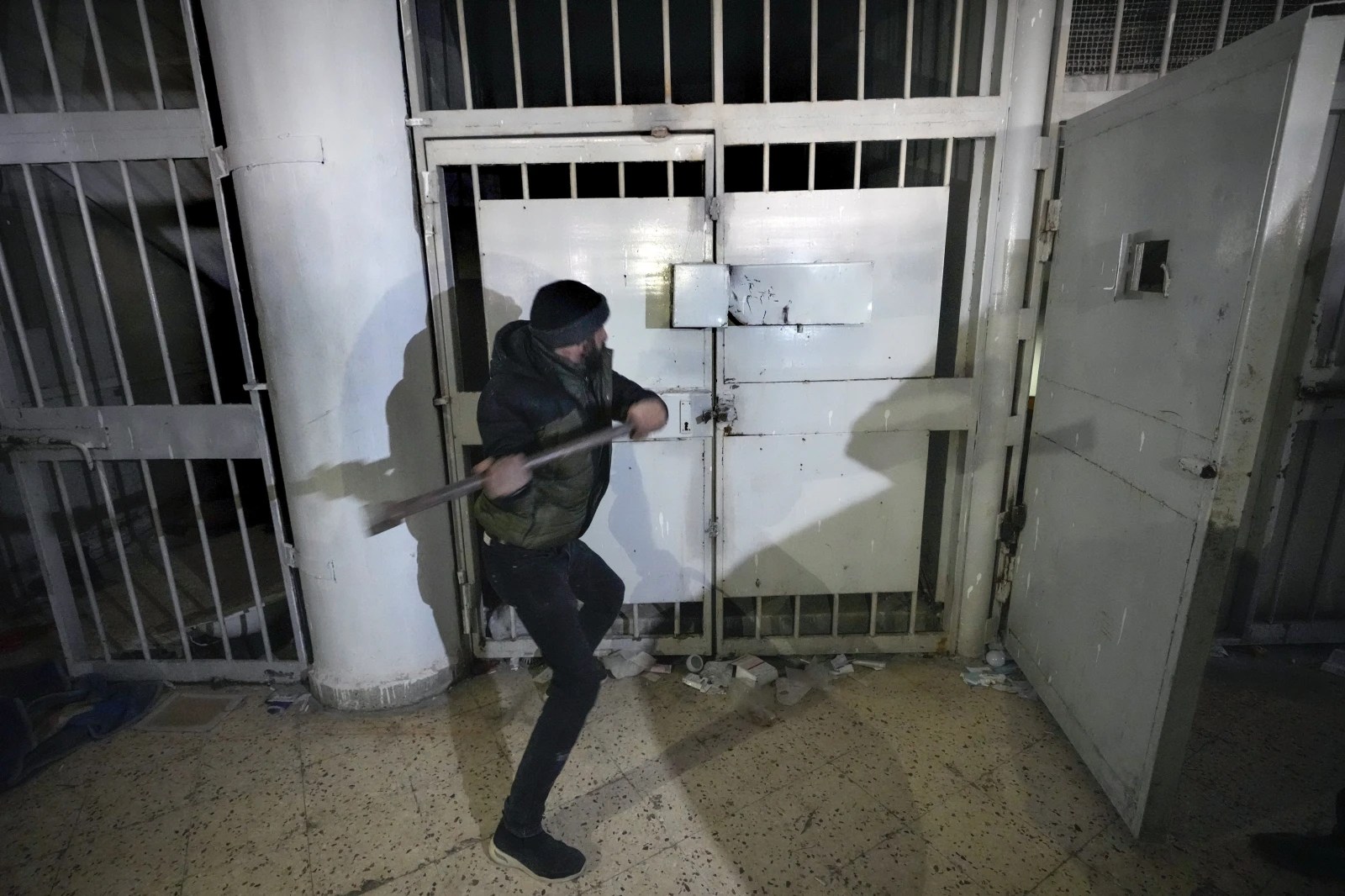
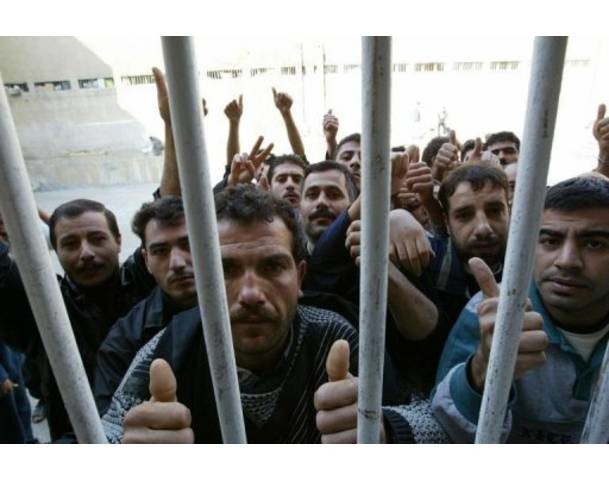
It’s also very good that tens of thousands of prisoners have been liberated from Assad’s dungeons. But it’s bad – profoundly depressing, in fact – that so many are in such a bad state. Lots of women and children have been found behind bars. The children were either arrested by the regime along with their parents, or were born in these dungeons to mothers who had been raped.
Read the rest of this entry »Liberation
The Syrian Revolution: the most thoroughgoing, diverse, persistent and resilient revolution in all human history.
The revolutionary Syrian people: a people that risked everything, lost everything, and then won. A people that was helped only by God.

I remember Syrians chanting “Ya Allah, Malna Ghairak Ya Allah” – O God, We Have Nobody but You, O God – and this was largely true. Syrians were slaughtered by Iranians and their Lebanese, Iraqi, Afghan and Pakistani militias; and by imperialist Russia’s air force; and by the Baathist-al-Qaida amalgam ISIS. The US, and the Turkish-Kurdish PKK, and Zionists worked against them. The Egyptian dictator, the Saud family, and in particular the filthy UAE regime conspired to keep them in chains. Syrians were slandered by conspiracy theorists, authoritarian campist ‘leftists’ and pro-PKK ‘anarchists’. The media saw them only as a security problem. In Turkey and Lebanon refugees were attacked by racist mobs. The EU’s border guards shot at them. The EU did what it could to normalise Assad and to send refugees back to be murdered.
The revolution’s three greatest military enemies – once it had broken the back of the fascist regime – were ISIS, Iran, and Russia. Though at first Assad, Iran, Turkey and other allowed it to grow, ISIS was in the end defeated by America, and many other actors, at the cost of the destruction of several cities. Iran’s militia system had its bluff called, and was smashed (for other reasons) by Israel. Russia has exhausted itself with its criminal invasion of Ukraine. But the key factor in this blessed ten days of revolutionary culmination has been the maturity, courage, and intelligence of Syrian revolutionaries, and first amongst them HTS under the leadership of Ahmad al-Sharaa, or Abu Muhammad al-Jolani.
Aleppo was crucial. Inhabitants of the west of the city – which had never before slipped regime control – and in particular members of religious minorities, were very frightened on the first day of the takeover. But their fear was quickly dissipated. One rebel hick pushed over a Christmas tree, and was arrested and disciplined, and the tree restored. The people of Aleppo were assured that they could worship as they wished and wear what they liked. Even better, Jolani announced: “The city of Aleppo will be managed by a local authority, and all military forces, including those of HTS, will fully withdraw from the city in the coming weeks.” The military coalition of which HTS is the largest actor has forbidden any fighter from entering any home without permission from the leadership, and has forbidden setting up military bases in civilian neighbourhoods.
Public buildings are under guard. There has been no looting so far, nor any revenge attacks. More impressive than the treatment of Aleppo’s Christians has been the treatment of Shia civilians – a community which, like the Alawis, has been closely associated with the criminal regime and its criminal foreign (Iranian) backers. But there has been no looting or revenge attacks by the rebels on Nubl and Zahra, Shia towns in Aleppo province which hosted murderous sectarian militias. The militias ran away and left the civilians to their fate – and their fate has been to be reassured, and to have food and water distributed to them. The rebel discipline, tolerance and magnanimity here is an enormously positive sign.
Read the rest of this entry »Assad’s Prison State
Much of the media is reporting the collapse of the Assad regime as ‘scary jihadis’ rather than as the liberation – the huge advance in human freedom – it actually is. I’ve written this text for the ISIS Prisons Museum (where I am chief English editor) giving background on Assad’s detention and torture state, and the history of the regime’s massacres against the Syrian people, to show what’s at stake for Syrians. Please read, and share. And please pay attention to the IPM website and project. We’re planning to document and reconstruct crime scenes from Assad prisons as we have from ISIS prisons.
Quotes from the text:
“The prominent dissident Michel Kilo described meeting a young child in prison. The child’s mother had been raped in prison. Her child was born in prison nine months later. When Kilo met the boy he told him a story about a bird…”
“This was not the first time the Syrian regime had directed large scale violence against the population in the streets … It had sent the army to suppress urban uprisings in 1963, 1964, 1965, 1967, 1973, and 1980. But the 1982 Hama massacre was on a totally new scale…”
“The purpose of such abuse is not to extract information from prisoners – otherwise, why would it continue for months and years after arrest, when any information a prisoner may have had would have become obsolete. Instead it is designed to demonstrate the regime’s absolute power, and to project terror onto the society beyond the prison, to paralyze society from action.”
Anti-Campist Anger
I was on Luton’s Inspire FM trying to summarise the dramatic and blessed events in Syria. I’m really trying not to deal with the idiotic and inhumane campist propaganda that ignores the agency of the Syrian people in favour of ridiculous and ignorant grand geo-political narratives. There’s so much more important stuff going on than that chattering…. but here some was thrown at me, and I responded. Watch/ listen here.
Dawn MENA Conversation on Syria
Dawn MENA (Democracy in Exile) hosted me and Radwan Ziadeh on a Twitter Space, where we discussed the astounding advances of the suddenly revived Syrian Revolution. You can listen to it here.
To Aleppo and Beyond
An edited version of this article was published at the New Statesman.
Today, for the first time in years, millions of Syrians can dare to hope. In only three days, rebel forces swept out of the north western corner of the country in which they had been crammed, into Aleppo city and beyond.
The dominant power in the rebel coalition is Hayat Tahrir al-Sham, a militia which began in 2011 as an offshoot of al-Qaida, but which has since purged its most extreme elements and greatly moderated. It’s still an authoritarian Islamist organisation, but is not at all ‘like ISIS’, as some are claiming. It doesn’t field a ‘religious police’ to interfere in people’s private lives, and it has a far more tolerant approach to religious minorities and dissent than ISIS. It isn’t popular with the people it rules – at least it wasn’t until four days ago when the offensive was launched. People have protested against its authoritarianism for months. Unlike the Assad regime, HTS has largely tolerated these protests. But even if people don’t like HTS, they do support the offensive. That’s because they wish to return to their homes from which Assad and his allies expelled them.
At first the offensive looked like a limited operation, perhaps agreed between Turkey and Russia to force Assad to negotiate. But as the regime lines collapsed and the rebels entered Aleppo, pushing Iran’s militias out and liberating prisoners from Assad’s dungeons, it soon became clear that events had slipped foreign control. This is primarily a Syrian drama, reflecting both rebel success and regime failure.
The rebel coalition contains unified military forces operating much more efficiently and professionally than ever before. Even more impressive than the military improvements on show is the obvious social progress. Rebel messaging to the multicultural inhabitants of Aleppo has stressed respect for the rights and lifestyles of all religions and sects, and so far this has been backed up in practice. Unveiled women walk the streets without harassment, and services are held in the churches. There have been no credible reports of violations whatsoever. The rebels have even set up a phone line through which citizens can report violations. It is important civil revolutionaries continue to hold the rebels to the high standards they seem to have set for themselves. It was a mistake, a decade ago, to turn a blind eye to the growing criminality of the armed men, which did so much damage to the revolutionary cause.
For now, very unusually, electricity is on in the whole city. Public buildings are guarded from looters. The rebels already look something like a government, in stark contrast to the regime – a narco-mafia (look up its Captagon trade) underpinned by local warlords and foreign imperialists.
Read the rest of this entry »History Made on the Ground
You know the multiverse theory, that there are many parallel universes, and that they may contain alternate versions of ourselves and our conditions in this universe…. Well, the last couple of days feel like we’ve jumped from one existence into a parallel universe, one in which a lot more is possible. This universe is a flexible, more cheerful place, in which the Syrian Revolution may even be resolved. (As it happens, we went the day before yesterday on a trip to Edinburgh to see my son. He bought us tickets to the Museum of Illusions. We walked through an arrangement of swirling lights called The Vortex, and we lost our balance. Was that when it happened? When we got home we heard the news that Aleppo city had been liberated.)
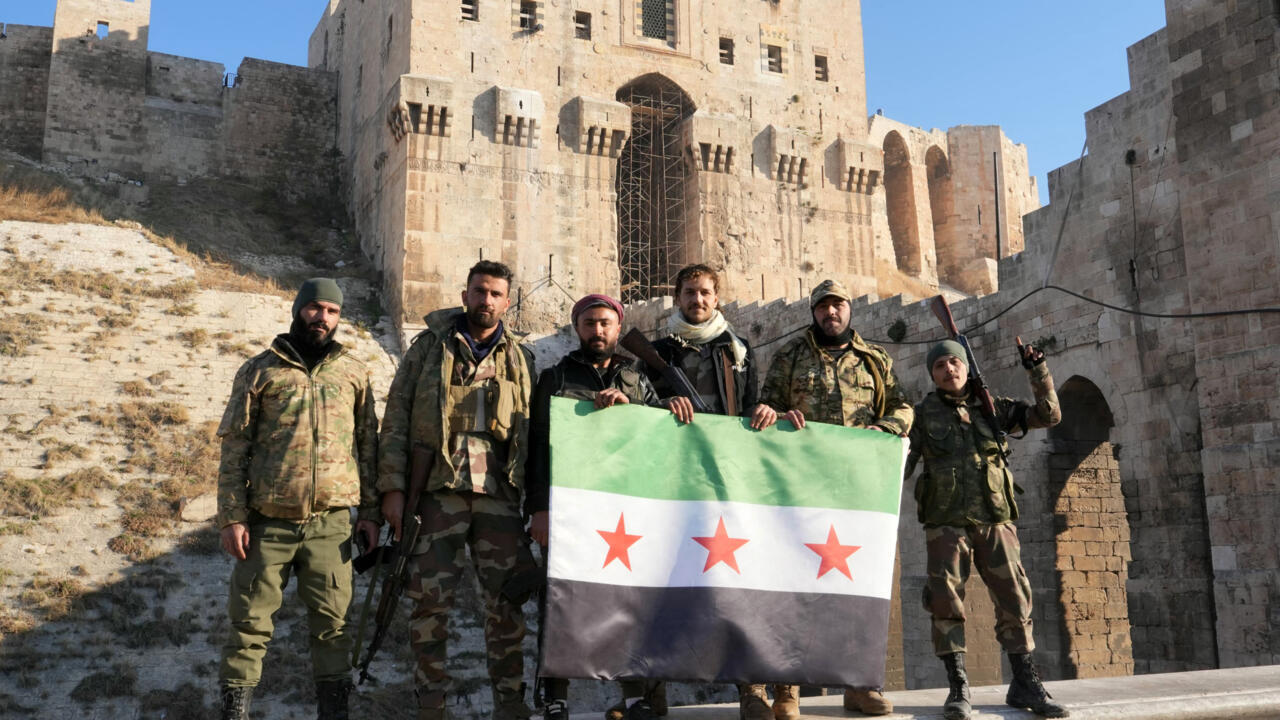
The rebels advanced out of the narrow strip of Idlib in which they and millions of Syrians from around the country had been crammed for over four years. ‘The rebels’ here means a military alliance under the umbrella of Hayat Tahrir al-Sham – the greatly moderated and better organised reincarnation of Jabhat al-Nusra. It’s still an authoritarian Islamist militia, but it’s not at all ‘like ISIS’ as the uninformed are saying. It broke definitively from the ISIS stream in 2014. It has a much more positive policy towards sectarian and ethnic minorities than ISIS. It allows far greater space for pluralism, disagreement and consultation than ISIS did (though it still arrests and detains some political opponents, and tortures them). Unlike ISIS, it doesn’t field a Hisba Diwan (or morality police) to interfere in people’s daily lives. Its focus is Syrian rather than transnational. It doesn’t threaten the west.
Its ‘Fath al-Mubeen’ military alliance also incorporates lots of members of other less authoritarian groups that were displaced to Idlib and then gobbled up by HTS. HTS has not been popular among people in Idlib – they’ve been demonstrating against it for months – but its offensive is wildly popular, because the people want to be rid of Assad and his foreign backers, and to return to their homes.
I didn’t expect the offensive, at least not on this scale. Nobody did. At first it looked to me like a controlled operation to restore the agreed Astana lines – that is, the division of north west Syria agreed upon at Astana by Russia, Iran and Turkey. Russia had pushed Turkey to normalise and negotiate with Assad, and Turkey had tried hard to do so. Assad had refused to budge from his maximalist positions, the Russians don’t want to alienate Turkey (given their difficult position attacking Ukraine), and Turkey needs more Syrian territory to which to send Syrian refugees. So perhaps the Turks and Russians were scaring Assad into negotiating by taking a few towns in the Aleppo countryside.
But the offensive went much further than that, far beyond the Astana lines. News came, meanwhile, that the Turks had prevented the Syrian National Army – comprised of former Free Army militias now under Turkish control – from moving towards eastern Aleppo. This allowed the PKK-dominated SDF to take areas in Aleppo abandoned by collapsing Assad forces – surely the opposite of what Turkey wanted. Turkey was not, therefore, in control of events. Turkey clearly didn’t know what was going on.
Read the rest of this entry »


 Qunfuz