Author Archive
Daughter of a Martyr
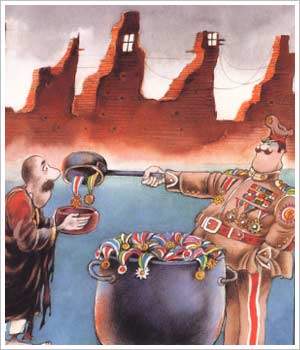
picture by Ali Farzat
Anonymous eye witness in Tripoli:
After more than ten days at home, yesterday morning I went out for some grocery shopping, and I noticed a sad and fearful quietness in the faces of the Libyans in the streets because of the inhumane events which are happening. The streets are very quiet and almost empty. People no longer feel safe enough to walk in the streets even in daylight. In fact, the shops near here are all closed; only a few small grocery markets are open so people can buy the basic needs (water, flour, oil).
There is an apparent shortage of all goods in the market, including dairy products, beverages, and vegetables. All the goods are highly expensive. We wanted to buy flour but we couldn’t find any. Also people are buying up whatever is available. Two days ago I saw my neighbors carrying big bags of flour. They told me that some bakeries are running out of bread, and that soon all bakeries and food shops will close. Prices of food have almost doubled (a bag of 20 eggs used to cost between 4.75/5LYD, and now it costs 10 LYD). People are suffering between the need to stock up with adequate quanties of food and water on the one hand and the sudden high prices on the other.
Report from Oman
By Iman Said
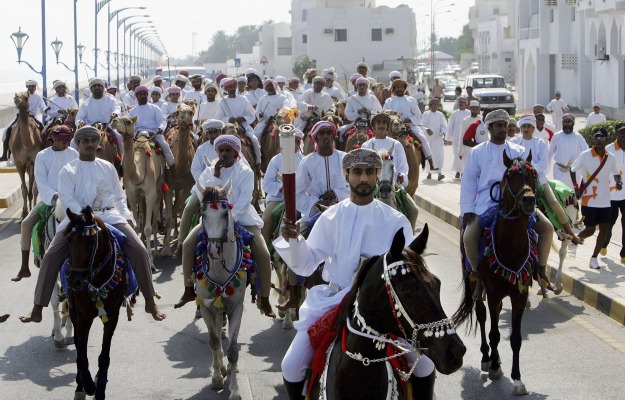 I did not see this coming, though I am fully aware of the unemployment rate, high prices, low salaries, lack of freedom of speech and corruption that has been flowing in the veins of the Sultanate. Omani people have watched the uprisings in the Arab world, and they have learned a valuable lesson from the Tunisian and Egyptian revolutions. The power of the people is so great that it can change the unbearable reality. According to the Oman News Agency, what happened yesterday and what is happening today all over Oman is a type of ‘vandalism’ though the protestors were chanting: “selmeyyah” (peaceful protests) all the time.
Let’s start from the very beginning. About 300 protestors gathered on Saturday in the Globe roundabout in Suhar, or what is known now as the ‘Reform Square’, to demand more political and economic reforms. This comes after the decrees issued by the Sultan and which did not meet the protestors’ demands for change. The result was that the police arrested 41 people to spread fear among the others. Of course that did not happen. The protestors were more determined to continue with their peaceful protests.
Stay in Your Home You Will Be Safe
 From our anonymous eyes and ears in Tripoli.
Right after Friday prayers, people started to leave the mosque which is a two-minute walk from my building. I could hear that gunfire had already started in another area before the people finished their prayers. As the peaceful protestors left the mosque, they started to chant: La Ellaha Ela ALLAH, Qaddafi Adouaa Allah – “There is no god but God, Qaddafi is the enemy of God”. The moment I saw that scene I was so happy, proud, and speechless!
The gunfire in my area, and in Souk Jomaa, Mayzaran, Siyahiya, Dahra and elsewhere, was random and didn’t stop until around 5 pm.
A short time after the protestors passed by my street, an open car with 5 armed thugs parked in front of my building. They opened fire in the air, and then one of them said loudly, “Whoever doesn’t like Qaddafi, get out of your house now!” Then he said, “As long as you stay inside your homes you will be safe, and whoever comes out will be immediately killed.”
The Satan of Our History
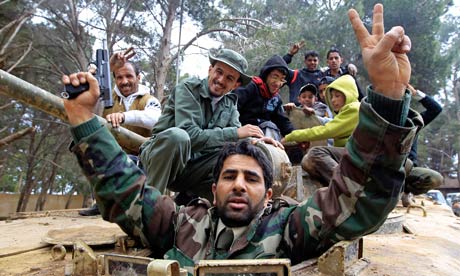
liberated Shahat city. photo by Reuters
Latest from our freedom-loving friend in Tripoli:
I am in Tripoli, on the 24th February at 1pm. As I heard in the news this morning that Zawiya city is under attack, I called my friend in Zawiya to check. He confirmed to me that Zawiya city has been under ruthless and continuous attack since last night at around 2am. He also reported that around 8am there was very heavy gunfire and the sound of exploding bombs. He told me he was terrified because the gunfire didn’t stop the whole night. (An eye witness told al-Jazeera that at least 100 people have been killed in Zawiya this morning).
Minutes after my call with my friend, I received confirmed news that Misurata is under attack too by the so-called security forces, and a little girl along with many other injured people were brought to Misurata hospital.
Scandalously Done
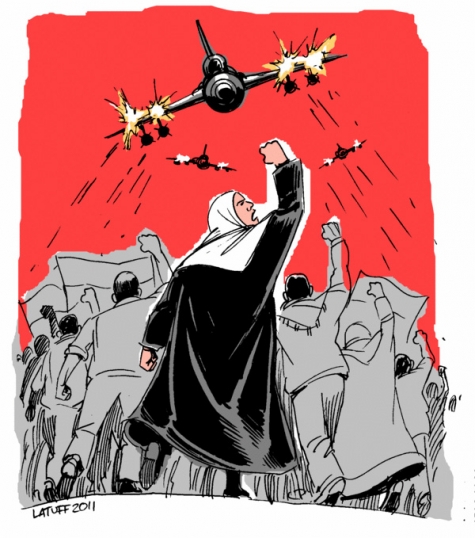
picture by Carlos Latuff
Our witness in Tripoli writes:
At 2am I hear gunfire and screaming coming from far. Hours later, I heard that a woman was randomly shot by ‘security forces’ while she was standing by her window in an area called Zawiyat Adahmani, which is near the area of Ben Ashour, where I live.
Last night there were big celebrations around the streets and mainly in Green Square by the thug’s supporters (when 2 days ago almost 1000 martyrs were brutally killed). Following his threatening speech, anyone who walks in the streets of Tripoli by night will be cleared (killed) right away- exactly as he said. Right after the celebrations, non-Libyan mercenaries and some black Libyans (from the south) belonging to ‘kitaib khamis‘ (the Khamis Qaddafi Brigade) were spread all around Tripoli (there is a video taken proves mercenaries driving around the area of Fashloom- at least 8 open cars).
Cockroach Rule
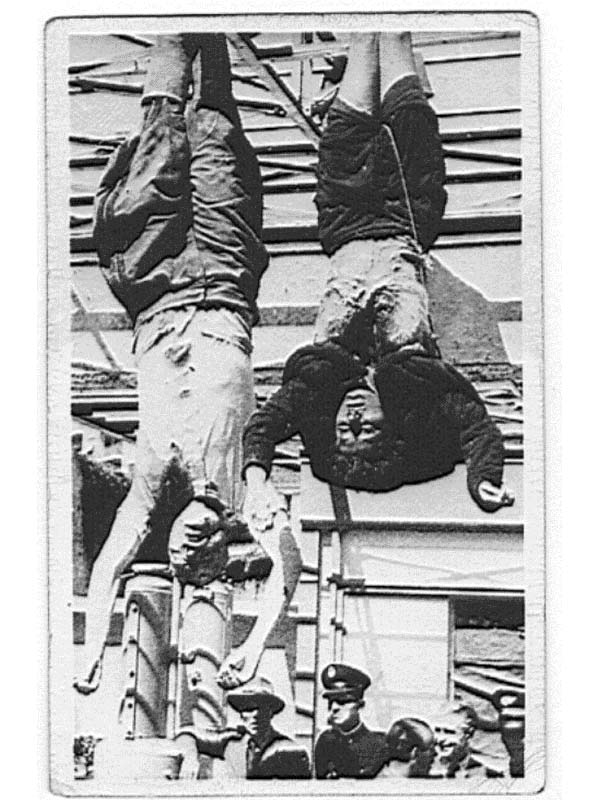
Mussolini and his mistress. April 1945
Our informant in Tripoli, last I heard, was at home, terrified, trying her best to remain calm amid the sound of heavy gunfire.
Tripoli is very hotly contested. Reports suggest eastern Libya, meanwhile, has become an anarchist’s paradise. Benghazi, Tobruk, al-Bayda and smaller towns and villages are in the hands of the people and revolutionary soldiers. Committees have been formed for neighbourhood protection, rubbish collection and traffic direction. The mood is peaceful, triumphant and fearless. Two war planes have been landed in Benghazi by pilots who refuse to bomb the people. Another crashed outside the city after its pilots parachuted out. Today the city of Misurata, in the west, has also been liberated.
Qaddafi’s regime has already collapsed. The army in Misurata, and in the Jebel al-Akhdar region, has joined the people. A statement by high-ranking officers asks all military personnel to head to Tripoli to remove Qaddafi. The Interior Minister and the Justice Minister have resigned, as have many diplomats. All prominent Libyan tribal and religious leaders have backed the revolution. At least a quarter of the country’s oil output has halted; a tribal leader in the east threatened to stop supplies to Europe if Qaddafi continued to kill – and indeed the pipeline to Italy is now dry.
How Many Martyrs?
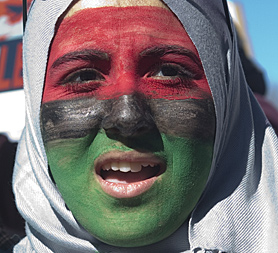 Our thoughts and prayers are with the heroes and heroines and martyrs of Libya, and with our brave correspondent in Tripoli, now under fire. Communication is on and off, mainly off. Here is her most recent report. Since she sent it the phone lines have been cut entirely and the city’s electricity is also disconnected.
I live in the Ben Ashour area of Tripoli. Minutes ago my neighborhood was under severe aircraft attacks. Non-Libyan mercenaries are attacking the people. 60 brave Libyans from the army were executed because they refused to kill their own brothers who were going on totally peaceful, unarmed demonstrations.
I hear the nonstop gun machines all round the area of Ben Ashour. We are witnessing the second massacre today and the death toll is reaching 250 in Tripoli and increasing! At this very moment I’m seeing at least 4 jets flying around the city of Ben Ashour. Armed mercenaries are located in different areas of Tripoli, mainly: Ben Ashour, Fashloum, Soug Ejoumaa, Gergaresh.
The Fall of The People
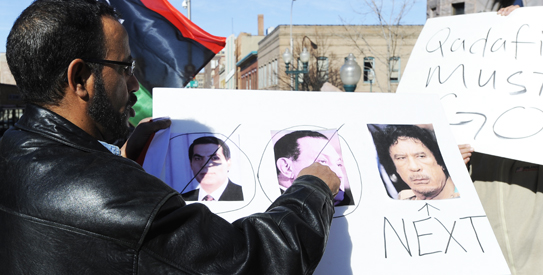 Our friend in Tripoli reports.
A new morning with more horrific news. Yesterday in Benghazi Qaddafi henchmen fired at mourners of the dead – and during the burial services of more than 80 martyrs – with machine guns. The families burying their beloved heroes were all shot in the cemetery – الله أكبر (Allahu akbar!) Qaddafi is taking out his lunatic rage against the people of Libya!
Benghazi confirmed the death of 200 in one hospital. There is no question now it was a massacre in Libya. And this morning, the heroes of Benghazi are burying more than 216 martyrs. Reports are informing me that the total death toll is over 400 by now.
Last night in Tripoli, they released many prisoners of ‘’Jdayda’’ (most of them are criminals or illegal/homeless immigrants from different African countries) to terrorize people, attack protestors and steal houses. They kept only prisoners that belong to ward 9 (which contains the most deadly dangerous criminals). Gaddafi also released the female section of the prison and now Tripoli city is filled with thugs and criminals everywhere and it has become unsafe to go out alone. It’s obvious that Qaddafi wants the fall of the people (a play on The People Want The Fall of the Regime).
Massacre in Benghazi
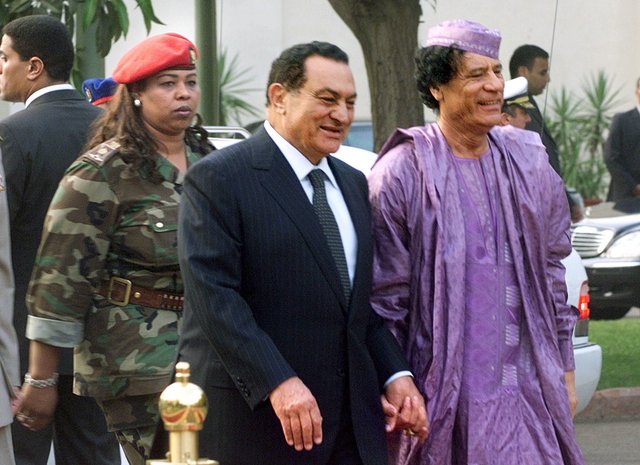 An update from our freedom-loving friend in Tripoli.
Internet is restored in Libya after 6 hours offline. Kaddafi’s regime is circulating messages to people in Benghazi saying: ‘’Mercenaries in east Libya are killing people and water has been poisoned by unidentified source’’. Gaddafi is facing the fight of his life; not only he is violently responding to protesters, but he is taking advantages of those mercenaries coming from African poor countries – who barely understand or are aware of what’s going on inside Libya and tempt them with small amount of money to KILL Libyans. Around 100 martyrs were killed in 4 days only!
Today, I called my friend in Benghazi. She told me: ‘’We are hungry, no food supplies for us; people are dying more and more everyday, women and children are amongst the dead in the horrific Benghazi massacre, we are isolated from the media coverage.” She also told me that yesterday three tanks tried to roll in but the soldiers abandoned them and citizens burned them. And yesterday night, the hospitals announced 40 dead martyrs including children (one child died- 13 years old), and this morning saw the death of 15 martyrs. Hospitals are running out of medical supplies & are calling for urgent need of medical aid; gun shots barely stop, and helicopters are firing and throwing bombs on protestors. Yet beyond all this mess, she is proud that people in east Libya are doing their best to recover from the virus that has been ruling Libya for over 40 years.
Syria Speeding Up
Three weeks ago I wrote that Syria was not about to experience a popular revolution. Although I’m no longer sure of anything after the events in Tunisia and Egypt (and Libya, Algeria, Jordan, Yemen and Bahrain) – and although it’s made me unpopular in certain quarters – I’m sticking to my original judgement. No revolution in Syria just yet.
Latest from Libya
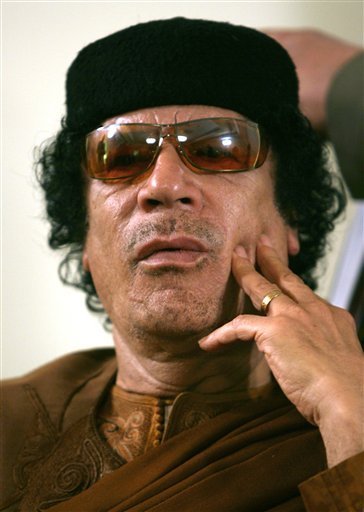 Our friend in Tripoli reports:
It was only one day and it has already witnessed the burial service of 30 martyrs in Hawari cemetery in Benghazi. A source from al-Jalaa hospital in Benghazi confirmed that most of the dead people are between the ages of 13 to 36 years old, including 40 to 50 injured people. The number of martyrs and injured people are growing all around the cities of east Libya and hospitals in Benghazi issued urgent calls for all types of blood.
Today I believe things are getting worse, Gaddafi’s regime has cut all means of communication (land lines, cell phones, internet), water, electricity and gas services from Benghazi, Darna, Zentan, and several cities in east Libya, yet Benghazi is winning by keeping its highly increased courageous spirits and the determination to put an end to the 42 years of oppression.
Today some people from different corners of Tripoli (like Fashloom & Joumhouriya Street) are repeatedly trying to go on demonstrations against the regime but they were immediately oppressed by the backbones of Gaddafi’s regime, who are paid and armed to stop by all means any chance of peaceful demonstrations.
Not forget to mention that on the 16th of February, the night before the Day of Rage’ in Libya, the Libyana company, a Libyan mobile phone company owned by Saif El Islam (one of Geddafi‘s sons) circulated messages to people’s cell phones warning them against crossing ” The Four Red Lines”:
Blood in Libya
A report from a friend in Tripoli. She must remain nameless.
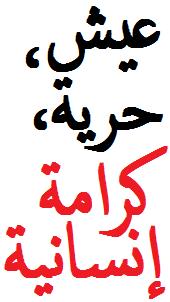
bread, freedom, human dignity
I’m here and safe for now, al-hamdullah. There is no internet in Libya, and maybe there will be no electricity in the coming days. I uploaded software late at night to get the internet, and very few have access to this software.
The death toll in Benghazi is growing, almost 80 are dead just in 3 days. It’s getting dirty here and the media coverage is too little. We are not getting the international attention and I am afraid if the Libyan protesters are ignored, this murderer will seal Libya off from the world and ruthlessly kill any protest before they even have the chance to begin.
Yesterday, I left work and I went to Sahat el-Ghadra, where all his thugs were supporting him. They got all kids out of schools and forced them to carry posters of his pictures and everyone to hang the stupid Libyan flag inside their cars and … the number of flags around Tripoli are more than the number of bloody flags you can see in the US.
The Autumn of the Patriarch
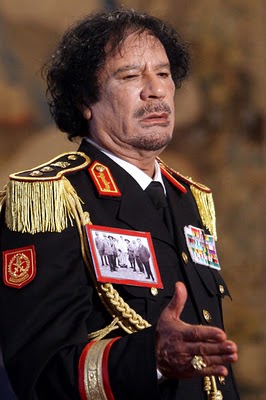
Brother Leader
Muammar al-Qaddafi is neither a president nor a king (although he did call himself ‘King of Kings’ at one Arab summit). No, what he is, as well as Colonel, is the Brother Leader, and the Guide of the First of September Great Revolution of the Socialist People’s Libyan Arab State-of-the-Masses (he invented the Arabic word jamahiriyya for the last chunk). I’ll refer to him here as Qaddafi.
Qaddafi is famous for grandstanding – his female bodyguards, his tent, his flamboyant dress. In interviews he growls and flicks his hands. At Arab League meetings he puts his feet on the desk, smokes cigarettes, gets into shouting matches, dramatically swans out. Sometimes he says things worth saying, and he’s often provided a laugh for Arabs who don’t live in Libya.
Qaddafi thinks he’s a lady-killing revolutionary of Guevara proportions and a tyrant of the stature of Mao; hence his Green Book (not to forget his fiction). At the same time, he thinks the people, not he, are in control of Libya’s destiny. And perhaps – we can hope after Tunisia and Egypt – he’s right.
Ideologically he’s swung from Arabism to Islamic socialism to pan-Africanism, but it’s all been hot air. His hosting of a diversity of ‘revolutionary’ groups, including religious cults, reinforced the impression that he was either stupid or insane.
Bahrain Rising
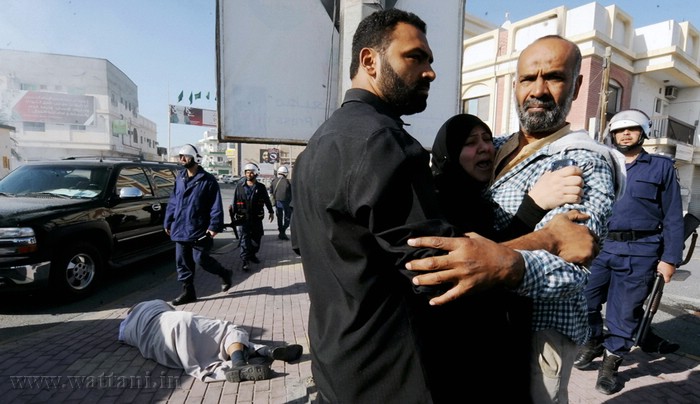 On the tiny island state of Bahrain an intelligent, highly politicised Shia majority is ruled by an actively sectarian Sunni ‘king’ and his mercenary police force. To ensure minimum fraternisation, and to shrink the Shia majority, Sunni Arabs from such countries as Syria, Jordan and Yemen are awarded citizenship after loyal service in the police.
Bahrain was known to Sumerians as Dilmun, a possible location for the Garden of Eden. Today it’s known to Americans as the home of the Fifth Fleet, one of the more essential bases for guarding the Gulf. It’s linked by causeway to Saudi Arabia, which provides it with security and thousands of drunk young men on Thursday nights. It is likely that Saudi Arabia would intervene if Bahrain went the way of Egypt.
Unlike other Gulf countries, Bahrain has always been notable for its angry mass demonstrations against assaults on Iraq, Lebanon and Palestine. Not surprising, then, that February 14th’s Day of Anger attracted a wide section of Bahraini society, including Sunnis. There’s nothing sectarian about the protestors’ democratic demands – one of their chants is Not Sunni Not Shii Just Bahraini – but we can expect sectarian mobilisation by the regime and Saudi-owned media if protests continue, as they doubtless will. The Bahraini people will be described as an unwitting front for Shii-Persian assault. For this reason, the Iranian leadership would do well to remain silent as events unfurl (Iran’s comments on the Tunisian and Egyptian revolutions, after all, have been inaccurate and propagandistic.)
Hossam el-Hamalawy on The Workers and The Military
Egypt’s revolution could go in any direction in the months and years to come. It could end up in a tame army-supervised semi-democracy under the presidency of Amr Moussa, with the army running foreign policy. More likely, the result will be far more interesting than that.
The Supreme Military Council has decided not to lift the state of emergency. The core of the old system remains in place. And Communique Number Five calls for an end to industrial action. But oil and gas workers continue to strike, as well as transport, textiles and media workers. More significantly, workers are refusing the authority of Mubarak-era union officials, and are organising to represent themselves. Another instance of spreading revolutionary fervour: state TV workers chased the head of the news department out of the building.
Writing for Jadaliyya, Egyptian blogger Hossam el-Hamalawy examines the role of the working class in the revolution. He concludes: “We have to take Tahrir to the factories now. As the revolution proceeds an inevitable class polarization is to happen. We have to be vigilant. We shouldn’t stop here.”