Author Archive
What’s Wrong With Travel Writing
I’ve recently read “Cleopatra’s Wedding Present” by Robert Tewdwr Moss, a well-written account of travels through Syria in the late 1990s. Moss is an evocative and sensuous writer. His sense of place and time is highly accurate: I immediately recognised the streets he described, and wanted to tell him how things have changed. (But it’s impossible to tell Moss anything now. He was stabbed to death by a rent boy in London shortly after finishing this book).
The strength of characterisation – of Syrians and foreign tourists – in the book suggests that Moss would have made a great satirical novelist. There are also strong set pieces on some of the archeological highlights of Syria, such as Queen Zenobia’s desert city of Palmyra, Saladin’s castle in the green Lattakian mountains, and the ‘dead cities’ around Aleppo – Byzantine settlements which were suddenly and mysteriously vacated, leaving mosaics, churches and olive presses for archeologists to puzzle over.
hijab/ niqab/ blab
My position on the hijab, or head covering, for what it’s worth, is that it is unnecessary. Surat Nur of the Quran, verse 31, says: “…tell the believing women….not to display their charms (in public) beyond what may (decently) be apparent thereof; hence, let them draw their headcoverings over their bosoms.” Given that the Arab women and men of the prophet’s time all wore a head covering (as men in the Gulf still do – it’s an obvious clothing choice for desert dwellers), but the women often left their breasts bare, it seems obvious here that the injunction is not to cover hair, which was covered anyway by prevailing social custom, but to cover breasts. The more general directive is for both men (who are addressed in the previous verse) and women to dress modestly according to the standards of their time and place.
Many Muslims would point to the ahadith, the records of the prophet’s words and actions, instead of to the Quran for guidance on this point. The problem with the ahadith is that they are sometimes contradictory. Sunni and Shia Muslims claim different ahadith collections as authoritative. Although an elaborate medieval science was developed to establish the reliability of ahadith, its methods do not meet the rigorous standards of modern textual criticism, and we cannot be nearly as certain of the origin of ahadith as we can of the Quran. In any case, I’m the kind of Muslim who thinks we can appreciate the spiritual and social treasures of Islam without imitating the social habits of the first Muslims. The prophet never claimed to be anything more than a man. He and his companions were the products of a particular cultural context. When we learn from their example, we need to do so with our historical senses switched on, looking for general principles which we can apply to our own context rather than for abstract and timeless rules.
Syrian Opposition
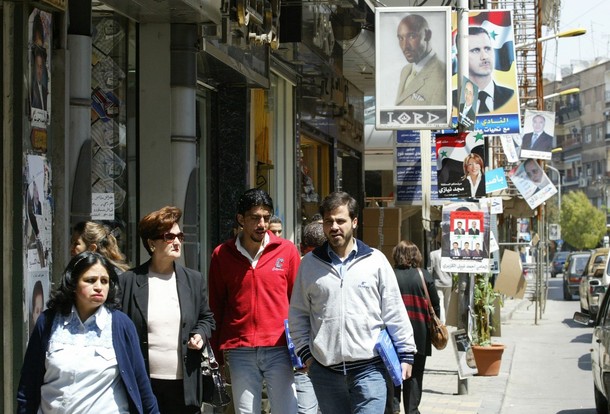 The Arabs of the Levant and Iraq love talking politics. This is one of the more rewarding things about spending time with them. In Syria, for instance, instead of enduring conversations about cars, house prices or football, you can immerse yourself in big issues: God and death, revolution and gender, secularism and resistance.
But because normal political life in Syria – organising parties, holding meetings and rallies, writing articles critical of the government – is criminalised, most people have no defined political affiliation. And it is of course impossible to accurately research political opinion, so any pronouncements on the views of Syrians are inevitably based on anecdotal evidence.
With that reservation, here are some pronouncements on the political views of Syrians. I base them on conversations with my Syrian relatives, my wife’s family, and many friends and colleagues from three years residence in the country and several long visits.
Misguided Responses
Here is my letter, which was published in the Guardian newspaper, on the fuss caused by the Danish cartoons of the Prophet Muhammad:
“Very many Muslims find themselves cringing between the charging rhinos of militant secularism and unreflective Islamism. On the one hand, the offending cartoons insult our most sacred values. This is not a question of free speech. In associating the Prophet with terrorism they only repeat in more grotesque form an allegation that has repeatedly been made. This last attack, following an endless stream of negative imagery emanating from Hollywood or CNN, and real attacks on Palestine, Iraq and Afghanistan, have been too much for some of us. But it is clear that most Europeans do not understand why the cartoons are so hurtful. The response called for is intelligent engagement with the media, not violent threats. Some Muslim countries also need to ensure that their own treatment of religious minorities is exemplary, according to Islamic principles, before they complain. And if Muslim countries wish to take political action against their enemies they should start by expelling the military bases of powers occupying Iraq.”
Although I found the cartoons offensive, I found the response more so. Some British Muslims made life even more difficult for the rest of us by holding up signs praising the tube bombs of July 2005. Nigerian Muslims attacked churches. Muslims rioted, threatened, and burned.
The Islamism of Not
One of my correspondents has suggested that islamist economic policy cannot improve the dire social conditions of Muslim countries. I think it is being overly generous to islamism to think that it has an economic policy, or any kind of policy at all. Beyond vague promises to implement sharia law (and there’s a concept that means very different things to different people), islamism is best understood by what it is not. It is a rhetorical function rather than anything of substance.
Of course, there are as many different islamisms as there are contexts in which it thrives. Sunni and Shia islamism, right and left islamism, peaceful and violent, macho and feminist, and so on. Perhaps one good way to divide islamisms, however, is into two kinds: islamism to protect established power and islamism to challenge it.
Islamism which protects established power is the older form. The West complained less about it, because the West was happy with the status quo. The classic manifestation of this kind of islamism is the Wahabism of Saudi Arabia, which takes Ibn Taymiya’s anti-Shia, anti-Sufi, anti-innovation discourse to ever more puritan lengths, and which designates the Al-Saud family as guardians of the doctrine. So long as the Sauds suppress religious diversity, demolish shrines, allow full rein to the religious police, they are free to make whatever decisions they wish on the country’s oil wealth and foreign alliances. The king is ‘wali al-amr’ and it is part of religion to obey him.
Taking a Step Back from Taking a Step Back
 It was two weeks into the Israeli blitz against Lebanon. Was it about to escalate to include Syria, where most of my family, and my wife’s people, live? My wife’s best friend, Randa, had already lost 22 members of her extended family under the rubble of their southern Lebanese village. The kind of epic tragedy, like Iraq and Palestine, that I follow on the internet for several hours a day, and get emotional about. But on this occasion, I couldn’t do so. I was booked in for 10 days of meditation at a retreat in Herefordshire. Fate decreed withdrawal from the war. No internet. No TV. No newspapers. No contact with the outside at all.
And no contact with the other meditators. We had to agree to maintain ‘noble silence’ for the duration: no talking, no physical contact, no eye contact.
Ten days of silence at the end of a hectic summer. I’d travelled in Iran from the migrainous Tehran traffic to the desert peace of Yazd, experienced a spiritual moment in Shiraz’s Nizam ul-Mulk mosque, and another by a spring in a mountain village, spliff in hand, taking a step back from my chattering voice, and observing it. I’d seen Kandinsky’s revelations in London and the Kirov ballet in Petersburg. I’d been racially profiled by a Finnish border guard, and felt how much more uncomfortable it’s become to be an Arab and Muslim in Britain. After all these environments, all these preoccupations, it was time to detach myself.


 Qunfuz