Archive for the ‘Palestine’ Category
Sabra and Shatila
Genre-specific readers be alerted: this is first draft fiction, not reportage – though its material is entirely factual. Twenty seven years ago today.
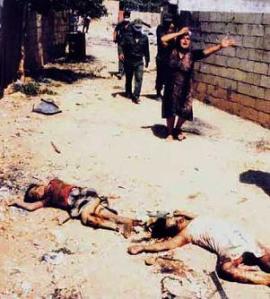 The militia were Arabs, brother Arabs.
The Phalangists were already baying from east Beirut, howling revenge. Now Israel flew Haddad’s militia, la crème de la crème, up from the south. Both groups assembled at the airport, for General Sharon to ensure all were properly kitted out: with weapons, military rations, medical supplies; Israeli cocaine and Lebanese hashish; Mediterranean testosterone, bad breath.
Then he uncaged them.
At six on Thursday evening. In the first penetration, three hundred and twenty men were brought on thirty trucks. Four gangs invading from four approaches. These were the most blood-addicted, rape-happy, battle-addled of militiamen, men long ago surfeited on outrage, men who required ever more extreme atrocities to stir their glutted senses. Ever wilder, ever sharper.
Israel lit the sky for them. White phosphorus flares trailing and dancing. Fire above like a terrible sun in the ceiling, a sun switched on in anger, while the children are sleeping.
Obscenity
This is, more or less, a selection from posts I made during the Gaza massacre.
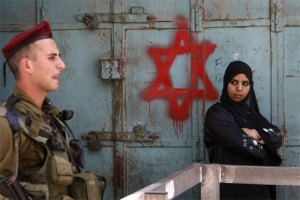 According to the dictionary, obscenity is what is offensive or repulsive to the senses, or indecent in behaviour, expression or appearance.
From Palestine come pictures on the internet, and on al-Jazeera – burning half bodies, a head and torso screaming, corpses spilt in a marketplace like unruly apples, all the tens and hundreds of infants and children turned to outraged dust. A little more out of focus, but concrete, there is the obscenity of starved refugees and cratered farmland, of shriek-soaked hospital walls and babies born at checkpoints. Still further behind these instances, these symptoms, looms the brute and perpetual obscenity of the ancient Canaanite-Arab Palestinian people having been driven from their land into camps and walled ghettoes, where they have been repeatedly massacred. All of this is offensive, repulsive and indecent. The Western media, not wishing to offend our senses, keeps the obscenity quiet. Better put, they cloak the obscenity with the greater obscenity of untruth, of dreaming a pleasant version while people bleed and die.
This should concern everybody, and first of all writers and readers. For the prime obscenity for us here, away from the immediate death and panic, is the language we use to hide the reality of what’s happening. We use magical terms. This is how it goes:
Bubbling with Energy
An edited version of this article was published in The National.
 We entered Palestine from Jordan, across the Allenby Bridge and over the trickle which is what’s left of the diverted, overused, and drought-struck river. The Dead Sea glittered in the hollow to our left. Jericho, the world’s oldest city, shimmered through heat haze to our right. The site where Jesus was baptised was a stone’s throw away. Palestine is most definitely part of bilad ash-Sham, in the same cultural zone as Syria, Lebanon and Jordan, but it is also most definitely like nowhere else on the planet. Suddenly the superlatives were coming thick and fast.
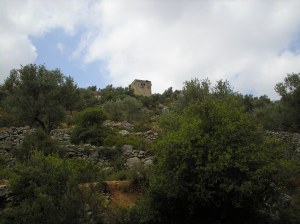
Palestine feels as large as a continent – but one that’s been crushed and folded to fit into the narrow strip of fertile land between the river and the sea. The Jordan Valley depression is the lowest point on earth, part of the Rift Valley which stretches from east Africa, and it’s as hot as the Gulf. But only a few miles up from the yellowed, cratered desert into the green hills before Jerusalem, and the weather is very different. As we left our performance in Ramallah a couple of nights later, gusts of fog blew in on an icy wind. If a Palestinian in the West Bank manages to find an unoccupied hilltop – which isn’t at all easy – he can look all the way to the forbidden Mediterranean, and perhaps he’ll pick out the fields of his ancestral village.
A Visit to Hebron
This was published on the Reuters Great Debate blog.
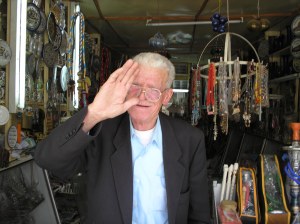 There’s no pretty way to describe what I saw in Hebron, no tidy conceit to wrap it in.
I visited as a participant in the Palestine Festival of Literature, the brain child of the great British-Egyptian novelist Ahdaf Soueif. I was in the company of many wonderful writers and publishers, among them Python and traveller Michael Palin, best-selling crime novelist Henning Mankel, Pride and Prejudice screenplay writer Deborah Moggach, and prize-winning novelists Claire Messud and MG Vassanji.
Our first stop was Hebron University, where I ran a workshop on ‘the role of writing in changing political realities.’ The students were bright and eager; the only discomforting note was struck by a memorial stone to three killed while walking on campus, by rampaging settlers, in 1986.
After lunch we visited Hebron’s historic centre.
The Green Still Resists
 In one of the most contentious sections of his thoroughly contentious Cairo speech, Obama declared:
Palestinians must abandon violence. Resistance through violence and killing is wrong and does not succeed. For centuries, black people in America suffered the lash of the whip as slaves and the humiliation of segregation. But it was not violence that won full and equal rights. It was a peaceful and determined insistence upon the ideals at the center of America’s founding. This same story can be told by people from South Africa to South Asia; from Eastern Europe to Indonesia. It’s a story with a simple truth: that violence is a dead end. It is a sign of neither courage nor power to shoot rockets at sleeping children, or to blow up old women on a bus. That is not how moral authority is claimed; that is how it is surrendered.”
It’s difficult to know where to start with this. Perhaps by registering just how insulting it is for the representative of the imperial killing machine – responsible directly and indirectly for millions of deaths in Iraq, Afghanistan, Pakistan, Lebanon, Somalia – to lecture the dispossessed and massacred Palestinians on their occasional attempts to strike back. We can be sure that the sleeping children Obama is concerned with here are the Israeli children who live on the stolen land of Palestine, not the unsleeping, traumatised children of Gaza, several hundred of whom were burnt and dismembered six months ago. Then it’s worth remarking how the erudition and intelligence shown in Obama’s pre-presidential book ‘Dreams from my Father’ have been immediately crushed on his assumption of the presidency. How otherwise could his historical vision be so partial and simplistic? There was certainly a key non-violent aspect to the struggle for civil rights in the United States, but pretending that violence played no role in the process makes it necessary to ignore the American Civil War (half a million dead), Nat Turner, Malcolm X, the Black Panthers and rioting Chicago. Violence, or the threat of violence, was important in South Africa and India too, and certainly in Obama’s ancestral Kenya, and was the dominant anti-imperial strategy in Vietnam and Algeria.
Entering Palestine
 I love it when Arab Christians have names like Omar. It shows, on their fathers’ part, a rejection of the sectarianism which cripples us. I know of a Christian family in Beirut which named its eldest son Jihad, and Muslim families with sons called Fidel and Guevara. Omar is not merely a specifically Muslim name; it’s more particularly a Sunni name, disliked by some Shia for theological-historical reasons. Omar is not a good name to have written on your ID card while driving through a Shia-militia-controlled area of Baghdad. But I know an Iraqi Shia woman whose brother is called Omar, because her father rejected the whole sorry sectarian business.
By and large, the Palestinians have avoided the curse. It’s still the case that if you ask a Palestinian whether he’s Muslim or Christian he responds, “Palestinian!” I mention this because our guide from Amman to the Allenby Bridge was a Palestinian Christian called Omar, and because the Palestinians, unlike their enemies, are proud of their diversity and pluralism.
Swaying in the bus aisle, Omar explained that Jordanian officers would check our passports but would not stamp them. “The Jordanian government has recognised Israel, but not Israeli control over the West Bank. Why are there Israeli police on the border and not Palestinians? Jordan recognises this as a crossing, but not a border.”
Suheir Hammad
Suheir Hammad is one of the Palfest participants who deserves a post to herself. A Palestinian-American, Suheir was born to refugee parents in Amman. She spent her first years in civil war Beirut before moving to Brooklyn, where drugs and gang wars raged. She is a poet, prosewriter and actress. Her poetry erases any distance between the personal and political, and is humane, passionate and particular. Greatly influenced in its rhythm, diction and pacing by New York hip hop, it fits snugly into the tradition of Palestinian oral delivery exemplified by the late poet Mahmoud Darwish.
Suheir stars in the film Salt of this Sea, but it is surely time someone directed her in a poetry performance DVD. You have to hear her read to really appreciate what she does. A good place to start is the poem First Writing Since, which concerns 9/11.
Ali Abunimah on Obama’s Lecture

Palestinian Obama. Zan Studio
Personally, I found it unpleasant to see Obama lecturing the Arabs, and the handpicked audience clapping as ecstatically as trained apes whenever the President (rather like Napoleon in Cairo) made an Islamic allusion. No matter that he said ‘hajib’ intead of ‘hijab’. Most depressingly, Obama’s address was heavily influenced by the Bernard Lewis school of Orientalism – Arab and Muslim anger is caused by the cultural trauma of modernity and a “self-defeating focus on the past,” rather than by very present realities, such as the ethnic cleansing of Palestine, the occupations of Iraq and Afghanistan, the destabilisation of Pakistan and Somalia, the unwelcome military bases in the Muslim world, and the support of dictatorial regimes such as Mubarak’s. Obama’s assumptions repeated falsities, such as the notion that Arab regimes focus on Palestine to distract the people from their own failings. In fact the Arab regimes do everything they can to take the focus off Palestine, as the Palestinian tragedy is the key symbol of the bankruptcy of the client regimes. And Obama mocked violent resistance while not saying a word about the 1400 just killed in Gaza or the million slaughtered in Iraq.
The best response I’ve seen to the speech is by Ali Abunimah, who studies Obama’s phrases well: “Suffered in pursuit of a homeland? The pain of dislocation? They already had a homeland. They suffered from being ethnically cleansed and dispossessed of it and prevented from returning on the grounds that they are from the wrong ethno-national group. Why is that still so hard to say?” Ali goes on:
Once you strip away the mujamalat – the courtesies exchanged between guest and host – the substance of President Obama’s speech in Cairo indicates there is likely to be little real change in US policy. It is not necessary to divine Obama’s intentions – he may be utterly sincere and I believe he is. It is his analysis and prescriptions that in most regards maintain flawed American policies intact.
Visit Palestine
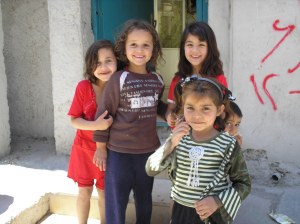
Click here to see my photo album of people.
Click here to see my photo album of walls.
Click here to see my photo album of al-Khalil/ Hebron.
Click here to see my photo album of Ramallah, Bethlehem and Jerusalem.
Please read the captions.
I have just returned from a physically, mentally and emotionally exhausting week in Palestine. I was a participant in Palfest 09, the second Palestine Festival of Literature. It was a great honour to be in the company of writers like Michael Palin and Debborah Moggach, and Claire Messud, MG Vassanji, Abdulrazak Gurnah, Ahdaf Soueif and Jamal Mahjoub, the lawyer for Guantanamo Bay prisoners Ahmad Ghappour, Palestinian poets Suheir Hammad and Nathalie Handal, and all the others. I’ll do a post at some point on everybody there. It was an even greater honour to meet Palestinian academics, students, and people on the streets and in the camps, to witness their incredible resilience and creative intelligence. Something fearless in them slipped into me, and gave me optimism. A people like this can not be kept down indefinitely.
Four Solutions
artist Marc Rudin
This was published at The Palestine Chronicle.
I do not hate (Israelis) for being Jewish or Israeli but because of what they have done to us. Because of the acts of occupation. It is difficult to forget what was done to us. But if the reason for the hate will not exist, everything is possible. But if the reason remains, it is impossible to love. First we must convince in general and in principle that we have been wronged, then we can talk about 67 or 48. You still do not recognize that we have rights. The first condition for change is recognition of the injustice we suffered.”
– Said Sayyam, martyred in Gaza January 2009, to Ha’aretz, November 1995.
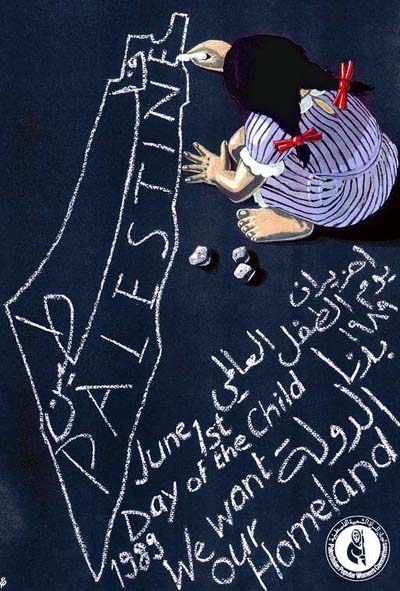
All Palestine is controlled by Zionism. The Palestinians (not counting the millions in exile) are half the population of Israel-Palestine, but they are victims of varying degrees of apartheid. The Jewish state has already lost its Jewish majority, and is more hated by the Arab peoples than at any time in its brief, violent history. Let’s take it as given that continuation of the present situation is untenable for everyone concerned. We need a solution.
After the Massacre 1 – Palestine and Israel
A version of this was published at The Electronic Intifada
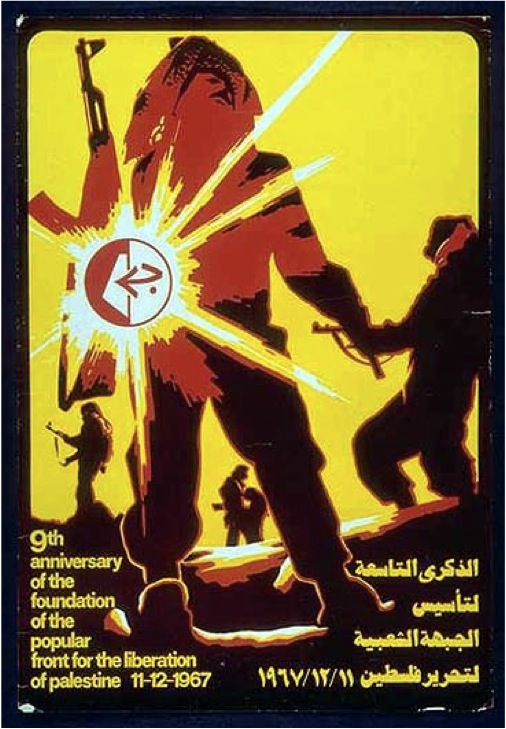
artist Marc Rudin
Hamas isn’t Hizbullah, and Gaza isn’t Lebanon. The resistance in Gaza – which includes leftist and nationalist as well as Islamist forces – doesn’t have mountains to fight in. It has no strategic depth. It doesn’t have Syria behind it to keep supply lines open; instead it has Mubarak’s goons and Israel’s wall. Lebanese civilians can flee north and east; the repeat-refugees of Gaza have no escape. The Lebanese have their farms, and supplies from outside; Gaza has been under total siege for years. What else? Hizbullah has remarkable discipline. It is surely the best-trained, best-organised army in the region, perhaps in the world (I’m not talking of weapons, but of men and women). Hamas, on the other hand, though it has made great strides, is still undisciplined. Crucially, Hizbullah has air-tight intelligence control in Lebanon, while Gaza contains collaborators like maggots in a corpse.
But Hamas is still standing. On the rare occasions when Israel actually fought – rather than just called in air strikes – its soldiers reported “ferocious” resistance. Hamas withstood 22 days of the most barbaric bombing Zionism has yet stooped to, and did not surrender, and continues to fire rockets.
Letters
I’ve recently written to Gordon Brown, David Cameron and Khaled Mahmood MP to complain about their positions on the massacre in occupied Palestine. I’ve also written to Gerald Kaufman and Nick Clegg, leader of the Liberal Democrats, to praise their calls for an arms embargo on the apartheid state. And I walked into the office of my local MP, Russell Brown, and spoke to Mr Brown’s assistant. A few days later I received a letter from Mr Brown which repeats the usual rubbish about ‘peace’ and the need to disarm the resistance so the oppressor can sleep more soundly at night. At least he bothered to send me a letter. I received responses from Brown, Cameron, Clegg and Kaufman too, but none from Khaled Mahmood. Mr Mahmood was quoted by the Guardian as “dismissing” calls for sanctions and an arms embargo. Mahmood is a Birmingham MP who no doubt receives a lot of votes because he has a Muslim name. Not only is he betraying his Muslim voters who would like to see their representatives develop a peaceful strategy of resisting the murderous British-Zionist alliance, he isn’t even capable of replying promptly to letters.
Here’s my response to Russell Brown’s letter. I won’t publish his letter because I don’t have permission and because it’s on paper, but I quote some of it. You can imagine the rest – it’s the standard New Labour magical incantation.
Dear Mr Brown
Thank you for your letter in response to my conversation with Cameron concerning the situation in occupied Palestine.
You write: “It is not difficult to understand the frustration, fear and anger of those Israelis who are the targets of Hamas rocket attacks, and the pressure on Israel’s democratic government to take action.” You then state the government position, and that of the European Union Presidency, that Israel’s use of force is “disproportionate.”
Israel Must Lose
I was one of 300 writers and academics who signed this excellent letter, which was published in the Guardian. The letter was an informal effort over only 48 hours. More writers and academics are signing at Znet.
The massacres in Gaza are the latest phase of a war that Israel has been waging against the people of Palestine for more than 60 years. The goal of this war has never changed: to use overwhelming military power to eradicate the Palestinians as a political force, one capable of resisting Israel’s ongoing appropriation of their land and resources.
Israel’s war against the Palestinians has turned Gaza and the West Bank into a pair of gigantic political prisons. There is nothing symmetrical about this war in terms of principles, tactics or consequences. Israel is responsible for launching and intensifying it, and for ending the most recent lull in hostilities.
Against ‘Peace’ and ‘Moderation’
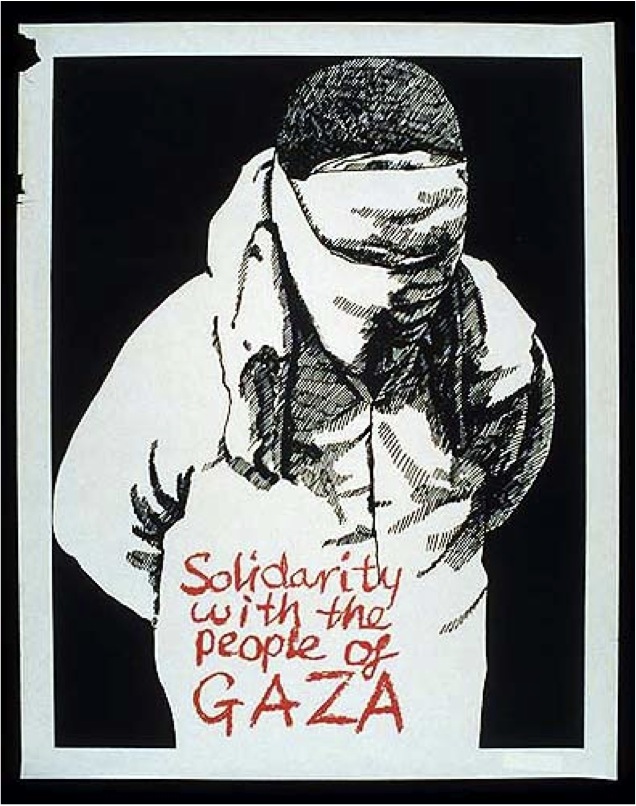 The numbers of the dead don’t mean much any more. It was round about the five hundred mark when I realised the impact of death on my mind was lightening. There are pictures on the internet – burning half bodies, a head and torso screaming, corpses spilt in a marketplace like unruly apples, all the tens and tens of babies and children turned to outraged dust – but how many pictures can you keep in your heart? How much anguish can you feel? Enough anguish to mourn 500 human beings? And of what quality can your anguish be? Can it be as intense as the anguish a bystander to the murder would feel? As intense as that of a friend of a victim, or of a father? What about the fathers who have seen all their children burn?
I remember the days when I was outraged if ten were killed in one go. Ah, happy days! Ten in one go would be good. But of course, this is what the enemy wants: the enemy wants us to value Arab life as little as it does. It wants us to stay in our numbness, to descend deeper in. It wants us to forget.
Misha’al (and Clegg)
The media love to ‘balance’ the occupied with the occupier. But if there was really balance, Khalid Misha’al, the leader of Hamas, would have as much airtime as Livni, Barak and Olmert. I congratulate the Guardian for publishing this excellent article by Misha’al. I republish it here because everybody should read it, and because I agree with it.
I do so with reservations, however. Although I support Hamas’s resistance, and although I think the Palestinians should be represented by the people they voted for and not by collaborators, I believe Hamas to be a flawed organisation. It is anti-Semitic, for a start; there’s no point pretending otherwise. It’s understandable that a population brutalised in the name of the Jews might latch on to ready-made racist generalisations about the Jews, but quoting the Protocols of the Elders of Zion in the Hamas constitution is not only morally wrong, but also stupid. It hampers clear analysis of the situation, and of the enemy. I wrote about that here: http://qunfuz.blogspot.com/2008/03/what-hamas-should-do.html


 Qunfuz