Archive for the ‘UK’ Category
Abusing Quilliam’s Name
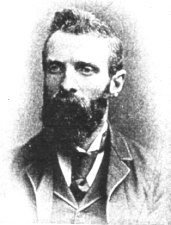 Abdullah Quilliam was a 19th Century British convert to Islam, the founder of a mosque in Liverpool. He was also an anti-imperialist and a supporter of the Caliphate. He argued that Muslims should not fight Muslims on behalf of European powers, citing specifically Britain’s enlistment of Muslim soldiers against the resistance in Sudan. If Quilliam were alive today he would, at very least, be kept under observation by the British intelligence services.
It is ironic, then, that this activist Muslim’s good name has been appropriated by the government-backed and funded Quilliam Foundation, established in April 2008, supposedly to counter extremism in Muslim communities.
Those who read my stuff will know that I despise Wahhabism, and still more Wahhabi-nihilism. I oppose Islamic political projects which aim to capture control of the repressive mechanisms of contemporary Muslim states. I am stunned by the stupidity of such slogans as “Islam is the solution.” I take issue with anyone who attempts to impose a dress code or an interpretation of morality on anyone else, and I loathe those puritanical ideologies which fail to recognise the value of music, art, mysticism, philosophy, and popular and local cultures in the Muslim world. It is obvious that political Islam has often been exploited for very unIslamic purposes by the American empire and its client dictators in Saudi Arabia, Egypt, Pakistan and elsewhere. Nominally Islamic political parties bear a great weight of responsibility for diverting the Iraqi resistance into a disastrous sectarian war. The terrorist attacks on London in July 2007 were abominable crimes and a catastrophe for all British Muslims. I know all that, yet I oppose the Quilliam Foundation.
Letters
I’ve recently written to Gordon Brown, David Cameron and Khaled Mahmood MP to complain about their positions on the massacre in occupied Palestine. I’ve also written to Gerald Kaufman and Nick Clegg, leader of the Liberal Democrats, to praise their calls for an arms embargo on the apartheid state. And I walked into the office of my local MP, Russell Brown, and spoke to Mr Brown’s assistant. A few days later I received a letter from Mr Brown which repeats the usual rubbish about ‘peace’ and the need to disarm the resistance so the oppressor can sleep more soundly at night. At least he bothered to send me a letter. I received responses from Brown, Cameron, Clegg and Kaufman too, but none from Khaled Mahmood. Mr Mahmood was quoted by the Guardian as “dismissing” calls for sanctions and an arms embargo. Mahmood is a Birmingham MP who no doubt receives a lot of votes because he has a Muslim name. Not only is he betraying his Muslim voters who would like to see their representatives develop a peaceful strategy of resisting the murderous British-Zionist alliance, he isn’t even capable of replying promptly to letters.
Here’s my response to Russell Brown’s letter. I won’t publish his letter because I don’t have permission and because it’s on paper, but I quote some of it. You can imagine the rest – it’s the standard New Labour magical incantation.
Dear Mr Brown
Thank you for your letter in response to my conversation with Cameron concerning the situation in occupied Palestine.
You write: “It is not difficult to understand the frustration, fear and anger of those Israelis who are the targets of Hamas rocket attacks, and the pressure on Israel’s democratic government to take action.” You then state the government position, and that of the European Union Presidency, that Israel’s use of force is “disproportionate.”
Dear Prime Minister
Dear Prime Minister
I am very pleased that you have been calling for an immediate ceasefire in Israel-Palestine. This marks a clear difference from the statements not only of President Bush but also of Tony Blair during the 2006 assault on Lebanon. Your stand shows some degree of British independence, and I thank you for it.
I am much less pleased to read this Downing Street statement: “We are working urgently with international partners to address the underlying causes of the conflict, including trafficking of arms into Gaza. Moderation must prevail.”
At The Empire’s Edge
Here’s a piece I wrote for the National about Arabs on Hadrian’s Wall.
 Beyond the fleeting days of summer, Hadrian’s Wall in the north of England is a cold place to be. I stood on a high ridge looking down the line of the Wall at black cloud building over the ruins of Housesteads fort. I was fully exposed to the wind, which carried small seeds of rain, and the mud covering my clothes seeped slowly towards my heart. For a moment I dreamt myself into the skin of an ancient soldier, one come here from warmer climes to serve his empire, and I shivered to my frozen toes. Then my son grinned, turned towards the fort, and with a delighted scream charged downwards, slaying imagined barbarians as he went.
We had set out early in the brisk morning from our home in south west Scotland, over bridges and past floods in low-lying fields. Streams gurgled in roadside ditches; pond-sized puddles occupied town centres. There’s enough water here to produce the illusion of hopping island to island through a vast archipelago.
Fracturing Authority
I had great sympathy for Chechnya when it was twice destroyed by Russian forces. The Chechens have been fighting for their independence for more than a hundred and fifty years. But Prime Minister Gordon Brown had no sympathy for Chechnya because, he says, Chechnya is officially part of Russia. The Chechen issue is a matter of Russian ‘territorial integrity.’ I admit that Brown’s position here makes sense. However brutal Russia’s treatment of Chechnya, it isn’t Britain’s business. (It may be the business of concerned British people, but that’s something else).
I don’t have much sympathy for Georgia, however, and none at all for the bleatings of the US, Britain and Germany, including Brown’s ridiculous bleatings in the Guardian. When the Soviet Union collapsed, Russia relinquished its control of eastern Europe and allowed independence to Caucasian and Central Asian nations. But instead of independence several of these countries became absorbed into the American empire. The fear that some of them had of their huge neighbour was understandable and deeply rooted (though not in Georgia, which had participated in Soviet rule from the Georgian Stalin to the Georgian Shevardnadze). The real fault was the West’s, to so stupidly exploit this fear, and to extend, by hubris, NATO membership and American missiles right to Russia’s borders. Russia in 1991 was too weak to do anything but let power slip, but its tolerance of Western expansion also showed a naivety, an overly-optimistic trust in Western capitalism. The very memory of that naivety is a humiliation to Russians.
Arab London
This appeared in Gulf Life (Gulf Air’s inflight magazine):
It’s August and, as well as the Notting Hill Carnival, west London is seeing its yearly influx of Arab tourists. While the visitors are here they’ll rub shoulders with a varied and well-established Arab community.
Unlike some cities, London is too mixed to be ethnically zoned. When I lived a few years ago on the Harrow Road in west London, my neighbours were Poles, Pakistanis, Trinidadians, Lebanese .. I could go on. In London there are no monocultural ghettoes, but there are cultural concentrations, and my Harrow Road bedsit was in the middle of the Arab one.
At lunchtime I would cross the canal to buy steaming bowls of harira from the Moroccan stallholders on the Golborne Road. North towards Willesden I would meet newly-arrived Iraqi refugees, each with a story. If I walked west to Shepherd’s Bush I found Syrian grocers selling olive oil from the old country, and balls of salty shellal cheese. On the Uxbridge Road I could even eat fetteh, the essential Levantine working man’s food, and I prayed with men of all sects in a basement mosque.
Flooding the Swamp
The metaphor most commonly used to describe terrorism and its backdrop is the one of the mosquitoes and the swamp, in which the mosquitoes are the bombers and the swamp is the much wider public which sympathises with and supports the terrorists, and from which the terrorists recruit. The metaphor is entirely accurate. It is not wishy-washy liberalism but cold logic to state that the only feasible method of defeating anti-Western Islamist terror in the medium to long term is to ‘drain the swamp’, by removing the grievances which inflame hundreds of millions of otherwise reasonable and tolerant Muslims against the West.
This does not mean surrendering Western values to an Islamist agenda but implementing common sense ‘do as you would be done by’ principles. Westerners too would be infuriated by foreign powers which occupied them, or which peppered their land with unwanted military bases, or laid siege to their elected governments, or propped up dictators who abused them.
If the West stopped violently interfering in the Muslim world, the Muslim world would stop violently replying. Certainly, a tiny hardcore of mosquitoes would continue to desire conquest of the infidels, but with their swamp dry, they would soon die off.
“Maps for Lost Lovers” and writerly responsibility
Update 2015: With the passage of time, much of this review embarrasses me. So people and perspectives change. My current view is better summed up by my words at the 2015 Shubbak festival, which Brian Whitaker reports:
There is a beautiful novel called Maps for Lost Lovers by Nadeem Aslam who is Pakistani-British, and I would recommend that everybody reads the novel as a work of literature because it is beautifully, beautifully written and characterised.
It works as a novel, but there is no good Muslim character in it. They are real characters and you can sympathise with them even when they are doing horrible barbaric things. But they are all doing horrible barbaric things from the moment they get up in the morning, and its the kind of horrible barbaric things that British Pakistanis do that you read about in the Sun newspaper.
So of course there is an issue, but we cant tell Nadeem Aslam that he’s a representative British Pakistani writer and therefore he has to write a nice version of British Pakistanis in order to educate the white population that some of them are all right. He’s writing what he wanted to write about and what was real for him, and he did it really well. I think the critique should focus on the social context. It’s not Nadeem Aslam’s fault so much as the Sun newspaper’s fault.
And here’s the thing I originally wrote:
I’ve recently read Nadeem Aslam’s finely-constructed and richly metaphorical novel “Maps for Lost Lovers”, which portrays a British Pakistani community and its rigid boundaries over a year of daily life and crisis. Save for some occasionally unconvincing dialogue, the writing is beautiful and poetic. Unlike, for example, Martin Amis, Aslam respects his characters, who are well-rounded and complex enough to evoke sympathy even when they behave badly. He shows them busy with gossip, work, poetry – and plenty of murder. For example, a book shop owner is murdered for money by his relatives in Pakistan. At the heart of the book, Chanda and Jugnu are murdered by Chanda’s brothers for ‘living in sin.’ Chanda wants to divorce her husband so she can marry her lover, but her husband has disappeared for years, and she doesn’t know where to. Another girl is murdered by a ‘holy man’ during exorcism-beatings. And so on: a litany of crimes motivated by ‘honour’ and superstition.
One subplot revolves around a woman being forced by sharia law to marry another man before returning to a husband who has divorced her once while drunk. The actual regulation is this: if a man divorces his wife THREE times he cannot remarry her unless she has been married to someone else and that marriage has also collapsed. This is generally understood as a warning to husbands not to divorce their wives without considering the consequences. Furthermore, a divorce announced when the husband is angry or intoxicated is not recognised. As for the stranded Chanda, sharia would automatically grant her a divorce if her husband disappeared for a day longer than a year. Fair enough, Aslam is writing about uneducated people’s partial and skewed understanding of their religion, or of their confusion of tradition and religion, but this point will be lost on non-Muslim readers.
You Muslims!
This summer my son and I spent a few days in the house of a friend of mine from university days, a friend from a very different background, but a very good friend, very intelligent and very funny, who has always treated me with respect and a great deal of generosity. It was wonderful to see him. The problem was his girlfriend. (Now ex-girlfriend, so I dare write this without jeopardising the friendship).
The first thing she said to my eight-year-old son, after “hello,” was, “Do you feel uncomfortable because I’m not all covered up?” Some minutes later at the dinner table she squeezed her eyes at him and then me, and asked, “What nationality are you?” I should stress here that I’m a native speaker of English, and that my son, although he’s never lived in Britain, has inherited my proper British accent. By now it was apparent that there was an obsessional block in this woman’s head.
A little later my friend (as he does) said something silly about gay people. The girlfriend cast worried glances at me, then my son, and said in the childish tone some people adopt when instructing children, “I think gay people are great!” These educative comments continued, quite irrelevantly. The most absurd, aimed meaningfully at my little boy, was “I really enjoy getting drunk sometimes!” Normally I would argue back, but I was in the very uncomfortable position of being a guest in my friend’s house. Anyway, my son was grown-up enough to understand that this strange woman had a strange agenda.
hijab/ niqab/ blab
My position on the hijab, or head covering, for what it’s worth, is that it is unnecessary. Surat Nur of the Quran, verse 31, says: “…tell the believing women….not to display their charms (in public) beyond what may (decently) be apparent thereof; hence, let them draw their headcoverings over their bosoms.” Given that the Arab women and men of the prophet’s time all wore a head covering (as men in the Gulf still do – it’s an obvious clothing choice for desert dwellers), but the women often left their breasts bare, it seems obvious here that the injunction is not to cover hair, which was covered anyway by prevailing social custom, but to cover breasts. The more general directive is for both men (who are addressed in the previous verse) and women to dress modestly according to the standards of their time and place.
Many Muslims would point to the ahadith, the records of the prophet’s words and actions, instead of to the Quran for guidance on this point. The problem with the ahadith is that they are sometimes contradictory. Sunni and Shia Muslims claim different ahadith collections as authoritative. Although an elaborate medieval science was developed to establish the reliability of ahadith, its methods do not meet the rigorous standards of modern textual criticism, and we cannot be nearly as certain of the origin of ahadith as we can of the Quran. In any case, I’m the kind of Muslim who thinks we can appreciate the spiritual and social treasures of Islam without imitating the social habits of the first Muslims. The prophet never claimed to be anything more than a man. He and his companions were the products of a particular cultural context. When we learn from their example, we need to do so with our historical senses switched on, looking for general principles which we can apply to our own context rather than for abstract and timeless rules.


 Qunfuz