Norway
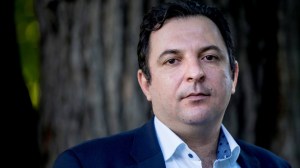
Mazen Darwish
It was a pleasure to visit Oslo, where my co-author Leila al-Shami and I were hosted by the Literaturhuset and the Syrian Peace Action Centre. Of course, not every moment was pleasurable. A couple of audience comments reminded us of the rising red-brown tide of counter-revolutionary propaganda spouted by people who describe themselves as ‘leftists’ as well as those honest enough to identify openly with the far right. Sam Hamad calls this ‘the fascism of the 21st Century‘. Karam Nachar (a member of the Local Coordination Committees and editor of al-Jumhuriya) gave a fascinating talk on the intersection of political and cultural activism in Syria. Afterwards a Nordic fascist stood up and said, “You claim President Assad is killing people, but is it surprising when the rebels are being armed by colonial powers?” Such a statement not only ignores (and justifies) the Russian and Iranian imperialist assault on Syria, but also encapsualtes the stunning (willed) ignorance of those who believe that the United States is trying to get rid of the Assad regime. After another talk, a Norwegian said he’d recently visited Damascus, “where everything was fine”, and explained how Assad is defending Christians. Anyone in central Damascus in possession of eyes and ears can hear the bombs falling and see the smoke rising from the suburbs. Fortunately the exemplary revolutionary (and great writer) Marcell Shehwaro, who happens to be a Christian, was there to put him in his place.
It’s distressing enough that the violence wielded against east Aleppo and other liberated areas of Syria has reached truly genocidal levels. In addition we are forced to observe the ugly spectacle of so-called ‘experts’, ‘leftists’ and ‘journalists’ cheerleading the slaughter. (One such is the grotesque far-rightist-posing-as-progressive Jill Stein.) In such a grim context, it was balm for the brain to spend time with Syrian (and Lebanese and Palestinian) revolutionaries in Oslo. Perhaps the greatest honour was meeting Mazen Darwish of the Syrian Centre for Media and Freedom of Expression, a man of great principle and intelligence, who has paid a great price.
If you follow this link, you’ll see Mazen and I speaking about Aleppo on Norwegian TV.
No Knives in the Kitchens of this City
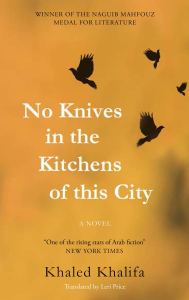 This review of the latest novel by Khaled Khalifa – an examination of Aleppo’s decades-long strangulation at the hands of the Assad regime – was published at the Guardian.
Were Syrians wise to revolt? Aren’t they worse off now?
Such questions misapprehend the situation. Syrians didn’t decide out of the blue to destroy a properly functioning state. The state had been destroying them, and itself, for decades. “No Knives in the Kitchens of this City”, the new novel by Khaled Khalifa, chronicles this long political, social and cultural collapse, the incubator of contemporary demons.
The story stretches back to World War One and forward to the American occupation of Iraq, but our narrator’s “ill-omened birth” coincides with the 1963 Baathist coup. The regime starts off as it means to continue. The maternity hospital is looted and emptied of patients. Soon the schools and universities are purged. Only pistol-toting loyalist professors survive. Public and individual horizons shrink as the president’s powers grow beyond all limits, through Emergency Law, exceptional courts, and three-hour news broadcasts covering “sacred directives made to governors and ministers”.
The novel follows a large and well-drawn cast – a family, their friends, enemies and lovers – back and forward across three generations. This multiple focus and enormous scope turns the setting – the city of Aleppo – into the novel’s central ‘character’. “Cities die just like people,” Khalifa writes. So ancient neighbourhoods are demolished, and lettuce fields give way to spreading slums.
“No Knives in the Kitchens of this City” won the Naguib Mahfouz Medal for Literature. As in many of Mahfouz’s novels, Khalifa’s urban environment develops a power somewhere between metaphor and symbol: “The alley was witness to the destruction of my mother’s dreams, and the idea of this alley grew to encompass the length and breadth of the country.”
A Social Media Mea Culpa
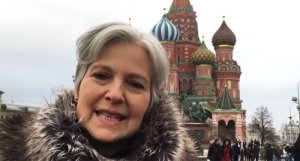
Jill Stein in Moscow
On Facebook (which steals my time and makes me angrier than I already am) I remarked that the Tories will be in power for another decade in Britain now that ‘leftists’, mistaking an electoral party for a social movement, have re-elected the pro-Putin, pro-Khamenei Jeremy Corbyn to leadership of the Labour Party. (Here is the excellent Sam Hamad on Corbyn’s foreign policy.) Likewise, or even worse, some American ‘leftists’ will be voting for Jill Stein in their presidential elections. Stein believes that wi-fi rays (not just internet use) damage our brains. She attended a dinner with Putin in Moscow, then told Russia Today that ‘human rights discourse resonates here’. This while Russia occupies parts of Ukraine and rains white phosphorus and thermite cluster bombs on Syrian hospitals. Speaking in a city where it isn’t safe to be black, or openly gay, to write investigative journalism, or to dissent from the Putin line. Stein’s running mate believes that Assad won an election fair and square. Even if she could win, this hippy-fascist mix would not in any way be a progressive alternative. But of course she can’t win. What she can do is take votes from Hillary Clinton, and help Trump to win (something Putin is praying for). Yes, Clinton is as horrible as anyone from the American establishment, but she’s a hell of a lot better than Trump, the white-nationalist candidate whose election will have immediate and terrible effects on American society. As Clay Claiborne points out, voting for Stein in this context may be one definition of white privilege.
The discussion after my anti-Corbyn post includes me commenting on the stuff I wrote on this blog before 2011 (particularly on Iran), and one lesson I think I’ve learned since. As that stuff can still be viewed here, I’m posting part of the discussion.
subMedia and others
I am interviewed (from 14 minutes to the end) in Requiem for Syria, a generally excellent and very sweary film by subMedia, an anarchist news channel in Canada. It’s particularly good to see their nuanced take on the (Kurdish) Democratic Union Party, or PYD. You can watch the episode here.
Henry Peck interviewed Leila al-Shami and me for Guernica magazine. You can read that here.
And Ursula Lindsey reviewed our book ‘Burning Country: Syrians in Revolution and War’, alongside other books, for the Nation. That’s here.
The Prison
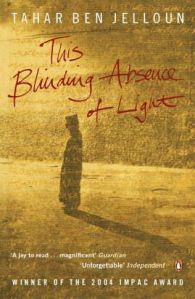 This article about Arab prison writing was published at the National.
From ‘Prisoner Cell Block H’ to ‘Orange is the New Black’, prison dramas fill the Anglo-Saxon screen. In the Arab world, you’re more likely to see them on the news. In recent months, for example, detainees of the Syrian regime have staged an uprising in Hama prison and been assaulted in Suwayda prison.
No surprise then that contemporary Arab writing features prisons so prominently, sometimes as setting, more often as powerful metaphor.
“About My Mother”, the latest novel by esteemed Moroccan writer Taher Ben Jelloun (who writes in French), is an affectionate but unromantic portrait of his parent trapped by incoherence. The old lady suffers dementia, mistaking times, places and people, but there is a freedom in her long monologues, the flow of memory and shifting scenes, torrents of speech which eventually infect the narration.
The novel is family memoir and social history as well as an experiment with form. Jelloun’s mother was married thrice, and widowed first at sixteen. At the first wedding, the attendants presenting the bride chorus: “See the hostage. See the hostage.”
Fettered by tradition and domestic labour, now by illness and age, she responds with superstition, fatalism and resignation. Her own confinement is echoed by memories of national oppression, first by the French, then by homegrown authorities. She learns to mistrust the police even before her son Taher’s student years are interrupted by eighteen months in army disciplinary camp, punishment for his low-level political activism. “That’s what a police state is,” the adult writes, “arbitrary punishment, cruelty and barbarity.”
National Liberation War
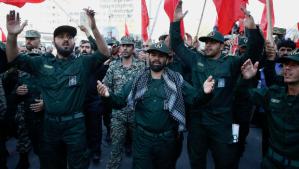
Mourning in Iran for a general killed in Syria
An edited version of this article was first published at The New Arab.
Because the Iran Iraq war was followed by an endless succession of conflicts, we forget its foundational horror. Killing at least a million, burning entire cities, and propelling identity politics towards its current fascistic heights, it was the region’s equivalent of World War One.
Iraq started the war. Exploiting Iran’s mid-revolution weakness, Iraqi forces invaded, seeking to annex Khuzestan province. Had Saddam Hussein been a leader interested in safeguarding civil and national rights, Iranian oppression of Khuzestan’s Ahwazi Arabs might have provided justication. But Saddam was a tyrant who oppressed Iraq’s Arabs just as much, and his prime concern was the province’s oil wealth. His brutal aggression included raining poisonous gas on Iranian cities.
No-one can fault the Iranians for the passion of their response. Gulf, Western and Soviet support for Iraq’s war understandably exacerbated the Iranian sense of victimhood which persists, and clouds so many minds, until today. After a certain point, however, the Iranian war lost its defensive character. Khomeini rejected a 1982 truce offer from a chastened Saddam, determined to fight on until Iran occupied the Shia holy cities of southern Iraq. This never happened, but war conditions helped Khomeini neutralise Iran’s revolutionary energies and firmly establish his own rule. The war dragged on for another six years.
Rising Up with Sonali
It was a pleasure to be hosted on ‘Rising Up with Sonali’, an LA-based radio and TV show run by women. We discussed the High Negotiations Committee’s transition plan for Syria, the origins of the Assad dictatorship, and how the revolution erupted.
You can watch or just listen to it here.
Another War Opens
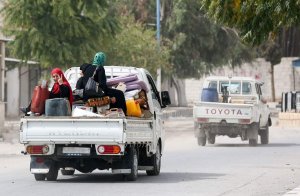
Jerablus residents returning home
This was first published at the New Arab.
On August 9th, Turkish President Erdogan visited Russian President Putin in Saint Petersburg. The two leaders cleared the air after a period of mutual hostility during which Turkey had shot down a Russian fighter jet and Russia had bombed Turkish aid convoys heading to Syria.
Clearly some kind of deal was struck at the meeting. Turkey now feels able to engage in robust interventions in northern Syria against both ISIS and the Democratic Union Party, or PYD, a Kurdish party-militia closely linked to the PKK, a group at war with the Turkish state. Except for the public recognition that Moscow is more relevant than Washington, it isn’t clear what Turkey has given Russia in return. Turkey has after all just supported the rebel push to break the siege of Aleppo.
Perhaps the earliest sign of the new reality was the Assad regime’s aerial bombardment of PYD-controlled territory in Hasakeh. The PYD closed Aleppo’s Castello road to regime traffic in response.
A ceasefire was quickly agreed, but the clash was still a surprising turnaround. Assad had never bombed the PYD before. In fact the two had sometimes collaborated, not as a result of ideological proximity or fraternal feeling, but out of a ruthless pragmatism. The regime withdrew from Kurdish-majority areas without a fight in June 2012. The PYD inherited the security installations in these three cantons – now called Rojava, or western Kurdistan – and Assadist forces were freed up to fight the revolution elsewhere.
On KPFA in Berkeley
Here’s an interview Leila and I did in Berkeley, California in April (or was it early May?) We talked about local democracy and self-organisation in Syria, the fascist and imperialist forces ranged against the revolution, and the idiotic misconceptions of the dominant Western ‘left’.
You can listen to it here.
The Tragedy of Daraya
This was published at The New Arab.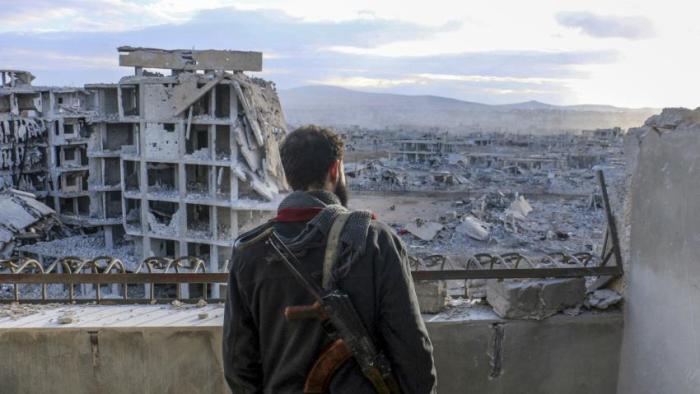
Daraya is – or used to be – a sizeable town in the Damascus countryside. A working and middle-class suburb of the capital, it was also an agricultural centre, famed in particular for its delicious grapes. In recent years the town has become a symbol of the Syrian revolution, and of revolutionary resilience in the most terrible conditions. And now, after its August 25th surrender to the Assad regime, it becomes symbolic of an even larger disaster.
Daraya’s courageous social and political activism stretches back long before the eruption of the revolution in 2011. Its residents protested against Israeli oppression in Palestine during the second intifada, and then against the American invasion of Iraq. Those who believe that Assad’s regime represents popular anti-Zionism and anti-imperialism won’t realise how brave these actions were. Independent demonstrations were completely illegal in Syria, punishable by torture and imprisonment, even if the protests were directed against the state’s supposed enemies. And Daraya’s activism focused on domestic issues too, in the form of local anti-corruption and neighbourhood beautification campaigns.
This legacy of civic engagement owes a great deal to the Daraya-based religious scholar Abd al-Akram al-Saqqa, who introduced his students to the work of ‘liberal Islamist’ and apostle of non-violence Jawdat Said, and was twice arrested as a result. Jawdat Said emphasised, amongst other things, rights for women, the importance of pluralism, and the need to defend minority groups.
In 2011 Daraya became one of the most important laboratories for exploring the possibilities of non-violent resistance. Ghiath Matar, known as ‘little Gandhi’, put al-Saqqa and Said’s principles into practice by encouraging protestors to present flowers and bottles of water to the soldiers bussed in to shoot them. The regime responded, as usual, with staggering violence. Matar, a 26-year-old tailor, was arrested in September 2011. Four days later his mutilated corpse was returned to his parents and pregnant wife.
From the start, despite the regime’s divide-and-rule provocations, Daraya’s protest movement rejected sectarian polarisation. As in Deraa and Homs, Christians in the town joined protests, and church bells rang in revolutionary solidarity with the martyrs. Even as Salafism and jihadism rose to prominence elsewhere in the traumatised country, Daraya preserved its tolerance.
Inland American Conspiracies
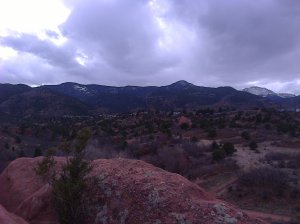
outside Colorado Springs
A shorter version of this piece was published at the New Arab.
From the canyon walls of Manhattan island to science-fiction California, coastal and urban America is more diverse and sophisticated than almost anywhere else in the world.
As for inland America, the stereotypes are true, but other things are also true.
In April we were travelling to talk about our Syria book, in New Jersey, then Boston, then over to LA. From there inland to Colorado, high desert at the mountains’ beginning where you can suffer sunstroke and frostbite in the same afternoon.
The cities here exemplify American modernity. They are clean, bright, spacious, and architecturally befuddled. At the same time they bear an emotional trace of the recent Wild West past. One of our talks was in a town called Golden (for the metal, and the craze), at the Colorado School of Mines.
Another was at a liberal arts college in Colorado Springs, a conservative city boasting a US Airforce Academy, lots of retired soldiers, weapons factories, and a concentration of evangelical churches. It also houses the 47-acre HQ of Focus on the Family, a media and lobbying organisation which militates against abortion and gay marriage and promotes creationism instead.
Before we spoke a woman came up and introduced herself as “an international poet”. She told us she cared about Syria very much. “And it’s so obvious what the solution is! An international Sunni-Shia peace conference.”
The Battle for Aleppo
A slightly edited version of this article was published at the New Arab.
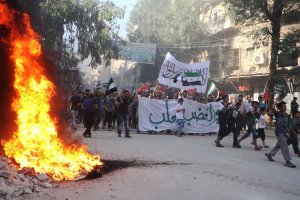 Aleppo is 7000 years old, its mythical origins mixed up with the prophet Abraham and a milk cow, its opulent history underwritten by its place on the Silk Road. Socially and architecturally unique, in its pre-war state Muslims and Christians, and Arabs, Armenians, Turkmen and Kurds, lived and traded in streets redolent sometimes of the Ottoman empire, sometimes of corners of Paris. Before the war Aleppo contained the world’s largest and most intact Arab-Islamic Old City. Now – with the covered souq, the Umayyad mosque, and many other markets, baths and caravansarays destroyed – that honour passes to Morocco’s Fes.
The city’s working class eastern districts have been liberated twice in the last five years. On the first occasion, July 2012, armed farmers swept in from the countryside to join urban revolutionaries against their Assadist tormentors and for a few weeks it felt the Assad regime would crumble in Syria’s largest city and economic powerhouse. But the battle soon succumbed to the war’s general logic: rebel ammunition ran out, the fighters squabbled and looted, foreign jihadists took advantage as the stalemate extended.
These strangers pranced about on blast-traumatised horses, imposed their brutal versions of sharia law, murdered a fifteen-year-old coffee-seller for supposed blasphemy, and finally declared themselves a state.
In January 2014, prompted by popular anger, the entire armed rebellion declared war on ISIS, driving it out of western Syria, Aleppo city included. This was the second liberation.
Aleppo is Syria’s most important centre of civil activism. It houses revolutionary councils and emergency healthcare projects, independent newspapers and radio stations, theatre groups and basement schools. Despite the years of barrel bombs and scud missiles, 300,000 people remain in the liberated zone.
Syrian Democracy
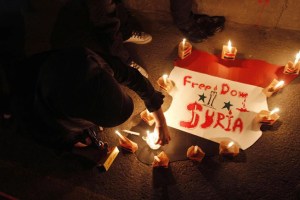 An edited version of this piece was published at the National.
You may think Syrians are condemned to an unpleasant binary choice, between Assad – a mass-murdering dictator who at least shaves – and the jihadist with the beard, the dripping knife, the global agenda. Which perhaps makes Assad the lesser evil. Yet the real choice being fought out by Syrians isn’t between the dictator and the jihadists (the two feed each other), but between various forms of violent authoritarianism on the one hand, and grassroots democracy on the other. The democrats deserve our support.
Interviewing activists, fighters and refugees for our book “Burning Country: Syrians in Revolution and War”, we discovered the democratic option is very real, if terribly beleaguered. To the extent that life continues in the ‘liberated’ but brutally bombed areas – areas independent of both Assad and ISIS – it continues because self-organised local councils are supplying services and aid.
For example, Daraya, a suburb west of Damascus now suffering its fourth year under starvation siege, is run by a council. Its 120 members select executives by vote every six months. The council head is chosen by public election. The council runs primary schools, a field hospital, a public kitchen, and manages urban agricultural production. Its military office supervises the Free Syrian Army militias defending the town.
Reinvention versus Trumpism
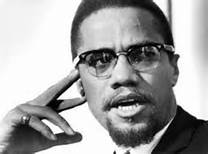
Malcolm X
This was first published at the New Arab.
While we were in New York to talk about “Burning Country”, I visited the 9/11 Memorial, a commemoration of the spectacle that arguably set the tone for the 21st Century. I was advised to visit by a friendly progressive professor, the host of one of our events. He said the attached museum was a good example of America’s self-portrayal as the world’s supreme victim. He wasn’t alone. Philip Kennicott in the Washington Post described the museum as “an oversized pit of self-pity, patriotic self-glorification and voyeurism.”
I didn’t really agree about the museum, and the memorial to the day when the twin towers were hit and almost three thousand civilians killed seemed to me tasteful and correct.
At the precise site of each tower’s base there are two-tiered pools of falling water. These enormous bottomless basins are inversions of the towers, the very opposite of phallic triumphalism. Each implies absence and a hidden abyss. In a way they are beautiful, superficially calming, and their noise nearly drowns the rush of the city around. But ultimately they are terrible, because gravity’s incessant pull on the water, the sound and sight of continuous descent, is a reminder of the terror of jumping, falling people, those who chose to plunge rather than burn, and of the tumbling shoes, the floating paper, the towers themselves collapsing, so many tons of metal and concrete, so many volumes of dust and smoke.
In the museum the focus is on the trauma experienced by the victims. There are first-hand accounts played on audio, and photographs and films of shocked New Yorkers gazing skyward, or running for their lives, or trudging slowly, whitened by dust. A shock, literally out of the blue, for an America almost entirely untouched on its own soil by war, at least since its civil war (though native-Americans and African-Americans must be excluded from this peaceable account of history).
Two Assassinations and a Brexit
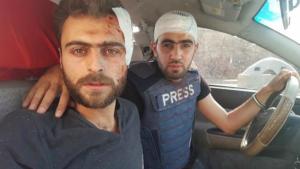
Khaled al-Issa (left) and Hadi Abdulllah, after the air raid, before the controlled explosion
This was published at al-araby al-Jadeed/ The New Arab.
On June 16th Jo Cox, a proponent of EU membership, a compassionate supporter of refugees, and the most articulate voice for revolutionary Syria in the British parliament, was shot, stabbed and kicked by a middle-aged man screaming “Britain First!”
On the same day Syrian citizen journalists Khaled al-Issa and Hadi Abdullah, 48 hours after surviving an air raid, were severely injured in an assassination attempt by controlled explosion.
Jo died in hospital shortly after she was attacked. In a different world, the kind she fought for, she would have been an honoured guest in free Syria. Khaled al-Issa died of his wounds on June 24th. Having survived Assad and ISIS-inspired brushes with death, it was probably Jabhat al-Nusra, Syria’s al-Qaida affiliate, that got him in the end. In a different world Khaled would be reporting on the achievements of post-dictatorship Syria. In this world, however, the very best are being murdered. The very worst are growing in power.
East and west, violent and nativist authoritarianism is on the rise. The British media focused on characterisations of Jo’s murderer, Thomas Mair, as a troubled loner rather than as a terrorist. Had he screamed ‘Allahu Akbar’ rather than ‘Britain First’ as he stabbed and shot, the emphasis would certainly have been different.