Something Worse?
An edited version of this article was published by al-Jazeera.
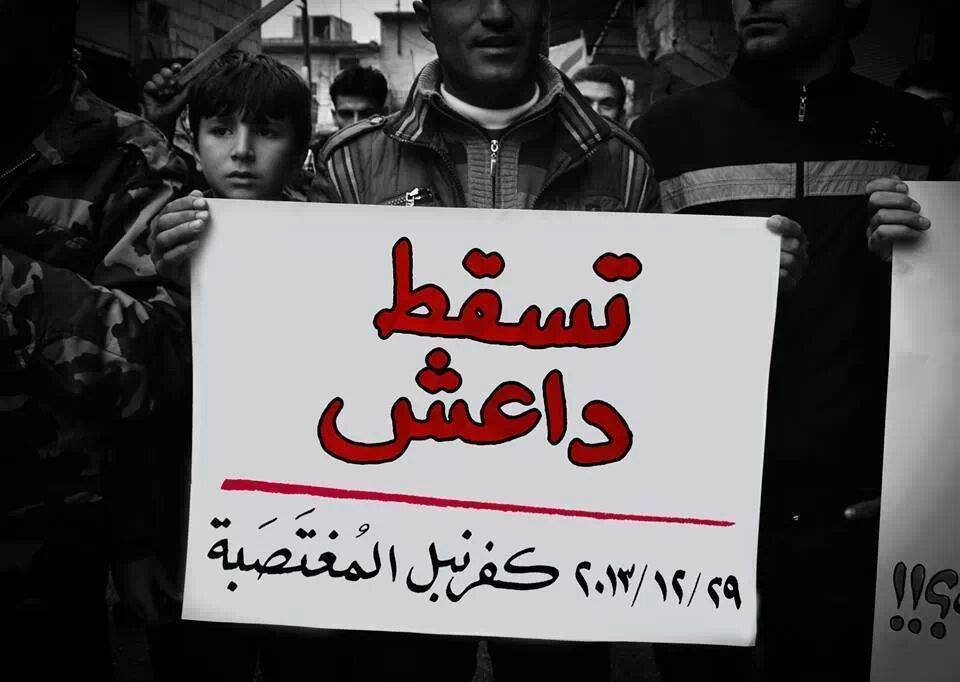
Down with ISIS, from Kafranbel
In a hotel lobby on the Turkish side of the Syrian border, Yasser Barish showed photographs of his bombed family home in Saraqeb, Idlib province. One room was still standing – the room Yasser happened to resting in on September 15th 2012 when the plane dropped its bomb. The other rooms were entirely obliterated – ground level rubble was all that remained. Yasser’s mother, grandmother, sister and brother were killed.
Saraqeb is a much fought over strategic crossroads, invaded wholescale by Assad’s army in August 2011 and March 2012. Since November 2012, the regime has had no presence in the town (though its artillery batteries remain in range). At first the Local Coordination Committee provided government, but through the spring of 2013, the al-Qa’ida-linked Islamic State of Iraq and Syria (ISIS) gradually increased its presence in the town.
Yasser told me how they took over Saraqeb. At first only ten representatives came, and they brought with them large amounts of medicine and food. They were humble and generous, and warmed the local people’s hearts. They also brought money, with which they recruited ammunition-starved and hungry local fighters. Then reinforcements arrived – “Libyans, Algerians, a lot of Iraqis, some Afghans and Turks, one white Belgian and one white American” – enough to frighten thieves into good behaviour, which at first increased the organisation’s popularity. But in May 2013 they whipped two men in a public square for an infringement of Islamic family law. In June they took absolute control, forbade drinking and smoking, and made prayer compulsory.
Yasser is part of an independent team which publishes magazines for adults and children – a sign of autonomous revolutionary success in terribly difficult circumstances. The slogan “I have the right to express my opinion” graces the cover of Zeitoun wa Zeitouna, the children’s magazine. Since the culling of his family, Yasser doesn’t care if he lives or dies. But so long as he’s here, he’s dedicated himself to improving local lives – teaching children how to read and encouraging them to tell stories and draw pictures. (The local schools, of course, are closed, and most of the teachers killed or fled.)
But even these simple aims are difficult to achieve, even in the regime’s absence. ISIS closed one printing press (a second ran at a secret location), and arrested and beat Yasser for ‘taking photographs of women’ (the ‘women’ in question were girls under the age of thirteen participating in one of his workshops). In July 2013 he witnessed ISIS attacking Saraqeb’s media centre and its abduction of a Polish journalist.
A Widow of Bayada
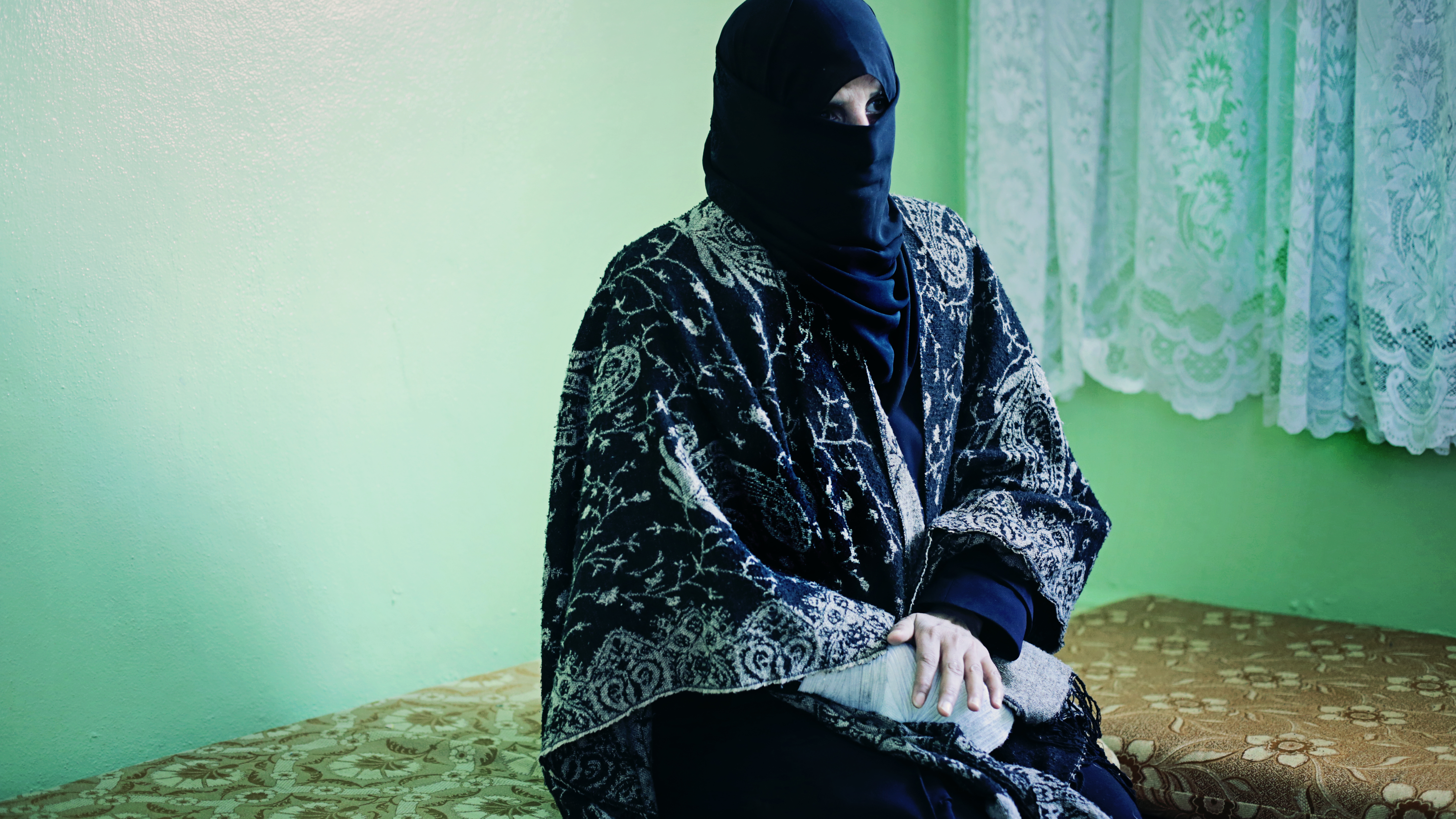
photograph by Mohamad Ojjeh
An edited version of this piece was published by the National.
Our car turns through the crowded alleyways of single-storey breezeblock houses, foggy with coal smoke in the icy December morning. This is the poorest quarter of Reyhanli, a Turkish town just across the Syrian border, and it’s crammed with Syrian refugees.
The woman whose story I’ve come to hear puts on a niqab when the camera comes out. And she prefers to be nameless, because she fears for her two married daughters still living in regime-controlled territory.
She lives in an empty, unheated house. Her son sits with us, and her small daughter shivers under a blanket. The woman is in early middle age but looks older. Her face is long, worn, and haggard, her voice pain-strained and sharp.
Her husband, born in 1972, worked with the military security for seventeen years but retired early when he needed an operation on a vertebral disc. After that he opened a roast chicken place in his Homs neighbourhood, Bayada. The family lived what his wife describes as a working-class life “of an acceptable standard”. They had six children. Bayada comprised both Sunni and Alawi families, “and the relationship between us was very good, even if the state favoured Alawis. We drank maté together. There was no problem.”
The revolution broke out less than a year after her husband’s retirement, and the newly-pressured military security began asking him to return to work. He refused. “How could he work for them? At that time Bab Dreib was being shelled. In our area there were house searches and random arrests of young men. They even took women, those who attended demonstrations and those who shouted ‘God is Greater!’ from their windows at night.”
Her husband supported the revolution and was part of a local network which helped the revolutionaries, finding shelter for those on the run and collecting food, medical supplies and money. His wife believes an Alawi neighbour informed on him. On the other hand, it was an Alawi friend who warned him that his name was on the wanted list at regime checkpoints.
All Things Considered (Again)
Again I was on All Things Considered, a BBC Radio Wales programme, talking with Nadim Nassar, Bishop Angelos, and Harry Hagopian about Muslims, Islamists, Christians, Syria and Egypt. Follow the link to listen (it may only be available for a few days).
http://downloads.bbc.co.uk/podcasts/wales/atc/atc_20140112-0930a.mp3
Dusklands
 Last summer I travelled in Morocco (where I used to live) in order to write an essay for the Maghreb issue of the Critical Muslim, which I also edited. This essay is available in full online (for free). To read the other essays, stories and poems (and there are some truly brilliant ones) you’ll have to buy the issue (available on Amazon) or subscribe. Please support the journal/ magazine by encouraging your local library/ college to subscribe.
Morocco’s Arabic name, ‘al-Maghreb’, emerges from the root gh-r-b, which denotes concepts including the west, distance, and alienation. ‘Ghareeb’ means strange. ‘Ightirab’ means living outside the Arab world, whether in the west or the east. ‘Maghreb’ also means sunset, dusk, the evening prayer, the time at which the daily fast is broken. Al-Maghreb al-Arabi refers to the entire Arab west – Libya, Algeria, Tunisia, Mauritania, the Western Sahara – but Morocco has no other name. It is al-Maghreb al-Aqsa, the furthest west, the strangest.
The ancient Egyptians believed they spent the afterlife wandering ‘the Western Lands’. William Burroughs, who lived in Tangier, wrote a novel inspired by the notion. When I lived in Morocco, teaching English at the turn of the century, a Syrian woman of my acquaintance used to play on the word like this: la tustughreb, anta fil-maghreb or, Don’t be shocked, you’re in Morocco! On this return visit I heard the same phrase from the mouth of a Moroccan man in a train.
But shocked I was, a little bit, twelve years ago.
I’d been living in the mashreq, the Arab east, before I arrived, and (foolishly) I expected the maghreb to be similar. I found a much more liberal place, one much less subject to taboo. For instance, depending on class and region, a Moroccan girl with a boyfriend is not quite the social catastrophe it would be further east. Moroccan sleaze is not hidden away (which is perhaps, overall, a good thing). I once almost pushed my son in his pushchair past men engaged in a sexual act, not in a dark basement but among the trees at the side of a main road. Several times I walked past the same exhibitionist in central Rabat. There were police nearby but they ignored him. And I frequently saw ragged street children sniffing glue-soaked rags, more of a South American scene than an Arab one. (I didn’t see that on this recent trip). In addition to public taboos, Moroccans lack the softness and eloquence, the courtliness, of the eastern Arabs. But they also lack the airs and graces, the intense class resentments, the hypocrisies. You don’t feel everyone is judging everyone else as you can do in the east, at least not in the same way, not to the same extent.
Then there were the contradictions, or perhaps the diversity, better put, of language, ethnicity, culture and, most of all, class. Parts of the big cities were comparable to Europe in their lifestyles and aspirations. Some of my students went to French-language schools, spent their holidays in Europe, and spoke French at home. Meanwhile much of the countryside was consigned to illiteracy and grinding poverty. There was almost no modern infrastructure out there. The people didn’t speak French. Some didn’t speak Arabic either.
I return twelve years later to Rabat, once my home, a handsome capital surrounded by red walls and built in that distinctive architectural style which connects Andalusia to West Africa. Rabat’s ‘new city’ contains tree-lined boulevards, embassies and white villas, and the enormous Makhzen (royal court) compound. The madina al-qadima (old city) and kasbah (fortified settlement) are to the west. A necropolis lies west of the madina. Then comes the beach and its piers, the crab-crawling rocks, and the cold Atlantic. The madina is neither traditional nor modern: it’s contemporary, and Moroccan traditions are an integrated part of contemporary life. The glossy-artisanal rue des Consuls is designed to serve foreigners, in the past and the present, but it’s by no means an over-touristed souq. The flea market in the mellah (what used to be the Jewish quarter) deals in antiques, broken office machines, and books – classics and curiosities in Arabic, French and English.
My visit comes in Ramadan, whose rhythm has overtaken the madina. This means quiet mornings and bustling afternoons. As the maghreb prayer calls, the sunset is dispersed by light Atlantic cloud, then the streets empty and silence reigns while the fast is broken. A fat moon rises. An hour later boys are sitting on the steps of the kasbah beating drums and singing traditional songs, not for show but to amuse themselves. A couple break into dance as they walk past. More drums and picnics down on the beach. The mosques are full (of both men and women) for Ramadan taraweeh prayers, and the markets are crammed until two in the morning.
Tahrir Square
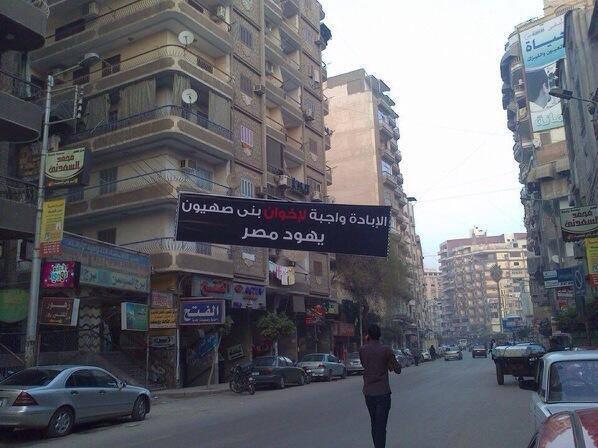
Cairo December 2013: “Extermination is a Duty. The Zionist Muslim Brothers are the Jews of Egypt”
Terribly out of date (but it’s a snapshot of a moment so it doesn’t really matter), my 2011 essay on Egypt for Critical Muslim is now online. From today’s perspective March and April 2011 look like a golden age. Who would have predicted the wave of fascism currently overwashing the Sisi junta’s state?
Cairo felt different. Tahreer Square, of course, carried a new set of meanings. The traffic, the pollution, the Stalinist gloom of the Mugamma building – these had shrunk, and revolutionary grafitti, redignified national flags, and the endlessly various Egyptian people now dominated the eye. It didn’t feel the same either to walk over the Qasr el-Nil bridge, not after the glorious battle of January 28th. (I kept trying to work out where the police van was burnt.) And the streets were in fact cleaner, even that, in central Cairo at least. In ritual overcompensation for the years of filth, people had been observed during the revolution’s 18 days scrubbing the pavements with toothbrushes. A man in a café called Ali Jabr explained it to me: “The Egyptians used to hate their country just as they used to hate themselves. Anywhere you went in the world, the people thought the Egyptians were rubbish. And the Egyptians agreed. After the revolution we know we aren’t rubbish, so we pick our rubbish up from the streets.”
You know that something rare and powerful is occurring, something all-encompassing, not limited to a political or intellectual elite, when even a mobile nuts-and-seeds stall has ‘Social Justice’ stenciled on its side.
I visited in late March and early April. My plane to Cairo was a quarter full at best. The airport was almost empty.
The immigration guard peered long at me and asked if I was originally Iranian, prompting me to wonder if anything had changed at all. There were no pictures of Mubarak on the walls. That was a change.
Then the driver who took me into town. He addressed the revolution immediately. “Tell me congratulations!” he grinned. I did so. “We’ve finished with him!” he exulted. “We’re free!” Pictures of some of freedom’s martyrs swung from the rear-view mirror.
I asked who he wanted for president now.
“Whoever proposes the best programme. The personality isn’t important. The ideas are important, the policies. I’ll judge on that.”
Most of Egypt considered itself a potential winner, but the losers were visible too. There was the burnt-out frame of the National Democratic Party headquarters for a start, hulking over the river like a man shamed in the stocks. And the police, who I was told “are sulking.” Certainly fewer patrolled than when I had last been here, and those who did certainly seemed less sure in their swagger, as if they’d recognized themselves at last – poorly trained, underemployed, unloved.
The news on the cab radio as we drove from the airport: the Ministry of the Interior was burning, the fire blamed on police officers protesting outside for a pay rise and the prosecution of their corrupt commanders. But their undeclared demand was for respect. I saw a poster pasted anonymously to Nileside walls pleading for trust to be restored in the police “on the basis of mutual love, not insult… for there are many noble men in the police force.”
Return from the Border
I was interviewed by ITV Border about my trip to the Turkish/Syrian border, where I was working with the Karam Foundation.
A Trip to the Border
I’ve just returned from a brief visit to the Syrian/ Turkish border, to the Salaam School for refugee children in Reyhaniyeh on the Turkish side, where I was working with the Karam Foundation, and to Atmeh camp inside Syria, where almost 30,000 people are sheltering from the slaughter. Northern Syria is dotted with similar camps.
You can view pictures from the trip here.
Something that doesn’t come across in the pictures is how cold it is. Snow was lying on the ground in Atmeh the day before I arrived, and a child had frozen to death. I’ll be writing about my experiences and some of the stories of the people I met. In the meantime, here is the trip summed up by my Facebook status updates:
December 6th – the first stage of my trip to the turkish-syrian border involved being examined at edinburgh airport under schedule seven of the terrorism act (2000). To this the failed human beings of east and west have reduced the syrian people’s revolution.
drank tea and ate knafeh with the teachers of the Salaam School in Reyhaniyeh. very inspiring to see the organised hard work that’s gone into fitting new walls into a villa (and building an olive grove) to make a school which serves over a thousand refugee children. forget Assad, ISIS, and the Coalition – the future of Syria belongs to self-organised and committed Syrian women and men
December 7th – Assad forces backed by foreign Shia terrorists have executed dozens of civilians in Nabk. Watch the silence of the Western media, which seems to have no problem with terrorism and religious extremism when it seeks to preserve the status quo.
December 8th – there are the blue hills of syria, as ethereal as the future, so near and yet so far
December 9th – among the children’s chosen heroes in my storytelling workshop were Robin Hood, Batman, my brother the martyr, my father the martyr, and Sponge Bob. Among the problems to be solved were a dinosaur eating people, a car hitting a pedestrian, my house being shelled, and my cousin stuck in prison.
Dubious Wisdom
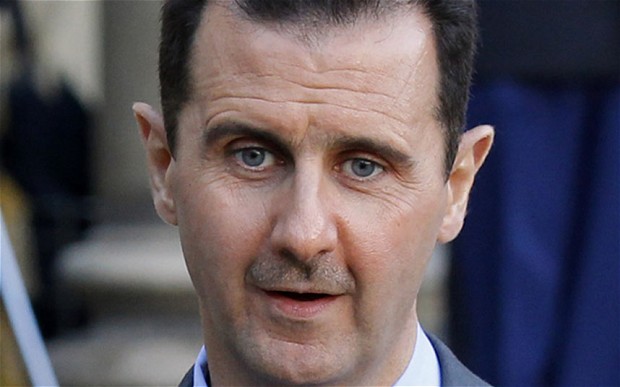 I wrote this review of Bente Scheller’s book for al-Jazeera.
Syrian poet Rasha Omran once told me that Bashaar al-Assad is “not a dictator, just a gangster boss.” But really he’s not even that. What he is, is what his father looked like in all those statues – one element in the managerial class, a (dysfunctional) functionary. Syria is a dictatorship which lacks an efficient dictator.
Hafez al-Assad – the father – was an entirely different matter. Born in a dirt-floor shack, he clawed his way to the top by brute cunning, deft flexibility, and strategic intelligence. The careful manipulation of sectarian tensions in order to divide and rule was one of his key strategies, yet he was also attentive to building alliances with rural Sunnis and the urban bourgeoisie – both constituencies now alienated by his son. Bashaar’s great innovation was supposedly economic reform. In practice this meant an unpleasant marriage of neoliberalism with crony capitalism. It succeeded in making his cousin Rami Makhlouf the richest man in the country. The poor, meanwhile, became much poorer, the social infrastructure crumbled, and unemployment continued to climb.
The thesis of former German diplomat Bente Scheller’s book “The Wisdom of the Waiting Game” is that the Syrian regime’s approach to its current existential crisis follows a “narrow path consistent with previous experience,” and she focuses on foreign policy to make this point. When the regime found itself isolated on Iraq after the 2003 invasion, for instance, or then on Lebanon in 2005 after the assassination of Rafiq Hariri and the Syrian army’s precipitous withdrawal, it waited, refusing to change its policy, until conditions changed, its opponents were humbled, and it was brought in from the cold. In his book “The Fall of the House of Assad”, David Lesch points out that Bashaar al-Assad felt personally vindicated by these perceived policy victories, and grew in arrogance as a result. Today, with the West handing the Syrian file over to Russia, and seemingly coming round to Bashaar’s argument that Islamism poses a greater threat than his genocidal dictatorship, it looks (for now at least) as if the refusal to budge is again paying off.
The most interesting parts of Scheller’s book are not actually dedicated to foreign policy, but describe – accurately and with balance – the causes of the revolution and the nature of the regime’s response. The most direct link she’s able to posit between domestic and foreign policy is that, in both, the regime’s only abiding interest has been self-preservation. In Scheller’s words, “regime survival … defines what is perceived as a security threat.” This chimes well with the shabeeha graffiti gracing Syrian walls – “Either Assad or we burn the country.” In regime priorities, Assad always stood far above the people, the economy, the infrastructure, and even the integrity of the national territory.
Fight the Winter
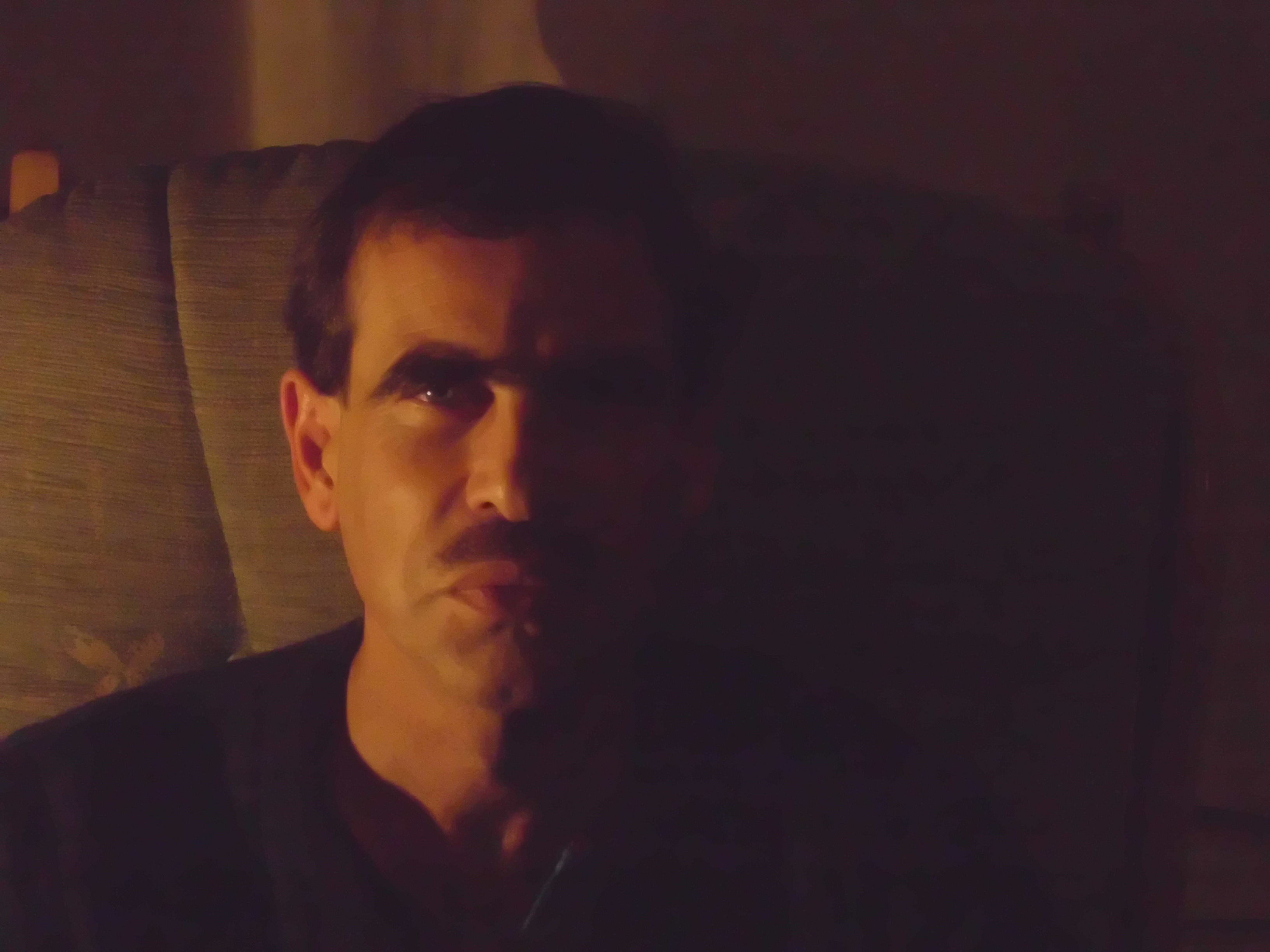 After provoking an armed uprising by his suppression of a non-violent protest movement (using rape, torture and murder on a mass scale), Syrian dictator Bashaar al-Assad lost control of large areas of the country. He then subjected those areas to a scorched earth policy, burning crops, killing livestock, shelling with artillery, dropping barrel bombs and cluster bombs from war planes, firing cruise missiles and sarin gas. Schools, hospitals and bakeries have been particularly targeted, alongside economic infrastructure. As a result a THIRD of Syrians, over seven million people, are now displaced. The Syrian winter is as cold as the Scottish winter, and this year millions of people will not be living in their homes but in half-demolished buildings, under trees, and in tents.
What’s the connection to the strange photograph of me? Well, I have shaved off my beard (the moustache and the central part of my monobrow will go on December 3rd). Such a traumatic assault on my facial hair, my very identity… Why? In the hope that you, dear readers, whatever your take on the conflict in Syria, will sponsor me, or in plainer terms, will donate some money. You can do so here. Every twenty dollars (or equivalent) buys blanket, coat and hat for a Syrian child. (If you remember, donate to Robin/ Wassim/ Team UK). I know the organisers of this charity and can vouch that they are absolutely honest, that every single penny will go to keeping a Syrian child warm this winter. Please do donate, and please share this page. We just have a few days to raise as much as we possibly can.
While I have your attention, please sign this petition to ask the British and French governments to boycott Rosoboronexport, imperialist Russia’s primary arms supplier to Assad’s genocide.
Iran’s Secret Army
As the world celebrates the deal between the West and Iran, it should be remembered that Western concerns over Iran’s nuclear programme – and the sanctions which have so damaged Iran’s economy – were provoked by Israeli concerns, and that these are not existential but strategic. Iran doesn’t need a nuclear weapon but only the ability to enrich uranium to a level where it could quickly make a nuclear weapon. At that stage, the bullying power given Israel by its own nuclear arsenal vanishes. A sensible approach to the problem would have reduced Tehran’s nuclear ambition while disarming Israel. The West, of course, did not press for this, and Iran, despite its stale ‘resistance’ rhetoric, did not hold out for it.
In general, it’s good to see tension reduced between Iran and the West. The great shame is that while a deal is done over the nuclear programme, something that was never much of a threat, Iran has not been called to account for its pernicious intervention in Syria, a far greater threat to regional and international security. Iran’s intervention is on a far greater scale than any Saudi or Qatari interference. The Islamic Republic’s ‘revolutionary’ legitimacy is of course destroyed by its siding with a tyrant against a revolutionary people, and its Shia legitimacy will also be destroyed in the eyes of any thinking human being, for it has joined Yazeed in a war against a struggling Hussain. After Assad’s employment of sectarian death squads, ‘Shia’ Iran’s deployment of racist occupation forces to direct the tyrant’s fightback has been the single biggest factor amplifying the sectarian nature of the conflict. It has already dragged Lebanon back to the brink of civil war. Some argue that peacable relations between the US and Iran will defang Iran’s hardliners. That may happen eventually, but it will be far too late for usurped and shattered Syria.
I used to argue that the West and the Arabs should work with Iran. I used to repeat the line about Iran not having attacked another country in three centuries. (I made allowances for its pernicious role in keeping Iraq divided and sectarian; Iraq had after all attacked Iran in the past.) Unfortunately this is no longer true. The Arabs are now absolutely right to regard Iran as an aggressive, expansionist threat. This deal has by no means secured peace in the region.
Qaddafi’s Harem
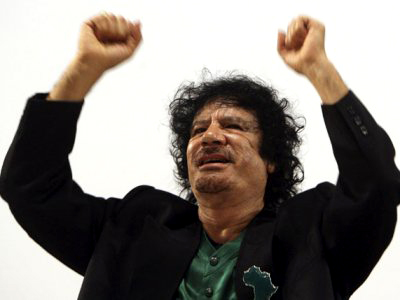 This review of Annick Cojean’s book was published at NOW.
*
“Today is the beginning of the end of the era of harems and slaves and the beginning of women’s liberation within the Arab nation.” Muammar Qaddafi. September 1981.
The Arab world is still crammed full of tyrannies self-labelling with terms such as ‘popular’ and ‘democratic’, sectarian regimes pretending to be secular, reactionary regimes describing themselves as progressive, and ‘resistance’ regimes which resist nothing but their subjects’ life and freedom.
The current post-revolutionary chaos in Libya provokes two orientalist responses: the crude (statist-leftist) version, that the uprising was a foreign conspiracy; and the subtler (because it’s never quite made explicit), that the Libyans made a terrible mistake by rising, because their fractious ‘tribal’ society can only be held together by a strong man of Qaddafi’s calibre. After him, goes the implicit argument, the inevitable deluge.
“Gaddafi’s Harem” by French journalist Annick Cojean provides a fact-based corrective to those fooled by Qaddafi’s illusions, specifically those impressed by the radical feminist image evoked by his once highly visible – and sexily transgressive – corps of ‘Amazon’ body guards. It will change the minds too of those who saw the dictator from a distance as a lovable buffoon.
His regime was capricious, yes, at times even darkly comedic, but it was based on undiluted sadism. The cramping stagnation it imposed for 42 years, and the fact that it refused to budge except by force of arms, are the prime causes of today’s anarchy. The means of domination it employed – psycho-social as much as physical – tell us a great deal about the universal megalomaniac personality, as well as certain cultural weaknesses in the Arab world and beyond.
Revolutionary Gardening
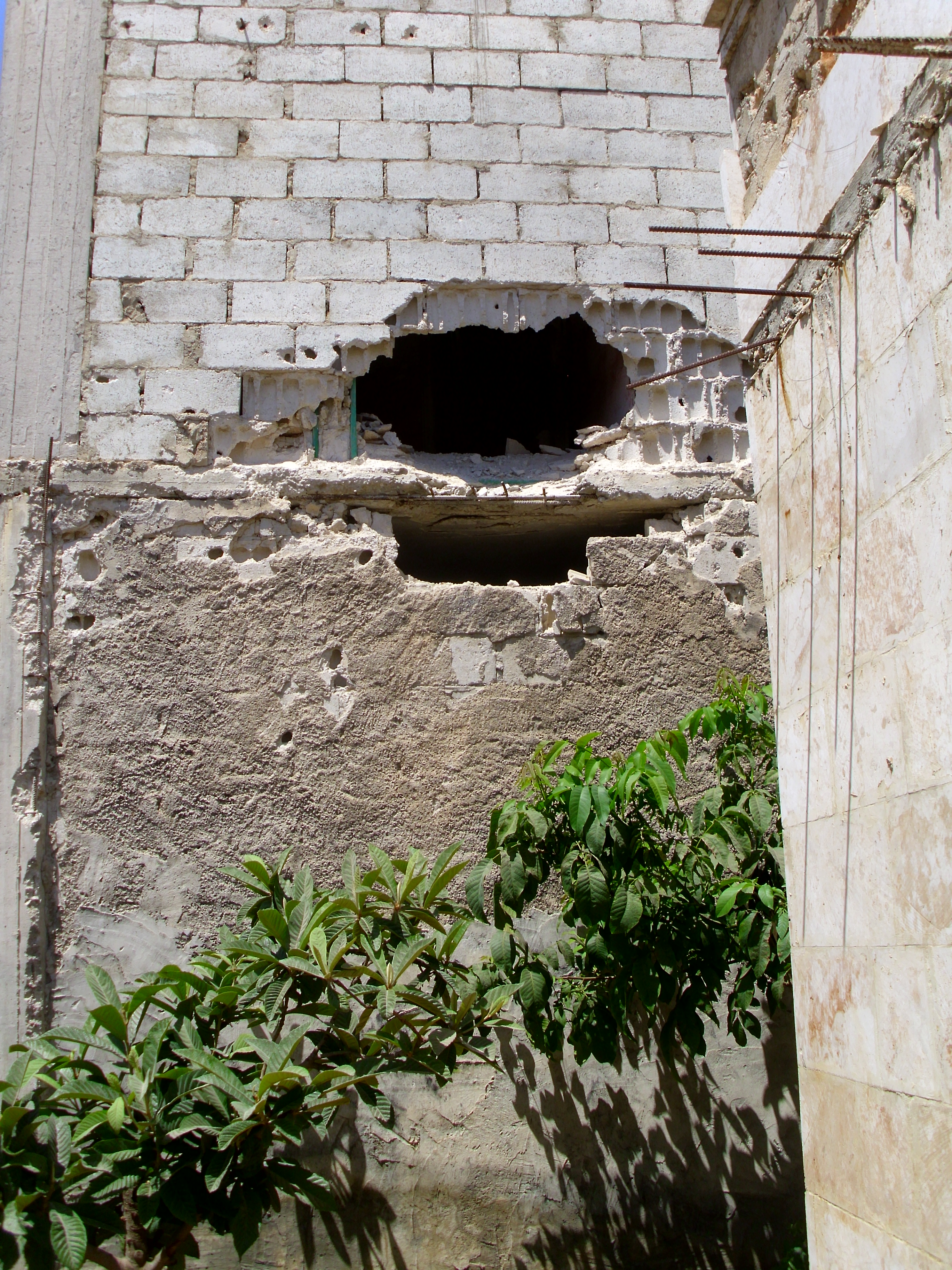
the radishes are at ground level
For a long time it’s been too late for a happy ending in Syria. The longer this process continues, the less we can hope for.
How do you fight a monster without becoming a monster? How, particularly when the monster’s chief strategy is to make a monster of you? How, when the world’s most powerful storytellers depict you as a monster? How, when monsters hiding behind human facades walk by blindly as you are tortured, raped, humiliated, maimed, murdered?
I don’t really know. I’d welcome a reading list, if anyone has one.
I know this monster must be fought, even if we become monsters while fighting it. I know we must fight both internally and externally. I know the greater and lesser jihads must be fought simultaneously.
At some point, somehow, this stage will be replaced by another. Most probably that stage like this one will be bumbled through blindly. Human beings seldom or never achieve control over their larger social movements. Still, it’s pleasant to imagine that Syrians will be able to defuse the sectarian tensions which have existed at least since ibn Taymiyyeh, which were immeasurably exacerbated by Sykes-Picot and the French occupation’s construction of an ‘army of minorities’, and then set afire by Assad’s gang and its allies. It’s good to hope too that a new constitution will guard against any party, clique or ideological police imposing its straitjacket on the plural people.
Beyond religion and politics, environmental factors should also be taken into account.
It’s interesting to note that Jared Diamond’s three factors of civilisational collapse (deforestation, soil erosion, water management problems) have been present in Syria since late Ottoman times, and rampant in the last couple of decades. People my age who grew up in Damascus remember that in their childhoods the Ghouta still consisted of orchards and streams, that summer temperatures almost never climbed above the mid to high thirties. You don’t have to be my age to remember the Barada as an actual river, rather than a layer of concrete and a few stinking pools. Wasn’t Damascus the city the Prophet refused to enter, fearing to sin by imagining himself prematurely in paradise? The dicatorship’s corruption (anyone with connections or money could build in the green zone) put paid to that. Stupidly grand development schemes repeated the pattern all over the country (Lake Assad, like Lake Nasser, was an environmental and social disaster – see Omar Amiralay’s film A Flood in Ba‘ath Land – a wonderful exercise in quiet irony). People’s lack of control over the public space meant they were alienated from it, and threw black plastic bags all over it (this explains the discrepancy between people’s spotlessly clean homes and the filth in the streets outside). Over the decade before the revolution erupted, a million climate change refugees, according to the UN, left the desertifying north east for the impoverished outskirts of Dera’a, Homs, Damascus and Aleppo. This, combined with the effects of Bashaar’s crony capitalism, provides the backdrop to the uprising. The revolutions to the west, and the monster’s extreme violence, provided the spark.
A Slaughter of Alawi Innocents
For the first time there is proof of a large-scale massacre of Alawis – the heterodox Shia offshoot sect to which Bashaar al-Assad belongs – by Islamist extremists among Syrian opposition forces. In its context, this disaster is hardly surprising. It follows a string of sectarian massacres of Sunni civilians (in Houla, Tremseh, Bayda and Banyas, and elsewhere), the sectarian ethnic cleansing of Sunnis from areas of Homs province, and an assault on Sunni sacred sites such as the Khaled ibn al-Waleed mosque in Homs, the Umawi mosque in Aleppo, and the Omari mosque in Dera’a. It follows two and a half years of rape, torture and murder carried out on an enormous scale by a ‘Syrian’ army commanded by Alawi officers and backed by sectarian Shia militias from Iraq, Iran and Lebanon, and by Alawi irregular militias. Assad and his backers have deliberately instrumentalised sectarian hatred more effectively than the Americans did in Iraq, and they must bear the lion’s share of responsibility for the dissolution of Syria’s social mosaic. Next, the counter-revolutionary forces in the West (chief among them the United States) must be blamed for obstructing the flow of arms to the Free Syrian Army, a policy which has inevitably strengthened the most extreme and sectarian jihadist groups (some of whom, such as the foreign-commanded Islamic State of Iraq and Syria, are actively fighting the Free Army). Human Rights Watch’s important report on the massacre of Alawi villagers is summed up in the video below. Sadly, HRW fails to adequately distinguish between Syrian and foreign, and moderate and extremist anti-Assad militias. The excellent EAWorldview critiques the report here. Its conclusion:
The HRW report illustrates the dangers of conflating the various factions of the insurgency under the heading “armed opposition groups”.
Coincidentally, that conflation is a tactic of the regime who seeks to portray the insurgency as extremist-led, largely foreign fighters rather than an extension of the indigenous protest movement that took up arms after Assad’s forces used violence to quash it from March 2011.
By this conflation, HRW (a fine organisation which has done great work in uncovering the truth of the Syrian conflict) veers dangerously close to the orientalist/racist stereotyping of the Syrian people’s struggle now dominant in both the rightist and liberal/leftist Western media.
It goes without saying that the crimes committed against Alawi civilians in northern Lattakia province are grotesque and idiotic, and constitute another strategic blow against the revolution and the survival of the Syrian state.
The London Review of Books on Syria
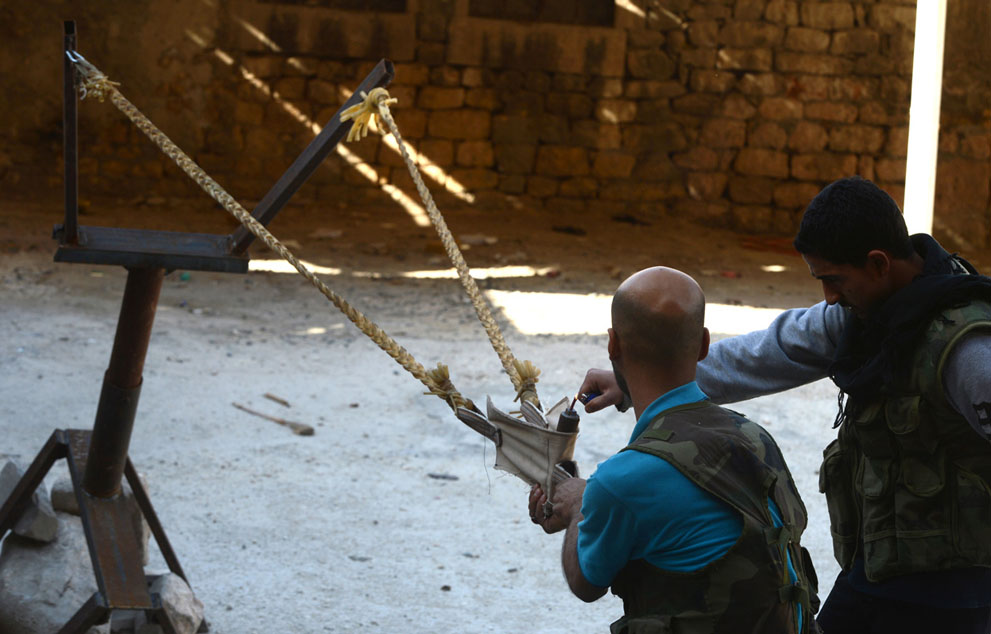
an improvised weapon in Aleppo
I wrote to the editor of the London Review of Books concerning their Syria (and Libya) coverage. There’s been no reply, so I’m posting the letter here.
Dear….
…….(introduction)…..
Watching the representation of the tragedy in the media has been almost as depressing as watching Syria burn. As someone with strong leftist and anti-imperialist leanings, it’s been particularly galling to find that ‘leftist’ commentary on Syria has often been the worst of all. Large sections of the left have wholeheartedly embraced the very discourse that they resisted during the War on Terror years – that of ‘terrorists’ and al-Qa’ida conspiracies explaining all. Leftist journalists have paid little or no attention to the regime’s blatant and deliberate instrumentalisation of sectarian hatreds, but have focussed on, and exaggerated, the backlash. Robert Fisk has gone so far as to embed himself with the regime army, and to (grotesquely) interview survivors of the Darayya massacre in the presence of the perpetrators of the massacre. Many leftists have convinced themselves, against all the evidence, that the American-led empire has been conspiring against the Syrian regime since the start of the revolution, that this is a re-run of Iraq. Tariq Ali even appeared on Russia Today (near the start) to explain that America was trying to take over Syria but Russia was protecting the country. Russia – the imperialist power which is arming and funding the regime as it commits genocide.
I subscribe to the London Review of Books because it’s by far the best written, most incisive, most reflective, and bravest British publication. Publishing Walt and Mearsheimer was a great move. On the middle east, Adam Shatz is always excellent, well-informed, interested in teasing out a complex truth. Much of the coverage of the revolutions has been eurocentric and orientalist, however. I agreed with novelist Hisham Matar when he called ‘shame’ on Hugh Roberts’s very long Libyan piece which at no point attempted to see things from a Libyan perspective. Rather, it cast the Libyans as passive agents, pawns in the hands of the devilishly clever white man. And on Syria, commentary has been statist-leftist, as if this were an amusing chess game between regional and super powers rather than a struggle for freedom and a genocide, with only one side receiving sustained imperialist aid. I wrote in brief about Patrick Cockburn’s orientalism here.
Aziz’s Story
 This was published at NOW
The Syrian city of Selemiyyeh lies to the east of Hama, where the fertile crescent becomes barren. The ruins of Shmemis castle, dating to the late Hellenistic period, cling to the cone of an extinct volcano nearby. The major historical site in the city itself is a shrine containing the tombs of Imam Taki Muhammed and Radi Abdallah. Some believe that Imam Ismail, the foundational figure of the Ismaili sect, is buried here too.
Although it’s an ancient city, with ancient links to the Ismaili faith, the ancestors of its present population were 19th and 20th Century migrants from Ismaili hill towns to the west, places such as Qadmous and Misyaf. The town, which also houses significant populations of Sunnis, Twelver Shia and Alawis, has long been a model of sectarian co-existence. Its secularism has been real – a genuine popular tolerance for difference, not the debased, propagandistic ‘secularism’ of the regime.
Along with Homs, Darayya, Dera‘a and Kafranbel (each one for different reasons), Selemiyyeh has become one of the capitals of the Syrian revolution. As a predominantly non-Sunni community which has since the start stood solidly for freedom and against the regime, its example proves both the mendacity of Assad’s sectarian narrative and the oversimplified western media discourse which portrays the fight as one between Sunni extremists and minority-secularists.
As part of its divide-and-rule strategy, the regime has spared Selemiyyeh the aerial bombardment and rocket attacks it has visited on majority-Sunni areas, but the city has suffered as much as anywhere from detentions and disappearances. Its revolutionaries, like all revolutionaries in regime-controlled areas, live underground.
Selemiyyeh has also bled (in January and February) from bomb attacks, probably organised by Jabhat an-Nusra, which targetted the regime’s shabeeha militia but also killed many innocent civilians. Despite such provocations, Selemiyyeh’s revolutionaries have cooperated with the Salafists of Ahrar ash-Sham, who have brought food aid to the city. And the community has done a great deal to house and feed its brothers and sisters of all sects fleeing violence in Homs and Hama. Pioneers of the early non-violent protests, many of Selemiyyeh’s residents are now engaged in the armed struggle.
When I met Aziz Asaad, an activist from Selemiyyeh, across the Turkish border in Antakya, I asked him why the community was so revolutionary, why it hadn’t been scared into fencesitting or even grudging support for Assad by the Islamist element of the opposition. His answer: “We read a lot. We’ve always read books.”