Shock and Awe versus Dentists, Farmers and Students
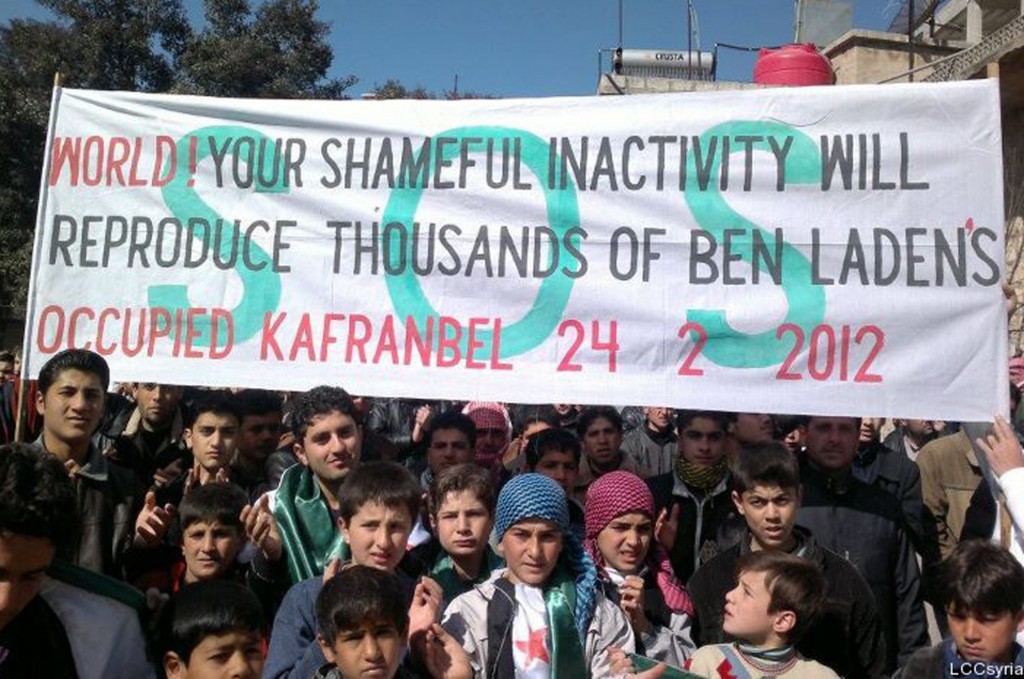 Whatever the hearts-and-minds rhetoric at the United Nations, in Syria the Obama administration is feeding the flames of Sunni extremism, and proving once again the truism that the American state is an enemy of the Syrian people (as it’s an enemy, like all states, of all peoples, including the American).
We expected strikes on ISIS. Some of the strongest strikes (and the strikes are far stronger than in Iraq), however, have been aimed at Jabhat al-Nusra (the Victory Front), the organisation from which ISIS split. Nusra is certainly an extremist Salafist group, and is openly linked to al-Qa’ida. Because its ideology terrifies not only minorities but also huge swathes of the Sunni population, it’s also a strategic obstruction in the way of the Syrian revolution. In August 2013 it participated (with ISIS) in the only documented large-scale massacre of Alawi civilians in the conflict. On the other hand, Nusra (unlike ISIS) was until yesterday actually fighting the regime, not other rebel groups. From January, along with every rebel formation, it’s been fighting ISIS too. And its leadership is entirely Syrian. Many Syrians, not necessarily extremist Salafists themselves, admire Nusra’s victories against their most immediate enemy – the Assadist forces dropping barrel bombs on cities and raping and torturing at checkpoints. A sensible answer to Nusra would be to provide weapons and funds to Free Army forces who would then be in a position to gradually draw men from the organisation, slowly making it irrelevant (most men don’t care about the ideology of their militia’s leadership; they care about food and ammunition). But the Americans are allergic to working with the people on the ground most immediately concerned by the outcome, and bomb from the air instead. Nusra is now abandoning front line positions (in some areas the regime may be able to take immediate advantage). One Nusra leader has already spoken of an alliance with ISIS against the Americans.
Syria’s new daily routine: the Americans and Gulf Arabs bomb the Salafist extremists while Assad bombs the Free Army and Islamic Front (and of course civilians – as usual it isn’t being reported, especially not now the televisual US war is on, but about a hundred are being killed every day). The headline in regime newspaper al-Watan reads “America and its Allies in One Trench with the Syrian Army against Terrorism”. The opposition reads it this way too. Several demonstrations yesterday condemned the American strikes, called for America’s fall, and for solidarity with ISIS and Nusra. A sign at one protest read: “Yes, It’s an International Coalition Against Sunnis.”
Three Monsters
 Part of me, of course, is happy to see bombs fall on the heads of the international jihad-fascists tormenting the Syrian people (I refer to ISIS, not the Shia jihad-fascists fighting for Assad, who I’d love to see bombed too). Mostly, I’m just disgusted. In the name of disengagement the West not only refused to arm and supply the democratic Syrian opposition – even as Assad launched a genocide against the people – the United States actually prevented other states from providing the heavy weapons and anti-aircraft weaponry the Free Army so desperately needed. It was obvious what would happen next. The Free Army – and the Syrian people – were increasingly squeezed between Assad and the ISIS monster. And now the Americans are bombing both Iraq and Syria. This is where ‘disengagement’ and ‘realism’ has brought us.
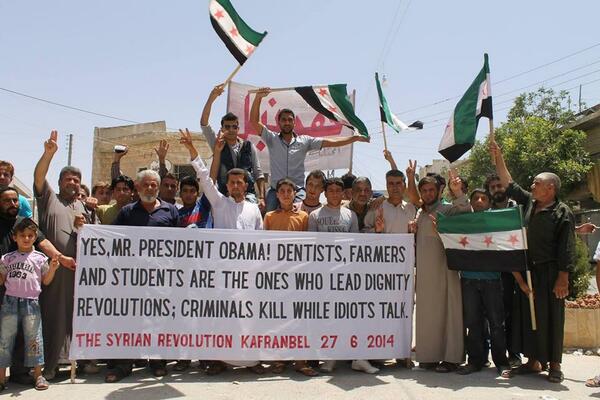
ISIS, like Assad, can be hurt from the air but defeated only on the ground. Obama and the Congress have just agreed to spend $500 million on training 5000 vetted members of the Free Syrian Army – the same people that Obama mocked as irrelevant “pharmacists, farmers and students” a few months ago. The training won’t be finished for eight months, and anyway will be of little use. The Free Army now houses some of the best, most battle-hardened fighters in the world. They don’t need training; they need weapons. In the present balance of forces, in any case, the wounds inflicted by America’s photogenic bombing run may not translate into any improvement on the ground. Only Syrians can improve things on the ground.
The West was not moved to act by 200,000 (at least) slaughtered, or nine million homeless, or by barrel bombs, rape campaigns, starvation sieges or sarin gas. It was only moved when an American was beheaded. The inconsistency is noted well by Syrians. In some quarters, an assault on ISIS which is not accompanied by strikes on Assad and aid to the Free Army will be perceived as a Western-Shia-Assadist alliance against persecuted Sunnis. This could increase the appeal of ISIS and successor Sunni extremist groups.
ISIS has many parents, but the first of these, in Syria at least, is Assad. He released extremists from prison while he was assassinating unarmed democrats. He sectarianised the conflict by setting up sectarian death squads and by bringing in Iran-backed Shia militias from Iraq and Lebanon. His scorched earth policy made normal life impossible in the liberated areas, creating the vacuum in which organisations like ISIS thrived. And until this June, he had an effective non-aggression pact with ISIS, not fighting it, buying oil from it. From January, on the other hand, all opposition militias – the Free Army groups and the Islamic Front groups – have been fighting ISIS (and losing thousands of men in the struggle). These fighters are not about to become an on-the-ground anti-ISIS militia, as the Americans seem to want. They know the truth – that both states, the Assadist and the psychotic-Islamist, are absolute enemies. There’s no destroying one without the other. And both must be destroyed by Syrian hands, not by foreign planes.
Updates

Liberated Kafranbel, abandoned to Assad’s bombs, pays tribute to James Foley
Everything’s burning from Libya to Iran. I’m working on fiction, so not responding except in Facebook bursts. Here are a few status updates, starting with today’s:
A year ago Assad’s fascist regime sprayed sarin gas over the Damascus suburbs, killing over 1400 men, women and children in five hours. Hundreds more died from the effects in the following weeks. Obama had given Assad effective permission to use tanks, artillery, missiles and war planes against the Syrian people (and had ensured that the people remained effectively unarmed), but made large-scale chemical attacks a ‘red line’. We soon saw that the red line meant nothing. An alliance of the British Labour Party, Tory back benchers, UKIP, the BNP, the US Congress and the Tea Party helped Obama step away, and to hand the Syria file to Putin’s Russia – the same power arming the criminal. So the genocide continued, and continues, to the mood-music accompaniment (in the liberal-left press) of absurd conspiracy theories, racist slanders, and willed deafness to the voices of those suffering.
(On absurd conspiracy theories, read this. And here is one of the best accounts of the Syrian revolution and counter-revolutions I’ve read.) It would be great if the US were really ‘withdrawing’ from the region, as some claim Obama is doing, leaving the people there to solve their problems independently. But Washington is not withdrawing – it continues to back the murderous coup junta in Egypt, and the Israelis as they pummel the refugees in the Gaza ghetto yet again for no more than psycho-symbolic reasons. Washington actively prevented states which wanted to aid the Syrian resistance from providing serious weapons. The result is the Islamic State (or ISIS) phenomenon – also provoked by Malki’s Iran-backed sectarianism in Iraq, and the US occupation and sanctions beforehand, and Saddam Hussain before that – and now American bombing runs in northern Iraq. Obama’s ‘withdrawal’ is as illusory as the Stop the War Coalition’s Putinesque ‘pacifism’.
Why I’m Voting Yes
 I’ll be voting for Scottish independence in next month’s referendum, and obviously not for ethnic-nationalist reasons – I have no Scottish blood as far as I’m aware (although the Scots may have some Syrian), and my mixed-up accent is far more English than not. Furthermore, I reject the simplistic ‘Braveheart’ narratives of uninterrupted Scottish victimhood. There’s an ex-mining town not far from here named Patna – after the Indian city – and in Sri Lanka the tea plantations bear Scottish names. Scots played an essential role in the British empire, and over the centuries Scottish as well as English landlords and industrialists have exploited the poorer Scottish classes (at some points driving them off their land en masse).
I’m voting yes because Scotland has a different political culture to England. It doesn’t contain that consmerist-suburban ‘middle England’ mainstream; the mainstream here is social democratic. If the Scots had taken control of their North Sea oil resources in the 1980s they may well have established a national oil fund, as Norway did, and perhaps today Scotland would not be Europe’s murder capital, nor the life expectancy in east Glasgow so depressingly low. What actually happened was that Thatcher spent the oil money in the boom years on privatisation and tax cuts, and used Scotland as a guinea pig for the most unpopular Tory policies, such as the Poll Tax, brought in here a year before England. Scotland has never voted Tory – as Alex Salmond says, there are more pandas in Edinburgh zoo than there are Scottish Conservative MPs – but it keeps suffering Tory governments. This is an evident democratic failure.
Ten Things to Remember about Syria
I edited the Critical Muslim’s Syria issue, which includes excellent essays by Amal Hanano, Rasha Omran, Itab Azzam, Maysaloon, Malu Halasa, poetry by Golan Hajji, prose from Zakkariya Tamer, and much more. I contributed an essay on Syrian culture revolutionised, and I wrote the following list:
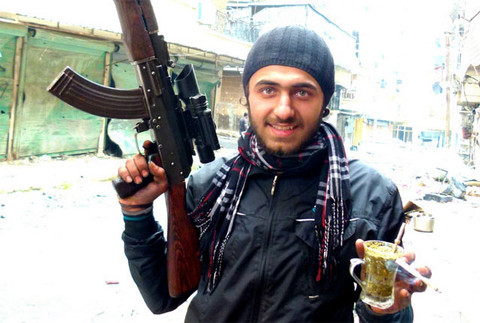 In the old days Syrians were ready to list their ten favourite picnic spots, their ten favourite restaurants, or even ten of the sects participating in the imaginary happy mosaic. Today lists of traumatisation leap to the mind: the ten largest refugee camps, or ten major massacres, or perhaps ten of the numerous new militias.
This list tends towards the positive (only number 10 is a bad thing – it’s something that can’t be ignored). It focusses on those aspects of Syrian reality that can’t be destroyed by war, those things which will survive (with the exception, we hope, of number 10).
1. Maté
Along with Turkish Coffee, Argentinian Yerba Maté is Syria’s quintessential drink. Drink it strong and sugary in a gourd or a glass, through a silver straw from the Qalamoun region; keep the water hot for continual fill-ups; and you’ll be telling Homsi and muhashish jokes all night. Maté connotes conviviality, and sometimes more specifically the Druze, Christian and Alawi mountain communities. When the martyred Free Army commander Abu Furat appealed to the Alawi community, he did so in terms every Syrian would understand: “I know the Alawis well. I’ve visited them in their houses. We’ve drunk maté together. We lived together before and we’ll live together again, despite you, Bashaar.”
How did a South American drink become a Syrian (and Lebanese) staple? The answer is in the late 19th/ early 20th Century mass migration of Syrian-Lebanese to South and North America, the Caribbean, and west Africa. A couple of hundred drowned with the Titanic. The ‘Street of the Turks’ in Gabriel Garcia Marquez’s Macondo is so-called because the people were Ottomans when they arrived in Colombia, but they were Syrian Ottomans, Arabs. Today 20 million people describe themselves as Syrian-Brazilians. Guyana’s richest family is the Maqdeesis. Carlos Menem, former Argentinian president, is of Syrian origin too.
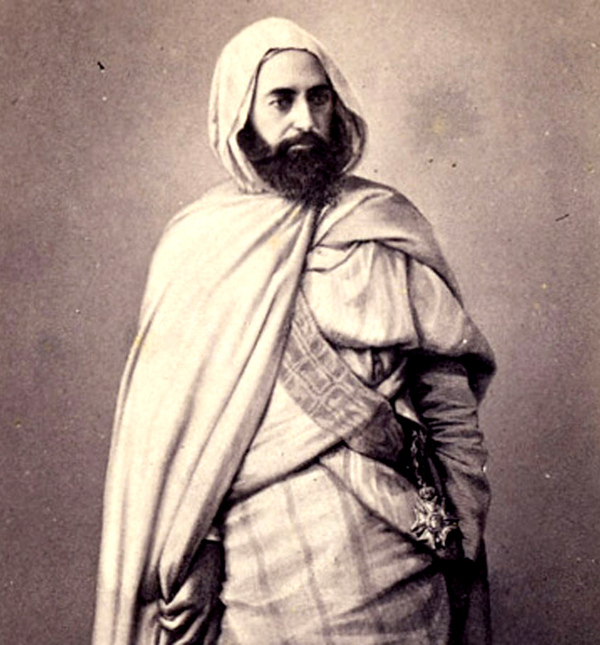
Abdul-Qadir al-Jaza’iri
2. Migrants
Abdul-Qadir al-Jaza’iri led a long and heroic resistance against the French occupation of Algeria. Eventually captured and brought to Paris, he was given the choice of exile elsewhere in the Arab world. Abdul-Qadir chose Damascus, where he wrote Sufi poetry in the shrine of the mystic Ibn ‘Arabi, who was an earlier migrant, from Andalucia. In 1860, when the Christian quarter of the Old City was burnt in sectarian rioting, Abdul-Qadir protected hundreds of Christians in his house and garden.
The tomb of Ibn ‘Arabi stands between two inner-city neighbourhoods climbing the slope of Mount Qassiyoun: ‘Muhajireen’, or Migrants, is so-named because it once housed Muslim refugees from the Balkans; and ‘Akrad’ means Kurds – still a Kurdish area, it was first built for the Kurds who came with Salahudeen al-Ayyubi (Saladin’s) armies.
Who else? Armenians, descendants of those who survived the forced march from Anatolia. Half a million registered Palestinian refugees and many more Palestinian-Syrians (Yarmouk camp in Damascus, Syria’s largest Palestinian population, is nearly empty now – its population refugees for a second time, mostly in Lebanon). Over a million and a half Iraqi refugees until Damascus and Aleppo became even less secure than Baghdad and Basra. And in 2006, a million refugees from the Lebanese South (fleeing Israeli bombs), who were welcomed in mosques, schools and private homes. Syrians angrily compare the way they welcomed refugees with the way they are now (not) welcomed, in their hour of need.
Syria Speaks on Tour
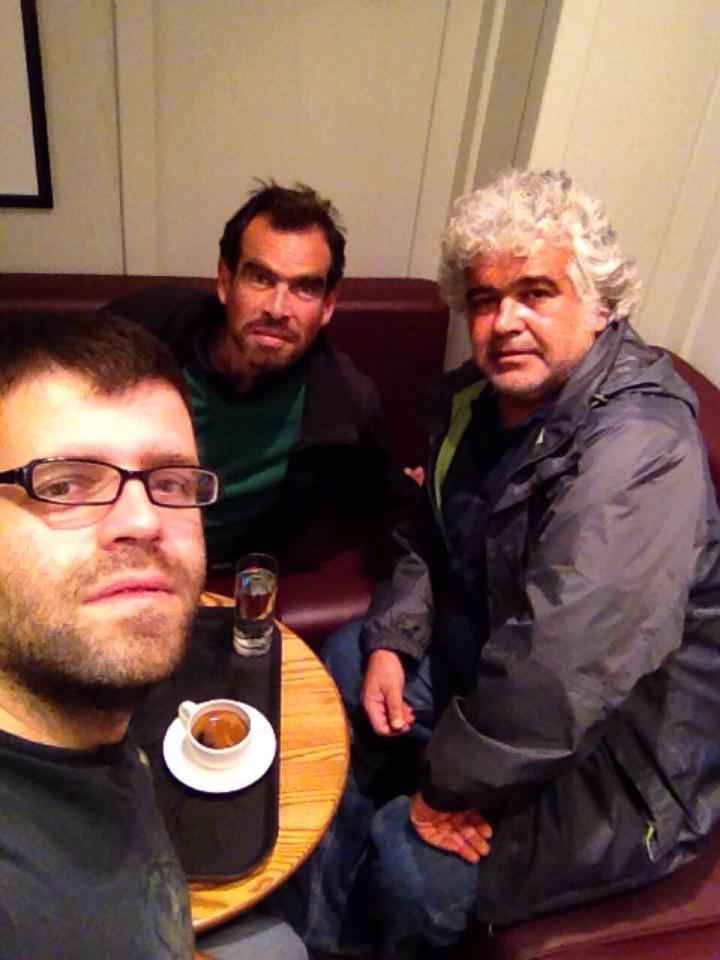
Khalil, Khaled, and me (pic by Khalil)
This was published at the National…
For a week in June, Syrian writers and artists toured England, giving readings and workshops to promote “Syria Speaks: Art and Culture From the Frontline”, a book reflecting the country’s new revolutionary culture. British-Syrian novelist Robin Yassin-Kassab describes the experience.
*
In Bradford we met a woman who had tried as hard as she could to forget she was Syrian. We didn’t discover her original trauma, but we heard its symptoms over a British-Pakistani curry. She hadn’t spoken Arabic for years, and never told anyone where she was from. Once a policeman detained her for an hour because she refused to tell him her origin.
In Bristol, on the other hand, we met a little old woman who, with her red hair and flowery dress, we might have mistaken for English. But she was a Damascene, and she wept when I read a description of her city. Afterwards she came to introduce herself. “I’ve lived in England for thirty years, and I didn’t realise until the revolution that I had a fear barrier inside. Then I noticed I’d never talked about Syria. I’d tried not to even think about it. But those brave youths gave me courage; they gave me back my identity and my freedom.”
So the Syrian revolution is alive and well in Bristol if not in Bradford, for this is where the revolution happens first, before the guns and the political calculations, before even the demonstrations – in individual hearts, in the form of new thoughts and newly unfettered words. Syria was once known as a ‘kingdom of silence’ in which public discourse was irretrievably devalued by enforced lip-service to the regime and its propaganda pieties. As a result, many Syrians describe their first protest as an ecstatic event, a kind of rebirth. In “Syria Speaks”, Ossama Mohammed’s story “The Thieves’s Market” concerns a woman who attends the state’s official demonstrations, until her friend is murdered for participating in an oppositional one. “I grew up,” she says, “came of age, abandoned someone and was abandoned, on a march that finished yesterday.” When that coerced march ended and a thousand new ones began, Syrians found unprecedented liberation simply by expressing honest opinions in the presence of their neighbours, by breaking the barriers of fear.
Beware the Game of Shadows in Syria
I am a signatory to this letter published by the Guardian.
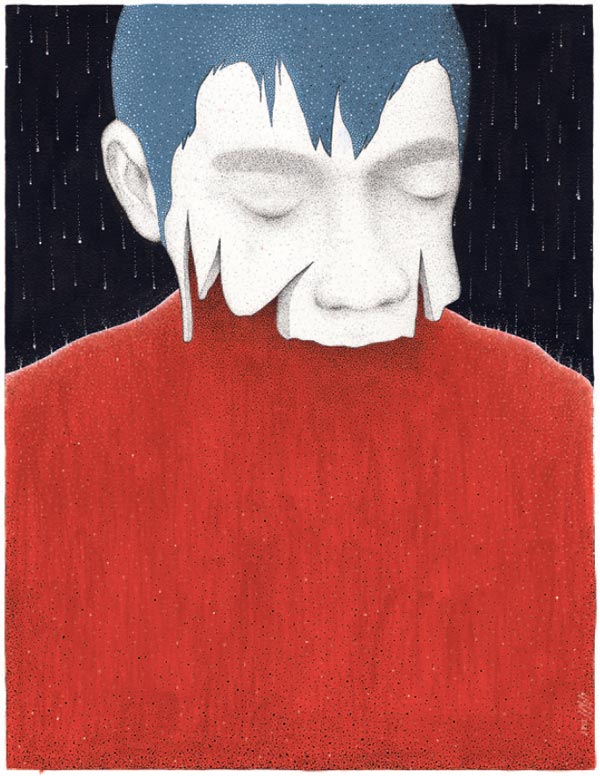
‘Hamza Bakour’ by Khalil Younes
As supporters of the Syrian people’s struggle for freedom and democracy, we are concerned by the British government’s decision to re-establish diplomatic relations with Iran in response to the crisis in Iraq (Shortcuts, G2, Iran, 18 June).
There is a grave danger that the Iranian government will see this as a licence to extend its already substantial intervention in Syria in support of its client – the Assad regime – which could not have survived this long without Iranian support.
Thousands of troops from the Iranian Revolutionary Guard and the Basij militia are actively fighting in Syria on the regime’s side, as are Iran’s proxies, Hezbollah and the Iraqi Shia militias. To ally with Iran in order to combat Isis is deeply ironic, since there is considerable evidence that the Syrian regime has been colluding with Isis: Assad’s air force bombs civilians, schools, markets and hospitals without mercy but declined to attack Isis’s massive headquarters in Raqqa until the Iraq crisis erupted.
The Syrian regime has been playing a game of shadows in which this covert collusion with the growth of Isis has been used to undermine the democratic opposition and strengthen its own claim to be a bulwark against “terrorism”. To accept Iran – and by implication Bashar al-Assad – as allies in the fight against Isis is to fall for this deception.
On ISIS and Iran
Now that ISIS has supposedly taken over vast swathes of northern Iraq (in reality, ISIS is a small minority of the Sunni Arab forces that have risen against the Malki government), the newspapers are full of articles telling us that the West should align with Iran to defeat the common foe. Of course, Iran’s sectarian and aggressively expansionist policy in both Iraq and Syria is a major contributor to the rise of ISIS and similar groups. Working with Iran against ISIS is as intelligent as working with Hitler against anti-Semitism. I discussed the issue with Hayder al-Khoi and Jeremy Paxman on the BBC’s Newsnight.
Syria Speaks on Front Row
I spent the last eight days on tour with Syria’s greatest novelist Khaled Khalifa, artist Khalil Younis, and writers Malu Halasa and Zaher Omareen. We were promoting the Syria Speaks book, a collection of art, cartoons, essays, short stories and novel extracts from revolutionary Syria. It felt useful to approach the subject through human stories rather than banging the head against the tired old political discourses. I’m writing about the tour and book for a piece which should be published next month. In the meantime, here on BBC Radio 4’s Front Row, Khaled, Malu and I discuss the new culture, Khaled’s experience under bombs, and the ISIS phenomenon.
First There Was the Word
I and lots of other writers participated in this BBC radio 4 programme on ‘British Muslim writing’. The programme is written and presented by Yasmin Hai. Those interested in this may also be interested in Clare Chambers’s book “British Muslim Fictions“.
On Syria’s Alawis
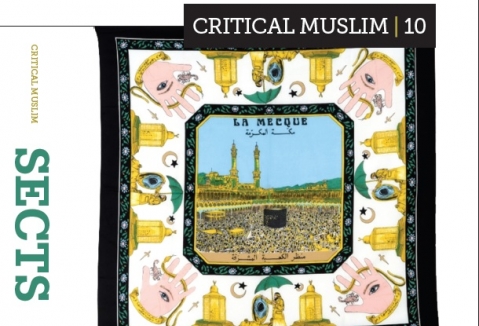 Here’s a brief extract from my essay on Syria’s Alawi community, its history and doctrines and its political fortunes under Assadist rule and during the revolution, written for the Sects issue of the Critical Muslim. If you haven’t done so yet, please subscribe, and encourage your library or college to do so. The next issue will be a Syria special.
Syria’s CIA-backed military coup in 1949 was the first in the Arab world. Although there was a later parliamentary interval, the coup brought the army (and therefore rural minority groups) into the centre of Syrian political life, and a pattern of coup and countercoup set in, only brought to an end when Hafez al-Assad, an Alawi air force officer, rose to absolute power in the 1970 ‘Correctionist Movement’, achieving stability through totalitarian control.
From one perspective, Assad’s early years were golden years for the Alawis, as they and other hitherto marginalised sects (Druze and Ismailis) as well as rural Sunnis moved into the cities and entered state elites. (“Syria’s Peasantry, the Descendants of its Lesser Rural Notables, and their Politics” by Palestinian Marxist Hanna Batatu is a wonderfully comprehensive, wonderfully written study of the mechanics and personalities of this movement). The regime settled Alawis (often low-ranking soldiers and their families) in strategic suburbs on the approaches to Damascus. In these early years too, the Ba‘ath demonstrated loyalty to its rural base and its proclaimed socialist values by building schools, clinics and roads for the villages.
The officers of the Republican Guard, the special forces and the security agencies – the real powers running the country – were almost exclusively Alawi. This ‘empowerment’ of the community arguably reversed its growing acceptance by the Sunni majority. Once despised, Alawis were now feared and resented. It was also the reason why the regime found it necessary to reduce Alawi identity to its Ba‘athist, or more properly Assadist, component. Because the regime depended on Alawis for its survival, it was potentially at their mercy. Therefore it needed to ensure that no alternative source of authority existed within the community, so independent Alawi shaikhs were killed, imprisoned, exiled, or intimidated into silence. The president’s brother Jameel, unqualified to say the least, attempted to make himself a spiritual leader in their place. Against the urging of the clerics, Alawi doctrines were not studied in universities. Religious education in schools centred on Sunni tenets and rituals (Christian students had their own classes). The president prayed Sunni-style in public, and Alawis were encouraged to give up their difference and build mosques and to go on Haj.
The Muslims Are Coming!
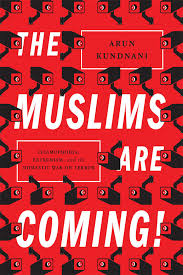 An edited version of this review was published at the Guardian. I like the Guardian’s books section and its G2 section, not least because they sometimes pay me to write. I also like some of their brave correspondents, such as Martin Chulov. What I don’t like at all is the idiotic, orientalist, conspiratorial, fact-free, and sometimes racist narrative against the revolutions in Syria and Libya which is so common in the Guardian’s comment sections. Blanket-thinking statist leftists like Seamus Milne and Jonathan Steele dominate, alongside talentless and ignorant polemicists like Tariq Ali. The last lines of my review target people like them, who are unfortunately influential in ‘liberal’ Britain. I am not at all surprised that the Guardian cut these lines from the review, although I name no names. These lines: “….the new Islamophobia of sections of the left, the notion that US imperialism and ‘al-Qa’ida’ are in league to destabilise imagined ‘secular’, ‘resistance’ regimes. Those who defended Iraqi Islamists in the Blair years now point to the Allahu Akbar chant as evidence of an agenda far more benighted than that of the genocidal neo-liberal dictatorships.” (I just spoke to the good man who commissioned the piece. He says the issue was space in the print edition. Fair enough. But why cut the lines which apply to Guardianistas?)
Arun Kundnani’s “The Muslims Are Coming”, vastly more intelligent than the usual ‘war on terror’ verbiage, focusses on the war’s domestic edge in Britain and America.
Kundnani’s starting point is this: “Terrorism is not the product of radical politics but a symptom of political impotence.” The antidote therefore seems self-evident: “A strong, active, and confident Muslim community enjoying its civic rights to the full.” Yet policy on both sides of the Atlantic has ended by criminalising Muslim opinion, silencing speech, and increasing social division. These results may make political violence more, not less, likely.
The assumptions and silences of the counter-radicalisation industry end up telling us far more about particular ideological subsections of Anglo-American culture than they do about the Muslims targetted. The two dominant security approaches to Muslim citizens described by Kundnani – ‘culturalist’ and ‘reformist’ –focus on ideology rather than socio-political grievances.
Culturalism’s best-known proponent is Bernard Lewis, Dick Cheney’s favourite historian, who locates the problem as Islam itself, a totalitarian ideology-culture incompatible with democratic modernity. So Mitt Romney explains the vast divergence between Israeli and Palestinian economies thus: “Culture makes all the difference” – and decades of occupation, ethnic cleansing and war make none. Writer Christopher Caldwell believes residents of the Paris Banlieu rioted in 2005 because they were Muslims (although many weren’t), and not because of unemployment, poor housing, and police violence. Perhaps the silliest culturalist intervention was Martin Amis’s “The Second Plane”, where Amis breezily admitted he knew nothing of geopolitics but claimed authority nevertheless from his expertise in ‘masculinity’ – 9/11 was explained by Islamic sexual frustration. Such discourses are part of an influential tradition of silliness. In 1950s colonial Kenya, psychiatrist JC Carothers understood the Mau Mau uprising as “not political but psycho-pathological”.
Return to Atmeh
 This was published by the Guardian.
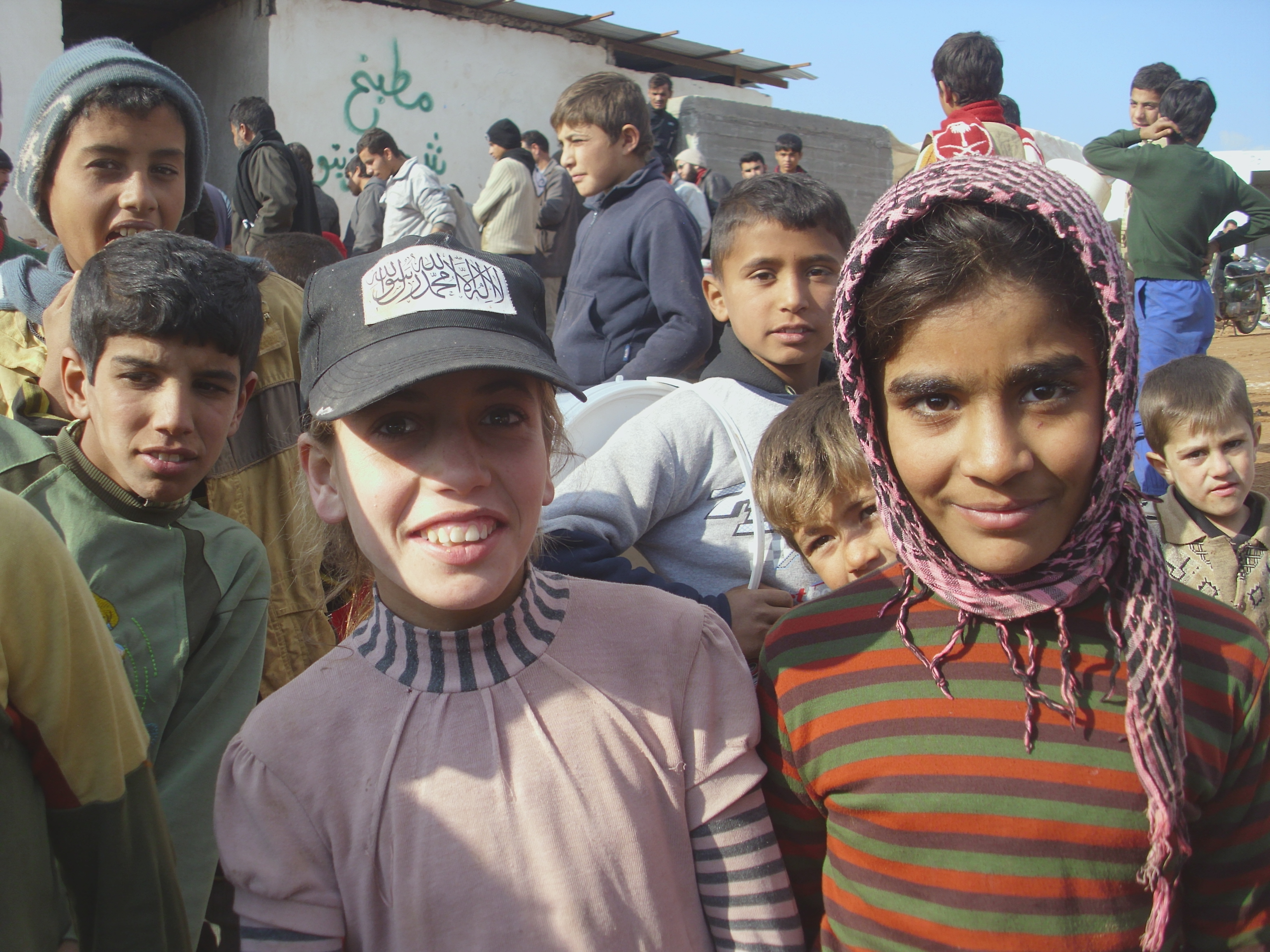
This must be how the Palestinian camps began their slow transformation into towering townships. The Syrian families here are still living in canvas or plastic tents, but the little shops selling falafel and cola on the Atmeh camp’s ‘main street’ are now breeze block and corrugated iron constructions. And now nobody dares to talk about going home.
Atmeh camp, just inside Syria, hugs the Turkish border fence. Its population has risen in the last six months from 22,000 to almost 30,000. This newly-sprung settlement is one of very many – there are more than six million people displaced inside Syria, and over two million in neighbouring states. The camp’s population dwindles and swells according to the vicissitudes of battle. When the regime reconquered (and obliterated) the Khaldiyeh quarter of Homs last July, an additional 50 to 60 families a day arrived.
Six months ago, when I last visited, I was able to travel deep into liberated Syria – as far as Kafranbel in the south of Idlib province – with nothing to fear from the Free Army fighters manning checkpoints. This time I didn’t dare go as far as Atmeh village, sitting on the nearby hilltop, because it was occupied by the al-Qa’ida franchise the Islamic State of Iraq and Syria (ISIS). In June the camp’s residents referred derisively to the mainly foreign jihadists as ‘the spicy crew’. Now they are a real threat – abducting and often murdering revolutionary activists, Free Army fighters, and journalists. This development contributes greatly to the gloom of the camp’s residents. (At the time of writing the Free Army and more mainstream Islamic battalions are finally striking back at ISIS, fighting and arresting its cadres.)
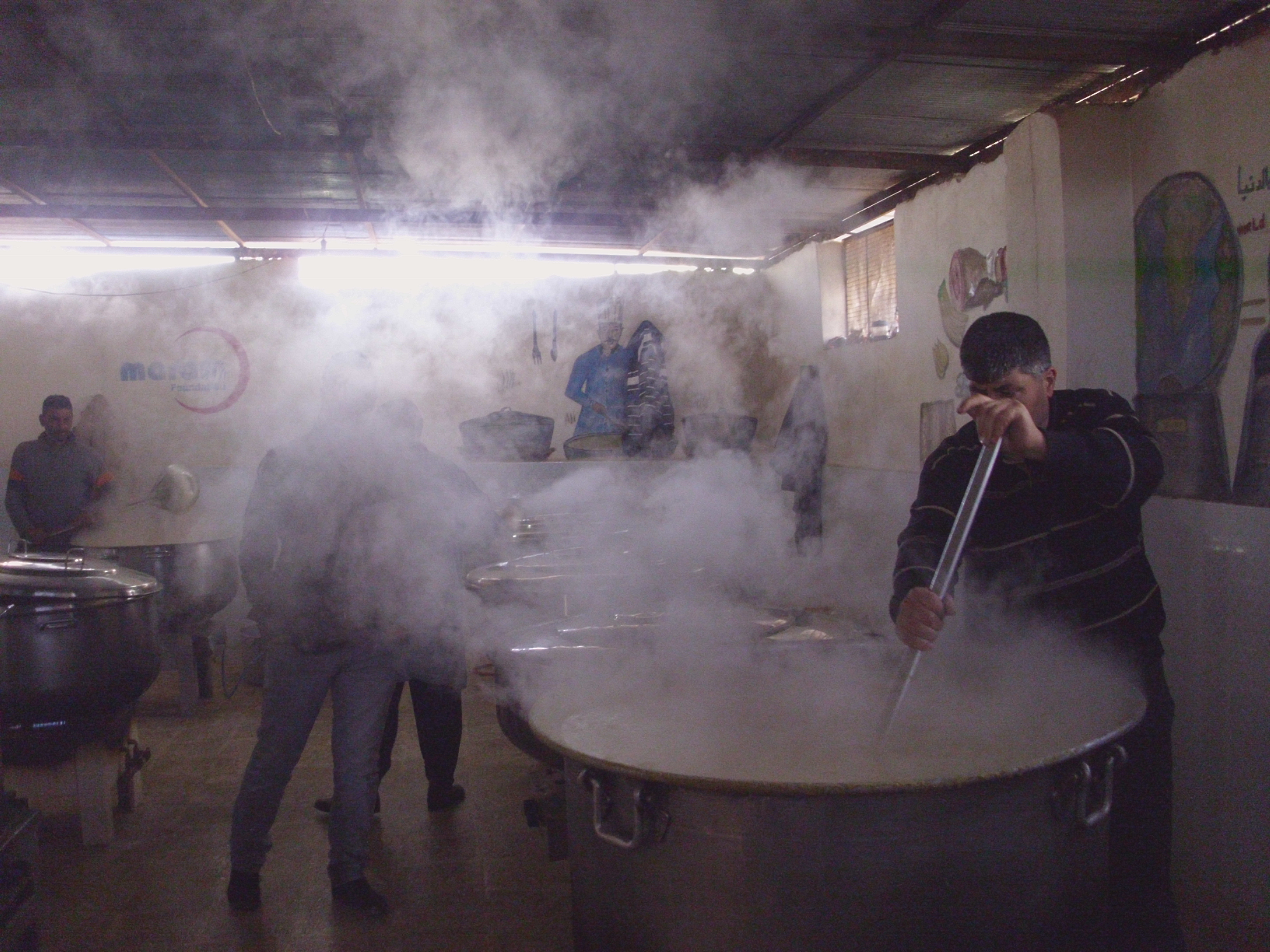 In the camp, the steaming vats of the Maram Foundation’s charity kitchen are cooking the same meal they were cooking six months ago: lentil soup. Children wait for lunch to be distributed with buckets in the red mud outside. Also on main street is a new clinic and one-room dentist (funded by the Syrian-American Medical Society). Dr. Haytham grins as he complains about the conditions. The roof leaks, and the recent snowstorm flooded his crowded space, destroying electrical equipment. As he served us tea, a boy called Mahmoud walked in to observe us, his face marked by post-treatment leshmaniasis scars (a resurgent disease caused by the sand flies which prosper in uncollected rubbish). Mahmoud, about five years old, seemed a pleasant child at first, but after a smiling photograph with one of our group his mood flipped, he violently pinched the hand of the man he’d been cuddling up to, and then took to whipping his older sister with a cable. “Nobody can control him,” somebody remarked. “He doesn’t have a father.”
Fatherless, husbandless, homeless… When I asked a man where he’d come from he changed the name of his town from Kafranboodeh to Kafr Mahdoomeh, ‘the Demolished Village’. I asked him why. “Because they haven’t left one house standing nor any animals in the fields. What will we ever return to? The whole town’s gone.”
Zeitouna Kids in their Own Words
Mohammad Ojjeh made a short film in which the children of the Salam School for Syrian refugees in Reyhanli, Turkey, speak about their experiences and the Karam Foundation’s Zeitouna programme.
The Salam School
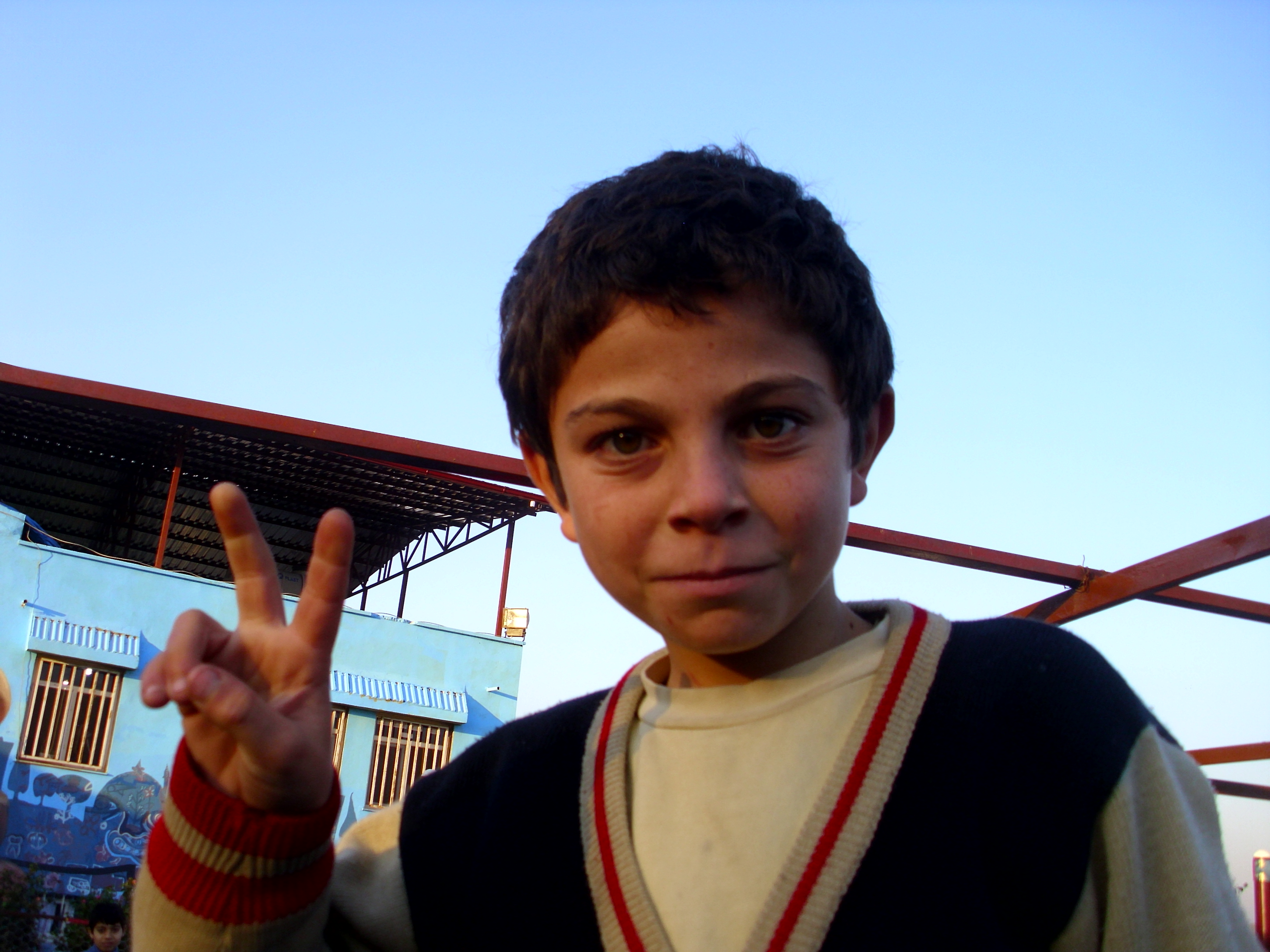 This was published at the National.
Syria is my father’s country, where I spent an important part of my young adulthood, where my son was born. Living there was inspiration for my first novel (though it’s set mainly in London). In fact, I fell in love with the country – with its enormous cultural and historical heritage, its climatic extremes, and its warm and endlessly diverse people. Of course there were moments – for example, visiting a broken man who’d been released after 22 years imprisonment for a ‘political offense’ – when I felt like getting the next plane out. And before too long I did move on, because a stagnant dictatorship was no place to build a future.
Then in 2011 the revolution erupted. This instant of hope was followed by a counter-revolutionary repression of unprecedented ferocity. How to respond? For a long time I wrote and spoke to anyone who would listen on one theme: the necessity of funding and arming the Free Army – civilian volunteers and defectors from Bashaar al-Assad’s military. Nobody did arm them, not seriously, and as a
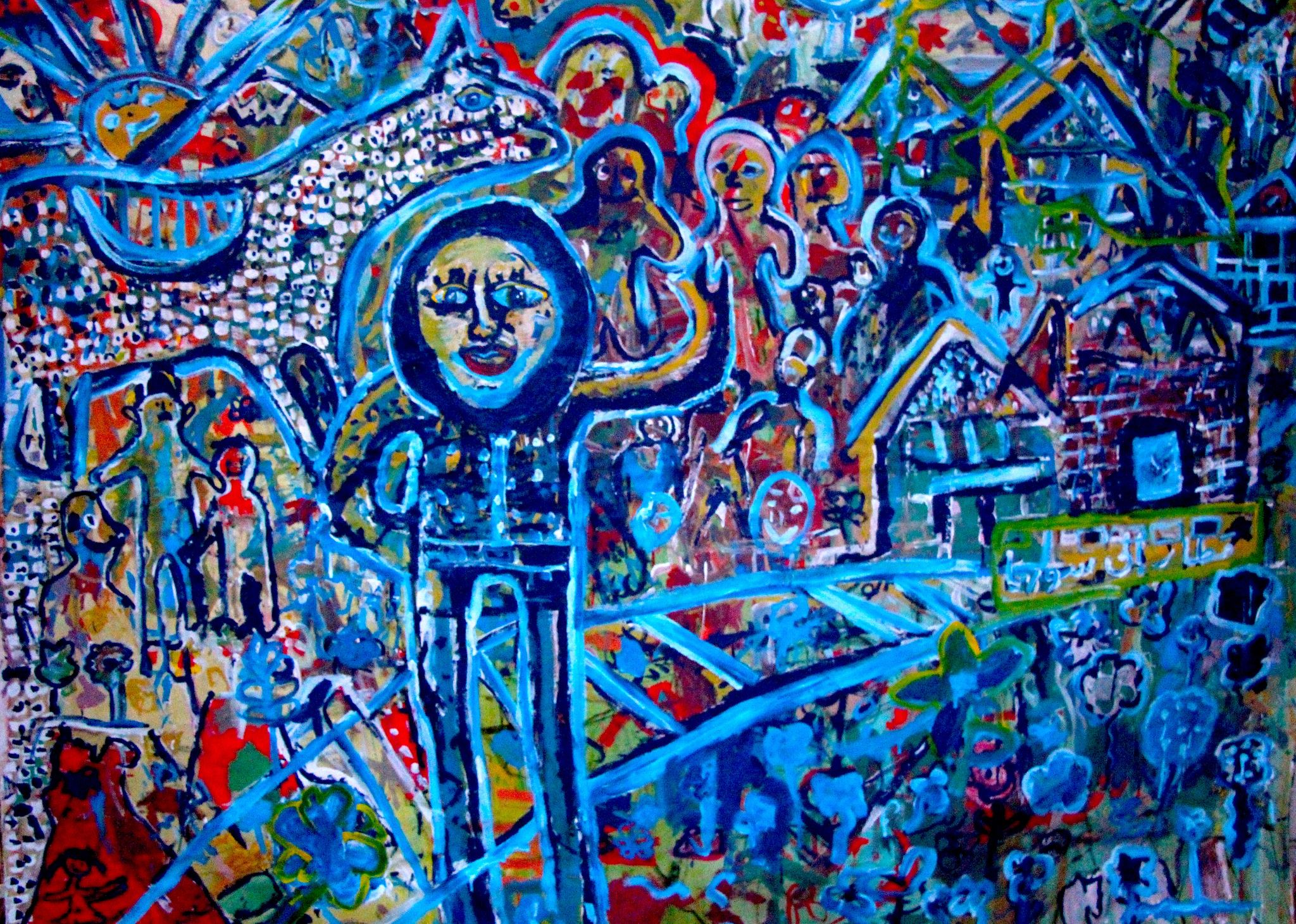
the train to syria
result the Free Army lost influence and Islamist factions filled the gap. Assad’s calculated manipulation of sectarian fears and hatreds produced a Sunni backlash. Al-Qa’ida franchises set up emirates near the Turkish border, and the West increasingly understood the Syrian drama not as a battle for freedom, but as a security issue. In illustration of this fact, I was stopped at Edinburgh airport as I started my most recent trip to the Turkish-Syrian border, in December, and questioned under the UK’s Terrorism Act. “Which side do you support?” they asked me. I explained there are many sides now, but the question seemed to be either/or: either the regime or the jihad – and support for the (genocidal) regime was the answer which ticked the ‘no further threat’ box.
They also asked why I was going. The answer: I was lucky enough to know a group of committed and talented Syrian-Americans, including Chicago-based architect and writer Lina Sergie Attar, interviewed below, founder of the Karam Foundation. Karam delivers aid and opportunity to war-struck Syrian communities, and I was on my way to participate in its Zeitouna programme.
How do you act usefully in the face of a tragedy which unfolds on an incomprehensible scale? Syrians and their friends were forced to address this question as Assad’s genocidal repression transformed the popular revolution into a civil war, and as an unthinkable third of the population were made refugees. Every city except two has crumbled in whole or in part under bombardment. Ancient mosques and churches have been reduced to dust. The country’s multicultural social fabric appeared to dissolve.