Zainab al-Hosni
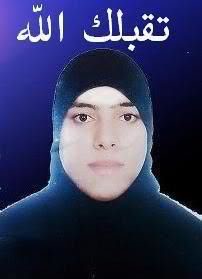 She was eighteen, from Homs. The regime wanted to get its hands on her brother Muhammad, an activist on the run, so it arrested her instead, as bait. Shortly afterwards the insecurity forces caught Muhammad, and shortly after that they summoned Muhammad’s mother to pick up his corpse. The corpse was burnt and punctured by bullets. While in the morgue, by chance, the mother found Zainab’s corpse too. Zainab’s arms had been cut off. Part of her body had been skinned. She had been decapitated.
During the battle between the Muslim Brotherhood and the regime in the early eighties the regime committed massacres. But it never tortured children and women to death. This style of barbarism is an innovation. Does it need to be said that it’s an innovation which doesn’t suit Syrian values? There are still some people, astoundingly, who tell us that this regime of the psychopathically ill is capable of ‘reform’.
Hafez al-Asad was a ruthless dictator of great but flawed intelligence. His sons do not qualify as dictators. To call them dictators is to insult dictators. They are a foul mix of pervert, monster, idiot, and spoiled brat. Each moment they remain at liberty is another catastrophe.
Beyond that, for Zainab, I can say nothing more.
UPDATE: – It now appears the regime is playing a clever sick game. Zainab has turned up on regime TV alive. The regime did kill her brother, and did label some other person’s dismembered corpse as Zainab’s, no doubt to discredit the accounts of the revolutionaries. So whose corpse did they dismember? This theatre reminds me of the time a few months ago when a French TV channel received a communication from a known contact at the Syrian embassy in Paris telling them the ambassador had resigned. The channel reported the story, then the next day the ambassador turned up to denounce the ‘lies’. Here’s Rime Allaf’s comment on Facebook:
The Zeinab story: the lie is the regime’s and the regime’s alone. The regime first came to arrest her (the real Zeinab), then first returned the body of her brother to the family (he died under torture), then told the family come take your daughter too – and gave them a burned beheaded body, unrecognizable, in pieces. That body, of course, still is a martyr, we just don’t know whose it is. The family was told by the regime that this was their daughter, they didn’t just find the corpse in the street, and it’s not the opponents of the regime who made this up. And after everyone got all worked up, they deliver “the victim who simply ran away” because – to boot – her brothers (who must be “extremists”) were abusing her.
The point is that the regime is not only criminal but criminally stupid, as if these games can prove anything about the “armed terrorist gangs” and about the “lying activists” and as if we’re supposed to forget the whole sequence of events, and only watch the Syrian television clip like idiots and say oh, the opposition lied. (Ironically, the criminal Taleb Ibrahim the other day claimed on television these same gangs had killed Zeinab.)
Winds of Change: Cinema from Muslim Societies
The Institute of Contemporary Arts in London is hosting a film festival starting tomorrow. The festival begins with the discussion – ‘Is there a Muslim world?’ Panelists include Hamid Dabashi, Ziauddin Sardar, and me. Of the films being shown, I strongly recommend Salt of this Sea, a Palestinian film starring Suheir Hammad and Salah Bakri, and Hatem Ali’s The Long Night, on Syrian political prisoners and their families. I’m introducing that one. The ICA blurb is below. I hope to see you there.
The Arab Spring is the starting point for films selected for a festival at the Institute of Contemporary Arts from 21 September that, like this year’s mass demonstrations for democracy across Arab regions, is concerned with civic freedom; human rights; gender and social equality; the challenges of modernity; and the place of religion within social structures.
Maltese Interviews
© 2011 Joseph A Borg
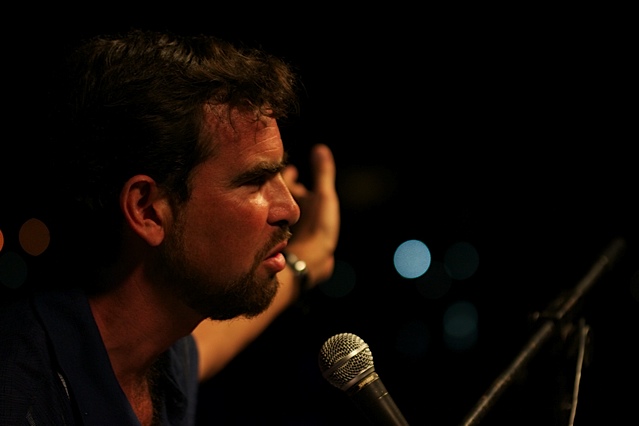
I was invited to the Malta Mediterranean Literature Festival. Malta is a fascinating place, with a fascinating Arabic-origin language, and I met many fascinating writers there. I’ll write about it soon. In the meantime, here are a couple of interviews with me from the Maltese press.
First, from the Times of Malta.
Albert Gatt discusses hedgehogs, dictators and parricide with author Robin Yassin Kassab.
As the crackdown in Syria continues, and the revolution in Libya inches towards resolution, another blow is dealt to the grand narrative of the Arab nation which various dictators – self-styled fathers to their people – used to justify their rule. Can literature offer a nuanced view that counters this narrative’s deadly simplicity?
This year, the Malta Mediterranean Literature Festival, organised by Iniżjamed and Literature Across Frontiers, will focus on the Arab Spring.
One of the guest writers is Robin Yassin Kassab, who appears courtesy of the British Council (Malta). Born in West London of Syrian descent, Yassin Kassab is a regular contributor to the press and blogs on http://qunfuz.com – qunfuz is Arabic for hedgehog or porcupine.
In his first novel, The Road from Damascus (Penguin, 2009), Sami, the son of Syrian migrants in London, struggles to carry the mantle bequeathed to him by his father, a staunchly secular Arab intellectual.
But the turmoil of his own private life and the havoc wreaked by 9/11 force him to challenge the worldview he has inherited, in whose name his father committed the ultimate betrayal.
I’m intrigued by the name of your blog – Qunfuz. In what sense is the writer a hedgehog?
Blind Orthodoxies
It’s always dangerous to declare generalised love for a movement or school of thought – including Sufism, because Sufism can be subdivided into spirit and tradition, into various orders and popular customs, into the sober and the drunk, the vocal and the silent, the revolutionary and the tame. Still, I’ll say I love it for its symbolic, illogical, individualist challenge to literalism and the obsession with rules, and because it smiles, and for its openness and tolerance, and its music and poetry; because, as Adonis says: “Sufism has laid the foundations for a form of writing that is based upon subjective experience in a culture that is generally based on established religious knowledge.”
My own Islam is closer to deep agnosticism than to literal belief; it’s more spiritual (when I manage it) than religious. As time goes by and political events unfurl I have less and less sympathy for rigidly exclusive forms of Islam, whether modernist or traditional, less sympathy for certainty, and more and more dislike for current Islamic political movements, which are state-obsessed, and divisive, and which seek to reinforce the stultifying, censorial aspects of Muslim cultures. So I happily defend those who shake and shout and dance as they pray, or who remember the names in silence alone, and I defend them more fiercely every time the orthodox tell me I shouldn’t.
A Syrian
 I met a Syrian whose identity will be revealed at the time of revealing. The Syrian, who is a revolutionary and someone who knows, reassured me of the final outcome. There are two options, the Syrian said. Either the regime goes or the people go. The people say: let’s say there’s been an earthquake. Let’s say a million of us have been killed. Now let’s go out and bring down the regime.
The Syrian said the businessmen of Aleppo in recent weeks have sent their capital into Turkey. Aleppo will rise, the Syrian said.
The Syrian has suffered. The Syrian is not a child. Almost enough clues.
While we were talking the Syrian heard that another friend had been detained. A woman. A professional.
al-Qa’ida Speaks
 time does not pass
our dead live more deeply
water flows stalactite
our lungs do not breathe
Iraqi Fragments
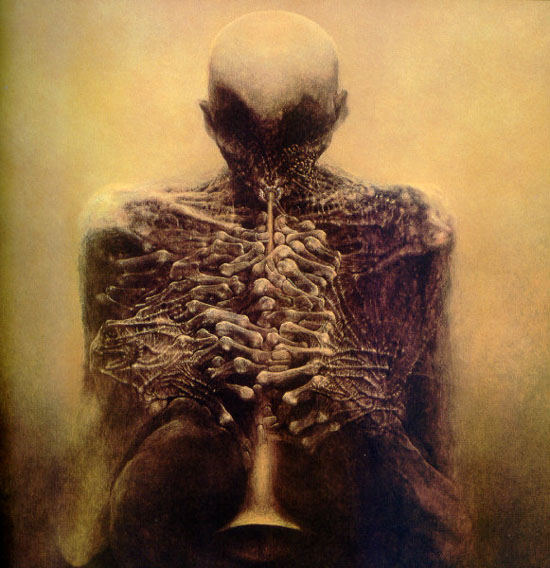
picture by Zdzisław Beksiński
Between the rivers where words begin
Strange architecture of flesh drawn by war
Babies born in the form
of bunches of grapes
And men who die tongueless
women die breastless
Not human any more.
Crimes Against Humanity
The World Tonight on BBC Radio 4 ran a segment on Amnesty International’s investigation of 88 deaths by torture in Syrian custody in recent months. The 88 include 10 children. This is only the tip of the iceberg. Thousands are missing. Following the report there’s an interview with Andrew Green, a former British ambassador to Syria, and with me. I agree with Andrew Green’s final comment, that the lack of a recognisable alternative to the regime constitutes a major obstruction in the way of the revolution. It does seem, however, that a consensus opposition council is now slowly emerging, including Syrians inside and outside the country, and of a broad range of political inclinations. Best of all, it seems that Burhan Ghalyoun is emerging as the opposition’s leader or figurehead. Ghalyoun is a popular secular intellectual. If Islamist voices are accepting him as a compromise figure, this is proof of their growing maturity.
Here’s the audio:
The Syrian People
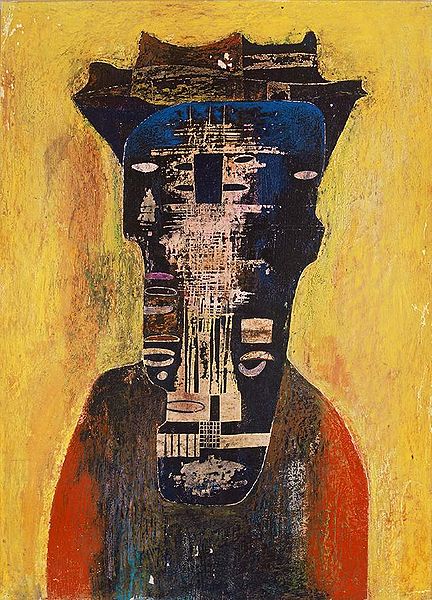
picture by Zdzisław Beksiński
walls to scrawl graffitti on
slabs of stone for carving
if you crush it it sings a song
changes colour with a stamping
meat to hang upon a hook
wire conducting electricity
balls to kick around the yard
to reduce to pure simplicity
wet cloth to dessicate
sweet sounds to silence
flaps and buttons to be tugged off
obscenities to be licensed
unruly features to be trimmed and then
punished, then punished, then punished –
the guilty corpse, the damned – to be
punished, dissected, turned inside out
so all the world can see
Libyans: Passive Tools?
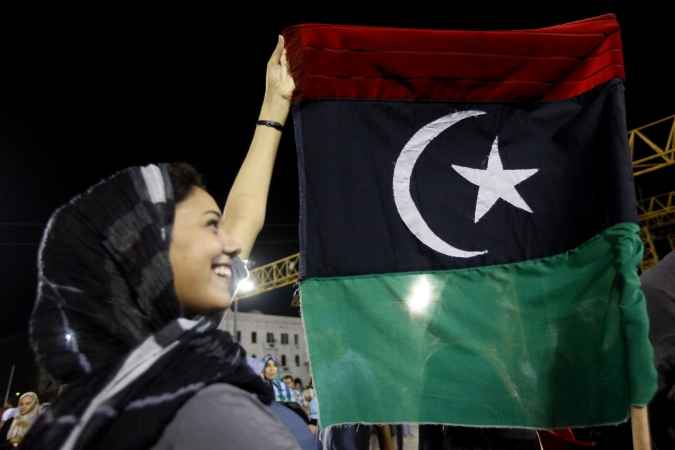
Reuters
Somebody said to me recently, “The Libyans will soon be doing business with Israel, whether they like it or not.” Here we go again: the assumption that the Libyans have no agency of their own, even after they’ve so dramatically taken the initiative to change the course of their own history. Yes, Libyans took help from NATO, Qatar, and the UAE when they found themselves with no other option. This doesn’t mean they are fated to be slaves of the West. Even Iraq doesn’t do business with Israel, and Iraq has suffered a full-scale US occupation.
Such easy assumptions about the Libyan people arise from racism, usually of the unconscious, ‘well-meaning’ variety. This racism consists, first, of indifference to the people’s plight under Qaddafi, or outright denial of their plight. The rose-tinted view of life under the dictator is reminiscent of the Zionists who assure us that Gaza has swimming pools and shopping malls and that Palestinian Israelis live better than any other Arabs. The rush to highlight the crimes of the revolutionaries (sometimes relying on Qaddafi regime propaganda) is accompanied by silence over the far greater crimes of the quasi-fascist tyranny.
Libyans (and, to a degree, Syrians) are seen as passive tools in the hands of the devilishly clever White man, as childlike people who don’t know their own best interests, as people best advised to shut up and enjoy being tortured for the sake of the greater ‘anti-imperialist’ good. The right of the Libyans to life and freedom, and to make their own decisions, becomes less important than the right of certain people to feel self-righteous.
Three Films (Victory and Music)
Three films from the Syrian Revolution. The first is a good illustration of why the revolution will win. Uniformed insecurity forces chant the tired old ‘with our souls and blood we sacrifice for you, Bashaar.’ It’s clear that their hearts aren’t in it. At least one soldier looks completely bewildered. The people of Inkhel respond by chanting ‘with our souls and blood we sacrifice for you, o martyr.‘ Their hearts are certainly in it. The second film (after the break) comes from Kisweh, a suburb of Damascus, and you should play it with the volume up. It demonstrates the Syrian appreciation of rhythm and drums as well as of freedom (hurriyeh). The third is a song sung by ‘Najwa from Nawa’ – Nawa is a village in the Hawran – calling on Bashaar to ‘irhal’ – get out.
Assault on Ali Farzat
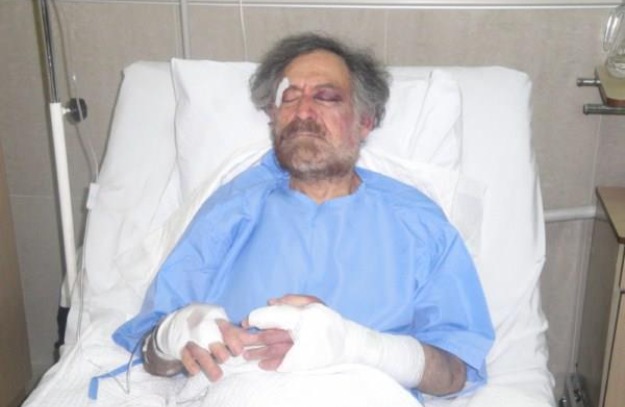 Here I am on PRI’s The World discussing the assault on Ali Farzat this morning.
And here‘s Foreign Policy’s comment on the assault plus a gallery of Farzat’s cartoons.
On the radio I said that the Syrian regime isn’t trying to be popular at present. Escalating its attacks on Syrian cities in Ramadan, increasing the gunfire at the dawn prayer and at the break of fast: these are not moves calculated to win popularity. Likewise, when regime torturers force the detained to pray to a picture of the dictator, and to repeat ‘There is no god but Bashaar’, they are not seeking approval. It’s much more basic than that. The message is: We can do whatever the hell we like. We can outrage you as much as we choose. We can shock you with our barbarity and then shock you again, because we are unimaginably strong.
But they aren’t strong. They are very weak indeed, as we will all soon – insha’allah – discover.
Art is Greater than Filth
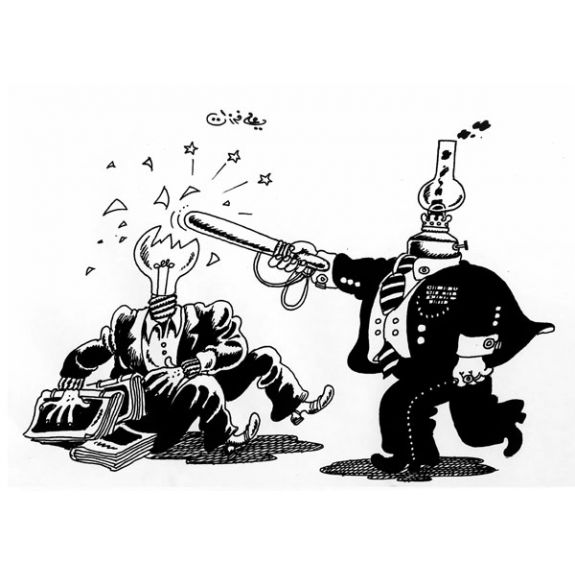 Ali Farzat, the Arab world’s greatest cartoonist – in fact one of the very best and bravest creative voices in the Arab world – was bundled into a van by Syrian regime filth last night. Some hours later he was found bleeding at the side of the airport road. First reports suggest that his hands have been broken.
I’ve often used Ali’s cartoons to illustrate online pieces. His work has been the perfect choice – its tone is tragicomic; he never minimises the pain of the contemporary Arab situation even as he laughs at it. His pen, and his blessed hand, draw the catastrophes of dictatorship and occupation, of misogyny and class oppression, of bureaucracy, hypocrisy and ignorance. Ali is a valuable friend of the Palestinian people: I hope those fools who still believe the Syrian thug regime is a ‘resistance regime’ will note this well.
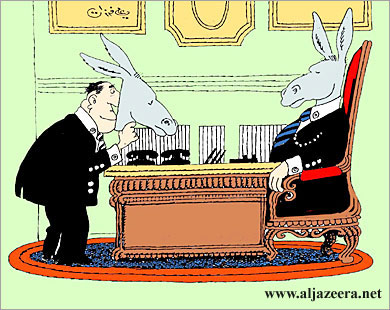 I discovered Ali Ferzat when I lived in Damascus in the late 1990s. His work was published in state newspapers. He seemed to be one of the rare few – poet Muhammad al-Maghut and actor Yasser al-Azmeh were others – who were permitted to transgress the state’s taboos. When Bashaar inherited power in 2000, Ali was granted permission to start up his own satirical newspaper, ad-Domari (‘the Lamplighter’). A couple of years later the initiative fizzled out under the pressure of mounting censorship and intimidation. The episode was symptomatic of the deceptions of Bashaar’s early years.
A few months ago the body of Ibrahim al-Qashoush, a native of Hama who wrote a popular anti-regime song, was found in the Orontes river. Ibrahim’s vocal chords had been ripped from his throat. Now the shabeeha regime has broken Ali’s hands. But it won’t break the creativity or the will of the Syrian people.
Victory in Tripoli
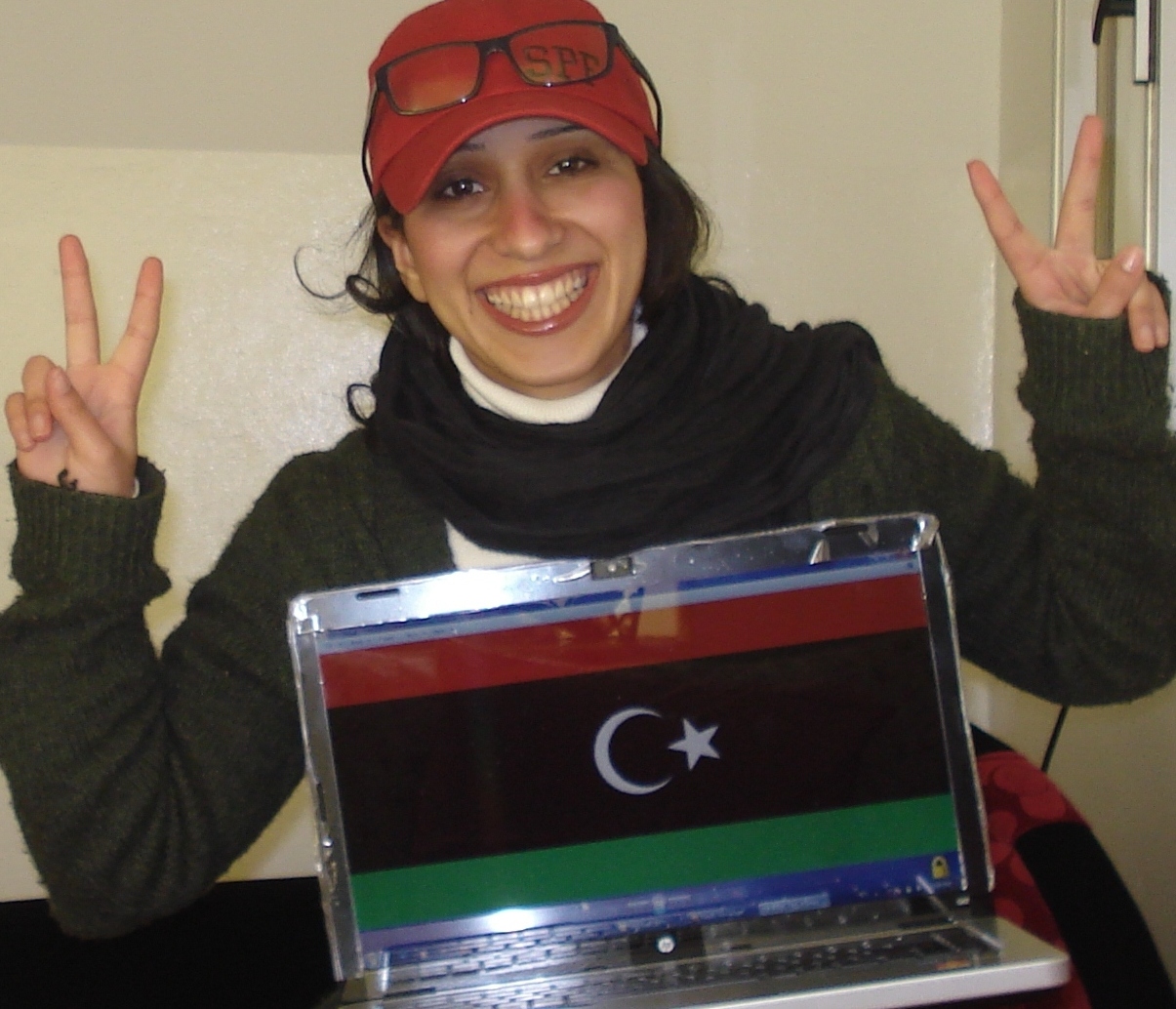 After six months of struggle, the Libyan revolution has arrived (again) in Tripoli. There may still be a trick or two up the megalomaniac’s sleeve, but the news coming in at the moment suggests a precipitous collapse. Saif-ul-Islam al-Qaddafi has been arrested. The tyrant’s daughter Aisha’s house is under the revolutionaries’ control, as is the military base of the formerly feared Khamis Brigade. The brigade in charge of protecting Qaddafi himself has surrendered. (The foreign supporters of Qaddafi and his supposedly ‘loyal’ subjects must be feeling rather silly now). Inhabitants of Tripoli’s neighbourhoods are pouring into their streets to greet the revolutionary forces.
Much of the credit for this victory must go to the revolutionaries of Misrata and the Jebel Nafusa. While the Transitional Council in Benghazi was busy fighting itself, the people of Misrata fought their way out of Qaddafi’s siege and then liberated Zlitan. The fighters of the Jebel Nafusa broke the siege around their mountains and then liberated Zawiya – which has suffered so much – and moved towards the capital. Last night revolutionaries in Tripoli, who have been launching small-scale operations nightly for months, rose in Fashloom, Souq al-Juma’a and other areas. Today they were met by their comrades arriving from the west and east.
The Revolution Takes On Zionism
A few days ago a well-planned resistance operation killed eight Israelis. Israel has no idea who carried out the operation, except that they were probably Arabs, so it has responded in its usual way – by randomly murdering Arabs. Fifteen have been killed so far in the Gaza ghetto, and six Egyptian soldiers were killed when Zionist forces violated Egypt’s sovereign border. Before the revolution there was no response to this kind of arrogant aggression. This time the Zionist government has been forced to apologise to Egypt. That’s not enough, of course, so the Egyptian people have taken matters into their own hands. In this film, the Zionist flag falls in Cairo. This was last night. The demonstration outside the Zionist embassy continues today. People are firing fireworks at the occupied building.


 Qunfuz