Archive for the ‘Palestine’ Category
Selective Outrage
There’s a link here to a two-part podcast of me talking about the genocide in Gaza, the genocide in Syria, and universal anti-fascism. Thanks to Andy Heintz for the opportunity.
Genocide justifying itself by genocide
The most repulsive thing I saw yesterday was a Zionist justifying the genocide of Palestinians by reference to the genocide of Syrians. Three points.
One: One genocide doesn’t make another OK. Obviously.
Two: Israel was a major reason why the US stopped serious weapons reaching the Free Army. Other than a few rhetorical comments, the US worked with Iran (doing a deal) and Russia (welcoming it into Syria to ‘solve the chemical weapons problem’, which of course it didn’t) to save Assad. This, according to what American officials told Syrians lobbying for weapons, was because Israel was worried about ‘instability’, especially about Syrians having anti-aircraft missiles and heavy weapons. So hundreds of thousands of Syrians were murdered, millions expelled, and the country utterly destroyed, for the sake of the apartheid state’s ‘stability’.
Three: Israel is doing exactly the same to Gaza as what Assad/Iran/Russia did to Homs, Aleppo, the Ghouta, etc: it is destroying the civilian infrastructure, imposing starvation sieges, hitting schools, hospitals, residential blocks, bakeries. Its aim is the same – to remove or annihilate the civilian population. Its genocidal rhetoric is the same, but it seems to be far more deeply spread amongst Israeli Jews than it is amongst Assad’s ‘loyal’ Alawi community. The difference in method is that Israel does the killing faster and more efficiently, with more advanced western (American and German) weapons.
So Israel does the same as Assad/Iran/Russia, only faster, and Israel contributed to the disaster in Syria anyway, and you can’t justify your fascist genocide in the south of bilad ash-sham by pointing to the fascist genocide in the north. You are all fascists, and the people of the region in their overwhelming majority despise you both. There will be no peace until both of your ideologies and murderous power systems are dismantled.
Read the rest of this entry »October the Seventh
A very slightly different version of this piece was published at The Markaz Review.
On October the seventh, Hamas fighters broke through the fence which locks Palestinians in the besieged Gaza Strip. In doing so they revealed Israel as a paper tiger. This supposed regional superpower, so skilled at containing and killing dispossessed Palestinian civilians, was unable to stop its enemies from attacking military bases and killing and abducting soldiers.
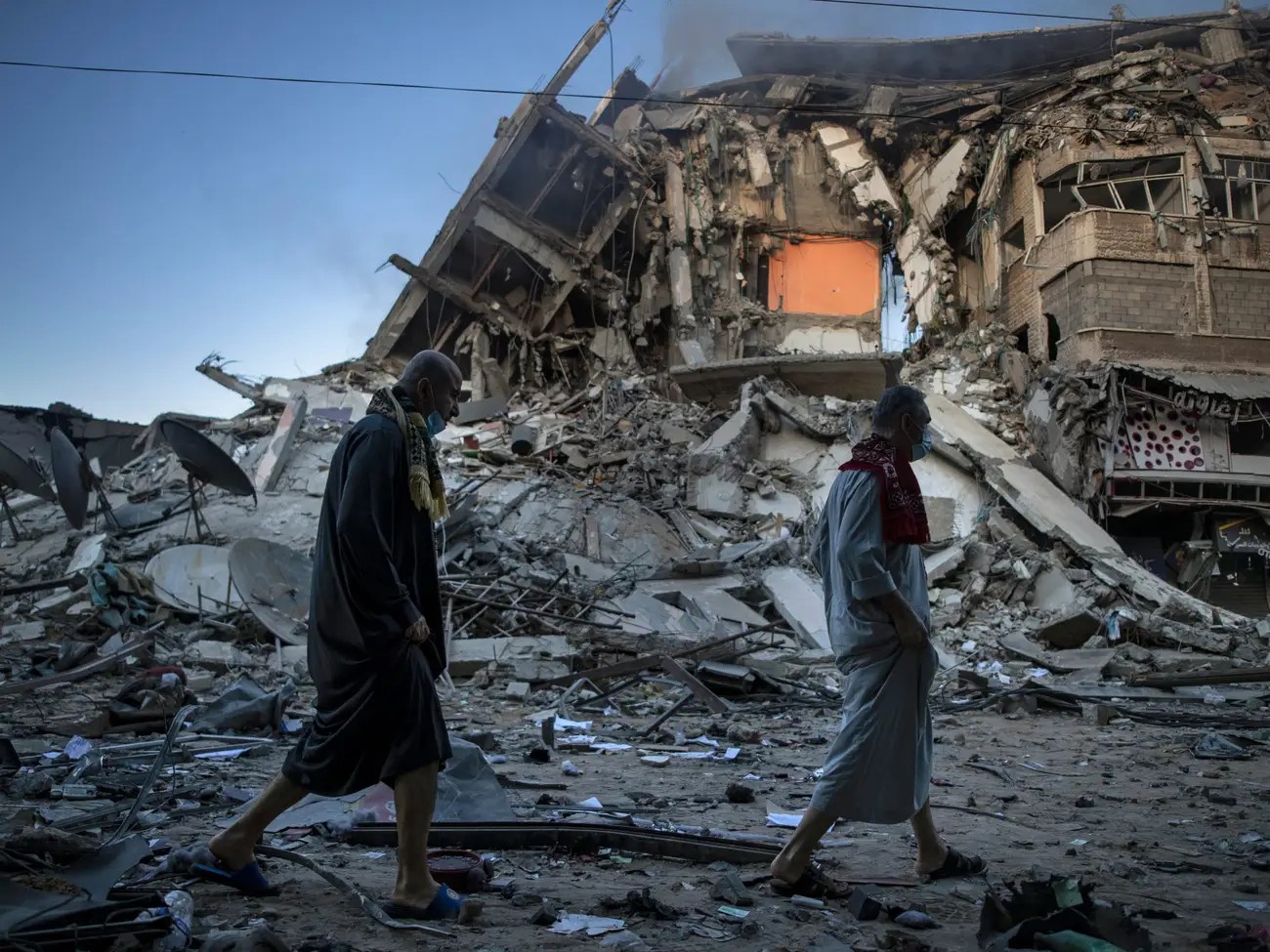
If Hamas had ended the operation there, it would have won an undoubted political as well as military victory. No doubt Israel would have responded with force, and as disproportionately as it always does, but it would have been somewhat restrained by its western allies and sponsors. The Israeli ‘peace camp’ (such as it is) might even have been revived. Even now we see Israeli fury directed at Netanyahu’s government that focused on guarding illegal settlers in the West Bank rather than the Gaza border fence. Just by breaking through the fence, Hamas changed the regional equation, showing that normalization between Israel and Arab dictators wouldn’t bring Israel security, that only a settlement with the Palestinians would do that.
But Hamas did more than break through the fence and strike military targets. It killed hundreds of civilians, including children and the elderly. A group of elderly people waiting at a bus stop were gunned down. Children were tied to their parents and set on fire. Whole families were murdered. Hamas perpetrated an appalling and enormous war crime.
This was immoral, illegal, and stupid. First, it pushed the already hyper-violent Israeli society into a blind rage for revenge. That may have been part of the calculation – to provoke a response so massive that it would upend the power structures in the region, in the hope that the new structure would turn out to be better for Palestinians. This is the kind of gamble that only a blind-faith pyromaniac could make.
Maybe the orders were, go in and cause as much damage and pain as you possibly can. Maybe they expected they would have only a few minutes to spend killing before the IDF killed them. In fact, incredibly, they had forty eight hours. I have no idea how this happened. If Israel were an Arab dictatorship, I’d say it was because key officers had been bribed or threatened to look the other way. But Israel is not an Arab dictatorship. No doubt in the years to come books will be written to attempt to explain.
In the end, Hamas achieved what has been called ‘catastrophic success’. It probably hoped to grab a few dozen hostages with which to bargain for Palestinian prisoners (or hostages) held in Israeli prisons. By taking so many hostages, and by killing so many civilians, it decreased the hostages’ value. Sections of the Israeli establishment seem to have already sacrificed the hostages. Their priority is to destroy the Palestinians, not to negotiate.
What Hamas fighters did was behave like savages. In so doing they gave Israelis and Westerners the perfect reflection of an image that already existed in their minds: the Muslim barbarian, the savage other, the irrational absolute enemy against whom all measures are justified. Because Hamas calls itself an ‘Islamic Resistance Movement’, the stain spreads to cover Muslims everywhere. (It’s worth repeating that Islamic rules of warfare very specifically forbid the harming of non-combatants.)
Irreconcilable Narratives
When I called relatives and friends living in Arab countries I realized that the story they were hearing from Arab media was very different to the story here in the west. There the focus was on Hamas’s assault on the military; here it was on Hamas’s terrorism against women and children. From the very start, the narratives spun in east and west were irreconcilable.
It didn’t help that Joe Biden said he’d personally seen and confirmed evidence of beheaded babies, and then a few hours later that the White House retracted his claim. It didn’t help that unverified claims of rape were spread far and wide. Some or all of these atrocities may actually have happened, but a lack of concern for truth on all sides has made it difficult to convince anybody of anything they don’t already believe.
Personally I don’t see any moral difference between shooting a baby in the head, or beheading a baby, or incinerating a baby with a bomb (and Israel has killed far more Palestinian children in the last few days than the total number of Israelis killed on October the Seventh). What the image of the baby-beheading rapist does, however, is to provide a justification for further genocidal violence.
The Context
Hamas’s attacks against civilians cannot be justified, but they can and must be contextualized. Israel and the West choose to believe that Hamas started the war on October Seventh. They tell us that when Hamas kills civilians it does so simply because it’s evil, and that when Israel kills civilians in greater numbers, and besieges and occupies them, it also does so simply because Hamas is evil.
Read the rest of this entry »Palestinian Assadists
There’s nothing more ridiculous than a Palestinian Assadist. For western Assadists, the Arab world is a blank on which to project ideological fantasies. But the Palestinians are part of this world. So what makes some repeat inhuman and absurd Assadist propaganda?

How has the Assad regime under father and son won such loyalty? Is it because in 1967 Hafez al-Assad, then defence minister, ordered the Syrian army to retreat from the Golan before any Israeli soldiers had turned up? So the Golan was handed to Israel, which then annexed it. Or is it because in 1973 Hafez al-Assad, now in absolute control, lost another war (not surprising given his endless purges and rabid sectarianization of the army) but spun the defeat as a historic victory and proof of his nationalist genius? Perhaps it’s because early in the Lebanese civil war, the Assad regime, which had loudly proclaimed its support for the Palestinian/Muslim/leftist alliance, intervened, but on the side of the pro-Israel Maronite Falangists to defeat the Palestinian/Muslim/Leftist alliance? Or could it be because throughout the 1980s the Assad regime slaughtered tens of thousands of Palestinian civilians in camps in Lebanon, most notably at Tel Za’atar? Perhaps it’s because the regime under Bashar utterly destroyed Yarmouk camp, until then Syria’s most important centre of Palestinian culture. Or because the regime tortured and starved so many Palestinians to death during the Syrian Revolution. Or maybe Assadist Palestinians love the regime because its reign has seen all of Syria parceled out to foreign powers – Russia, Iran, the United States, Turkey, the Turkish-Kurdish PKK, as well as the part it had already handed to Israel. Perhaps they believe the destruction of Syria’s cities, the murder of a million Syrians, and the expulsion of millions more, will in the end hasten the liberation of Palestine.
I should say that most Palestinians sympathise with the revolutionary Syrian people and not with the regime (and its allies) killing them. The more working class and more religious the Palestinian, the more this is the case (in my experience). And among liberal middle class activists there are many decent people who have shown solidarity with Syrians. Here’s a great statement by some of them from 2016. But some of the signatories were ostracised by other Palestinians for signing. Amongst the West Bank middle classes, including not a few faux-intellectuals, there’s plenty of Assadism. There’s also, for God’s sake, the statue of Saddam Hussein at Bir Zeit.
Why is it that this kind of Palestinian, the very kind who in previous decades we might have considered as being at the forefront of radical politics in the Arab world, has become enmeshed in such backward and inhumane modes of thought? It might be because the Palestinians haven’t experienced the revolutionary wave of the Arab Spring. This isn’t really their fault. They are stuck with the old nationalist narratives because they are stuck with a foreign occupation. Whereas their neighbours have moved on to postcolonial struggles. The foreign occupations have gone (or had gone, before Assad brought them back), so the struggle now is against those gangsters who seized control of the weakened countries the colonialists left behind.
Read the rest of this entry »Bitter Almonds
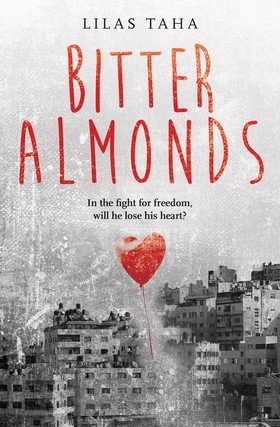 An edited version of this review appeared at the National.
This story starts with a birth and a departure, in Jerusalem in 1948. The birth is Omar Bakry’s, and it orphans him. The departure, alongside three quarters of a million others, is his forced expulsion from Palestine. “We’ll be back in a couple of weeks,” one fatefully quips.
Omar, now in the care of a neighbouring family, relocates to Damascus, where the novel unfolds through the fifties and sixties, both an engaging romance and a convincing period drama.
Lilas Taha writes in American English. My British-English ear found it difficult at first to believe in old-fashioned Arabs saving each others’ asses and getting in each others’ faces. The effect was exacerbated by occasionally clumsy dialogue. Real Palestinian-Syrians would see no need to specify, for example, “the ruling Baath Party” or “the actress Souad Hosni”. Realism is lost at moments such as these when the novel, veering into explanatory overstatement, seems too obviously an act of cultural translation. It might have been better to write a preface, or to add footnotes.
But as the pages turn, slowly but surely, the characters come entirely credibly to life. We learn a great deal about them by observing their negotiations of etiquette and social ritual as they traverse a domestic danger zone marked by deaths, difficult births, precarious marriages, and looming scandals.
The cast is close-knit. Mustafa is a farmer denied his land whose lungs are broken in a wool factory. The book’s title comes from his mouth, and provides a wisdom for the drama: “The bitter almonds make you savour the sweet ones more.” His wife Subhia, their son Shareef and daughters Huda and Nadia, make up Omar’s surrogate family.
Taha depicts them trying to make ends meet, their life in cramped quarters, male and female sleeping areas demarcated by a blanket, and the profound familiarities and festering resentments which grow in such conditions.
The Drone Eats With Me
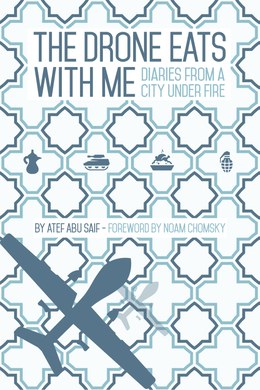 This appeared first at The National.
Plenty of news flows out from Gaza, but very little human information. This emotional blackout bothered Ra Page, founder of Comma Press, a Manchester-based publisher producing groundbreaking short story collections. It was Comma that gave the astounding Iraqi surrealist writer Hassan Blasim his first break. Comma has published a high-quality series of literary responses to scientific innovations as well as several collections based around cities such as Tokyo, Istanbul and Liverpool. Why not Gaza too?
“My rather naive idea with The Book of Gaza,” writes Page, “was to try to inch the city ever so slightly closer to a state of familiarity, to establish it as a place and not just a name, through the simple details that a city’s literature brings with it – the referencing of street names, the name-dropping of landmarks and districts.”
The book was by no means the first literary project to aim in some way to normalise Palestinian life. Since 2008 the Palestinian Festival of Literature (Palfest), brainchild of novelist Ahdaf Soueif, has tried to reaffirm, in Edward Said’s phrase, “the power of culture over the culture of power”. In practical terms, this means transforming a literature festival into a roadshow – Jerusalem one night, Bethlehem another, Ramallah on a third… Though these places are only a few miles apart, checkpoints prevent Palestinians from travelling between them. So the guest writers travel to their audience, and at the same time learn something of Palestine’s enormous creativity. This stateless nation has boasted many great literary talents, most notably Mahmoud Darwish and Mourid Barghouti in poetry and Ghassan Kanafani in prose. Meanwhile there are burgeoning film and music (especially hip hop) scenes.
For decades writers had to smuggle their manuscripts out of Gaza to presses in Jerusalem, Cairo or Beirut. The shorter the text, the more likely it was to be published. As a result, the Strip became an “exporter of oranges and short stories.” Edited by novelist and journalist Atef Abu Saif, The Book of Gaza contains stories from three generations. It achieves both the sense of place that Page hoped for and ‘familiarity’ through its treatment of universal themes. The stories are as likely to deal with women “besieged by preconceptions” (in Najlaa Ataallah’s words) as the seige imposed by Israel. The project succeeded in ‘depoliticising’ Gaza, at least to some extent.
But then, immediately after publication, Israel launched Operation Protective Edge. Story contributors were directly affected by the assault. Writer Asmaa al-Ghoul, for instance, lost nine members of her extended family. Page was driven to this bleak conclusion: “There is no stability in Gaza on which to build a reader-familiarity.”
The Wall
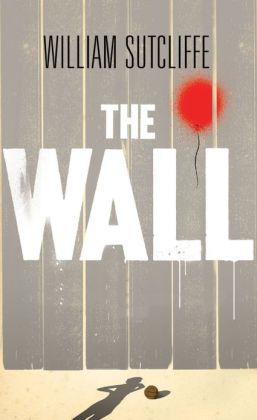 This review was published at the Independent.
Joshua lives in a brand new town called Amarias. He shares his brand new house with his mother who, since his father’s death in battle, has been “like a pane of glass riddled with cracks that was still somehow sitting there in the frame,” and also with tree-killing Liev, the “anti-father” whose cloying unpleasantness is a great pleasure to read.
One day, chasing a lost football and propelled by an overbearing curiosity, Joshua discovers a tunnel which leads under a wall to an entirely different world – one containing both danger and kindness, and a beguiling young girl. As storytellers from CS Lewis to Philip Pullman know, there’s something archetypal about holes in walls opening onto entirely unexpected realms; and tunnels to wonderland have been evoking rebirth since ancient cave painters squeezed through crevices to make their sacred art. William Sutcliffe employs all this rites-of-passage symbolism with a very light touch, and crafts his novel with sustained suspense.
The new world is not named (not until page 80 is it called “the Occupied Zone”; and the words ‘Israel’ and ‘Palestine’ are never mentioned) – in this way the book avoids being self-professedly ‘political’ – yet the place is described with great accuracy and atmospheric precision. An “aftertaste of violence is hanging in the air, like a bad smell.” The houses are close-packed, unpainted, unfinished. The shops spill onto cracked streets which are “both enticingly alive and strangely depressing.” Those who know will recognise “the mournful wail of a solo voice backed by violins” as the Egyptian diva Um Kalthoum, but Joshua doesn’t know. He doesn’t even speak the language, though the inhabitants speak his.
Amarias, on his side of the wall, with its lawns and pools and rows of identical houses, is clean and fresh “as if a magic spell has conjured it up out of thin air.” Once Joshua has tasted forbidden knowledge, the town, and the fact that no-one around Joshua seems to recognise the absurd ephemerality of its situation, become darkly surreal.
Hypocrisy, As Usual
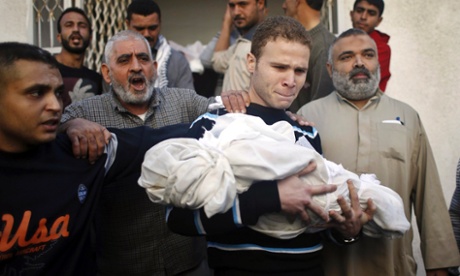
Omar al-Masharawi, son of a BBC cameraman in Gaza, murdered by Zionist bombs.
Israel has launched yet another attack against the Gaza Strip, striking the densely-populated and besieged territory from the air and the sea, and as usual the United States, Canada and Britain have lined up in support of Zionist terrorism.
Speaking from a system poisoned by the Israel lobby, State Department spokesman Mark Toner says: “There is no justification for the violence that Hamas and other terrorist organizations are employing against the people of Israel. We call on those responsible to stop these cowardly acts immediately. We support Israel’s right to defend itself.” Confusing Zionist settlers for ‘the Jewish people’, confusing perpetrator with victim, and then parroting outmoded ‘war on terror’ propaganda, Canadian foreign minister John Baird vomits the following: “Far too often, the Jewish people find themselves on the front lines in the struggle against terrorism, the great struggle of our generation.” Then Britain’s foreign minister William Hague makes the following immoral and illogical comment: “I utterly condemn rocket attacks from Gaza into southern Israel by Hamas and other armed groups. This creates an intolerable situation for Israeli civilians in southern Israel, who have the right to live without fear of attack from Gaza.”
Two things must be said. First, this round of escalation, like the 2008/2009 slaughter, was started by Israel. It is totally mendacious to pretend otherwise. The Hamas government in Gaza refrained from stopping other groups from firing missiles as a result of Israel’s murder of a disabled man and of a twelve-year-old boy in Gaza. Here is a timeline of events. Second, the settlers of southern Israel do not have the right to live without fear of attack while the original inhabitants of ‘southern Israel’ are herded into refugee camps. Eighty percent of people in Gaza are descendants of refugees ethnically cleansed from their villages and towns by Zionist militias in 1947 and 1948.
Outposts
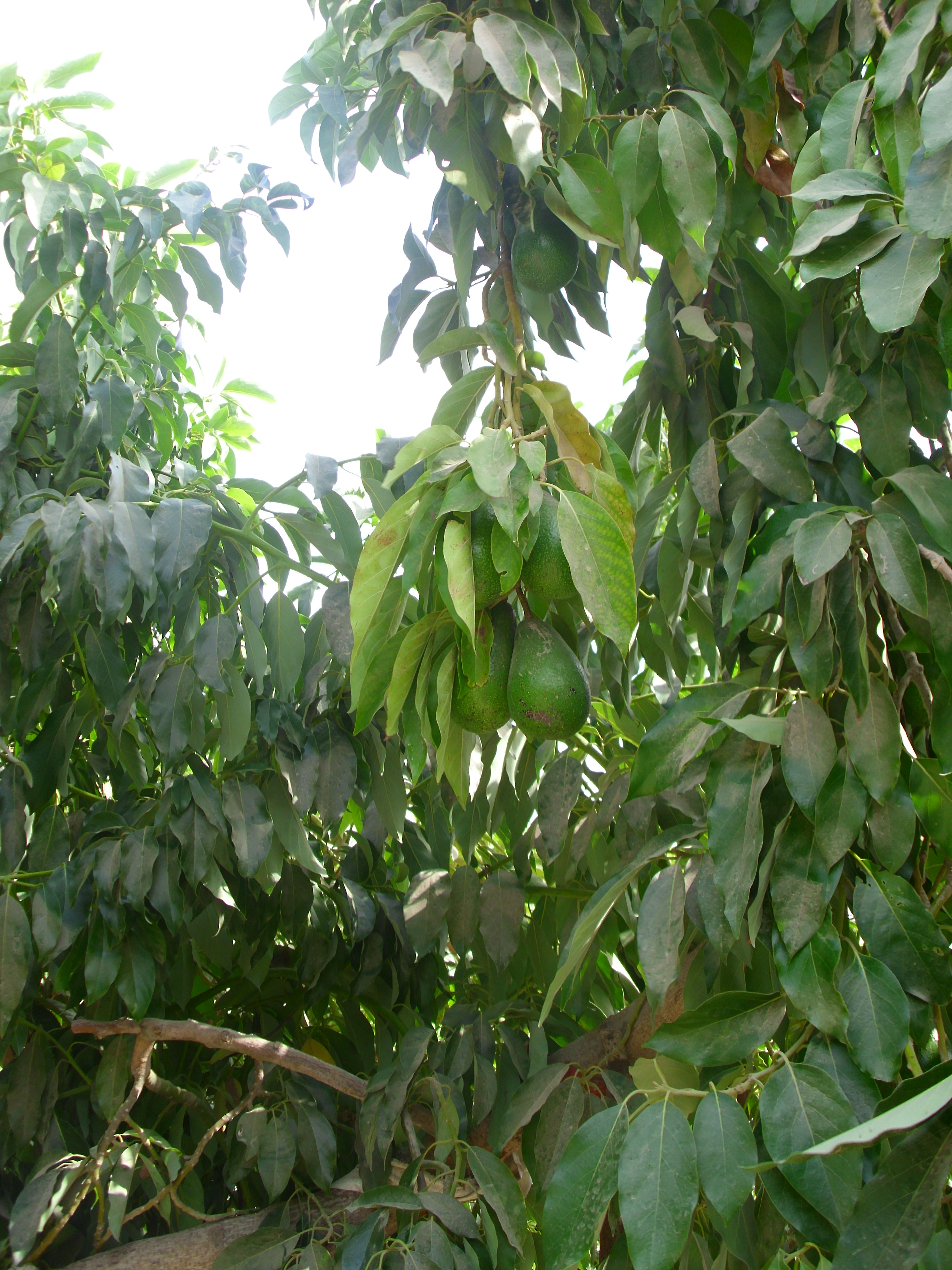
avocadoes
Whatever the Western media calls them, the illegal Jewish settlements on the West Bank are very far from being outposts. They are connected to Jerusalem and Tel Aviv by fast, Jews-only motorways. Their villas have swimming pools and lawns (a settler is allocated eight times more water than a Palestinian). Even the most recent and farflung of settlements are tooled-up enough to intimidate the Arabs on whose land they encroach.
It’s the Palestinian villages which feel like outposts, although some have been settled for thousands of years. Even when they’re close to major cities they are vulnerable, intermittently cut-off, and surrounded by wolves (or boars).
An example is Iraq Burin, a mountain-top village just a kilometre from Nablus but one trapped behind a checkpoint. Not only are the villagers unable to access city shops and services, they face violent harrassment from soldiers and armed men from the nearby Bracha settlement.
There’s an unarmed ‘popular’ struggle against land confiscation being waged here. It involves weekly demonstrations which are met by tear gas and sometimes bullets (in March two teenagers were killed). Similar protests are held in villages all over the West Bank, most famously in Bil’in, Nil’in and Budrus.
Mountain of Fire
With different pictures, and very slightly edited, this was published at al-Jazeera’s website.
 Nablus is built over deep wells on the narrow valley floor between Mount Jarizeem and Mount Aybaal. Its alleyways brim with ground coffee and spices, abrupt wafts of aniseed, plus honied tobacco bubbling from the argilehs, meat vaporising on the grills, traffic fumes, baking odours, pavement rubbish, and dust. By day there’s plenty of friendly Arab noise; by night barks and cock crows take over. Although this is a city of over 130,000 people, everybody seems to know everybody else. Deeper than that, there’s a connecting air of solidarity.
The intricate Old City, and the view of the ochre mountainside, reminded me of Damascus. In fact, Nablus used to be known as Little Damascus. Before Messrs. Sykes, Picot and Balfour chopped up the world, there was a trade route from Nablus (the West Bank) via Irbid (Jordan) to Damascus (Syria). Nabulsis and Damascenes intermarried. In Syria today the famous sweet knafeh is known simply as nabulsiyeh, the Nablus thing.
Nablus is also famed for its delicious olive oil soap. Although local bedazzlement by ‘modern’ products and (mainly) the obstructions of Israeli occupation have shrunk the industry, factories still operate in the Old City, sourcing their oil from the semi-besieged villages in the nearby hills.
These days life is a little easier than it has been. Palestinians can get to Ramallah fairly fast. They can’t get to Jerusalem (or Gaza, or Haifa) but they can benefit from some of the EU/ PA cash sloshing around if they’re lucky. They can even drive up to the Sama Nablus viewpoint and drink tea without being shot at from the military base above.
Yom Kippur
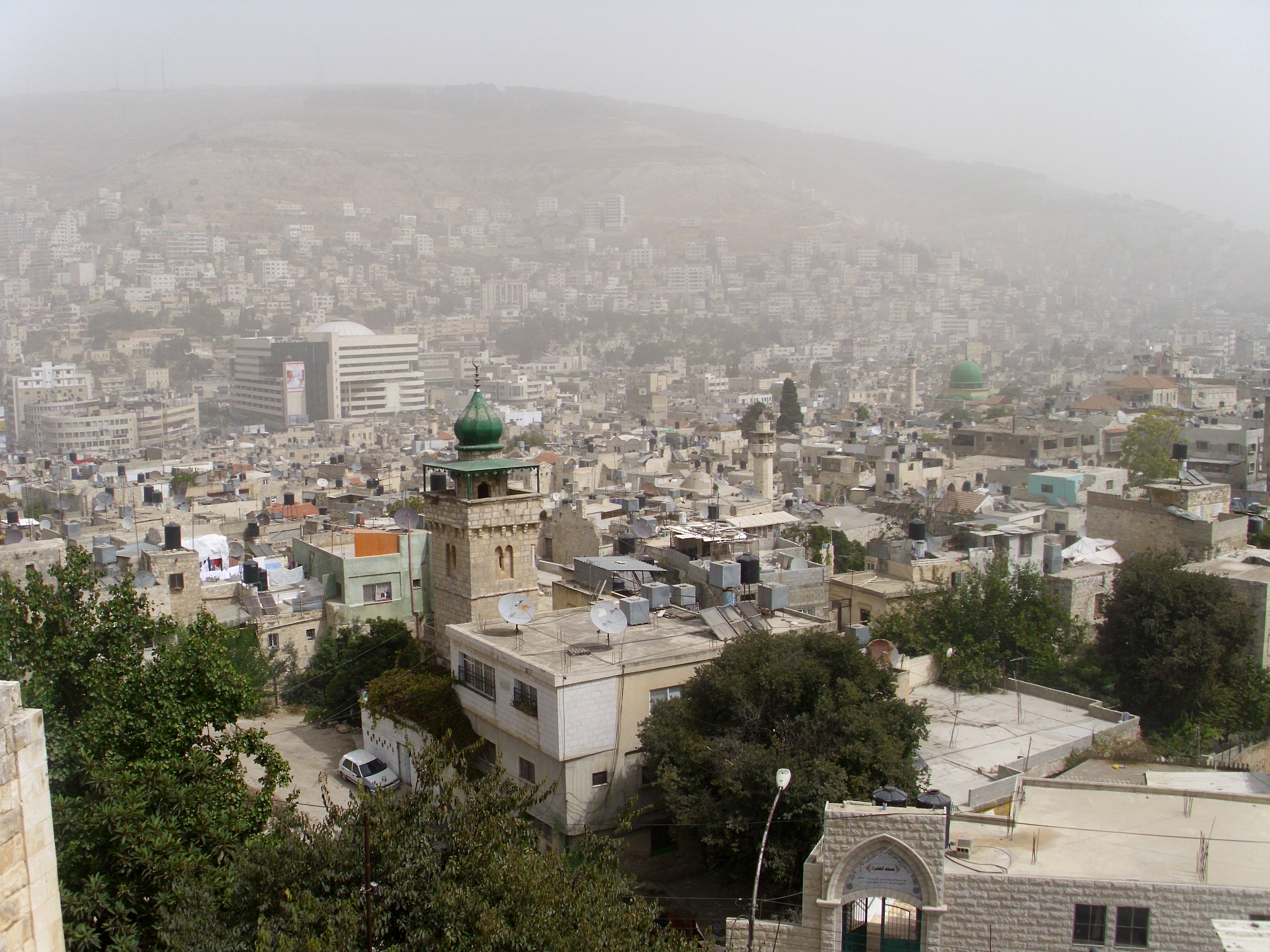
Summer Mist in Nablus
“Have you visited Afghanistan? Pakistan? Yemen? Do you have a weapon? Do you have a credit card? Give us your email address. Do you know anyone in Israel? Do you know anyone in Jordan? What is your novel about? What did you do yesterday?”
It only took an hour and a half to get through the border. They were closing early because it was Yom Kippur, yowm al-ghafran in Arabic, the Day of Atonement.
The driver who met me said he couldn’t go to Nablus, not now, it was getting too late, because the car had Israeli plates and settlers were throwing stones, he could take me to Ramallah instead, although it was further.
“Won’t we be alright with Israeli plates?”
“We need Palestinian plates. They’re throwing stones at Israeli cars because they don’t want Jews driving on the holiday.”
So we went to Ramallah, south through the West Bank. We drove down the confiscated Jordan valley. A couple of memorials to settlers shot here during the Second Intifada were set up at the roadside. To our east, closed military zones and then the hills of Jordan rising. To the west, ochre desert mountains and hardly any habitation.
Sun Deprived in Palestine
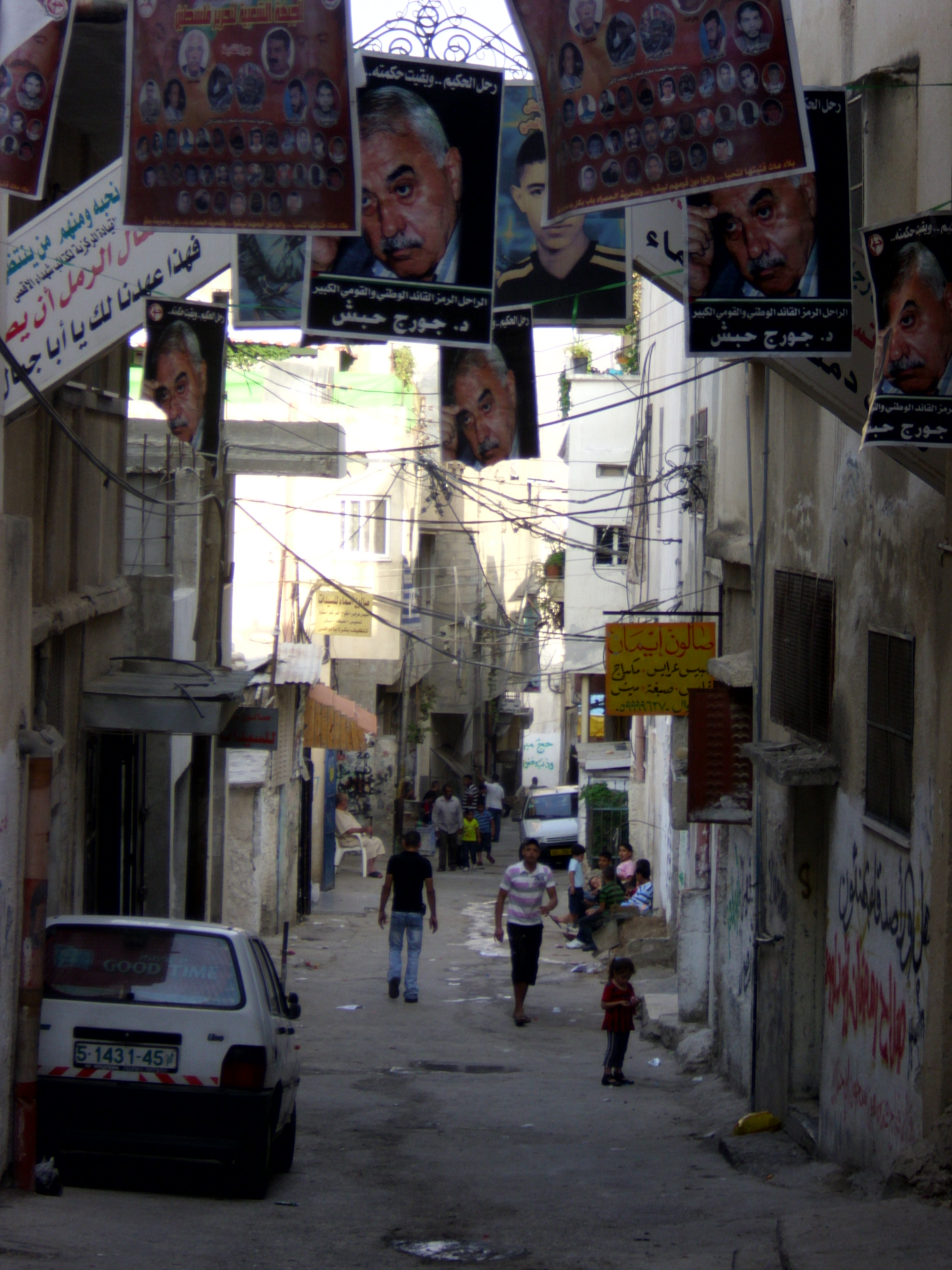
The PFLP's George Habash pulls an eyebrow
Balata Camp started as tents in the fifties, grew cement blocks in the sixties, installed sewage and water in the seventies, and has stretched ever upwards until now. The camp boasts the densest population in the West Bank: at least 25,000 people in a couple of square kilometres (the inhabitants claim up to 40,000). The buildings are so tightly packed that the kids forced out to play in the shadowed alleyways suffer from Vitamin D deficiency, sun deprivation. There are eight to ten people to a residential room. In school there are 50 children to a class. UNRWA schools and the graveyard take up most space. Most of the graves are those of people killed in the streets of the camp.
It’s a remarkably friendly place, but also discomfiting. Many of the young are prematurely aged and many of the old seem broken. There’s a higher proportion of wheelchairs than anywhere else I’ve been. In a comparatively wide street I found boys playing table football in front of a memorial to their murdered playmate. They laughed and screamed.
An Apartheid Distinction
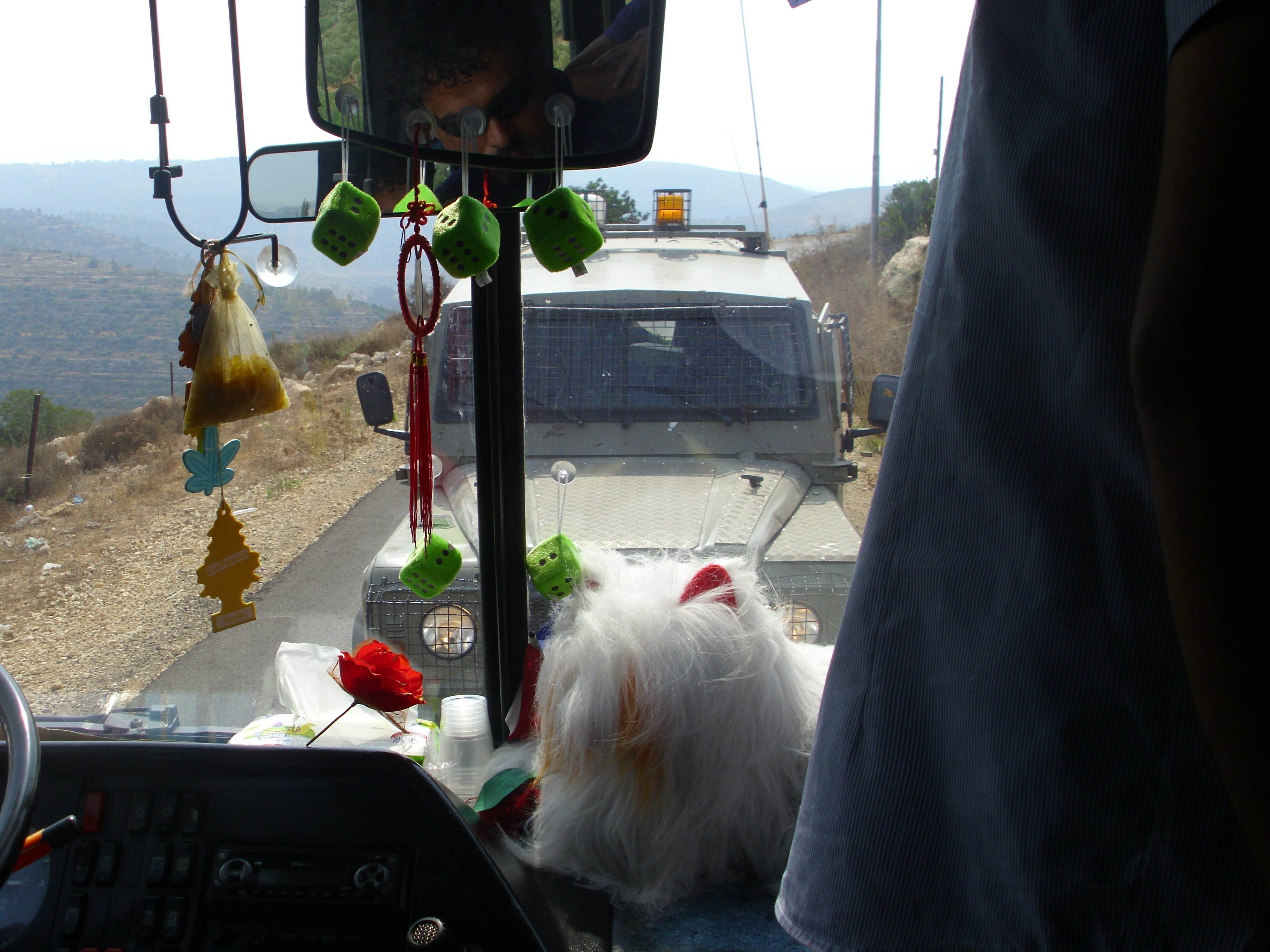 I was at the border, a British national with an Arab name on my way into Palestine-Israel. The Jordanians were suspicious but not at all intimidating. It felt more like an unexpected cup of tea with an avuncular officer (which it was) than an interrogation. I learnt about Abu Tariq’s children and he learned about my reasons for crossing, my travels, and my career. He noted everything down before shaking my hand.
The bus through no-man’s land was full of Palestinian-Israelis, descendants of the remnant not driven out in 1948 – those the Israelis call ‘Arab-Israelis’, as if they were recent immigrants from Kuwait or Algeria. The sun bubbled the box of our bus. It was airless and sweaty inside.
Israeli border control is staffed by teenaged girls in low-slung military trousers backed up by men with sunglasses and enormous guns. The girls clocked my (Arabic) name, and my bags were searched. Then I was closely questioned. Then I had to wait. Fortunately it was Yom Kippur: they let me through an hour later when they closed up early.
Then by car through the the ethnically-cleansed city of Beesan (signposted in Arabic script with the Hebrew name – Beit She’an), and into the West Bank. The roadsigns here are very democratically scripted in Hebrew, English and Arabic, except for those in Hebrew only. But Palestinian towns and villages are never posted. A visitor travelling a Jews-only road wouldn’t realise that such places exist. Jerusalem is written in Arabic as “Urushaleem,” and then between brackets “al-Quds”, which is the actual, ancient and contemporary Arab name. In such ways the attempt is made to occupy the land’s abstract Arab qualities, to control history and memory, the past as well as the present and future.
Things that Happened While I was There
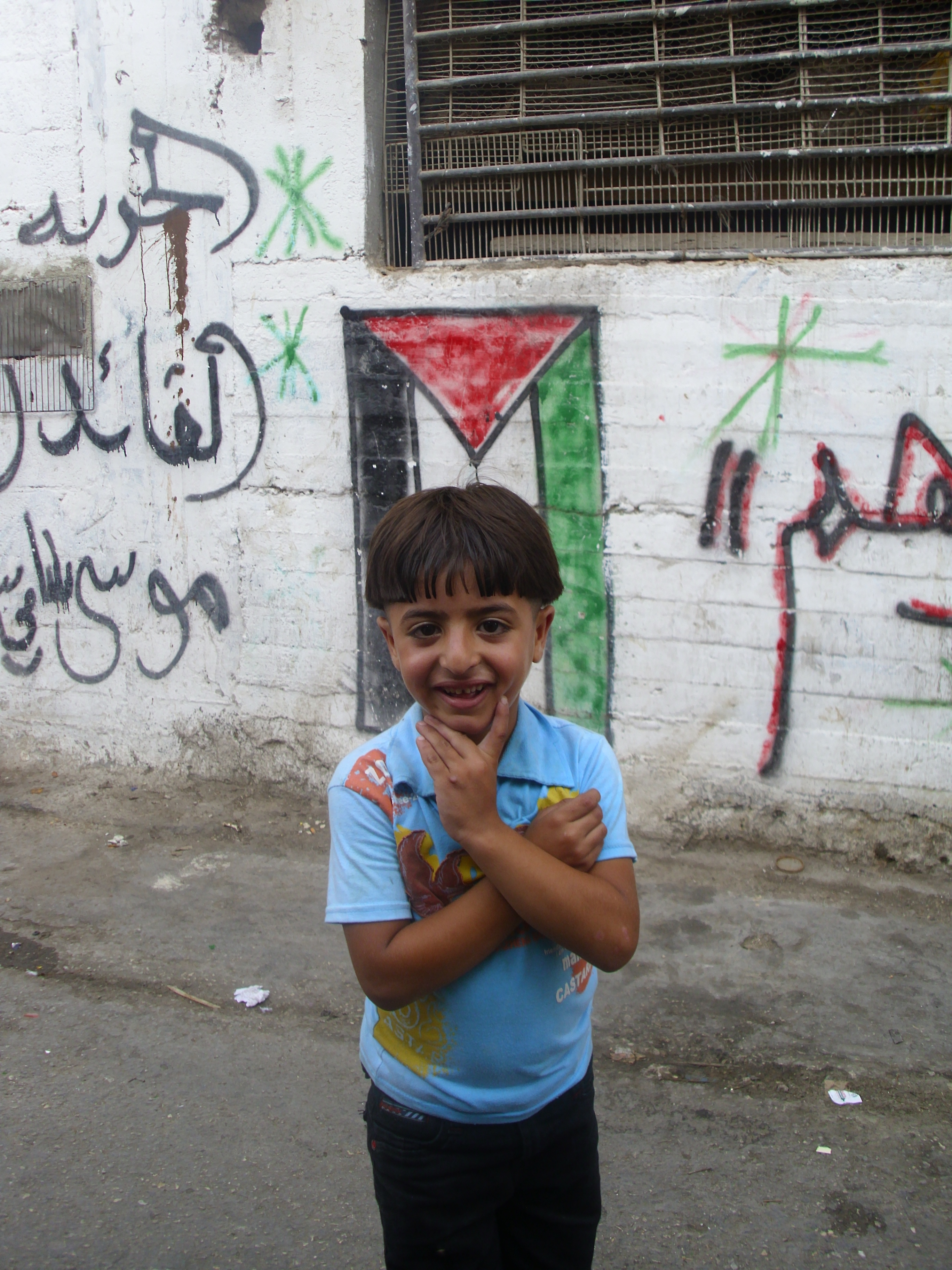 A large demonstration was held in central Nablus calling for the release of the thousands of prisoners held in the Israeli gulag.
Israeli forces shelled Gaza.
The Palestinian Authority arrested 53 men in overnight raids.
I passed a settlement built during Netanyahu’s ten-month settlement freeze.
Two settlers were shot in the legs by Palestinian fighters while driving near Hebron.
PA president Mahmoud Abbas let slip that he might not pull out of peace talks when the settlement freeze lapses.
The Palestinian Authority arrested 20 men in overnight raids.
Dana wrote a story about a girl raped by a relative.
Hamas forces closed down a Gaza restaurant because a woman had publicly smoked the argileh there.
Prisoners
During the journey from Ramallah to Nablus I got talking to the middle-aged man sitting beside me. It turned out he’d been in prison for five years, cramped in a cockroach-run tent with tens of other men. At the kiosk at the end of my street I got talking to a white-haired young man. A few nights earlier the two owners of the kiosk had been taken away in an Israeli jeep. The white-haired man’s brother had been killed in 2007. He himself had done eleven years inside. I got talking to a writing student whose brother was constantly detained. A Palestinian friend of mine who now lives outside did ten years in Israeli jails. Two and a half of them were underground. Almost every male I met in Nablus had been imprisoned at some point. There are at least 8500 prisoners currently inside. But my friend tells me he felt more free inside the small prison than he did inside the larger. So here’s the statistic that counts: in all the territories controlled by the apartheid state of Israel there are 5,300,000 Palestinian prisoners. The other half of the Palestinian people is locked outside in exile. Here’s Saed Abu-Hijleh describing temporary detention.


 Qunfuz