Ali Abunimah on Obama’s Lecture

Palestinian Obama. Zan Studio
Personally, I found it unpleasant to see Obama lecturing the Arabs, and the handpicked audience clapping as ecstatically as trained apes whenever the President (rather like Napoleon in Cairo) made an Islamic allusion. No matter that he said ‘hajib’ intead of ‘hijab’. Most depressingly, Obama’s address was heavily influenced by the Bernard Lewis school of Orientalism – Arab and Muslim anger is caused by the cultural trauma of modernity and a “self-defeating focus on the past,” rather than by very present realities, such as the ethnic cleansing of Palestine, the occupations of Iraq and Afghanistan, the destabilisation of Pakistan and Somalia, the unwelcome military bases in the Muslim world, and the support of dictatorial regimes such as Mubarak’s. Obama’s assumptions repeated falsities, such as the notion that Arab regimes focus on Palestine to distract the people from their own failings. In fact the Arab regimes do everything they can to take the focus off Palestine, as the Palestinian tragedy is the key symbol of the bankruptcy of the client regimes. And Obama mocked violent resistance while not saying a word about the 1400 just killed in Gaza or the million slaughtered in Iraq.
The best response I’ve seen to the speech is by Ali Abunimah, who studies Obama’s phrases well: “Suffered in pursuit of a homeland? The pain of dislocation? They already had a homeland. They suffered from being ethnically cleansed and dispossessed of it and prevented from returning on the grounds that they are from the wrong ethno-national group. Why is that still so hard to say?” Ali goes on:
Once you strip away the mujamalat – the courtesies exchanged between guest and host – the substance of President Obama’s speech in Cairo indicates there is likely to be little real change in US policy. It is not necessary to divine Obama’s intentions – he may be utterly sincere and I believe he is. It is his analysis and prescriptions that in most regards maintain flawed American policies intact.
Visit Palestine
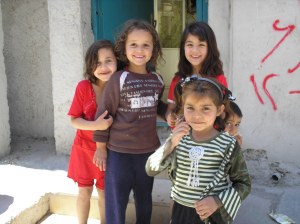
Click here to see my photo album of people.
Click here to see my photo album of walls.
Click here to see my photo album of al-Khalil/ Hebron.
Click here to see my photo album of Ramallah, Bethlehem and Jerusalem.
Please read the captions.
I have just returned from a physically, mentally and emotionally exhausting week in Palestine. I was a participant in Palfest 09, the second Palestine Festival of Literature. It was a great honour to be in the company of writers like Michael Palin and Debborah Moggach, and Claire Messud, MG Vassanji, Abdulrazak Gurnah, Ahdaf Soueif and Jamal Mahjoub, the lawyer for Guantanamo Bay prisoners Ahmad Ghappour, Palestinian poets Suheir Hammad and Nathalie Handal, and all the others. I’ll do a post at some point on everybody there. It was an even greater honour to meet Palestinian academics, students, and people on the streets and in the camps, to witness their incredible resilience and creative intelligence. Something fearless in them slipped into me, and gave me optimism. A people like this can not be kept down indefinitely.
Muslim Writer
Something for the Muslim Writers Awards:
Am I a Muslim writer? American Jews and Russian Christians are what I read when I write. I like Syrian poets and Egyptian novelists too, but it would be difficult to argue that Nizar Qabbani is more ‘Muslim’ than he is ‘Arab’ or ‘Modernist’.
Is Islam a defining part of my personality? To be honest, it depends on the year. And what determines Muslim belonging anyway? Geography? Ideology? Linguistics? Surely not skin colour. Should Muslim writing be halal, and avoid beer and heresy? Should it intend to prevent vice and promote virtue? – if so, late Tolstoy was a Muslim writer.
It happens that my novel discusses tawheed, and that its most balanced character is a prayerful Muslim who wears hijab. I used the ideas and characters I found before me. But if I set my next novel amongst anarchist philosophers in the Ukraine, will I still be doing Muslim writing? It’s problematic, certainly.
I suppose if you can have Black writing and Gay writing and London writing you can have Muslim writing too. The label, like any other, is limiting if it’s used as a box, but liberating if we use it as a springboard. The point is, that as Muslims in Britain, many fictions are being written about us. Many are presented as fact. The Muslim label already looms large in the cultural imagination, and is skilfully brought into play by everyone from Martin Amis to Madonna. So we should write back. We – and I mean nothing more definite by ‘we’ than those who share a few key Islamic references, who don’t see Islam as foreign – have a million tales to tell. In Britain we are immigrants and natives, black and white and brown, rich and poor, taraweeh-praying and whisky-swilling, and mixtures of the above. For us to be heard in our variety is important, because heard voices empower. Voices heard through novels also work against ignorance, because novels, unlike the BBC, humanise. They deal in characters instead of abstractions, and raise questions, and so provide the human texture which the most well-intentioned news media cannot.
As Muslims in a non-Muslim or even Islamophobic society, I think we have something especially strong to contribute. We possess not only a fresh stock of stories and a range of new cultural forms, but also the enriched perspective and impatience with assumption that otherness and in-betweenness give you. To see all lands as foreign, through the eyes of a musafir – there is something in this which Islam and novel-writing share.
Syria’s Tolstoy
A book review for the Guardian:
 Syria, more than most, is a land of stories and storytellers. The farmers and shopkeepers describe early Islamic battles or episodes from the Crusades as if they’d attended in person. A gathering of friends is quickly elevated into group performance of jokes, laments, myths, and conspiracies. Even the Syrians’ surnames suggest stories: there are families called The-Milk’s-Boiled, Sip-The-Yoghurt, and Undone-Belt. “The deeper you swim into our stories,” a village rhetorician once told me, “the more you understand that they have no floor.”
Yet Syria is better known for its poets, and its TV dramas, than for its novelists. Egypt, with its unending metropolis, is the home of the Arabic novel, and Egypt produced the Arabs’ master of fiction, Naguib Mahfouz. But a flame equally bright now burns from Damascus, via Germany. Here is the Great Syrian Novel, and its author Rafik Schami.
In “The Dark Side of Love” Schami exploits all the resources of the classic realist novel and then goes a little further, forging a new form out of Syrian orality. His basic unit is not chapter or paragraph, but story; a thousand bejewelled anecdotes and tales are buried here, ready to spring, but each is sculpted with such dazzling surety into the whole that reading the book is always compulsive. In its final, self-exposing passage, Schami compares his method to mosaic work, in which every shiny object is a beauty of itself, yet which in combination, at a distance, reveal a still greater beauty. The novel is even Tolstoyan in its marrying of the personal, social and political spheres, of private with national life.
Writer Talk
Notes for a talk to the Dumfries Writers Group tonight. It’s pretty narcissistic, but narcissism is what I do. I’ll also talk about the practicalities of finding an agent and a publisher, and about blogging.
Where does the urge to write come from?
It comes from the fear of death. From where all human effort beyond eating comes from. Maybe eating too. But the fear of death is only one way to say it. Writing is the attempt to control what can’t be controlled, to impose pattern on confusion, to battle time by recording it, to immortalise thought and sensation, and so to make them sacred. A vain but very human enterprise.
The film director Werner Herzog said, “I believe you can discover a very deep, ecstatic truth by fabricating.” I’m not sure what this means, but I’m sure I agree with it.
Also, for me, fabrication is a channel for passion which might otherwise express itself as anger.
The Gulf Between Us
Another book review, fairly horribly edited by the Guardian. Here’s the unedited version:
The Arab world’s bestselling novel of recent years has been Alaa Al Aswany’s “Yacoubian Building”, which features a gay journalist, a corrupt minister, and sexual abuse in police cells. The very grown-up film of the book has reached a huge audience. Arabic novels on sale in the Gulf discuss taboos from pre-marital romance to sectarian conflict and slavery. Meanwhile, Al-Jazeera broadcasts from Qatar, offering the Arabs a range of political debate which shames the BBC, and which would have been unthinkable twenty years ago. Satellite and the internet have effectively finished the Arab age of censorship. As for books in English, the ‘Arab World’ sections of many Gulf bookshops could be renamed ‘Harem Fantasy for Whites’, concentrating disproportionately on more or less fraudulent revelations of the “Princess” variety. So long as it sells, very nearly anything goes.
Given the new level of official Arab tolerance, it was surprising to hear that Geraldine Bedell’s “The Gulf Between Us”, a romantic comedy narrated by a middle-aged Englishwoman, had been banned from the International Festival of Literature in Dubai, and this because the novel contains a ‘gay shaikh’. Both author and publisher cried censorship, plunging the festival – Dubai’s first – into a swamp of bad publicity. Margaret Atwood cancelled her appearance.
A few days after the damage had been done, the truth came out: the book hadn’t been banned. Like many others, it was not selected in the first place. Maragaret Atwood regretted her cancellation.
Stranger to History
A book review of Aatish Taseer’s “Stranger to History: A Son’s Journey Through Islamic Lands” for the Guardian.
Aatish Taseer grew up in secular, pluralist India. His early influences included his mother’s Sikhism, a Christian boarding school, and He-Man cartoons. Nagging behind this cultural abundance, however, was an absence: of his estranged father, the Pakistani politician Salmaan Taseer.
The best of “Stranger to History” is the “Son’s Journey” of the subtitle: the movement towards – and away from – his father’s world. Taseer describes the embarrassment, frustration and occasional joy of meeting his father and half-siblings, and of approaching a cultural and national identity which painfully excludes him. Alternating with this story is a more generalised journey into Islam, from the Leeds suburb which produced the 7/7 bombers, through Istanbul, Damascus and Mecca, to Iran and Pakistan. On the way Taseer observes the ‘cartoon riots’, is interrogated by Iranian security officials, and watches the response in his father’s Lahore home to Benazir Bhutto’s assassination. The writing is elegant and fluent throughout, the characters skillfully drawn.
Four Solutions
artist Marc Rudin
This was published at The Palestine Chronicle.
I do not hate (Israelis) for being Jewish or Israeli but because of what they have done to us. Because of the acts of occupation. It is difficult to forget what was done to us. But if the reason for the hate will not exist, everything is possible. But if the reason remains, it is impossible to love. First we must convince in general and in principle that we have been wronged, then we can talk about 67 or 48. You still do not recognize that we have rights. The first condition for change is recognition of the injustice we suffered.”
– Said Sayyam, martyred in Gaza January 2009, to Ha’aretz, November 1995.
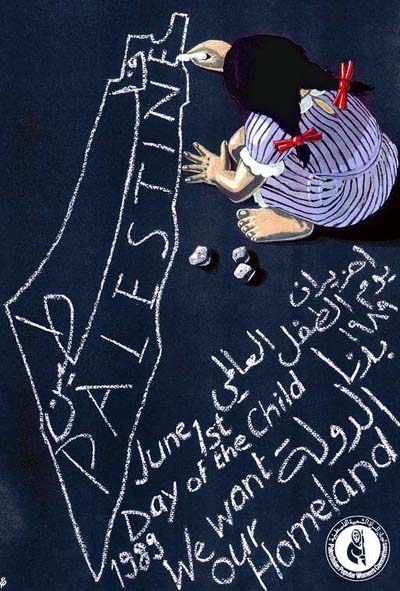
All Palestine is controlled by Zionism. The Palestinians (not counting the millions in exile) are half the population of Israel-Palestine, but they are victims of varying degrees of apartheid. The Jewish state has already lost its Jewish majority, and is more hated by the Arab peoples than at any time in its brief, violent history. Let’s take it as given that continuation of the present situation is untenable for everyone concerned. We need a solution.
Sectarian Rabble-Rousing
Al-Ahram Weekly, the English language twin of the Arabic daily, is an Egyptian state organ. The Weekly has a broader range of opinion than the tame daily, and does often contain interesting articles. The great Palestinian thinker Azmi Bishara, for instance, can be found in the Weekly. Unfortunately, however, Egyptian regime nonsense concerning the Persian-Shia ‘threat’ is also fed into the mix. This article by Galal Nassar is a sad example. Below is my response to his piece:
Dear Mr Nassar
I am not a Shia Muslim. If I were, I would not be a supporter of the velayat-e-faqih system. I agree with you entirely that the velayat-e-faqih concept is a perversion of traditional Shia ideas. I also agree that velayat-e-faqih leads to authoritarian government, to the detriment of Iranian society.
If it is authoritarianism that bothers you, however, I wonder why you single out Iran, which is at least a semi-democracy. The dictatorship in Egypt seems a much better target, especially after the mass arrests of recent weeks. Another good target is the barbaric dictatorship in Saudi Arabia. As a Sunni Muslim, I am outraged by the Wahhabi perversion of Islam that holds sway in that country.
After the Massacre 1 – Palestine and Israel
A version of this was published at The Electronic Intifada
artist Marc Rudin
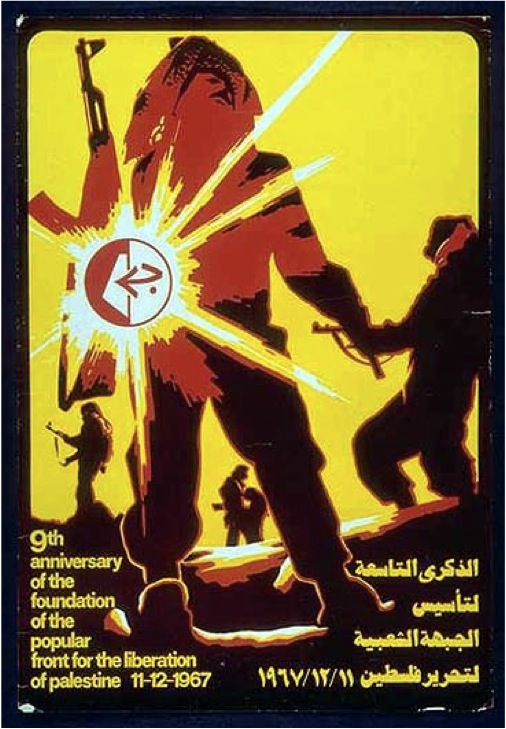
Hamas isn’t Hizbullah, and Gaza isn’t Lebanon. The resistance in Gaza – which includes leftist and nationalist as well as Islamist forces – doesn’t have mountains to fight in. It has no strategic depth. It doesn’t have Syria behind it to keep supply lines open; instead it has Mubarak’s goons and Israel’s wall. Lebanese civilians can flee north and east; the repeat-refugees of Gaza have no escape. The Lebanese have their farms, and supplies from outside; Gaza has been under total siege for years. What else? Hizbullah has remarkable discipline. It is surely the best-trained, best-organised army in the region, perhaps in the world (I’m not talking of weapons, but of men and women). Hamas, on the other hand, though it has made great strides, is still undisciplined. Crucially, Hizbullah has air-tight intelligence control in Lebanon, while Gaza contains collaborators like maggots in a corpse.
But Hamas is still standing. On the rare occasions when Israel actually fought – rather than just called in air strikes – its soldiers reported “ferocious” resistance. Hamas withstood 22 days of the most barbaric bombing Zionism has yet stooped to, and did not surrender, and continues to fire rockets.
Letters
I’ve recently written to Gordon Brown, David Cameron and Khaled Mahmood MP to complain about their positions on the massacre in occupied Palestine. I’ve also written to Gerald Kaufman and Nick Clegg, leader of the Liberal Democrats, to praise their calls for an arms embargo on the apartheid state. And I walked into the office of my local MP, Russell Brown, and spoke to Mr Brown’s assistant. A few days later I received a letter from Mr Brown which repeats the usual rubbish about ‘peace’ and the need to disarm the resistance so the oppressor can sleep more soundly at night. At least he bothered to send me a letter. I received responses from Brown, Cameron, Clegg and Kaufman too, but none from Khaled Mahmood. Mr Mahmood was quoted by the Guardian as “dismissing” calls for sanctions and an arms embargo. Mahmood is a Birmingham MP who no doubt receives a lot of votes because he has a Muslim name. Not only is he betraying his Muslim voters who would like to see their representatives develop a peaceful strategy of resisting the murderous British-Zionist alliance, he isn’t even capable of replying promptly to letters.
Here’s my response to Russell Brown’s letter. I won’t publish his letter because I don’t have permission and because it’s on paper, but I quote some of it. You can imagine the rest – it’s the standard New Labour magical incantation.
Dear Mr Brown
Thank you for your letter in response to my conversation with Cameron concerning the situation in occupied Palestine.
You write: “It is not difficult to understand the frustration, fear and anger of those Israelis who are the targets of Hamas rocket attacks, and the pressure on Israel’s democratic government to take action.” You then state the government position, and that of the European Union Presidency, that Israel’s use of force is “disproportionate.”
Israel Must Lose
I was one of 300 writers and academics who signed this excellent letter, which was published in the Guardian. The letter was an informal effort over only 48 hours. More writers and academics are signing at Znet.
The massacres in Gaza are the latest phase of a war that Israel has been waging against the people of Palestine for more than 60 years. The goal of this war has never changed: to use overwhelming military power to eradicate the Palestinians as a political force, one capable of resisting Israel’s ongoing appropriation of their land and resources.
Israel’s war against the Palestinians has turned Gaza and the West Bank into a pair of gigantic political prisons. There is nothing symmetrical about this war in terms of principles, tactics or consequences. Israel is responsible for launching and intensifying it, and for ending the most recent lull in hostilities.
Against ‘Peace’ and ‘Moderation’
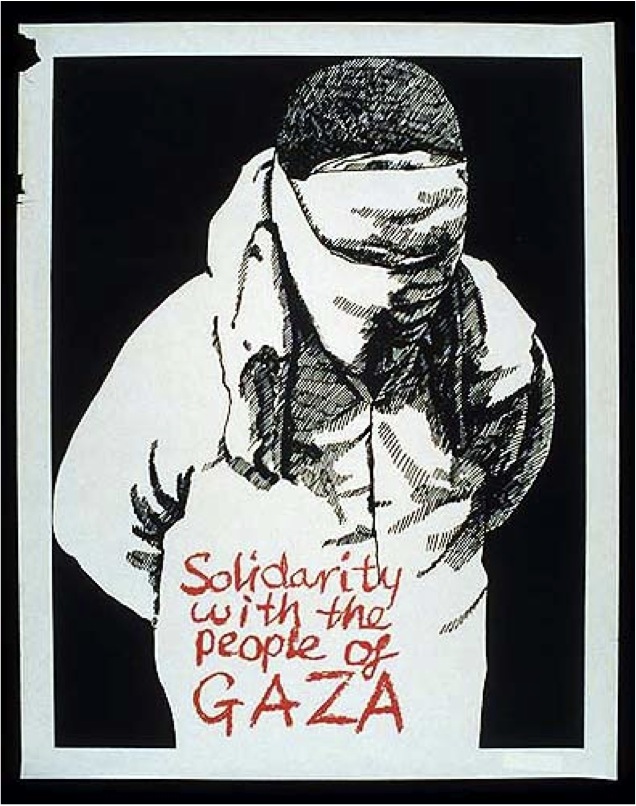 The numbers of the dead don’t mean much any more. It was round about the five hundred mark when I realised the impact of death on my mind was lightening. There are pictures on the internet – burning half bodies, a head and torso screaming, corpses spilt in a marketplace like unruly apples, all the tens and tens of babies and children turned to outraged dust – but how many pictures can you keep in your heart? How much anguish can you feel? Enough anguish to mourn 500 human beings? And of what quality can your anguish be? Can it be as intense as the anguish a bystander to the murder would feel? As intense as that of a friend of a victim, or of a father? What about the fathers who have seen all their children burn?
I remember the days when I was outraged if ten were killed in one go. Ah, happy days! Ten in one go would be good. But of course, this is what the enemy wants: the enemy wants us to value Arab life as little as it does. It wants us to stay in our numbness, to descend deeper in. It wants us to forget.
Misha’al (and Clegg)
The media love to ‘balance’ the occupied with the occupier. But if there was really balance, Khalid Misha’al, the leader of Hamas, would have as much airtime as Livni, Barak and Olmert. I congratulate the Guardian for publishing this excellent article by Misha’al. I republish it here because everybody should read it, and because I agree with it.
I do so with reservations, however. Although I support Hamas’s resistance, and although I think the Palestinians should be represented by the people they voted for and not by collaborators, I believe Hamas to be a flawed organisation. It is anti-Semitic, for a start; there’s no point pretending otherwise. It’s understandable that a population brutalised in the name of the Jews might latch on to ready-made racist generalisations about the Jews, but quoting the Protocols of the Elders of Zion in the Hamas constitution is not only morally wrong, but also stupid. It hampers clear analysis of the situation, and of the enemy. I wrote about that here: http://qunfuz.blogspot.com/2008/03/what-hamas-should-do.html
Dear Prime Minister
Dear Prime Minister
I am very pleased that you have been calling for an immediate ceasefire in Israel-Palestine. This marks a clear difference from the statements not only of President Bush but also of Tony Blair during the 2006 assault on Lebanon. Your stand shows some degree of British independence, and I thank you for it.
I am much less pleased to read this Downing Street statement: “We are working urgently with international partners to address the underlying causes of the conflict, including trafficking of arms into Gaza. Moderation must prevail.”


 Qunfuz