Disappearing Hope
This article was first published at the excellent Syrian platform Al Jumhuriya.
On 17 June, Syrian content creator Hassan Akkad was arrested in a Damascus café by armed men, as if he were an immediate danger to the public. In reality, he was only an irritant to the few powerful people he was holding to account in his YouTube videos for failing to pay what they’d promised to rebuilding campaigns. His arrest made big waves in Syrian society – however, other less high-profile arrests have not gained as much attention.
In Akkad’s case, as in others, the authorities are maintaining the Assad-era Law No. 20 of 2022, a Cybercrime Law which criminalises ‘defamation’ and ‘slander’, and using it against Syrians who criticise the powerful or wealthy. Hassan Akkad was accused of defamation by Mousa al-Omar, a pro-government media celebrity, and by companies controlled by Muhammad Hamsho, a former financier of the Assad regime who has come to an agreement with the new government.
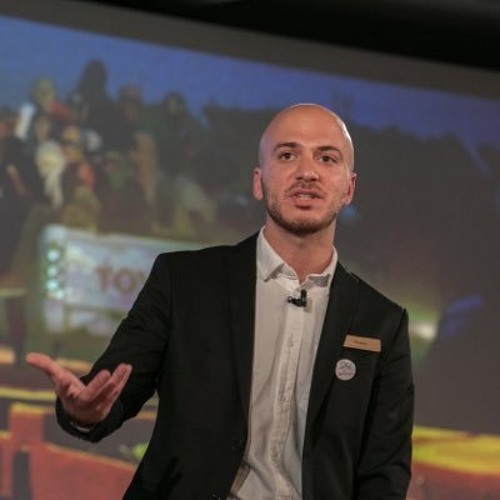
Fortunately for him, Hassan Akkad is a well-known and respected figure, and international journalists were among those who joined a wide range of Syrians in publicly objecting to his detention. This pressure led to his release after four days. Yet, rather than ending the episode by repealing, suspending or reforming the Cybercrime Law as some had demanded, the Ministry of Information actually increased restrictions. Six new prohibited categories include ‘violations of public decency’ and ‘attacks on institutional reputations.’
These categories are wide open to interpretation, and they will have a chilling effect on discourse: they signal that any online criticism of a state institution or official could potentially be considered defamation. According to Fadel Abdulghany of the Syrian Network for Human Rights, the “mere existence” of these “vague penal texts” and “the possibility of their use is enough to drive individuals, journalists, and content creators into a pre-emptive silence, in a way that threatens the very possibility that a free public space might arise during the transitional phase.”
Akkad was by no means the first to be arrested on such questionable grounds. On 2 June, just a couple of weeks earlier, Yasser Abbas and Ibrahim Sheikh al-Shabab were detained for ‘defamation’ of authorities including Damascus Governor Maher al-Idlibi. Their actual ‘crime’ had been to campaign openly and peacefully against Marota City, an Assad-era luxury construction project in western Damascus that has entailed mass evictions of poor residents. As with Akkad, community pressure won the men’s rapid release. The authorities, however, did not drop charges against them; they will be tried in September.
A year before, in May 2025, the activist Ahmad Fakhr al-Din was arrested in Nabk for similarly spurious reasons. Fakhr al-Din’s Facebook page “Behind the Scenes in Nabk” had posted a video showing General Security operatives engaged in abuses. Though documenting abuses and holding officials to account are basic activities of the citizen journalism that proliferated during the now-officially-celebrated revolution, Fakhr al-Din’s truth-telling was considered to be “undermining state authority.” Once again, the victim’s popularity helped him. Locals immediately organized protests, people made formal complaints and expressed outrage on social media, and Fakhr al-Din was released within a few days.
But not everybody can count on such levels of public support – or even if they can, very powerful countervailing interests may cancel the impact of that support. The Emirati citizen Jasim al-Shamsi is a case in point. One of 133 Emirati intellectuals and public figures who signed a 2011 petition calling for democratic reforms in the UAE, al-Shamsi soon had to flee his home to avoid arrest. In January 2013 he and others were tried in absentia, charged with setting up a secret subversive organization. In December 2023, he was tried again on counter-terrorism charges, and this time sentenced to life imprisonment.
At that point, al-Shamsi was living in Turkey with his Syrian wife Raghda al-Kiwan, but when Syria was liberated from the Assad regime, the couple relocated to Syria. This was a logical move, given al-Shamsi’s long-term support for the Syrian Revolution, but not one that provided security.
On 6 November 2025, al-Shamsi was arrested at a checkpoint in the Damascus suburbs and transferred to the Political Security Directorate. No arrest warrant was presented, and no formal charges were brought against him. Apart from a brief phone call in mid-December, his family has heard nothing since his arrest. This leaves them, and Syrian society, with a troubling set of unanswered questions. Has al-Shamsi been delivered to the UAE authorities? What, if anything, did the transitional Syrian authorities receive in return? And if he was handed over as part of some kind of transaction, will Syrians and foreigners resident in Syria be at risk of disappearance for criticizing foreign governments as well as the government in Damascus?
Sometimes those arrested are not released despite popular support and despite there not being a powerful foreign state in the equation. On 27 December 2025, for instance, security forces arrested Murad Mahli, a Syrian-Turkmen journalist and director of the Jarablus Media Office, from his home in Jarablus. As they raided the Mahli home, the security operatives smashed surveillance cameras, presumably so no record of their behavior would remain. No charges have been brought against Mahli, and he has had no access to a lawyer. In place of formal charges, his family have described a smear campaign. Syrian journalists have campaigned for his release, so far to no avail.
Then there are cases involving controversial figures who may have crossed red lines of actual incitement but who have not been properly charged. Bakkar Hamidi, for instance, was arrested on 12 July 2026, perhaps for incitement against Alawite communities (that he accuses of Assad-era crimes) in Hama’s Ghab Valley. This possible justification for his ongoing detention remains speculation, because the authorities have not charged Hamidi with a crime.
A similarly controversial figure is Bilal Abdul Kareem. Born Darrell Lamont Phelps, Abdul Kareem is an African-American convert to Islam who moved to Syria in 2012 and set up the On the Ground News (OGN) media channel. Abdul Kareem is an Islamist, and a supporter of Islamic government in Syria, but this ideological alignment did not translate into obedient support of the Islamist militias running the territories liberated from Assad. In August 2020, Abdul Kareem was arrested by Hay’at Tahrir al-Sham and detained for six months as a result of his vocal support for prisoners’ rights and his loud opposition to torture. The Idlib authorities had been discomfited specifically by his Meethaq al-Adaleh, or Justice Covenant: an important attempt, from an Islamic perspective, to enshrine prisoners’ rights and due process. Abdul Kareem was not physically tortured during that detention, but he was held in solitary confinement, and he frequently heard the screams of others being tortured.
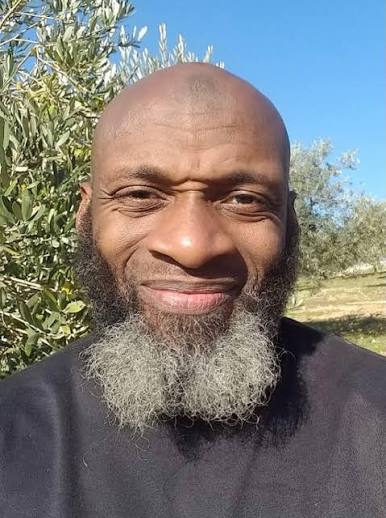
He was arrested again a year after the liberation, on 22 December 2025, following his strong public criticism of Syria’s membership of the Global Coalition against ISIS and of its larger cooperation with the United States. He had recently hosted on his show Hani al-Sibai, a sheikh aligned with Al-Qaeda, who took the opportunity to attack Ahmad al-Sharaa’s lack of transparency with regard to the economy, nepotism, and so on. It’s easy, therefore, to understand why the authorities are angry with him; nevertheless, Abdul Kareem has not been charged with a crime, and has not had access to a lawyer. Though relatively well-known, he has enjoyed less popular support than some, probably because Syrians who are not Islamists find his politics distasteful, and many Syrians with Islamist leanings don’t want to criticize the transitional government.
One of the most worrying arbitrary arrests is that of Dr. Shamis Mahfouz, a former opponent of the Assad regime and an expert in international law who had criticized the transitional authorities in the media. He was arrested by men from the Arnous Centre on 5 December 2025, and remains in detention. Dr. Mahfouz was charged with “conspiring against state security” and transferred to Investigation Branch 202, formerly known as the Criminal Security Branch. His human rights archive was also confiscated.
Islamists and human rights activists were the two categories most targeted by the Assad regime for arbitrary arrest and forced disappearance. By routinely accusing those who questioned abuses of ‘defamation’ or ‘conspiring against the state,’ the old order sought to criminalise all forms of dissent and social participation. Observers of the ‘new’ Syria may justifiably wonder if anything has changed.
To be fair, the numbers of those detained without due process are far, far lower today than they were under Assad (at least 160,000 disappeared forever in Assad’s gulag), and the current authorities are far more responsive to public pressure – at least for now. But they are still far too high. The principle remains that arrests and detentions happen when the authorities want them to, and at their discretion. This is not the rule of law that Syrian revolutionaries so ardently hoped for; it is arbitrary and unexplained tyranny.
The supporters of Hassan Akkad and Ahmad Fakhr al-Din have the right idea: abuses must be pushed back, and as soon as possible. I would argue that failing to fight them allows them to be normalized once again, but of course such abuses have long been normalized in Syria, and without interruption, despite the hopes of the revolution. More to the point is a reminder that the current authorities were brought to power by a war that emerged from a popular revolution, and that the popular revolution was catalyzed by abuses not so different from those happening today. The very first demonstration, in Hariqa, Damascus on 17 February 2011, was provoked by an arbitrary act of police brutality. The revolution’s widely-recognised ‘spark’ was the detention and abuse of children in Daraa because they had ‘insulted’ a powerful person – in that case, Bashar al-Assad.
The revolution, and the eventual collapse of the Assad tyranny, offered Syria a window of opportunity and a moment of hope, and the window was opened at an enormous cost. Now, with every arbitrary arrest, the window closes a little more. Without much more resistance from society, hope, just like people, will disappear – and in the end, nobody will dare to ask where the hope has gone.



Leave a Reply