Archive for August 2026
Discussing the ‘Regime Change Plot’ on Badlands
It was great to be hosted on the Badlands podcast by Iranian-American journalist Borzou Daragahi, who has reported from across the Middle East, including Syria. We were discussing my new book The Blood Between Us. The book is about post-Assad Syria, but this part of our discussion is retrospective, covering the CIA’s attempts to restrict the flow of arms to Syrian rebels. I come in at about 11 minutes into the recording. There may be a part two soon.
Rushed Justice Won’t Bury the Past
I wrote this in response to the unexpected and sudden death sentence delivered to Bashar al-Assad. It was first published at Syria Direct.
On August 11, 2026, Atef Najib was sentenced to death by the Fourth Criminal Court in Damascus. As head of Political Security in Daraa in 2011, Najib was responsible for the torture of a group of schoolboys who had sprayed anti-government graffiti—an event that helped catalyze the Syrian revolution. Some of those schoolboys testified against him in court. Najib also ordered the repression of protests with live ammunition. For the people of Daraa, his presence in court, forced to hear the testimony of his victims, was a long-awaited symbol of justice being done.
Others, however, were sentenced in absentia, without a full accounting of their crimes and without facing any of their victims in court. They included the very top officials of the former regime, foremost among them Bashar al-Assad himself. Syria’s former dictator—and Atef Najib’s cousin—is directly or indirectly responsible for the killings of hundreds of thousands of people. Bashar’s brother Maher, former head of the Fourth Division, which launched sarin and chlorine attacks, enforced starvation sieges and barrel-bombed neighborhoods to oblivion, was also sentenced to death. So too were several others, including former defense minister Fahd al-Freij.
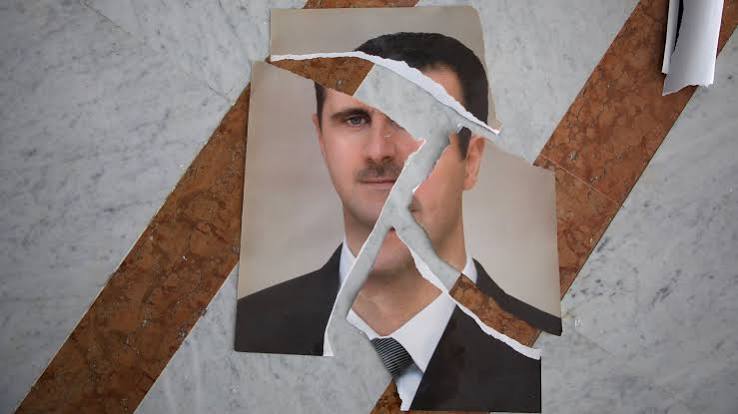
For many people, these verdicts—particularly the one against Bashar—look like justice, and in a very obvious sense they are. The man who ordered the burning of Syria’s cities and the torture to death of its youth is finally being held to account. The man it was forbidden to criticize, on pain of death, now has his own appointment with the noose. Wrongs are being righted and the past is being buried. That is why crowds celebrated the verdicts outside the Palace of Justice in the capital, as well as in Daraa. Some of Syria’s hundreds of thousands of bereaved and tormented mothers will sleep more soundly now.
Other voices, however, are drawing attention to flaws and drawbacks in the process. Amnesty International, for example, called on Syria’s transitional government both to abolish the death penalty on principle and to end trials in absentia. Many Syrian victims of the Assad government will be angered by this, but we should all consider Amnesty’s principle, which may align with the Quranic warning: “He who kills a soul neither in revenge for another, nor to prevent corruption on earth, it is as if he killed the whole of mankind” (Quran 5:32, in Tarif Khalidi’s translation).
The warning has two parts. It does sanction—though it certainly does not prescribe—the death penalty for murder and for “corrupting the earth,” a term referring to crimes that undermine society, which could cover massacres, mass detention and so on. On the other hand, it stresses the gravity of getting it wrong. Nobody sane would dispute Bashar al-Assad’s guilt, but what of all those who may be sentenced to death in the Syria of today and tomorrow? Can it be guaranteed that their trials will always be fair and fully informed?
There’s another question which, in this case, is even more relevant. Could a performative death penalty verdict potentially be used to silence the voices of victims, avoid a full accounting and make an inconvenient problem go away?
Read the rest of this entry »Remembering and Forgetting: The Bosnian Genocide
I visited Bosnia in September 2024 to write the following essay for the Genocide issue of the Critical Muslim. I discovered that the genocide of the Bosniaks by Serb fascists in the 1990s was only the latest of a cycle of genocides.
*
In the enthusiasm of arrival, I nearly forget what has brought me here.

Sarajevo is a city in a low valley between tree-clad mountain slopes. The architecture is a mix of Ottoman and Austro-Hungarian, and a series of elegant bridges arch over a central river. It’s a city, therefore, lying somewhere between Prague and Isfahan, connecting those distant cultures. It has a café scene, based around the distinctive Bosnian coffee, which betrays a Middle Eastern approach to time. Its cuisine merges Turkish, Slavic, and central European influences.
It looks like a multicultural success story. A few steps from my hotel room there are several mosques, a Catholic church, an Orthodox church, and a synagogue. And a few steps from the nearest mosque is a café serving alcohol. Some of the Muslims leave the mosque after prayer and greet their friends who are sitting drinking beer. Between a quarter and a third of the women wear some kind or other of hijab. Sometimes the religiously-dressed women are accompanied by men in shorts and T-shirt. That’s a scene that can be seen anywhere in the Muslim world. But there are also religious-looking men, long-bearded, in sober, spacious dress, accompanied by women in shorts and T-shirt. You could say that a “secular” sort of Islam is practised here, if you were to use only one, positive signification of that troublesome word. Better, perhaps, to say that there’s an easy interplay of the secular and religious. A variety of beliefs and levels of belief, of different ways of living, jostle against each other not just politely but brightly and warmly. So it seems.
There are Turkish and Arab tourists, and Muslim visitors from Germany, England and France, no doubt feeling safer, more respected, and more comfortable here than they would in most European destinations.
I am visiting in the eleventh month of the full-scale Zionist genocide of Palestinians. The banners in support of Palestine are ubiquitous – in shop windows, car windscreens, or draped from the bridges. Not just flags, but the remembered dates of specific massacres. But beyond that, when you bring up “Syria”, the Bosniaks don’t immediately regurgitate conspiracy theories, nor squint in confusion, but demonstrate political understanding and Muslim and human solidarity. This provides another good reason for me to feel at home, or at least among friends. I remember the large protest demonstration in Sarajevo in 2016 when Aleppo was being destroyed by Assad, Russia and the Iranian militias. Other capitals ignored the disaster, but Sarajevo knows fascism when it sees it. It understands genocide.
This line of thought brings me back to my purpose. If it hadn’t, I’d have been reminded by the bullet holes and larger shell damage still visible on many of the walls. So now I recall an earlier mental image of the city, one formed by news reports in the early 1990s. It shunts my sunny euphoria to the side, imposing itself over my vision. This older version of Sarajevo is grey, snow-cursed, painted with pain-scarred faces, puddles of blood, and smouldering tower blocks. This is what has brought me here. My purpose is to write about the genocide of the Bosniaks.
And that makes everything look and feel different. Even the beautiful, green mountain sides, from which Serb big guns and snipers once terrorized the city below. When I walk out of town to the Kozija ćuprija bridge, then upwards on a path towards Mount Trebević, I find a different flag displayed. Nobody stops me to ask for my passport, but I am now, very suddenly, in the territory of a different administration – the Republika Srpska. The officials of this entity don’t recognize that a genocide of Bosniaks took place, or if they do, they believe it was necessary. They believe the Serbs, the genocidaires, were the real victims of the war, and are today the victims of the peace. Which makes the peace merely temporary. Nothing here has been resolved, only frozen. Inconvenient facts have been forgotten, while genocidal narratives have been carefully remembered. Sarajevo is surrounded, locally and globally, by immensely powerful interests that don’t believe in the happy jostling together of different ways of life. The city is besieged by forces of history currently paralyzed from motion but ready to fall, like axes or hammers, as soon as the spell of peace passes.
How then did this multicultural Muslim society in the Balkans come to be, and why is it so dangerously surrounded?
A mountainous land rising from the Adriatic Sea up into and beyond the Dinaric Alps, Bosnia and Herzegovina (or BiH for short – Herzegovina is the drier, warmer southern third) was known as Illyria before the slow Roman conquest. Slavic tribes settled in the sixth and seventh centuries, amongst them a tribe called Croat and another called Serb. But the area between today’s Croatian and Serbian states has had its own distinct political identity at least since the medieval Banate of Bosnia and the Bosnian kingdom that followed. Ottoman forces first arrived in 1414. It took them the next 150 years to absorb the entire country into the empire. Then the Bosniaks gradually converted to Islam. By the early seventeenth century, Muslims formed a majority of the population.
Why did so many of the Bosniaks convert? Why them, as opposed to other communities under Ottoman rule in the Balkan peninsula, such as Serbs, Croats or Greeks? The answer surely has something to do with Bosnia’s position in the borderlands between western (Catholic) and eastern (Orthodox) Christianity. Most Bosniaks rejected both. In the early medieval period they had their own Bosnian Church, and were charged with heresy by the larger churches as a result. The two related theories presented by historians to explain the Islamic conversion are both connected to medieval Bosnia’s alienation from official Christendom. The first theory is that membership in the Bosnian Church – a less hierarchical version of Christianity – facilitated the passage to anti-hierarchical Sunni Islam. The second is that most medieval Bosniaks still lived in mountain hamlets and thus had no strong connection to any organized form of religion before the arrival of Islam. By this reading, the Bosnian Church was an elite affair, known to only a tiny minority.
Read the rest of this entry »Disappearing Hope
This article was first published at the excellent Syrian platform Al Jumhuriya.
On 17 June, Syrian content creator Hassan Akkad was arrested in a Damascus café by armed men, as if he were an immediate danger to the public. In reality, he was only an irritant to the few powerful people he was holding to account in his YouTube videos for failing to pay what they’d promised to rebuilding campaigns. His arrest made big waves in Syrian society – however, other less high-profile arrests have not gained as much attention.
In Akkad’s case, as in others, the authorities are maintaining the Assad-era Law No. 20 of 2022, a Cybercrime Law which criminalises ‘defamation’ and ‘slander’, and using it against Syrians who criticise the powerful or wealthy. Hassan Akkad was accused of defamation by Mousa al-Omar, a pro-government media celebrity, and by companies controlled by Muhammad Hamsho, a former financier of the Assad regime who has come to an agreement with the new government.
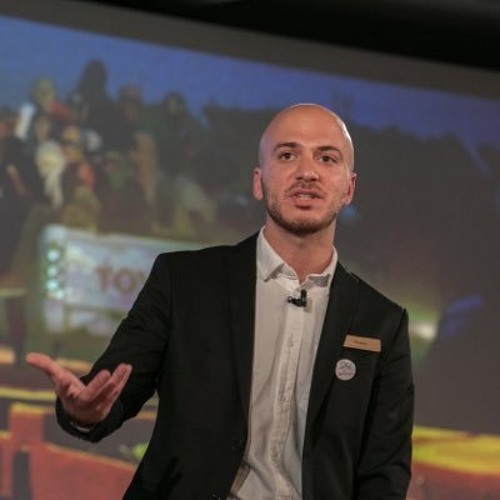
Fortunately for him, Hassan Akkad is a well-known and respected figure, and international journalists were among those who joined a wide range of Syrians in publicly objecting to his detention. This pressure led to his release after four days. Yet, rather than ending the episode by repealing, suspending or reforming the Cybercrime Law as some had demanded, the Ministry of Information actually increased restrictions. Six new prohibited categories include ‘violations of public decency’ and ‘attacks on institutional reputations.’
These categories are wide open to interpretation, and they will have a chilling effect on discourse: they signal that any online criticism of a state institution or official could potentially be considered defamation. According to Fadel Abdulghany of the Syrian Network for Human Rights, the “mere existence” of these “vague penal texts” and “the possibility of their use is enough to drive individuals, journalists, and content creators into a pre-emptive silence, in a way that threatens the very possibility that a free public space might arise during the transitional phase.”
Akkad was by no means the first to be arrested on such questionable grounds. On 2 June, just a couple of weeks earlier, Yasser Abbas and Ibrahim Sheikh al-Shabab were detained for ‘defamation’ of authorities including Damascus Governor Maher al-Idlibi. Their actual ‘crime’ had been to campaign openly and peacefully against Marota City, an Assad-era luxury construction project in western Damascus that has entailed mass evictions of poor residents. As with Akkad, community pressure won the men’s rapid release. The authorities, however, did not drop charges against them; they will be tried in September.
A year before, in May 2025, the activist Ahmad Fakhr al-Din was arrested in Nabk for similarly spurious reasons. Fakhr al-Din’s Facebook page “Behind the Scenes in Nabk” had posted a video showing General Security operatives engaged in abuses. Though documenting abuses and holding officials to account are basic activities of the citizen journalism that proliferated during the now-officially-celebrated revolution, Fakhr al-Din’s truth-telling was considered to be “undermining state authority.” Once again, the victim’s popularity helped him. Locals immediately organized protests, people made formal complaints and expressed outrage on social media, and Fakhr al-Din was released within a few days.
But not everybody can count on such levels of public support – or even if they can, very powerful countervailing interests may cancel the impact of that support. The Emirati citizen Jasim al-Shamsi is a case in point. One of 133 Emirati intellectuals and public figures who signed a 2011 petition calling for democratic reforms in the UAE, al-Shamsi soon had to flee his home to avoid arrest. In January 2013 he and others were tried in absentia, charged with setting up a secret subversive organization. In December 2023, he was tried again on counter-terrorism charges, and this time sentenced to life imprisonment.
Read the rest of this entry »