Posts Tagged ‘Holy Land’
‘Holy Land’ Ideology
This essay – and review of Nour Masalha’s account of Palestine through the millenia – was published at New Lines Magazine.
On 30 October 2024, in the run-up to the presidential election pitting Kamala Harris against Donald Trump, Bill Clinton addressed voters in Michigan, a state with a significant Arab-American population. Democrat strategists were worried that Arab-Americans, along with many students and progressives, would punish their party at the polls for its participation in Israel’s genocide in Gaza. That’s presumably why they brought out Clinton — a former president with star quality — to boost their chances. But Clinton was so lost in his own story that he surely made things worse. His words also revealed the extent to which even elite Americans understand the Middle East through a mythical rather than historical framework.
“I understand why young Palestinians and Arab Americans here in Michigan think too many people have died. I get that,” Clinton started, before exonerating the genocidaires of blame. Hamas, he explained, “force you to kill civilians if you want to defend yourself.” Then his discourse degenerated further. “I got news for them,” he said, meaning Hamas. “They [the Israelis] were there first, before their faith existed.”
Clinton seems to have meant that the Israelis were “there first” because Judaism is an older religion than Islam, but Judaism is not the Israelis and Islam is not the Palestinians. This strange category error emerges from the same myth complex that renders many Americans unable to distinguish between the Land of Israel imagined in Sunday school and the State of Israel established by conquest and mass ethnic cleansing a few years after World War II. Likewise, they fail to distinguish the ancient Israelites from the contemporary Jewish peoples.
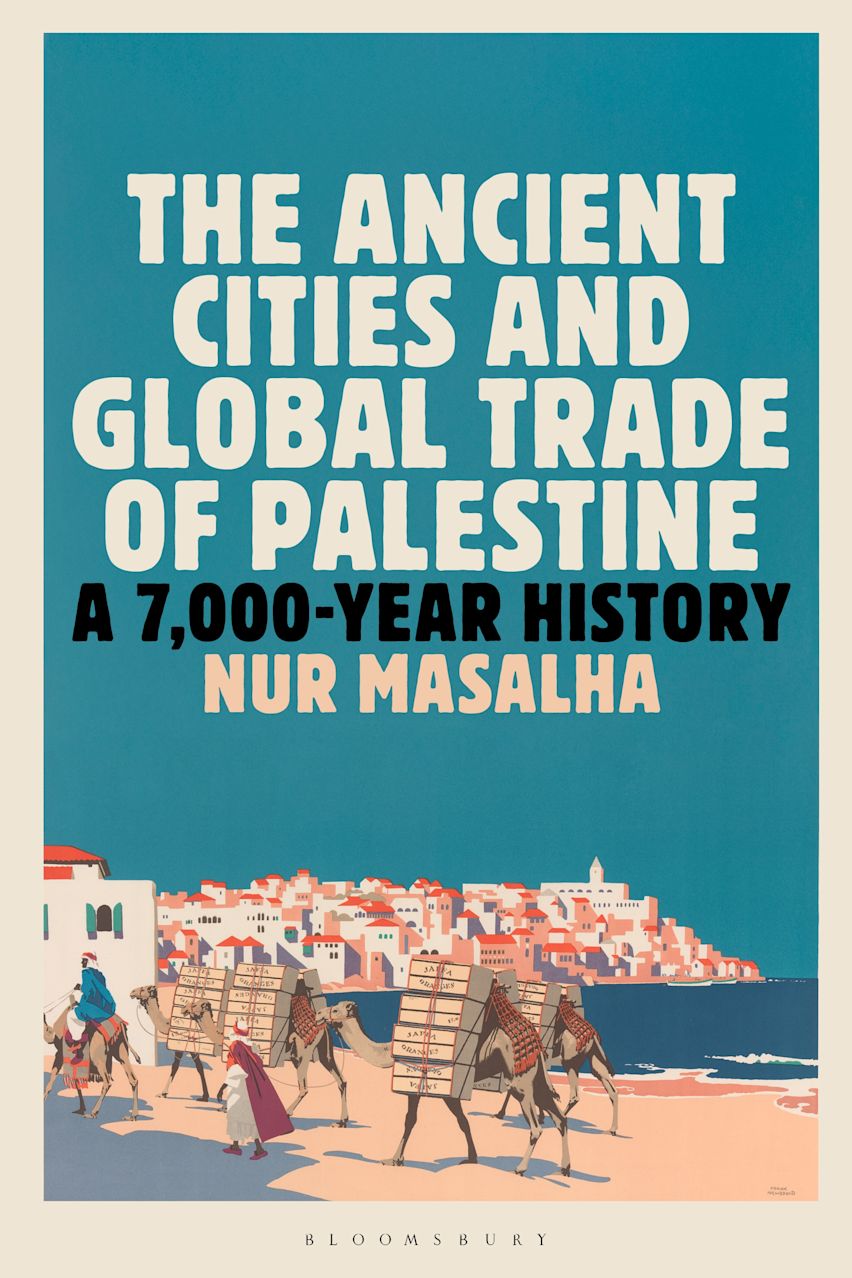
The former president would have been better informed had he read some books on the topic other than the Old Testament — books like Nour Masalha’s meticulous and lavishly referenced “The Ancient Cities and Global Trade of Palestine: A 7,000-Year History.” This is the latest in a string of books Masalha has written examining the country’s ancient past.
It’s interesting that Clinton, in American terms a secular liberal, arrives at similar conclusions to America’s Christian Zionists, who read Genesis 12:3 — “And I will bless them that bless thee, and curse him that curseth thee” — as an exhortation to support the Israeli state. The confusion of the ancient and the contemporary when considering the Middle East is a very common confusion throughout the Western world, not just the U.S., and one that has been carefully exploited to ease the dispossession of the indigenous people of what is now Israel and the occupied Palestinian territories.
The usual story goes that Palestine was inhabited mainly by Jews until they were expelled en masse by the Romans. But the Romans are not as convenient an enemy for contemporary Western audiences as the Muslim Arabs, so some are shifting focus — Benjamin Netanyahu, for instance.
“For roughly 2,000 years,” Netanyahu said, unchallenged, on Jordan Peterson’s podcast, “we were conquered by the Romans, we were conquered by the Byzantines. They did a lot of bad things to us, but they didn’t really exile us, contrary to what people think. The loss of our land actually occurred when the Arab conquest took place in the seventh century. The Arabs burst out from Arabia, and they did something that no other conqueror — not the Romans, not the Byzantines, not the Greeks before them, not Alexander the Great, nobody — did before. They actually started taking over the land of the Jewish farmer.”
No doubt Netanyahu knows that this is revisionist history designed to serve very contemporary political purposes. But if he actually believes what he says, he would be well-advised to read the Israeli writer Shlomo Sand’s 2008 book “The Invention of the Jewish People.” In that work, like others before him, Sand dispatches the myth of the Roman mass expulsion (so he agrees to that extent with Netanyahu); premodern states had neither the capacity nor the desire to perpetrate mass expulsions. Instead, the Romans destroyed the Jewish political class when they destroyed the temple. But even before that, Sand shows, there was never a Jewish monoculture in Palestine. The Torah was written in the fifth and sixth centuries BCE by an urban elite that claimed mythical ancestry elsewhere (Mesopotamia, via the patriarch Abraham, and Egypt, via Moses). The majority of the population during the Jewish period were pagans, more likely to worship Baal or Astarte than Jahweh.
Judaism was a proselytizing creed at least until the adoption of Christianity as the Roman state religion (and later than that in Yemen). According to Sand, there were already more Jews outside Palestine than inside when the temple was destroyed. Many converts were won in ancient Rome. The notion that the Jews were a single “race” separate from others, initially seen in the late Middle Ages, gained ground in 19th-century Europe in concert with the rise of racial theory, the various post-Napoleonic nationalisms and modern forms of antisemitism.
Elements of Sand’s argument have been disputed, but its core makes perfect sense. The Jews are as plural and diverse as anyone else. The idea that Jews originating in Yemen, Ethiopia, Iraq and Poland form one unified people clearly distinguished from others is a construction. The Jews are as “invented” as all peoples are, including the Syrians, the British and African Americans. Nations, as Benedict Anderson formulated it, are always “imagined communities.” This doesn’t mean they are not “real”; if people experience themselves as a nation, then they are a nation. (Even more pertinently, Sand quotes Karl Deutsch: “A nation … is a group of persons united by a common error about their ancestry and a common dislike of their neighbours.”) But it does point to the absurdity of pretending that a contemporary nation was “there first” thousands of years ago, and of expelling or annihilating the natives on that basis.
The “there first” justification for ethnic cleansing is particularly absurd — and ironic — in Palestine. Sand argues that the closest descendants of the ancient inhabitants of Judea are actually the Palestinians, most of whom gradually converted first to Christianity, and then to Islam. Sand’s book was a controversial bestseller in Israel, but it wasn’t the first to posit that the Palestinians had descended from Jewish farmers. “Eretz Israel in the Past and Present,” a 1918 book written by Itzhak Ben-Zvi and Israel’s first prime minister, David Ben Gurion, did just that. But the idea was soon forgotten as Palestinian resistance to Zionist settlement intensified. The Palestinians were increasingly cast as nomads unattached to any specific bit of land. Their generic “Arabness” was emphasized; the minority who escaped expulsion from the new Jewish state were labeled “Arab Israelis” as if they were recent immigrants from Kuwait — or less recent invaders from Mecca.
Read the rest of this entry »