Posts Tagged ‘Death penalty’
Rushed Justice Won’t Bury the Past
I wrote this in response to the unexpected and sudden death sentence delivered to Bashar al-Assad. It was first published at Syria Direct.
On August 11, 2026, Atef Najib was sentenced to death by the Fourth Criminal Court in Damascus. As head of Political Security in Daraa in 2011, Najib was responsible for the torture of a group of schoolboys who had sprayed anti-government graffiti—an event that helped catalyze the Syrian revolution. Some of those schoolboys testified against him in court. Najib also ordered the repression of protests with live ammunition. For the people of Daraa, his presence in court, forced to hear the testimony of his victims, was a long-awaited symbol of justice being done.
Others, however, were sentenced in absentia, without a full accounting of their crimes and without facing any of their victims in court. They included the very top officials of the former regime, foremost among them Bashar al-Assad himself. Syria’s former dictator—and Atef Najib’s cousin—is directly or indirectly responsible for the killings of hundreds of thousands of people. Bashar’s brother Maher, former head of the Fourth Division, which launched sarin and chlorine attacks, enforced starvation sieges and barrel-bombed neighborhoods to oblivion, was also sentenced to death. So too were several others, including former defense minister Fahd al-Freij.
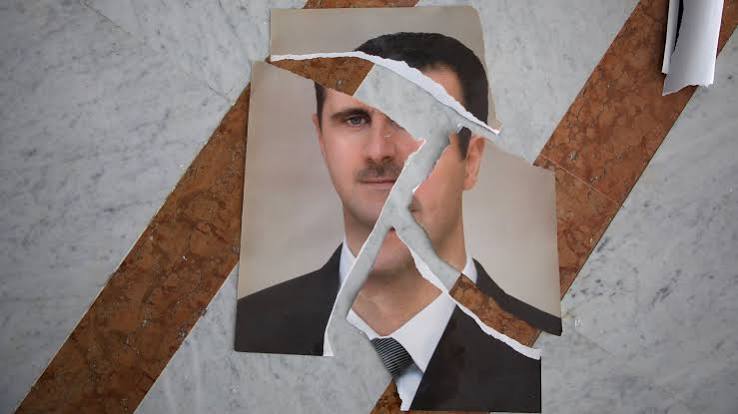
For many people, these verdicts—particularly the one against Bashar—look like justice, and in a very obvious sense they are. The man who ordered the burning of Syria’s cities and the torture to death of its youth is finally being held to account. The man it was forbidden to criticize, on pain of death, now has his own appointment with the noose. Wrongs are being righted and the past is being buried. That is why crowds celebrated the verdicts outside the Palace of Justice in the capital, as well as in Daraa. Some of Syria’s hundreds of thousands of bereaved and tormented mothers will sleep more soundly now.
Other voices, however, are drawing attention to flaws and drawbacks in the process. Amnesty International, for example, called on Syria’s transitional government both to abolish the death penalty on principle and to end trials in absentia. Many Syrian victims of the Assad government will be angered by this, but we should all consider Amnesty’s principle, which may align with the Quranic warning: “He who kills a soul neither in revenge for another, nor to prevent corruption on earth, it is as if he killed the whole of mankind” (Quran 5:32, in Tarif Khalidi’s translation).
The warning has two parts. It does sanction—though it certainly does not prescribe—the death penalty for murder and for “corrupting the earth,” a term referring to crimes that undermine society, which could cover massacres, mass detention and so on. On the other hand, it stresses the gravity of getting it wrong. Nobody sane would dispute Bashar al-Assad’s guilt, but what of all those who may be sentenced to death in the Syria of today and tomorrow? Can it be guaranteed that their trials will always be fair and fully informed?
There’s another question which, in this case, is even more relevant. Could a performative death penalty verdict potentially be used to silence the voices of victims, avoid a full accounting and make an inconvenient problem go away?
Read the rest of this entry »