Qunfuz

Robin Yassin-Kassab

Hair for the Observer

with 3 comments

Here is an unedited version of an article published in the Observer Woman magazine.

Eid people 3When I first saw my wife she was seated in the middle of a crowded room, she had her eyes fixed on me, and she had a luxuriously unruly cascade of hair. We started talking, and from then on her hair’s startling blackness seemed emblematic of the force of her character.

I enjoyed seeing her hair fanned out around her moonsliver face. I enjoyed touching it, either its natural curliness or its hair-dryered straightness. In a city where half the women covered their hair in public, and just because she had such beautiful hair, Rana’s hair became for me her sign, the feature by which I’d pick her out at a distance, my symbol for understanding her and what she meant to me.

So when, five years into our marriage, Rana decided to cover her hair, I was somewhat bothered. In the meantime we’d moved from Syria via Morocco to Saudi Arabia, we’d had children, and Rana had worked as a teacher and TV presenter. She’d always been an elegantly modest dresser, but here, amid the compulsory dress codes of Saudi Arabia – which annoyed both of us – she’d decided to introduce something new. I grasped for a response.

Read the rest of this entry »

Written by Robin Yassin-Kassab

November 9, 2008 at 12:30 am

Posted in Islam

Tagged with

A Plague on Both their Houses

with 9 comments

The great thing about the forthcoming American presidential election is that Hillary Clinton won’t be the winner. The lamentable thing is that either Barack Obama or John McCain will be.

I have detested Hillary Clinton since she led a New York demonstration against ‘Arab terror’ in the first days of the second Intifada. This was before the Intifada became militarised, when it still centred around stone-throwing crowds and peaceful demonstrations, and when the zionist occupation was murdering dozens of Palestinians every day. This year her campaign website stated: “Hillary Clinton believes that Israel’s right to exist in safety as a Jewish state, with defensible borders and an undivided Jerusalem as its capital, secure from violence and terrorism, must never be questioned.” Just run your eyes over that again. Hillary Clinton doesn’t just believe that the citizens of Israel should be safe, but that Israel “as a Jewish state”, as an apartheid state for Jews only, not for its citizens or for those it has driven out, should be safe. She believes that illegally occupied and illegally colonised east Jerusalem, an ancient Arab city originally built by Canaanite Jebusites, should remain under eternal zionist occupation. And she believes not only that her immoral and stupid positions are right, but that they should never be questioned. Such is the weight of zionism on American political life – as heavy a taboo as God is in the east.

Read the rest of this entry »

Written by Robin Yassin-Kassab

November 1, 2008 at 1:49 am

Bomb in Damascus

with 12 comments

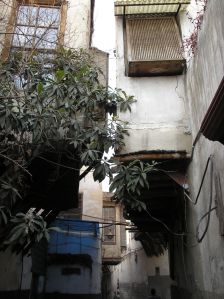
P1071119This morning a car bomb exploded in Mahlak street, Damascus, at a junction with the airport road and not far from Sitt Zainab. Seventeen are dead and 14 injured. That sounds like a powerful bomb, killing more than it maims.

In 1997 I found myself walking over what appeared to be blood and oil stains in the Victoria area of the city. There were soldiers gathering shards of glass and hosing the street down. Bystanders were subdued, not meeting your eye. I asked someone what had happened and he mumbled something about a gas leak. In fact a bus had been blown up minutes after leaving the old station at Baramkeh, and nine people had been killed. Afterwards there were whispers about Lebanese Maronites (the Lebanese Sunnis still supported Syria) being behind it, and of course Israel was a suspect. But the whole thing was kept as quiet as possible. The deal the regime has made with the people is: allow us corruption and thuggishness if we give you in return a foreign policy which doesn’t shame you and, most fundamentally, a guarantee of security. Exploding buses are a message from whoever sends them to the Syrian people, and the literal translation of the message is: the regime can’t protect you.

Read the rest of this entry »

Written by Robin Yassin-Kassab

September 27, 2008 at 10:21 pm

Posted in Lebanon, Syria, USA, Wahhabism, Zionism

Tagged with ,

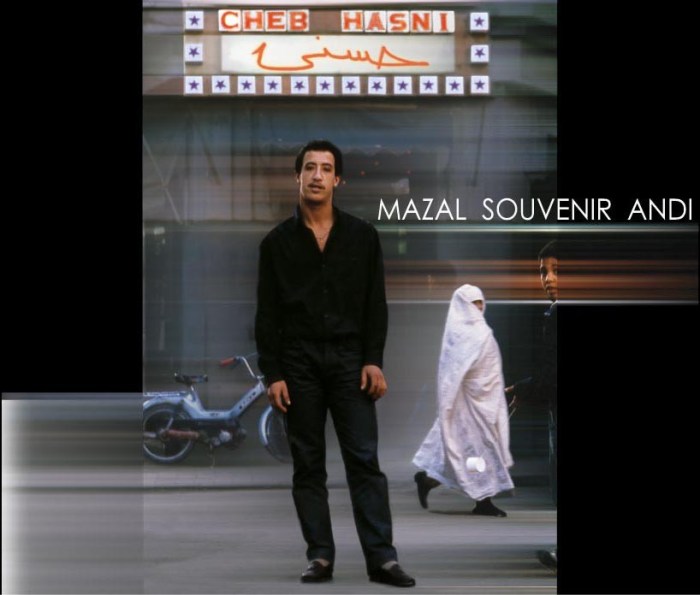
Remembering Chab Hasni

leave a comment »

hasniThis was written for the National.

Disturbing a sleeping box of old cassettes the other day, my hand brushed an album by Chab Hasni, and memories rushed in as fluent as music, of the Algerians I’d known in Paris in the early nineties, particularly my friends Qader and Kamel.

In Algeria these two had been ‘hittistes’. That’s a real Algerian word: a French ending tacked onto the Arabic ‘hayit’ meaning ‘wall’. The hittistes were the youths who spent their time leaning against walls, bored, angry, and stoned. They had no jobs and no housing – those young men who did have jobs often slept in their workplaces. They spent their time dodging the fearsome police force.

Life as ‘clandestin’ illegal immigrants in France was not much easier. There too they had to negotiate checkpoints. I remember Kamel spending a fortnight in prison for being stopped ‘without papers’. When at liberty, they peddled hashish on Pigalle and sold the cassettes they lifted from shops. (Still, there was honour amongst thieves. Qader once knocked down a fellow Algerian for stealing from an old man on the metro. “So what if he’s French?” he growled. “He could be your grandfather!”)

Read the rest of this entry »

Written by Robin Yassin-Kassab

September 26, 2008 at 12:14 pm

Two Reviews

leave a comment »

Two reviews, one harsh and critical, one brief and bright.

I met Nadeem Aslam in Southampton, and spent an evening and a morning having wonderful conversations with him. When I told him I’d written a bad review of his latest book (half of it is bad) for the National (in Abu Dhabi) he was not in the least bitter, not even for a moment. I am not such a successful human being. I would have been convulsed with rage and venom for at least three hours, and then ill with it for weeks. He just wanted to know why I didn’t like the book. Well, it’s partly the politics, and quite a lot to do with characterisation. Then my review may be fierce precisely because I think he’s a major writer, and therefore fair game. (But I don’t think he’s fair game after meeting him, such a lovely man he is; I hang my head in shame). The negativity of the review may also have something to do with me responding to my own perceived failures as a writer.

And damn, they pay you to squeeze out an opinion, so opinionate is what you do.

The problem with writing a book review after you’ve had a book published is that it seems as if you’re suggesting you could outwrite the writer you’re criticising. Ironically, now that I should be more qualified to write about novels, I feel less qualified. Or at least worried that I’m setting myself up. Anyway.

Read the rest of this entry »

Written by Robin Yassin-Kassab

September 23, 2008 at 12:08 am

My Absence, and a Sad Marriage

with one comment

I apologise from my absence. I’ve been very busy. I’ll be back soon, but for now I’ll post something from Conflicts Forum. I’ll post it because it clarifies the already clear truth that Salafism, whether the Salafis know it or not, has an inherent opposition to genuine resistance in the Arab and Muslim worlds. Below you’ll read about the marriage of Wahhabi nihilism and Arab fascism, and how its purpose is to deepen the Empire’s control by encouraging the people to hate each other. And there is further clarification of how very unlike this twisting, thrusting couple (Mr. Salafi and Mr. Fascist – it’s a same-sex partnership) are organisations like Hizbullah and Hamas.

The honeymoon after the wedding was remarkable for its dog-gnawed corpses, and for the smiles on the faces of fat businessmen and kings.

(I recommend Conflicts Forum’s intelligent and detailed articles. The three-part report on how Hizbullah defeated Israel in 2006 is fascinating.)
Read the rest of this entry »

Written by Robin Yassin-Kassab

September 22, 2008 at 10:26 pm

Fracturing Authority

with 7 comments

I had great sympathy for Chechnya when it was twice destroyed by Russian forces. The Chechens have been fighting for their independence for more than a hundred and fifty years. But Prime Minister Gordon Brown had no sympathy for Chechnya because, he says, Chechnya is officially part of Russia. The Chechen issue is a matter of Russian ‘territorial integrity.’ I admit that Brown’s position here makes sense. However brutal Russia’s treatment of Chechnya, it isn’t Britain’s business. (It may be the business of concerned British people, but that’s something else).

I don’t have much sympathy for Georgia, however, and none at all for the bleatings of the US, Britain and Germany, including Brown’s ridiculous bleatings in the Guardian. When the Soviet Union collapsed, Russia relinquished its control of eastern Europe and allowed independence to Caucasian and Central Asian nations. But instead of independence several of these countries became absorbed into the American empire. The fear that some of them had of their huge neighbour was understandable and deeply rooted (though not in Georgia, which had participated in Soviet rule from the Georgian Stalin to the Georgian Shevardnadze). The real fault was the West’s, to so stupidly exploit this fear, and to extend, by hubris, NATO membership and American missiles right to Russia’s borders. Russia in 1991 was too weak to do anything but let power slip, but its tolerance of Western expansion also showed a naivety, an overly-optimistic trust in Western capitalism. The very memory of that naivety is a humiliation to Russians.

Read the rest of this entry »

Written by Robin Yassin-Kassab

September 1, 2008 at 5:01 pm

Posted in imperialism, UK, USA

Tagged with

Dawkins or McIntosh

with 7 comments

I am increasingly infuriated by religious claims to certainty and by religious attempts to close down free thought (I’m not talking about high profile attacks on writers or cartoonists here, which have more to do with power politics than theology, but simply the resort to ‘it’s true because God says so’). Although some leftist and anti-imperialist Islamist groups have achieved great things, I find the current fashion for religious politics in the Arab world to be a dead end. Simple-minded slogans like ‘Islam is the solution’ are no solution. An analysis of contemporary disasters based primarily on class and state and corporation could conceivably provide grounds for unity and solidarity; political action based on Sunni or Shia myths will ultimately only help the empire to divide and rule; it will also empower rulers and institutions hiding behind religious cover. It is sad to watch the Muslims becoming more and more religious as they gallop further into social, economic and environmental catastrophe.

The rise of ugly modernist forms of religion is not confined to the Muslim world. Everywhere, the death of traditional religion has spawned a million poor substitutes. Under the pressure of traumatic social change, and almost always of war, traditional forms of Judaism, Christianity, Islam, Hinduism and Buddhism have morphed into Zionism, neo-conservatism, Bible-belt evangelical-nationalism, fascism, Stalinism, Ba’athism, Wahhabi-nihilism, state-Hindu chauvinism and Maoism. And fundamentalist atheism.

Read the rest of this entry »

Written by Robin Yassin-Kassab

August 21, 2008 at 6:07 pm

Edinburgh

with one comment

I read at the Edinburgh Book Festival on August 12th. It was a double event, shared between me and Mohammed Hanif, author of the Booker-longlisted novel “A Case of Exploding Mangoes.” Mohammed’s book is a tragi-comic detective story which references Marquez’s “Chronicle of a Death Foretold”; and the murderee is General Zia ul-Haqq. (General Musharraf quivers between impeachment and exile as I type). It was great to meet Mohammed, not least because he knows several of the journalists I used to work with in Pakistan. One evening he cooked me a chilli-rich meal. I hope we meet again.

The death that has hung heaviest over the last week is not Zia’s but Palestinian poet Mahmoud Darwish’s. It was even a death foretold: the Palestine National Theatre was at Edinburgh performing a play based on the Darwish poem “Jiddariyya”, which concerns mortality and the extinction of identity, and which he wrote after heart surgery. It was a new bout of heart surgery which killed him. Such are the Edinburgh crowds that I failed to see the play. I did see Sabry Hafez give a talk on Darwish, and how the extinction of identity is for Palestinians an immediately concrete threat beyond the universal problem of physical death: Darwish was from a family of ‘mutaselaleen’, Palestinians who crept back across the border into ethnically-cleansed Israel in the months following their expulsion in 1948, and as a result his name could not appear on school registers. I wish I’d seen the play. Also sold out was a film on three screens by Iranian director Abbas Kiastorami. It showed, apparently, a Shia passion play, a taaziyeh for the martyrdom of Hussain, performed in an Iranian village.

Read the rest of this entry »

Written by Robin Yassin-Kassab

August 19, 2008 at 12:13 am

Complex Origins

with 4 comments

Sumerians at prayer

Sumerians at prayer

From a Muslim perspective, I’m used to seeing Judaism, Christianity and Islam as episodes within the same religion (which is not to deny their differences) – a series of revelations emanating from the same cultural locus. But since so many of the Abrahamic stories are inherited from earlier civilisations, even from the very first to write down stories, it may be that my definition of one religion, or at least one civilisation, should expand to include the earliest myths. Stories so early that we can reasonably guess their roots reach deep into our pre-civilised hunter-gatherer past.

Myth doesn’t mean untruth any more than a great novel does. Myth is heightened truth. A myth is perhaps more ‘true’ than reality because reality unfiltered is unstructured and unexplained. The fact that God uses human myths to talk to humans need not perturb the religious. “wa tilka al-amthal nadribuha lil-nas la’alahum yatafakiroon,” says the Qur’an. “We rehearse these parables to people in order that they may think.” From a religious perspective, the rehearsal of myths in sacred text is proof of God’s understanding of human minds. And where do the myths arise from anyway? From unforgotten events, and from us, from our shared Godstuff.

Read the rest of this entry »

Written by Robin Yassin-Kassab

August 5, 2008 at 1:40 pm

Arab London

with one comment

This appeared in Gulf Life (Gulf Air’s inflight magazine):

It’s August and, as well as the Notting Hill Carnival, west London is seeing its yearly influx of Arab tourists. While the visitors are here they’ll rub shoulders with a varied and well-established Arab community.

Unlike some cities, London is too mixed to be ethnically zoned. When I lived a few years ago on the Harrow Road in west London, my neighbours were Poles, Pakistanis, Trinidadians, Lebanese .. I could go on. In London there are no monocultural ghettoes, but there are cultural concentrations, and my Harrow Road bedsit was in the middle of the Arab one.

At lunchtime I would cross the canal to buy steaming bowls of harira from the Moroccan stallholders on the Golborne Road. North towards Willesden I would meet newly-arrived Iraqi refugees, each with a story. If I walked west to Shepherd’s Bush I found Syrian grocers selling olive oil from the old country, and balls of salty shellal cheese. On the Uxbridge Road I could even eat fetteh, the essential Levantine working man’s food, and I prayed with men of all sects in a basement mosque.

Read the rest of this entry »

Written by Robin Yassin-Kassab

August 5, 2008 at 10:21 am

Posted in UK

Tagged with

Representation

with one comment

Somebody at Channel 4 has been making an effort. A few weeks ago a documentary called “Dispatches: It Shouldn’t Happen to a Muslim” criticised the rising tide of Islamophobia in the British tabloid media and the corresponding rise in physical attacks on Muslims. The presenter brought up a series of stories which I half remembered hearing before, and half remembered feeling vaguely embarrassed about. Like how the NatWest bank got rid of its piggy bank posters to avoid offending over-sensitive Muslims. Like how British hospitals have to rearrange their wards so the beds all face Mecca. Like how a Muslim hate mob vandalised a house in which British soldiers returned from Afghanistan were to be billeted. All of these stories were completely false. The Sun was not charged with incitement to hatred.

The documentary didn’t take on Islamophobia in the so-called ‘quality press’, legal system or government, and beyond references to the July 7th bombs in London it did not give a wider political context for the surge in Muslim hatred. It did, however, point to how serious the problem is becoming. According to opinion polls, which are slippery by nature, 51% of British people believe Islam in general is to blame for the 7/7 attacks. 26% think the presence of any Muslims in the country is a security threat.

A couple of days later there was a great British screen moment. The screen read: After The Qur’an, Big Brother – which blasphemously reminded me of the Islamic “After your mother, your father.” But “The Qur’an” meant a two hour documentary on various ways of reading the text in various social contexts.

Despite the inevitable simplifications (Iranian women are “uniformly dressed in chadors”) the documentary did an admirable job of showing the range and flexibility of Qur’anic interpretation. Space was given to mullahs and Sufis, liberals and conservatives, the hijabbed and the non-hijabbed, to stake their very different claims on Qur’anic meaning. One interviewee said, “The Qur’an is like a supermarket; you can take what you want.” Although the Tesco’s imagery grates, this is of course correct; like the Bible, the Upanishads and Shakespeare, the Qur’an is vast enough to provide succour to almost any world view.

As a corrective to the unreconstructed ‘essentialist’ orientalist discourses we still hear so much from, the documentary shone a healthy light on the changing nature of Muslim societies. The society chosen for exemplification is Egypt, where almost no urban women wore the hijab thirty years ago but where almost all now do. The reason for the change was, I think, correctly diagnosed as “military defeat and economic failure” leading to a new search for identity.

“The Qur’an” spent a great deal of time examining (or at least quoting) verses which seem to encourage, on the one hand, fighting, and on the other, peaceful co-existence, and decided that the text promotes “tolerance and intolerance in equal measure.”

This made me think of the sometimes contradictory names of God: the Merciful and the Tyrant as well as the First and the Last. It made me think of all the strange binaries in the Qur’an. The words for ‘life’ and ‘death’ are each mentioned 145 times. ‘Spending’ and ‘satisfaction’ occur 73 times each. ‘This life’ and ‘the life after’ 115 times each. ‘The misled’ and ‘the dead’ 17 times each. And so on.

The Qur’an aims for totality, to broaden our horizons. It offers us a language to speak, a vocabulary – for instance – for both war and peace. And it describes itself as a ‘furqan’, a test.

The documentary reached a fine and logical conclusion: that in the Qur’an, “one consistent message comes through: think and think.”

But then it made much too big a deal about the Qur’an being originally written without tanqeet (punctuation distinguishing letters) or harekat (vowel markings), as if this was new information. One German professor’s interpretation of the Qur’an with the help of an Aramaic dictionary was interesting but vastly overblown. The dark-eyed maidens awaiting the faithful in paradise are translated by the professor as ‘bunches of grapes’. The documentary played this as if it would shake the foundations of Islam, but the general idea has always been uncontroversial. A clear majority of Muslims have always known that the descriptions of heaven and hell are symbolic images of the ineffable. The Qur’an (2:26) itself stresses this. At this point in the programme it seemed a bit like the writer had run out of things to say. He could have taken two more minutes on Palestine.

On that subject, the documentary stated: “In the last eight years, over 700 Israelis and over 2000 Palestinians have been killed.” While the real numbers are 1057 Israelis and 4862 Palestinians. http://www.ifamericansknew.org/stats/deaths.html#source The documentary also failed to mention the first and basic fact of the conflict: that most of Palestine was ethnically cleansed in 1948 and the remnant occupied and settled from 1967.

This lack of explanation makes the conflict seem like an ideological struggle between two equal parties, both with equal mythic allegiances to the land. This is misleading for two reasons. First, Israel is a nuclear-armed regional superpower while the Palestinians are stateless and very nearly defenceless. Second, although both sides do have strong mythical-religious claims on the land, and although both speak this resonant language when they are suffering or when they seek to mobilise their friends and allies, the conflict is no more about religion than the Northern Irish conflict was about Catholic-Protestant theology. It’s about territory and power and oppression.

If documentaries fail to give this context, who will? Certainly not the evening news.

While celebrating the 60th anniversary of apartheid Israel the Guardian stated that 250,000 Palestinians were expelled from their homes in 1948. I emailed to complain, and had to wait for more than a week until I received a reply saying that I wasn’t the only one to have questioned the figure, and that the Guardian was researching it. It took another few days for the hardworking research staff to learn that, since the work of Israeli new historians like Ilan Pappe in the 80s and 90s it has been accepted as historical fact that somewhere between 700 and 800 thousand Palestinian refugees were created in 1948. I wonder why it took so long to uncover this uncontroversial fact? I wonder which ‘research sources’ the Guardian relies on? I wonder how long it would have taken the Guardian to apologise if its front page had underestimated the number of Holocaust victims by two thirds? (No, I’m not suggesting that the two tragedies are analogous, but there is a link, made by the Guardian piece itself when it cast Zionism as the solution to the Holocaust).

No-one is more to blame for poor representations of Muslims and Arabs than Muslims and Arabs themselves. This is part of the general sickness. When I was researching Arab novels in English translation I discovered that none of the Arab culture ministries do anything organised to promote Arab writing and art abroad. Israel had a receptive Western audience for its 60th anniversary celebrations, but it was the efforts of its ministries, ambassadors and friends that allowed it to paint itself as a success story. Meanwhile in Egypt, this year’s Nakba commemorations were banned. (How many people in the West understand the word ‘nakba’? And whose fault is that?) I can understand the clients wanting to keep as quiet as possible, but not a country like Syria. Syria has a just foreign policy and a laudable history of ethnic, sectarian and religious co-existence. It is one of the world’s most generous providers of refuge – to Armenians, Palestinians and Iraqis. Despite being a nation of born storytellers, it has totally failed to tell this story internationally.

Written by Robin Yassin-Kassab

August 4, 2008 at 4:39 pm

Posted in Uncategorized

A Great Day in the Axis of Evil

leave a comment »

Since Hizbullah rearranged Lebanon in May, the following has happened:

Syria and Israel have engaged in peace negotiations, under Turkish rather than American auspices, and on terms which are not humiliating to the Syrians and Arabs – so far at least. Bashaar al-Assad has also been well received in Paris, signalling a definite end to the period of European ostracism.

Hamas has negotiated a ceasefire with Israel and – so far – the Israelis are respecting it more than they ever respected ceasefires with the Palestinian Authority.

On July 16th, Israel did what it vowed in July 2006 it would not do: it received its prisoners (or their remains) as part of a prisoner-swap deal with Hizbullah. The Lebanese resistance has now succeeded in having all Lebanese prisoners returned home. Contrast the unanswered pleadings of Mahmoud Abbas, whose US-backed administration has failed to have any of the 11,500 Palestinian prisoners released. More prisoners, in fact, are being taken on the West Bank every night. Contrast the supine regimes in Jordan and Egypt, which have made peace with apartheid Israel while Jordanian and Egyptian prisoners in Israeli prisons are still unaccounted for. The lesson is clear: resistance pays. Obedience to US-Israeli hegemony only results in more weakness.

Israel’s war aims in 2006 were to defang the resistance and remove its deterrent power. In the event, the deterrent power that was removed was Israel’s. Far from surging in hours, 1982-style, through the south and the Bekaa, Israel bled for five weeks in the border villages. By all accounts Hizbullah is better armed now than in 2006, and its deterrent power increased.

After the war, Israel and its Western allies aimed to isolate Hizbullah politically in Lebanon, or at least to push it back from the border. There are UNIFIL troops in the south, but Hizbullah is still there on the ground, keeping a low profile, and actually protecting UNIFIL from al-Qa’ida-type attack. As for isolating the resistance on the Lebanese scene, Hizbullah has foiled the attempt to defang it by proxy, and masterfully, with its usual disciplne, clearing out the militias backed by the US and its clients and then immediately handing positions over to the national army. If it had been stupid, Hizbullah could have taken the government. It didn’t, but it did ensure the capabilities of the resistance. Syria and Qatar worked to encourage the compromise, marginalising the Saudi role. Sinyura and Jumblatt are doing a lot of public word-eating. The resistance has outmanouvered the empire politically as well as militarily.

And now a great, if questionable, surprise: the US is reported to be planning to open an interests section in Tehran, which would be the first official diplomatic contact since the revolution that removed the Shah. It looks like a great day in the axis of evil.

I think it’s still too early to say the direct extension of the war to Iran is impossible. The recent friendliness may be a PR exercise aimed to portray America as the flexible partner. America may intend to take control of European-managed talks with Iran merely so as to obstruct compromise. Mujahideen-e-Khalq and an array of ethno-separatist and sectarian opposition militias are still conducting covert operations against Tehran with American funding and direction, often out of bases in American-occupied Iraq.

But it does look as if the tide has turned against war. America and Israel have been at war with themselves for years over Iran. The publication of the National Intelligence Estimate in November 2007, which concluded that Tehran had halted its nuclear weapons research in 2003, is significant. The agencies went public because they wanted to reign in the neoconservatives who have done so much to hasten the financial, military and moral demise of the American empire. Most of the military hierarchy agree. Observers not blinded by arrogance or ideology can see that Iran is strong, and that its response to attack will be considerable.

Iran isn’t as strong as the propaganda suggests – it’s not a rising nuclear-fascist giant, but a deeply troubled country, globally still weak and unsure of itself. But it’s far better organised and better educated, more stable and more free than any other Middle Eastern state, with the possible exception of Turkey, from Pakistan to Algeria. Including, in at least some ways, Israel.

Written by Robin Yassin-Kassab

August 2, 2008 at 10:56 pm

Posted in Uncategorized

Selective Sentimentality

with 2 comments

Living in Britain again, I am struck anew by the selective sentimentality of government and media, and how popular acceptance of this emotional manipulation results in restrictions on our freedom of expression.

One stirring talking point has been the 15 British soldiers killed in Afghanistan in June, one of them (horror!) a woman. Lots of stuff on TV and in the papers about heroes sacrificing themselves for their country. Not long ago it was revealed (deliberately?) that good prince Harry had been serving in Afghanistan. Disappointing news. A member of the royal family swaggering armed through Asia makes it more difficult to explain away the current British militarism as ‘Blair’s wars’ and not necessarily the British people’s. Harry mumbled patriotically about the wounded ‘heroes’ he’d accompanied back to Britain, and the nation was encouraged to celebrate British toughness rather than question the justification for these pointless wars.

I sympathise with any parent who loses a child, and I sympathise with young working class people who join the army because they can’t see another way to earn a decent wage or develop useful skills. My advice, however, is to keep well away from the army. Joining the military means signing away your individuality – you agree to kill and be killed on behalf of the state. If your country is under attack this may be justifiable, but the wars Britain is now involved in are offensive, unlawful, against the interests of the British people, and doomed to failure. In their classic ‘Black Soldier’, radical proto-rappers The Last Poets discouraged African Americans from fighting in Vietnam, but if you’re white British the sentiment is easily transferred: if you want to fight a noble battle in defence of your community, you should do that at home, as part of your community. Killing the empire’s enemies is not the same as killing yours.

Then there’s the huge fuss over Zimbabwe. I don’t wish to excuse or mitigate the megalomania and criminality of Mugabe’s regime. More than 85 supporters of the opposition have been killed since the election which Mugabe obviously lost, hundreds more have been wounded and tens of thousands displaced. Land redistribution should have started in 1980 when the country achieved independence; it should have been carefully planned and directed to benefit the people socially and economically. Mugabe did it late and theatrically; the process was dictated by crude populism and corruption. Many Zimbabweans today are hungry, and this is in large part the regime’s fault. Drought, AIDS and Anglo-American sanctions are other causes. Africa isn’t helped by geriatric autocrats, and clearly it would be best if Mugabe stood down, or was removed by the people of Zimbabwe.

But let’s keep this in proportion. Saudi Arabia and Egypt are also run by geriatric autocrats, yet I don’t hear the same pulsating of British glands. Egypt arrests and routinely tortures hundreds of opposition members every week. These victims of the American-Mubarak order suffer anal rape and beatings because they are striving to make their own country freer and more dignified – it may be that they deserve the title ‘hero’ more than British boys who travel round the world to blow up the brown people their officers direct them to. Saudi Arabia has never had anything resembling an election. Neither country has an economic policy other than to do what Washington says, and neither, naturally, has an independent foreign policy that represents the interests of the people – which is why the British don’t whimper and whine about such regimes. And I mention only two of the client states.

One person not keeping it in proportion is the ridiculously titled Lord Paddy Ashdown of Norton-sub-Hamdon – the politician who distinguished himself in the run-up to the 1991 Gulf War by camouflaging his face with mud and crawling through TV studios muttering grittily about his SAS experience. Last week he told the Times: “The situation in Zimbabwe could deteriorate to a point where genocide could be a possible outcome – something that looks like [another] Rwanda.” He added that, in that case, international military action, with Britain playing a “delicate role”, would have to be considered.

There COULD be genocide in Zimbabwe, and there could be in Italy. But there isn’t. Talk of ‘delicate roles’ relies on British imperialist amnesia, or worse, an arrogant refusal to recognise that British interference in Africa and Asia has been overwhelmingly destructive. This is why the ‘Britain can go hang’ rhetoric coming from Mugabe will play very well in much of the world. It doesn’t, as the BBC and ITV seem to think, make Mugabe seem ridiculous. Zimbabwe isn’t Britain’s business. Or better put, a Britain informed of its own recent history should feel a little ashamed of itself, a little embarrassed even to say the word ‘Zimbabwe’. When Britain ruled, the country was called Rhodesia after the great colonialist pillager and racist Cecil Rhodes, under whose administration the country’s richest land was seized at gunpoint from its Shona and Ndebele owners.

A government truly interested in human rights, international law and the peaceful cooperation of nations would sanction the state of Israel, with its apartheid system, its continuous ethnic cleansing over the last 60 years, its violations of tens of UN resolutions, its occupation of Syrian and Lebanese land, its holding of eleven thousand political prisoners, and its refusal to sign the Nuclear Non-Proliferation Treaty. A lot more Palestinians have been killed since they elected Hamas than Zimbabweans since they voted against Mugabe.

Instead of sanctioning Israel, which it continues to support militarily, economically, politically and culturally, the British government said on Wednesday it was amending a ban on Hizbullah to cover its entire military wing. The Home Office stated: “This means that it will be a criminal offense to belong to, fundraise and encourage support for the military wing of the organization.”

The statement continued: “Hizbullah’s military wing is providing active support to militants in Iraq who are responsible for attacks both on coalition forces and on Iraqi civilians.”

What is certain is that British and American forces are occupying Iraq against the will of its people, and that they provide active support to militias responsible for attacks on both Iraqi civilians and nationalist resistance fighters. It is possible but unproven that Hizbullah is training some anti-occupation Iraqis, but highly improbable that it is supporting attacks on civilians. The sectarian aspect of the war in Iraq potentially weakens Shia Hizbullah’s position in the Sunni Arab world, and Hassan Nasrallah has frequently spoken out against the targetting of Iraqi civilians. On the other hand, of the million Iraqis dead as a result of the invasion and occupation, at least 310,000 have been killed directly by Anglo-American bullets and bombs. (see http://en.wikipedia.org/wiki/Lancet_surveys_of_casualties_of_the_Iraq_War#cite_note-update-77) Perhaps this is Paddy Ashdown’s ‘delicate role.’ Once again, no embarrassment. Not even a sense of irony.

I don’t belong to Hizbullah’s military wing and I’m not involved in fundraising for anybody except myself, but I have to say that I encourage people to support the military wing morally and politically. It is, after all, the only organisation in modern Arab history to have liberated land occupied by zionists. It is the most disciplined, intelligent force in the region. While Israel’s victims are overwhelmingly civilian, Hizbullah’s are overwhelmingly military. I encourage moral and political support for the resistance, but I don’t go so far as to ask Britons to volunteer. British people, meanwhile, can and do go to fight for the IDF.

And why do I ‘have to’ express my support? As a result of my British patriotism. Because Hizbullah is not al-Qa’ida. Hizbullah does not wish to murder British civilians or to annhilate ‘Jews and Crusaders.’ Hizbullah is engaged in a war it did not start, and is fighting for just principles. If people who support the fight feel they cannot speak openly about their politics in Britain, then Britain faces a very grim future.

Written by Robin Yassin-Kassab

July 7, 2008 at 12:08 pm

Posted in Uncategorized

Leaving Oman

with 11 comments

(This was published in the National newspaper)

Wadi SahtanAllow me to make a few generalisations, which will be as unfair as generalisations always are.

There are two kinds of Arab country. On the one hand, those with a vast and living history and a social life that makes London feel cold and dead, but where the people contend with too much political and economic pressure to be more than occasionally happy. And on the other, those countries with the comforts and ease provided by the oil economy, but so culturally dislocated, so alienated from themselves, that you feel Year Zero was declared when the oil started flowing. The kind of place where expats drink too much.

Oman, which I left last week, has in some measure the advantages of both kinds of country, perhaps just the right measure, and I love it. I call it my favourite Arab country, which is a high honour with me.

Read the rest of this entry »

Written by Robin Yassin-Kassab

June 30, 2008 at 11:23 am

Posted in Oman