Maghut’s Shade and Noon Sun
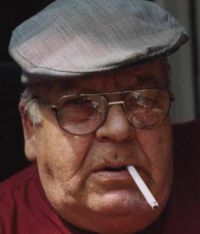 Syrian writer Muhammad al-Maghut was born the son of a peasant farmer in the dusty town of Salamiyah in 1934, during the French occupation. As a young man he joined the Syrian Social Nationalist Party, the second biggest mass party in Syria after the Ba’ath. Like the Ba’ath, the secular SSNP appealed to religious minorities – al-Maghut was of Ismaili origin. Unlike the pan-Arabists of the Ba’ath, it envisaged a fertile crescent state including Syria, Lebanon, Palestine, Jordan, Iraq, Kuwait and even Cyprus. Al-Maghut was locked up on several occasions for SSNP membership. During his first imprisonment – in Mezzeh prison in 1955 – he met the influential poet Adonis and started writing poetry himself.
As a poet he deserves to be much more widely known. Along with Adonis and Nizar Qabbani he was a modernist, using free verse instead of the traditional Arabic forms. Like Qabbani he aimed to be accessible to the ordinary people, but his ‘lover narrator’ is perhaps better suited to our twisted times than Qabbani’s. Certain verses sum up the decadent atmosphere very well indeed. The following remind me of those Gulf Arabs and others who profit from the prostitution of refugee women from occupied Iraq:
Lebanon is burning – it leaps, like a wounded horse, at the edge of the desert/ and I am looking for a fat girl/ to rub myself against on the tram/ for a Beduin-looking man to knock down somewhere. My country is on the verge of collapse/ shivering like a naked lioness/ and I am looking for two green eyes/ and a quaint café by the sea/ looking for a desperate village girl to deceive.”
The Search

On a couple of occasions – that I know of – I’ve had my irises scanned. These in the airports where I get pulled over for the stupid questions. In theory, a computer link can now tie my iris to my bank account, credit rating, police record, driving license and passport details – all in the sharpest microsecond.
The town centre has been replaced by a shopping mall, owned and controlled. People take more interest in Angelina Jolie’s romantic life than in the course of political events. The politics on show are soap opera, and the soap opera is determined a ‘British value’. According to the new points system for migrants, access to Britishness can be speeded up by campaigning for a political party (I presume they don’t mean Hizb ut-Tahrir), while ‘active disregard for British values’ – which might or might not mean protesting against imperialist wars – will retard membership of the club.
The great Englishman Dr. Johnson said, “Patriotism is the last refuge of a scoundrel.” And on that sound note allow me to introduce a short story by the Syrian writer Ibrahim Alloush, translated by Domenyk Eades.
Surfing on Islamophobia
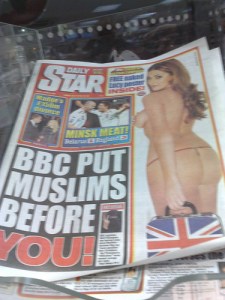 On Sunday, PULSE’s good friend Phil Weiss posted a sympathetic piece by Scott McConnell, editor of The American Conservative, on Christopher Caldwell’s new book about Islam in Europe. Here is the response by PULSE editors Muhammad Idrees Ahmad and Robin Yassin-Kassab which was published on MondoWeiss today:
There are two sets of population statistics about Europe, writes Eliot Weinberger in a post on the London Review Blog: ‘those of the Islamophobes and those of everyone else.’ Weinberger is commenting on the recent of flurry of books trading in the ‘Islamic threat’, among them one by neoconservative writer Christopher Caldwell. In his encomium to Caldwell, Scott McConnell couldn’t possibly have been referring to the statistics of ‘everyone else’. It would be hard otherwise to elevate a minority of 3.6 percent into a civilizational threat. So presumably he accepts the numbers of the Islamophobes. But he does more; he also echoes their assumptions. Small wonder then that he should consider ‘nuanced’ a book that describes Muslims as ‘conquering Europe’s cities, street by street’.
But before we get to Caldwell lets address McConnell’s own assumptions.
McConnell splits ‘the West’ and ‘the Muslims’ into opposing camps, and understands their relationship only in terms of harm. ‘Had I to weigh the extent to which the Islamic world is more victim or victimizer of America and the West’, he opines, ‘the scales would tilt decisively towards America as the more guilty party’. American crimes include the Iraq war and support for Israeli conquest of ‘the Arab sections’ of Jerusalem and the West Bank. Support for dictators, the proponderance of military bases, the exploitation of resources, Somalia, Lebanon, Afghanistan, and support for the Israeli conquest of the ‘Arab sections’ of Tel Abib and Yaffa, clearly do not factor in McConnell’s narrow vision. But it’s fair enough in itself. Where logic fails McConnell entirely, or rather where he fails logic and turns to racism instead, is where he places Muslim immigration into Europe ‘on the other side of the ledger’.
A Map of Home
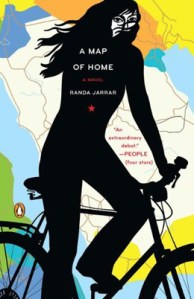 This review was published on the Electronic Intifada.
Randa Jarrar’s “A Map of Home” is a beautifully achieved coming of age novel which follows a clever girl through a war, a domestic battlefield, and repeated forced migrations. For our heroine, these events are aspects of the normal everyday stuff (because everything’s normal when it happens to you), like school, friends, family, and shopping. Despite the geographical and cultural particularities of the story, the themes – of awakening sexually, of learning how to love a parent yet firmly say no, and of struggling for independence and a place in the world – are universal, and the book will appeal to all but the most easily shocked readers.
At the novel’s centre is a family. The father, Waheed, is a Palestinian from Jenin exiled to a string of temporary residences. Resentful of his failure to develop a career as a poet, he projects his ambition onto his daughter, about whom Waheed is convincingly self-conflicted: he wants her to be a famous professor, but doesn’t want her to study away from home.
The Crisis of Islamic Civilisation
A slightly different version of this review was written for Prospect Magazine, where it was available free-of-charge for a while, but no longer.
The contemporary religious revival is a complex business. In the same period that Muslim societies, in their weakness, seem to have re-embraced Islam, America, in its strength, has re-embraced Christianity. Western Europe remains avowedly secular. Despite the contradictions within the West, mainstream Orientalism holds that all cultures are developing towards the universal (or, more specifically, globalised) model of secular modernity and the market. The Muslim world experiences backwardness to the extent that it resists secularisation.
“The Crisis of Islamic Civilisation”, a subtle and erudite book by former Iraqi minister Ali A Allawi, challenges this thesis. Surveying the Muslims’ social, economic and moral failures, and the terror espoused by certain Islamist groups, Allawi suggests the problem might not be too much Islam, but too little.
Enemies of Free Speech
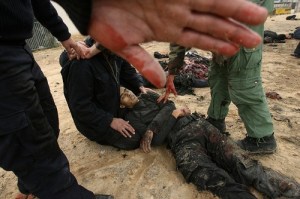
Gaza policemen check their organs
Remember the Islamophobic cartoons published by the neo-con Danish newspaper Jyllands-Posten? The controversy rumbled on from 2005 into 2006, and involved angry demonstrations, embassy-burnings (in countries where you can’t look at an embassy without a government permit), deaths, boycotts, and campaigns of support to counteract the boycotts. Although I found the cartoons deeply offensive, and not in the least related to free speech or constructive debate, I was more upset by the responses of some Muslims.
The cartoons were a media provocation, and should have been combatted through intelligent use of the media. The outpouring of Muslim anger at a West which insulted Muslims after slaughtering them was certainly understandable, but was aimed at the wrong target. I lived in Oman at the time, where the state-appointed Mufti as well as editorials in the state-controlled press encouraged people to boycott Danish goods. The supermarkets put up signs announcing that they no longer stocked Danish goods (although an English friend assured me that Danish bacon was still on sale in the foreigners-only pork room of one supermarket). Meanwhile the shelves groaned under American products, and Oman continued to stock British and American military bases. American planes were incinerating Iraqi Muslims in their mosques at the time. The cartoon fuss seemed very much to be an organised distraction from more serious issues.
Glorifying Terror?

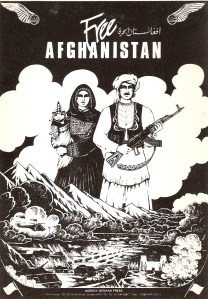 A British artist (Robin Ade) made these impressive propaganda posters during the Afghan war against the Soviet occupation. They were also printed as postcards. The picture to the right was sent out as a christmas card by Agency Afghan Press in the UK, prompting London’s Evening Standard to wonder, jokingly, if the three figures represented Joseph, Mary and Jesus. The picture to the left was made for Gulbedeen Hekmatyar’s Hizb-i-Islami, which then had a London office. The pictures raised no horrified eyebrows in the UK – of course not: the Afghan people and the Thatcher and Reagan administrations were all on the same side, for freedom, against godless Soviet communism interfering with a traditional culture. Today, however, Hekmatyar is fighting the NATO occupation of his country, and were a British artist to dare paint an Afghan mujahid, with Qur’an in one hand and kalashnikov in the other, standing on an American flag, underneath a calligraphed ‘Allahu Akbar’, he would quite probably be charged under anti-terror legislation.
In Control
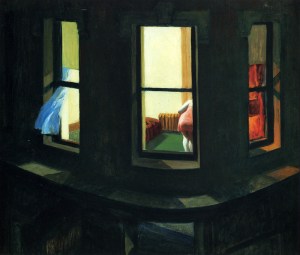
Night Windows by Edward Hopper
On this night I was the controller for King’s Cabs, whose shopfront office lies on the southern reaches of the Caledonian Road. I was the man who watches the phone line, directs the drivers, greets the punters. I sat under neon. I read a lot of stolen books.
The shift began at ten, in time for a plastic cupful of tea, a roll-up, and some pages of What Is To Be Done? before the pub closing rush, which had always been the only rush of the night. If it was a rush.
First action struck shortly after eleven, when a couple of red-jowled, sweaty-eyed men strolled in, bellies straining against football shirts and tongues wagging in keen debate.
“That black one, fuckin hell!”
“Nah. Sparrow tits? Nah. The fuckin Russki, I tell you.”
Culture of Fear
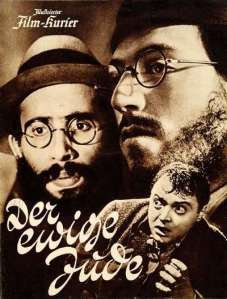
The Eternal Jew. Nazi-era film
I don’t usually subject myself to it, but a few days ago I found myself near a television in the act of broadcasting the BBC news. One of the headline stories, carefully selected for relevance from this world of trouble, concerned a bleach attack on the boyfriend of a married woman. The woman and her boyfriend were both British Muslims, so the newscaster expected the attack to put the focus back on ‘honour crimes in the Muslim community’. I wonder how many ‘native’ white males were glassed or bottled in Britain last Saturday night for looking at somebody’s girlfriend the wrong way. I wonder when the focus will be directed (it can’t be ‘put back’ because it wasn’t there in the first place) on Anglo honour crimes, on show right now in a pub near you.
Next little episode: Jim Fitzpatrick MP, whose east London constituency is a third Muslim, walked out of a constituent’s wedding party when he discovered – to his horror – that men and women were asked to sit in separate areas. Many comment-posters on the ‘liberal’ Guardian supported Fitzpatrick’s action, because gender segregation is not something we do in this country. Absolutely. If it weren’t for the Muslim cultural invasion, proper Brits wouldn’t have picked up the foreign habit of the stag and hen night.
How Grampa Entered History and Left Again
![scan0001[1]](https://qunfuz.com/wp-content/uploads/2009/08/scan00011.jpg?w=211&h=300 "scan0001[1]") Grampa was an older man than most of them in the castle, already in his thirties, almost too old for war. Nevertheless it was a fresh dawn for him, who was finally finding confidence in himself, liking himself at last. No longer tongue-tied, he was popular with the soldiers. He found he had the gift of getting on with men from all social classes and all parts of the country. And he was able to make himself useful.
Grampa was an older man than most of them in the castle, already in his thirties, almost too old for war. Nevertheless it was a fresh dawn for him, who was finally finding confidence in himself, liking himself at last. No longer tongue-tied, he was popular with the soldiers. He found he had the gift of getting on with men from all social classes and all parts of the country. And he was able to make himself useful.
They put him in charge of accounts. At the end of each month he handed over the leisure allowance in big notes, money for beer and cigarettes and trips into Glasgow. The men seemed to hold him personally responsible for this snippet of good fortune. Cheers, Arnold, they said one by one, bright eyed, shuffling forward and bouncing out. But this was not his only job. He was also a medical orderly and, with his cool nerves, an attendant at operations. Bloodied, hot, he displayed the type of courage that tougher breeds couldn’t understand. Once he saw a man faint at the sight of a needle who had before that crash-landed, unruffled, a flaming fighter plane on the sea.
He had been considered officer material – he was bright enough for that and more – had been sent on the training course in Wales. But then, rushing across the grey fells, his knee gave in. He only grinned. He was used to such disappointments. He hadn’t gone to sea because he couldn’t distinguish blue from red. He had failed his school exams because of a huge boil exploding on his bottom. He hadn’t gone to art school, where he might have made a career of colour blindness, because his father, despite the art master’s recommendation, thought art school unbecoming. So he had been placed instead in the book trade at the age of 14, more properly the tea-getting, message-bearing trade. (Though after the war he was promoted to a position that fitted his more solid presence). He worked among hard and paper backs. Papery-thin he was himself, and ivory white. His mates called him snowball for the icicle down that clung to his albumen skull. Later on, when I knew him, the hair had gone, but the soft domed head remained, and the blue veins.
Abusing Quilliam’s Name
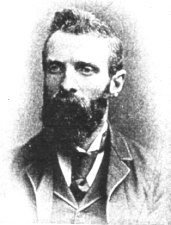 Abdullah Quilliam was a 19th Century British convert to Islam, the founder of a mosque in Liverpool. He was also an anti-imperialist and a supporter of the Caliphate. He argued that Muslims should not fight Muslims on behalf of European powers, citing specifically Britain’s enlistment of Muslim soldiers against the resistance in Sudan. If Quilliam were alive today he would, at very least, be kept under observation by the British intelligence services.
It is ironic, then, that this activist Muslim’s good name has been appropriated by the government-backed and funded Quilliam Foundation, established in April 2008, supposedly to counter extremism in Muslim communities.
Those who read my stuff will know that I despise Wahhabism, and still more Wahhabi-nihilism. I oppose Islamic political projects which aim to capture control of the repressive mechanisms of contemporary Muslim states. I am stunned by the stupidity of such slogans as “Islam is the solution.” I take issue with anyone who attempts to impose a dress code or an interpretation of morality on anyone else, and I loathe those puritanical ideologies which fail to recognise the value of music, art, mysticism, philosophy, and popular and local cultures in the Muslim world. It is obvious that political Islam has often been exploited for very unIslamic purposes by the American empire and its client dictators in Saudi Arabia, Egypt, Pakistan and elsewhere. Nominally Islamic political parties bear a great weight of responsibility for diverting the Iraqi resistance into a disastrous sectarian war. The terrorist attacks on London in July 2007 were abominable crimes and a catastrophe for all British Muslims. I know all that, yet I oppose the Quilliam Foundation.
Obscenity
This is, more or less, a selection from posts I made during the Gaza massacre.
 According to the dictionary, obscenity is what is offensive or repulsive to the senses, or indecent in behaviour, expression or appearance.
From Palestine come pictures on the internet, and on al-Jazeera – burning half bodies, a head and torso screaming, corpses spilt in a marketplace like unruly apples, all the tens and hundreds of infants and children turned to outraged dust. A little more out of focus, but concrete, there is the obscenity of starved refugees and cratered farmland, of shriek-soaked hospital walls and babies born at checkpoints. Still further behind these instances, these symptoms, looms the brute and perpetual obscenity of the ancient Canaanite-Arab Palestinian people having been driven from their land into camps and walled ghettoes, where they have been repeatedly massacred. All of this is offensive, repulsive and indecent. The Western media, not wishing to offend our senses, keeps the obscenity quiet. Better put, they cloak the obscenity with the greater obscenity of untruth, of dreaming a pleasant version while people bleed and die.
This should concern everybody, and first of all writers and readers. For the prime obscenity for us here, away from the immediate death and panic, is the language we use to hide the reality of what’s happening. We use magical terms. This is how it goes:
A Decisive Turning Point?
The Guardian reports on British campaigning in Afghanistan, specifically an “operation” which ”took nearly 3,000 British troops, many engaged in gun battles, to capture an area the size of the Isle of Wight.” I do wonder what meaning the verb ‘capture’ has here.
The article relays stories told by “British officials” and a couple of named officers, stirring stories which involve “a risky air attack” and a “Taliban drugs bazaar.” Twenty two British soldiers have been killed in Helmand province this month alone, so I expect our officials are thinking very hard indeed about the stories they tell. The recent adventure is called ‘Operation Panther’s Claw’, and is hoped to be “a decisive turning point in the eight-year conflict.”
We shall see. In the meantime, what seems a potentially decisive sign is the language and direction of this Taliban ‘code of conduct’. It demonstrates not only a higher stage of organisation than at any time since the movement’s 2001 defeat, but also a leap forward in ethics and political understanding.
On suicide bombing, the code says
(These) attacks should only be used on high and important targets. A brave son of Islam should not be used for lower and useless targets. The utmost effort should be made to avoid civilian casualties.
And concerning relations with the Afghan people,
The Mujahideen have to behave well and show proper treatment to the nation, in order to bring the hearts of civilian Muslims closer to them. The mujahideen must avoid discrimination based on tribal roots, language or geographic background.
For obvious reasons it is difficult to know precisely how those under the Taliban umbrella think. But it’s certainly safe to say the movement is learning lessons very quickly. When the ‘old Taliban’ took Afghanistan over from the warlords in 1996, it had the open backing of the US-Saudi-Pakistani alliance. This time it will have to think, and change, and work much harder.
Bubbling with Energy
An edited version of this article was published in The National.
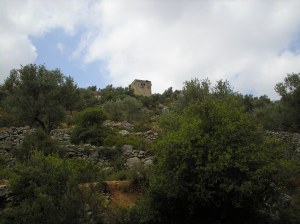 We entered Palestine from Jordan, across the Allenby Bridge and over the trickle which is what’s left of the diverted, overused, and drought-struck river. The Dead Sea glittered in the hollow to our left. Jericho, the world’s oldest city, shimmered through heat haze to our right. The site where Jesus was baptised was a stone’s throw away. Palestine is most definitely part of bilad ash-Sham, in the same cultural zone as Syria, Lebanon and Jordan, but it is also most definitely like nowhere else on the planet. Suddenly the superlatives were coming thick and fast.
Palestine feels as large as a continent – but one that’s been crushed and folded to fit into the narrow strip of fertile land between the river and the sea. The Jordan Valley depression is the lowest point on earth, part of the Rift Valley which stretches from east Africa, and it’s as hot as the Gulf. But only a few miles up from the yellowed, cratered desert into the green hills before Jerusalem, and the weather is very different. As we left our performance in Ramallah a couple of nights later, gusts of fog blew in on an icy wind. If a Palestinian in the West Bank manages to find an unoccupied hilltop – which isn’t at all easy – he can look all the way to the forbidden Mediterranean, and perhaps he’ll pick out the fields of his ancestral village.
A Visit to Hebron
This was published on the Reuters Great Debate blog.
 There’s no pretty way to describe what I saw in Hebron, no tidy conceit to wrap it in.
I visited as a participant in the Palestine Festival of Literature, the brain child of the great British-Egyptian novelist Ahdaf Soueif. I was in the company of many wonderful writers and publishers, among them Python and traveller Michael Palin, best-selling crime novelist Henning Mankel, Pride and Prejudice screenplay writer Deborah Moggach, and prize-winning novelists Claire Messud and MG Vassanji.
Our first stop was Hebron University, where I ran a workshop on ‘the role of writing in changing political realities.’ The students were bright and eager; the only discomforting note was struck by a memorial stone to three killed while walking on campus, by rampaging settlers, in 1986.
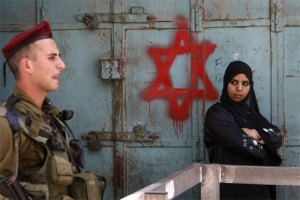
After lunch we visited Hebron’s historic centre.